Reptile Habitat Essentials: Complete Guide For 2025
Master the art of creating a thriving home for your reptile with expert tips on enclosures, climate control, and daily upkeep.
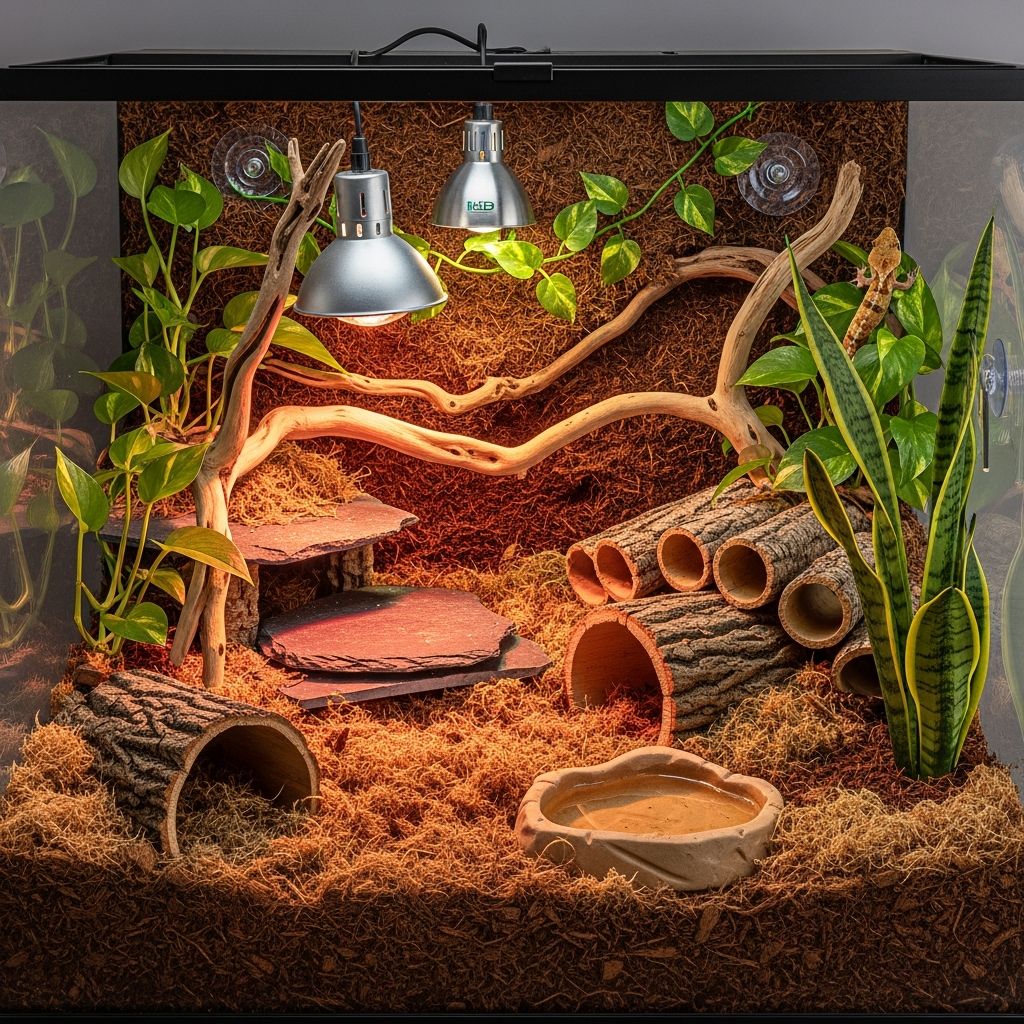
Creating a suitable living environment is the foundation of successful reptile ownership. Reptiles originate from diverse ecosystems, so replicating their natural conditions through proper enclosure design, climate management, and hygiene practices is crucial for their physical and behavioral well-being.
Selecting the Right Enclosure
The enclosure serves as your reptile’s entire world, influencing its activity levels, feeding habits, and stress responses. Size matters greatly—juveniles may start in compact setups for security, while adults demand expansive spaces to exhibit natural behaviors like climbing or burrowing.
- Opt for front-opening terrariums or custom PVC enclosures for easy access and secure lids to prevent escapes.
- Minimum dimensions should allow for a full temperature gradient: at least 4 feet long for most lizards, longer for larger species.
- Incorporate vertical space with branches for arboreal types or deep substrate for diggers.
Glass tanks work for small species but lack insulation; wooden or melamine options maintain stable microclimates better in varying room temperatures.
Mastering Temperature Gradients
Reptiles are ectothermic, relying on external heat to regulate body temperature. A proper gradient mimics their wild habitat, allowing them to bask or retreat as needed.
| Zone | Temperature Range (°F) | Equipment Needed |
|---|---|---|
| Basking Spot | 95-110 | Ceramic heat emitter or halogen bulb |
| Warm Side | 85-95 | Under-tank heater or radiant panel |
| Cool Side | 75-85 | Ambient room temp or low-watt heat mat |
| Nighttime Drop | 70-80 | Thermostat-controlled reduction |
Use digital thermostats with probes placed at substrate level for accuracy. Avoid hot rocks, which can cause burns.
Humidity and Ventilation Balance
Humidity levels vary by species: desert dwellers like leopard geckos thrive at 30-40%, while tropical chameleons need 60-80%. Inconsistent moisture leads to respiratory issues or shedding problems.
- Mist enclosures daily for high-humidity needs; use automatic foggers for consistency.
- Provide a moist hide with sphagnum moss for shedding support.
- Ensure 20-30% screen top ventilation to prevent stagnation while retaining moisture.
Monitor with a hygrometer; cover part of the screen with plastic wrap if levels drop too low.
Essential Lighting for Health
UVB lighting is non-negotiable for most diurnal reptiles, enabling vitamin D3 synthesis for calcium metabolism. Without it, metabolic bone disease (MBD) risks skyrocket.
- Choose T5 HO linear bulbs over coils for better UVB penetration (10-12% output for deserts, 5-6% for forests).
- Replace every 6-12 months, as output degrades invisibly.
- Provide 12-14 hours of daylight, dimming to simulate dawn/dusk.
Nocturnal species like crested geckos may skip UVB but benefit from low-level supplementation.
Substrate Selection Guide
The flooring impacts humidity retention, burrowing, and hygiene. Avoid loose particles that cause impaction if ingested.
| Substrate Type | Best For | Pros | Cons |
|---|---|---|---|
| Coconut fiber | Tropical species | Retains moisture, naturalistic | Can mold if too wet | Bioactive soil mix | Burrowers | Self-cleaning with isopods | Requires setup time | Tile or paper | Beginners | Easy clean, low risk | Lacks enrichment | Sand | Desert lizards (adults) | Allows digging | Impaction risk for young |
Bioactive enclosures with live plants like pothos enhance air quality and humidity while providing cleanup crews.
Furnishings for Enrichment and Security
A barren tank leads to boredom and stress. Multiple hides—one warm, one cool, one humid—offer security spots sized snugly for full body enclosure.
- Climbing branches, cork bark, and ledges for arboreal species.
- Leaf litter and rocks for ground-dwellers to forage and hide.
- Live, pesticide-free plants boost humidity and aesthetics.
Rotate items periodically to encourage exploration and prevent territorial fixation.
Water Features and Hydration
Fresh, dechlorinated water in heavy dishes prevents spills and allows soaking. Some species like turtles need ponds with filtration.
- Change water daily; position on cool side to avoid bacterial growth.
- Misting simulates rainfall for hydration via skin absorption.
- Drip systems encourage drinking in wary species.
Monitor for dehydration signs like sunken eyes.
Cleaning Schedules for Hygiene
Regular maintenance prevents pathogens like salmonella. Use reptile-safe disinfectants like diluted bleach (1:32) or chlorhexidine.
- Daily: Spot-remove feces, uneaten food; refresh water.
- Weekly: Partial substrate change, wipe surfaces, clean hides.
- Bi-weekly/Monthly: Full disassembly, scrub with Dawn dish soap, rinse thoroughly, dry completely.
Wear gloves; use tongs for safe spot cleaning.
Juvenile vs. Adult Setups
Young reptiles grow rapidly, needing setups that evolve with them. Start juveniles in smaller, cluttered enclosures for ease of feeding and hiding.
- Upgrade size as they reach 75% adult length.
- Maintain all gradients even in starter homes.
- Handle minimally until settled to build trust.
Quarantine new arrivals for 30+ days in identical setups to check health.
Common Pitfalls and Solutions
Overlooking gradients causes lethargy; improper UVB leads to MBD. Assemble a first-aid kit: gauze, tweezers, mite treatment, antiseptics.
- Find a reptile vet pre-purchase for annual exams.
- Track parameters with thermometers/hygrometers.
- Avoid wild-caught specimens due to parasites.
Species research via care sheets prevents mismatches.
Advanced: Bioactive Enclosures
These self-sustaining systems use soil, plants, and microfauna (springtails, isopods) for natural waste breakdown, reducing cleaning frequency.
- Layer drainage, soil, leaf litter; introduce cleanup crew after cycling.
- Ideal for naturalistic displays and humidity control.
- Monitor for overpopulation or crashes.
Popular for bearded dragons and ball pythons.
Handling and Socialization Tips
Reptiles aren’t cuddly but benefit from gentle interaction. Wait 1-2 weeks post-setup for acclimation.
- Support entire body; avoid tail grabbing.
- Short sessions (5-10 min) daily build familiarity.
- Warm soaks associate you with comfort.
Respect stress signals like hiding or hissing.
FAQs
What if my reptile isn’t eating?
Check temperatures first—too cold slows digestion. Ensure proper prey size and variety.
How often to replace UVB bulbs?
Every 6-12 months; test with a Solarmeter for output.
Can I keep multiple reptiles together?
Rarely—most are solitary. Monitor for aggression in multi-species trials.
What’s the best beginner reptile?
Leopard gecko or corn snake: forgiving care, small size.
Do reptiles need veterinary care?
Yes, annual checkups prevent hidden issues like parasites.
References
- Reptiles 101: A Beginner’s Guide to Care & Maintenance — Small Pet Select. 2023. https://shop.smallpetselect.com/blogs/care-resources/reptiles-101-a-beginners-guide-to-reptile-care-maintenance
- Guide to Reptile Care — Brookhaven Animal Hospital. 2022-12-06. https://www.brookhavenanimalhosp.com/site/blog/2022/12/06/guide-to-reptile-care
- Reptile Care for Beginners: A Helpful Guide — Vetericyn. 2023. https://vetericyn.com/blogs/vetericyn/reptile-care-for-beginners-a-helpful-guide
- Tips for Choosing Your First Reptile — Flamingo Pet Clinic. 2025. https://flamingopetclinic.com/tips-for-choosing-your-first-reptile/
- Reptile Care Tips from Aloha Animal Hospital — Aloha Vegas Vets. 2025-04-15. https://alohavegasvets.com/2025/04/15/reptile-care-tips-from-aloha-animal-hospital-in-las-vegas-nv/
Similar Articles








Read full bio of medha deb