
Reproductive System Drug Therapy in Animals
Comprehensive guide to pharmaceutical management of animal reproduction and breeding
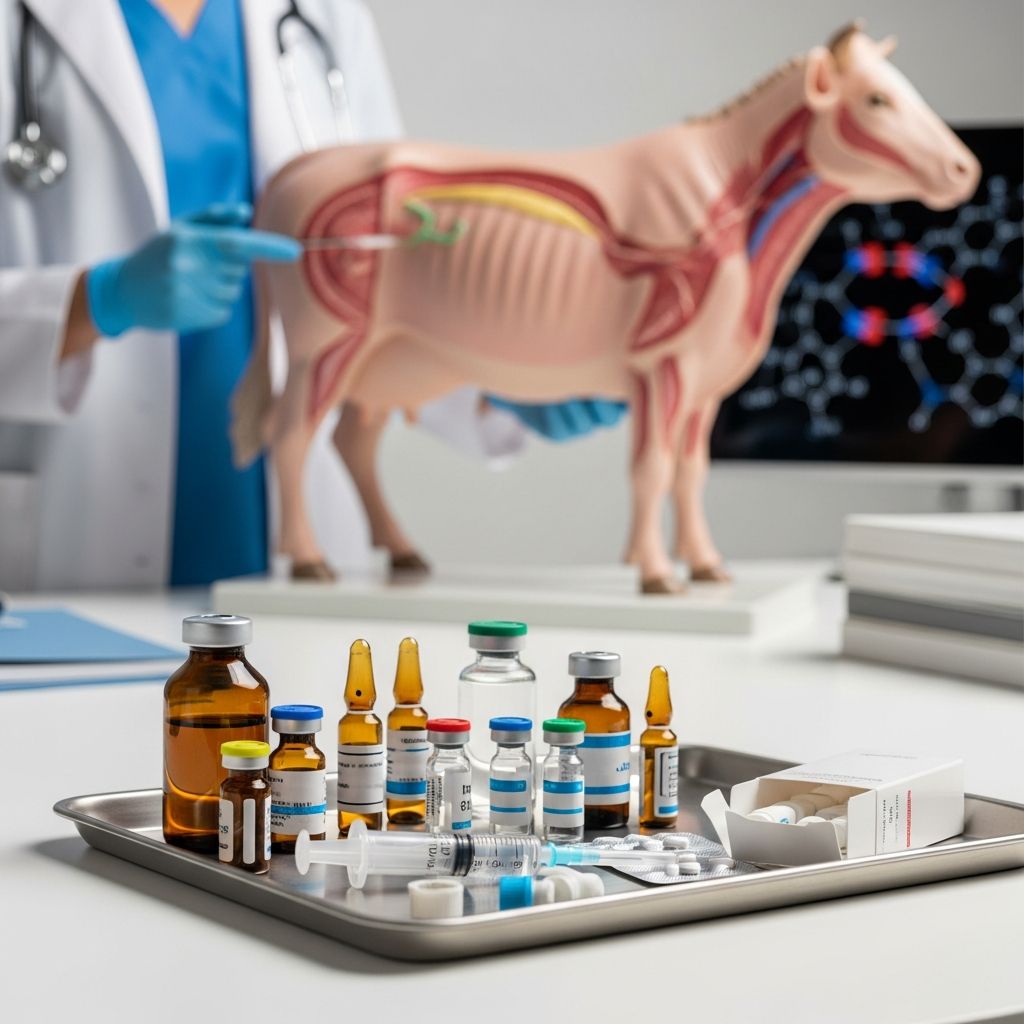
Introduction to Reproductive Pharmacotherapy in Veterinary Medicine
The ability to pharmacologically regulate animal reproduction represents one of the most significant advances in modern veterinary medicine. Rather than relying solely on surgical interventions, veterinarians now have access to a sophisticated arsenal of pharmaceutical tools that enable precise control over reproductive cycles, management of breeding programs, and treatment of reproductive emergencies. These medications function by mimicking or modifying naturally occurring hormones within the body, allowing clinicians to suppress, induce, or synchronize reproductive activity depending on the clinical situation and desired outcome.
The expanding pharmacological toolkit available to veterinary practitioners reflects decades of research into endocrine systems and reproductive biology across multiple species. Each class of medication interacts with specific receptors and biochemical pathways, producing predictable effects that can be leveraged for therapeutic benefit. Understanding these mechanisms, their appropriate applications, and their limitations is essential for any veterinarian managing reproduction in cattle, horses, dogs, cats, and other domestic animals.
Fundamental Hormone Systems and Their Pharmacological Targets
The reproductive system operates through intricate communication between the hypothalamus, pituitary gland, and gonads—a relationship referred to as the hypothalamic-pituitary-gonadal axis. Pharmacological interventions work at various points along this axis, making it possible to achieve diverse therapeutic outcomes through different mechanisms of action.
Gonadotropin-Releasing Hormone and Synthetic Analogues
Gonadotropin-releasing hormone (GnRH) serves as the fundamental signaling molecule that initiates the cascade of reproductive hormone release. Clinically available formulations include both native GnRH and numerous synthetic analogues that offer improved stability and extended duration of action. These agents are employed across multiple species for several distinct purposes.
In cattle operations, GnRH formulations are utilized to control ovarian follicular development and facilitate ovulation induction within controlled breeding protocols. For equine patients, GnRH therapy promotes ovulation of mature follicles, supporting artificial insemination and embryo transfer programs. In small animal practice, GnRH analogues address follicular cyst formation in both canine and feline patients, while also serving diagnostic functions in cryptorchidism evaluation.
The mechanism of action differs based on dosing patterns and duration of therapy. Short-term, pulsatile GnRH administration stimulates gonadotropin secretion, leading to increased follicle development and ovulation. In contrast, sustained, continuous GnRH exposure causes receptor desensitization through downregulation—a phenomenon that produces profound suppression of gonadal activity. This property makes extended-release GnRH implants valuable for reversible contraception in both male and female animals, with some formulations providing infertility lasting longer than twelve months.
Gonadotropin Hormones and Their Clinical Applications
Gonadotropins represent hormones naturally produced by the pituitary gland that directly stimulate ovarian and testicular function. Pharmaceutical sources include materials derived from equine and human pregnancy, as well as recombinant formulations produced through biotechnology.
Follicle-stimulating hormone (FSH) specifically drives follicle recruitment and growth within the ovary. When administered to cattle, FSH enables superovulation protocols valuable in embryo collection and transfer procedures. Luteinizing hormone (LH) and human chorionic gonadotropin (hCG)—which mimics LH action—trigger ovulation of mature follicles and support corpus luteum formation essential for pregnancy maintenance.
Equine chorionic gonadotropin (eCG) possesses predominantly FSH activity across most species and serves as the agent of choice for estrus induction and follicular stimulation. Commercial preparations frequently combine eCG with hCG to provide both follicular development and ovulatory stimulus in synchronized protocols.
Strategies for Estrus Synchronization and Breeding Control
Modern breeding operations depend on precise timing of reproductive events to maximize efficiency and genetic gain. Several pharmacological approaches accomplish this goal through coordinated manipulation of ovarian dynamics.
Progestin-Based Synchronization Protocols
Progesterone and synthetic progestin compounds serve dual roles in reproductive management—they suppress spontaneous estrus while simultaneously preparing the reproductive tract for controlled cycling. In cattle, progestins maintain luteal-phase conditions that prevent premature follicle dominance, allowing veterinarians to reset the ovarian cycle. Combined with prostaglandins that cause corpus luteum regression and estrogen compounds that prime the reproductive system, progestin-based protocols enable herds to cycle predictably on predetermined schedules.
Equine practitioners employ similar combinations of progestins and estradiol esters to synchronize estrus in mares, particularly benefiting artificial insemination programs and embryo transfer procedures. The flexibility of these approaches allows customization to match individual farm management schedules and breeding objectives.
Prostaglandin Administration for Cycle Manipulation
Prostaglandin F2 alpha (PGF2α) and its synthetic derivatives represent cornerstones of estrus synchronization across ruminant species. These compounds trigger regression of the corpus luteum when administered during the luteal phase, predictably inducing return to estrus within a characteristic timeframe. The ability to induce estrus at predetermined intervals enables batch breeding, reduces idle reproductive time, and improves overall herd reproductive efficiency.
Practical implementation varies by species and production goal. In cattle, single injections of long-acting prostaglandin formulations effectively induce estrus with minimal repeat dosing. Combination protocols that include prostaglandins alongside other hormonal agents provide enhanced synchrony when optimal timing is critical.
Pregnancy Termination and Reproductive Emergency Management
Situations frequently arise where pregnancy termination becomes necessary for animal welfare, economic, or management reasons. Pharmacological approaches to pregnancy interruption vary based on the stage of gestation and the specific agent selected.
Early Pregnancy Intervention
During early gestation, before firm placental attachment has developed, estrogen administration can effectively prevent embryo retention through mechanisms that interfere with embryo transport within the reproductive tract. These compounds produce embryotoxic effects that terminate pregnancy with minimal systemic complications.
Mid to Late Pregnancy Management
Once pregnancy progresses beyond the early embryonic phase, different pharmacological strategies become necessary. Prostaglandin F2α, administered at doses exceeding those used for estrus synchronization, causes corpus luteum regression and initiates uterine contractions. This approach proves effective in horses and pigs when used alone, while in cattle and sheep it typically combines with corticosteroid administration to ensure reliable pregnancy termination.
Dopaminergic agonists—compounds that block prolactin secretion—function as adjunctive agents in pregnancy termination protocols. These medications include bromocriptine, metergoline, and cabergoline. By reducing prolactin concentrations, these agents interfere with luteal function and pregnancy maintenance, proving particularly valuable when combined with prostaglandins in canine patients.
Antiprogestational Agents: Modern Alternatives
Antiprogestational compounds, including mifepristone and aglepristone, represent some of the most effective pregnancy termination medications available in veterinary medicine. These agents block progesterone receptor binding, thereby eliminating the hormonal support pregnancy requires. Clinical success rates approach 100 percent in dogs, with notably fewer adverse effects compared to other termination approaches. These medications allow pregnancy interruption across a wider gestational window than some alternatives, providing greater clinical flexibility.
Contraceptive Technologies and Long-Acting Solutions
Beyond managing breeding cycles in animals intended for reproduction, veterinarians frequently employ pharmacological contraception in animals where breeding is undesirable. Available options span from temporary suppression to reversible long-term infertility.
Progestin administration suppresses estrous cycling in dogs, cats, and mares through central nervous system effects and local reproductive tissue changes. These medications work through multiple mechanisms simultaneously—preventing follicle development, altering cervical mucus consistency, and inhibiting behavioral estrus. The reversibility of progestin-induced suppression makes these agents suitable for temporary breeding prevention while maintaining future reproductive potential.
Extended-release GnRH implants provide an innovative approach to long-acting contraception. Rather than permanent surgical sterilization, these implants deliver GnRH at continuous levels that cause receptor desensitization and sustained gonadal suppression. Animals receiving these implants experience reversible infertility lasting months to more than a year, after which reproductive function typically returns. This technology offers significant advantages for animals whose breeding status may change or where temporary reproductive suppression suffices for management purposes.
Emerging contraceptive vaccines targeting gonadotropin-releasing hormone represent future innovations currently under development. These immunological approaches would generate antibodies to reproductive hormones, preventing normal gonadal function through an entirely different mechanism than existing pharmaceutical options. While not yet widely available, these vaccines could revolutionize population-level reproductive control in animals where traditional pharmaceutical or surgical approaches prove impractical.
Treatment of Reproductive Pathology and Emergencies
Beyond routine breeding management, reproductive pharmacotherapy addresses acute and chronic pathological conditions affecting the reproductive system.
Pseudopregnancy Management in Companion Animals
Female dogs frequently experience pseudopregnancy—a condition where physiological changes mimicking true pregnancy occur in the absence of actual conception. This condition results from prolonged corpus luteum function and elevated progesterone. Dopaminergic agonists effectively suppress prolactin, interrupt the hormonal cascade maintaining pseudopregnancy, and resolve associated clinical signs. Bromocriptine represents the most commonly employed agent, administered at dosages of 10 micrograms per kilogram daily for ten days, or alternatively at 30 micrograms per kilogram daily for sixteen days.
Induction of Parturition
Glucocorticoid administration, particularly C-16 substituted steroids such as dexamethasone, betamethasone, and flumethasone, triggers parturition in ruminants when administered within two weeks of the expected calving date. Dexamethasone dosing typically ranges from 20 to 30 milligrams administered intramuscularly. These agents work through multiple mechanisms—they simultaneously reduce progesterone production, enhance prostaglandin sensitivity, and stimulate fetal cortisol production, all culminating in labor induction. Clinicians must exercise caution with glucocorticoid administration as inadvertent use during pregnancy may cause unintended abortion, particularly early in gestation.
Species-Specific Applications and Considerations
While fundamental reproductive endocrinology remains conserved across species, specific drug dosages, formulations, and clinical applications vary considerably.
| Species/Application | Primary Drugs | Primary Indication |
|---|---|---|
| Cattle | GnRH, FSH, PGF2α, Progestins | Estrus synchronization, superovulation |
| Horses | GnRH analogues, hCG, Progestins, PGF2α | Ovulation induction, estrus control |
| Dogs | GnRH implants, Dopamine agonists, Antiprogestational agents | Contraception, pseudopregnancy, pregnancy termination |
| Cats | GnRH agonists, Progestins | Estrus suppression, contraception |
Safety Considerations and Adverse Effects
While reproductive pharmacotherapy generally offers favorable safety profiles compared to surgical alternatives, clinicians must understand potential adverse effects and drug interactions. Glucocorticoid administration, particularly at high doses or extended durations, risks immunosuppression and metabolic complications beyond reproductive effects. Estrogen compounds may promote endometrial hyperplasia with chronic use. Prostaglandin administration occasionally produces systemic effects including salivation, diarrhea, and respiratory changes requiring monitoring. Understanding the specific risk profile of each agent enables appropriate patient selection and monitoring protocols.
Frequently Asked Questions About Reproductive Pharmacotherapy
How long does GnRH implant-induced contraception persist?
Extended-release GnRH implants typically provide reversible infertility lasting twelve months or longer, depending on the specific formulation and animal size. Reproductive function generally returns gradually after implant depletion.
Can antiprogestational agents terminate pregnancy at any stage?
Antiprogestational compounds prove most effective during mid-to-late pregnancy, though clinical success rates remain high across a broader gestational window compared to other termination methods.
Which prostaglandin formulations work best for estrus synchronization?
Both natural PGF2α and synthetic derivatives prove effective, with selection often depending on species, local availability, and specific management protocols.
Are reproductive pharmacological protocols safe during lactation?
Most reproductive medications pass minimally into milk when dams are actively lactating, though specific agents warrant individual consideration regarding nursing offspring.
Future Directions in Reproductive Pharmacology
The field of veterinary reproductive pharmacology continues evolving with emerging technologies including immunological contraceptive vaccines, improved GnRH formulations with extended duration, and novel progesterone receptor modulators offering enhanced efficacy with reduced systemic effects. These advancing options will expand therapeutic flexibility and improve outcomes across diverse veterinary settings and species.
References
- Pharmacologic Advances in Canine and Feline Reproduction — National Center for Biotechnology Information (NCBI). 2019. https://pmc.ncbi.nlm.nih.gov/articles/PMC7104932/
- Overview of Systemic Pharmacotherapeutics of the Reproductive System in Animals — Merck Veterinary Manual. https://www.merckvetmanual.com/pharmacology/systemic-pharmacotherapeutics-of-the-reproductive-system/overview-of-systemic-pharmacotherapeutics-of-the-reproductive-system-in-animals
- Principles of Treatment for Reproductive Disorders in Animals — Merck Veterinary Manual. https://www.msdvetmanual.com/reproductive-system/reproductive-system-introduction/principles-of-treatment-for-reproductive-disorders-in-animals
Similar Articles








Read full bio of Sneha Tete


