

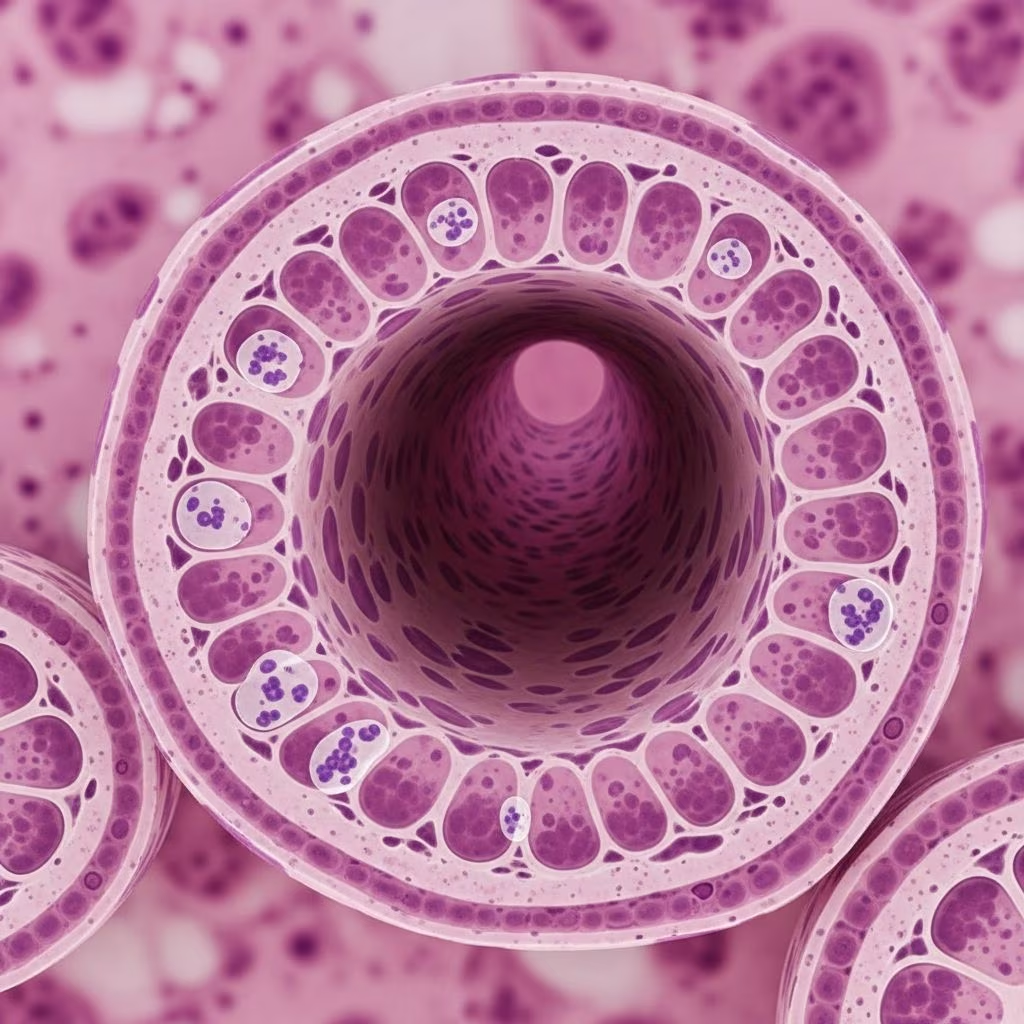
Renal tubular defects represent a group of disorders where the kidney’s tubules fail to properly reabsorb or secrete essential substances, leading to imbalances in electrolytes, acids, and other vital compounds in dogs and cats. These conditions disrupt normal kidney function, often resulting in metabolic disturbances that require prompt veterinary attention.
Understanding Kidney Tubule Physiology
The kidneys in pets consist of nephrons, each containing a glomerulus and a series of tubules including proximal, loop of Henle, distal, and collecting ducts. Proximal tubules reabsorb about 65-70% of filtered bicarbonate, glucose, amino acids, phosphate, and water, while distal tubules fine-tune acid-base balance, potassium, and sodium levels. Disruptions here lead to conditions like acidosis or excessive loss of nutrients.
Primary Types of Renal Tubular Defects
Several distinct defects affect the tubules, categorized by their location and function impairment.
Proximal Tubular Dysfunction
In proximal defects, such as Fanconi syndrome, the tubules cannot reclaim glucose, amino acids, phosphate, bicarbonate, and other solutes from the filtrate. This leads to their spillage into urine, causing generalized wasting. Common in certain breeds like Basenji dogs.
Distal Tubular Acidosis
Distal renal tubular acidosis (type 1) impairs hydrogen ion secretion, preventing urine acidification despite systemic acidosis. Urine pH remains above 6, promoting stone formation. Proximal type (type 2) involves bicarbonate wasting, leading to milder acidosis.
Hyperkalemic Renal Tubular Acidosis
Type 4 RTA arises from aldosterone deficiency or resistance, reducing potassium and hydrogen secretion, resulting in high serum potassium and mild acidosis. Often linked to hypoadrenocorticism in dogs.
Genetic and Acquired Causes
- Genetic Factors: Inherited in breeds like Basenji (Fanconi), Border Terriers, and some cats with familial traits.
- Acquired Triggers: Toxins, infections, liver diseases like hepatic lipidosis in cats, immune-mediated issues, or drugs affecting tubular function.
- Idiopathic Cases: Occur without clear cause, particularly rare forms in cats.
Clinical Manifestations in Dogs and Cats
Symptoms vary by type but often include lethargy, poor appetite, vomiting, and dehydration. Specific signs:
| Defect Type | Key Symptoms | Affected Species |
|---|---|---|
| Fanconi Syndrome | Polyuria, glucosuria, hypophosphatemia, osteomalacia | Dogs (Basenji) |
| Type 1 RTA | Hypokalemia, nephrocalcinosis, alkaline urine | Dogs, Cats |
| Type 2 RTA | Bicarbonate wasting, mild hypokalemia | Cats primarily |
| Type 4 RTA | Hyperkalemia, weakness, bradyarrhythmias | Dogs (Addison’s) |
Hypokalemia from types 1 and 2 can cause muscle weakness and ventroflexion of the neck in cats.
Diagnostic Approaches
Veterinarians use a multi-step process:
- History and Exam: Note breed, symptoms onset, diet, toxin exposure.
- Laboratory Tests: CBC, serum biochemistry (electrolytes, anion gap), blood gas analysis showing normal anion gap metabolic acidosis.
- Urinalysis: Check pH, glucosuria without hyperglycemia, aminoaciduria, low specific gravity.
- Provocative Tests: Ammonium chloride load for distal RTA (failure to acidify urine).
- Imaging: Ultrasound for nephrocalcinosis or stones.
Normal anion gap with hyperchloremic acidosis distinguishes RTA from other acidoses.
Management and Treatment Strategies
Treatment focuses on correcting imbalances and addressing causes.
- Acid-Base Correction: Potassium citrate or sodium bicarbonate for acidosis.
- Electrolyte Supplementation: Potassium gluconate for hypokalemia; monitor hyperkalemia in type 4.
- Fluid Therapy: IV fluids for dehydration, promoting diuresis.
- Specific Therapies: Low-phosphate diets for Fanconi; mineralocorticoids for type 4.
Hospitalization is common until stable. Long-term, regular monitoring prevents complications.
Prognosis and Long-Term Care
Prognosis is good for idiopathic cases with treatment; guarded if secondary to progressive disease. Owners should monitor urine pH, electrolytes quarterly. Early intervention improves quality of life.
Preventive Measures for Pet Owners
- Regular vet check-ups for at-risk breeds.
- Avoid nephrotoxins like antifreeze, NSAIDs.
- Balanced diets supporting kidney health.
Frequently Asked Questions (FAQs)
What breeds are prone to renal tubular defects?
Basenji dogs for Fanconi syndrome; Norwegian Forest Cats for type 2 RTA.
Can diet help manage these conditions?
Yes, potassium-rich, low-phosphate diets aid supplementation and reduce stone risk.
Is surgery ever needed?
Rarely; for obstructive stones from chronic alkaluria.
How do I know if my pet has RTA?
Suspect if polyuria, weakness, and lab-confirmed acidosis with inappropriate urine pH.
What’s the difference between proximal and distal RTA?
Proximal wastes bicarbonate early; distal fails to secrete H+ late, with persistently alkaline urine.
Renal tubular defects, though uncommon, demand vigilant care. Collaborate with vets for tailored plans enhancing pet longevity.
References
- Excess Acidity in the Blood of Cats – PetMD — PetMD. 2023. https://www.petmd.com/cat/conditions/urinary/c_ct_renal_tubular_acidosis
- Renal Tubular Acidosis in Dogs and Cats Explained – YouTube — VetEmCrit. 2023. https://www.youtube.com/watch?v=vZ7zb3mBzI0
- A review of renal tubular acidosis — PubMed (Veterinary Emergency and Critical Care). 2024-07-15. https://pubmed.ncbi.nlm.nih.gov/39023331/
- Familial and Congenital Renal Diseases of Dogs — MSPCA-Angell. 2023. https://www.mspca.org/angell_services/familial-and-congenital-renal-diseases-of-dogs/
- Renal Tubular Acidosis – VetFolio — VetFolio. 2024. https://www.vetfolio.com/learn/article/renal-tubular-acidosis



