

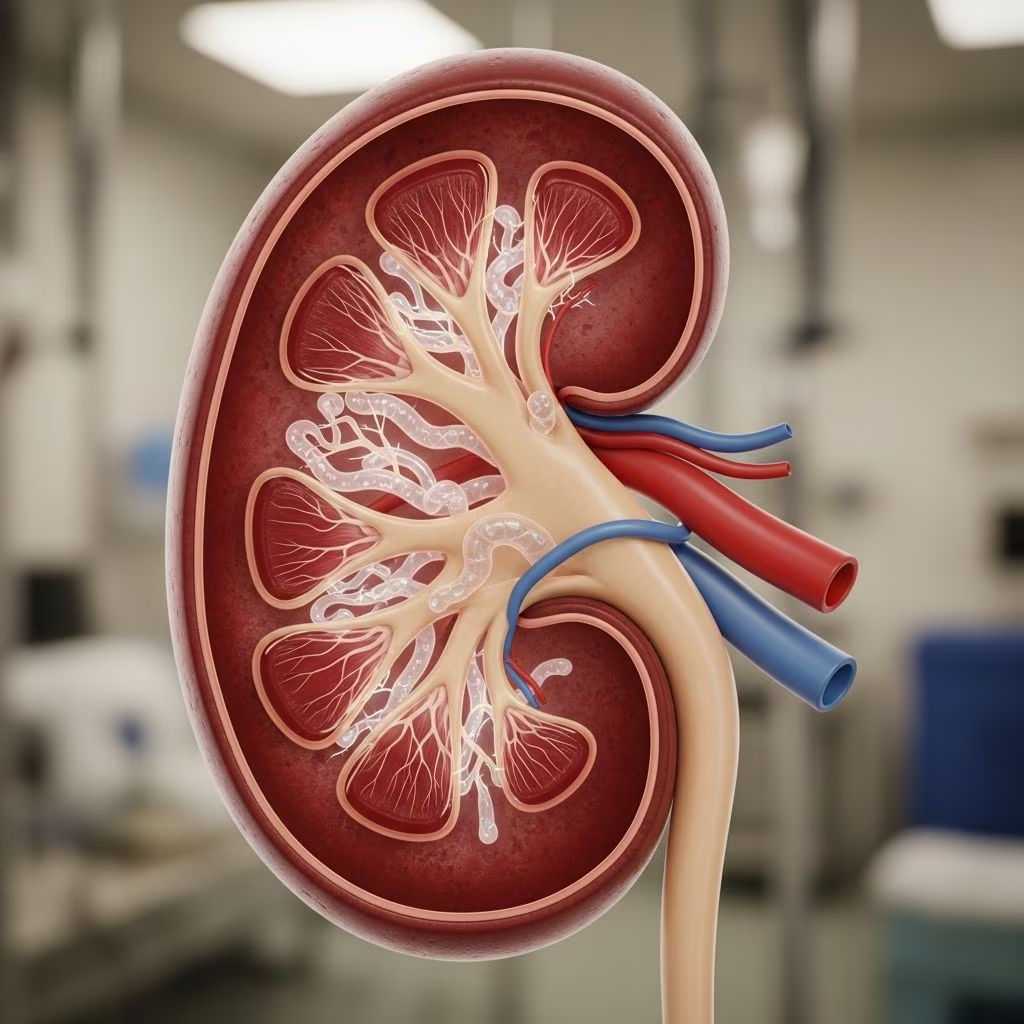
Renal tubular acidosis (RTA) represents a challenging yet manageable condition affecting the urinary system in horses. This disorder disrupts the kidneys’ ability to regulate acid-base balance, leading to a buildup of acid in the bloodstream. While rare in equine medicine, RTA demands prompt recognition to prevent severe complications. This article delves into its mechanisms, clinical presentations, diagnostic approaches, therapeutic strategies, and long-term management, drawing from established veterinary insights to equip owners, trainers, and veterinarians with essential knowledge.
Understanding the Pathophysiology of Equine RTA
The kidneys play a pivotal role in maintaining the body’s pH through hydrogen ion excretion and bicarbonate reabsorption. In RTA, tubular dysfunction impairs these processes, resulting in hyperchloremic metabolic acidosis—a state where chloride levels rise excessively while bicarbonate drops. Horses, as herbivores, typically produce alkaline urine, complicating differentiation between RTA types (distal type 1 or proximal type 2), as anorexia alone can acidify urine.
Potential triggers include prior drug administration, such as aminoglycoside antibiotics that accumulate in proximal tubules, causing cell damage and sloughing. Renal injury from toxins or ischemia may also precede RTA. Notably, no definitive breed or sex predisposition exists, though recurring cases in Friesian horses suggest possible genetic factors. The mean onset age hovers around 7 years, with development spanning days to weeks.
Recognizing Clinical Manifestations
Horses with RTA often exhibit acute, nonspecific symptoms that mimic other illnesses. Primary signs include profound depression, complete anorexia, muscle fasciculations or trembling, and cardiac irregularities like tachycardia or arrhythmias. Additional observations encompass weight loss, poor performance, weakness, and ventral edema in chronic scenarios.
These manifestations stem from acidosis-induced electrolyte shifts, particularly hypokalemia, which exacerbates muscle and heart issues. Respiratory compensation—rapid shallow breathing—attempts to expel excess CO2, but fails to fully correct the pH imbalance. In severe cases, neurological signs or laminitis may emerge, underscoring the multisystem impact. Owners might first notice reduced appetite and lethargy during routine care or competition.
Diagnostic Approaches and Laboratory Confirmation
Diagnosis hinges on clinical suspicion paired with targeted testing, as symptoms overlap with colic, infections, or chronic renal failure. Serum chemistry reveals hallmark severe metabolic acidosis (low bicarbonate), marked hyperchloremia, and frequent hypokalemia. Urine analysis shows neutral to alkaline pH despite systemic acidosis, alongside hyposthenuria (inability to concentrate urine).
Further evaluation may include elevated parathyroid hormone and vitamin D levels, though their causal role remains unclear. Renal ultrasonography can detect cortical echogenicity or pelvic dilation if concurrent damage exists. Blood gas analysis confirms the respiratory compensation pattern. Differentials like diarrhea-induced acidosis or primary renal failure are ruled out via normal creatinine/urea and absence of gastrointestinal signs. A table summarizing key lab findings aids quick reference:
| Parameter | Typical RTA Finding | Normal Range (approx.) |
|---|---|---|
| Bicarbonate | Severely decreased | 24-30 mEq/L |
| Chloride | Markedly elevated | 98-110 mEq/L |
| Potassium | Often low (<2.5 mEq/L) | 2.5-5.0 mEq/L |
| Urine pH | Neutral-alkaline (6.5-8.0) | 7.5-8.5 (herbivores) |
| Specific Gravity | Low (<1.020) | 1.020-1.050 |
Sixty-three percent of cases show concurrent renal compromise, emphasizing comprehensive renal profiling.
Therapeutic Interventions and Acute Management
Treatment prioritizes correcting acidosis and electrolyte deficits. Intravenous sodium bicarbonate, dosed by base deficit calculation (e.g., 0.3 × body weight in kg × deficit in mEq/L), rapidly restores pH. Oral supplementation follows for maintenance. Potassium chloride addresses hypokalemia, especially if below 2.5 mEq/L or with tremors/arrhythmias—critical as low potassium worsens outcomes.
Aggressive therapy yields resolution in days for transient cases, but recurring ones (56% incidence) necessitate lifelong oral alkali. Fluid therapy supports diuresis, flushing tubular debris. Monitoring via serial blood gases ensures correction without over-alkalization. In renal damage-linked cases, nephroprotectants like fluids mitigate progression.
Step-by-Step Treatment Protocol
- Step 1: Stabilize with IV fluids and calculate bicarbonate deficit.
- Step 2: Administer IV NaHCO3 slowly to avoid rebound.
- Step 3: Supplement potassium if indicated; monitor ECG.
- Step 4: Transition to PO NaHCO3 (1-4 mEq/kg/day divided).
- Step 5: Reassess labs in 24-48 hours; adjust as needed.
Prognosis, Recurrence, and Long-Term Care
Prognosis is favorable with early intervention—many horses fully recover. However, relapses plague over half, particularly those with genetic hints or renal scars. Chronic cases demand ongoing monitoring, dietary tweaks (low-protein feeds to ease renal load), and periodic bicarbonate. Friesian owners should screen for familial patterns.
Nutritional support counters weight loss: high-fat, low-starch rations maintain condition without taxing kidneys. Regular veterinary check-ups track acid-base status, preventing decompensation during stress like transport or competition.
Preventive Strategies and Risk Factor Mitigation
Minimize nephrotoxins— judicious aminoglycoside use with hydration protocols. Prompt treatment of urinary infections or dehydration preserves tubular integrity. For at-risk breeds, baseline chemistries aid early detection. Educating owners on vague signs like poor appetite fosters timely intervention.
Frequently Asked Questions (FAQs)
What causes RTA in horses?
Causes include drug toxicity, renal injury, or idiopathic factors; genetics may play a role in recurrent cases.
How is RTA diagnosed?
Via blood tests showing hyperchloremic acidosis, hypokalemia, and alkaline urine pH.
Is RTA curable?
Transient cases resolve fully; chronic ones require lifelong management.
Can diet prevent RTA?
No direct link, but renal-supportive feeds aid management.
What’s the survival rate?
High with prompt therapy; most stabilize rapidly.
Conclusion
Renal tubular acidosis, though uncommon, poses significant risks if overlooked. Vigilance for depression, anorexia, and trembling, coupled with lab confirmation and bicarbonate therapy, optimizes outcomes. Advances in equine nephrology continue to refine care, promising better lives for affected horses.
References
- Renal Tubular Acidosis in Horses — MSD Veterinary Manual. 2023. https://www.msdvetmanual.com/urinary-system/noninfectious-diseases-of-the-urinary-system-in-large-animals/renal-tubular-acidosis-in-horses
- Renal tubular acidosis in horses (1980-1999) — PubMed (Journal of Veterinary Internal Medicine). 2001-04-01. https://pubmed.ncbi.nlm.nih.gov/11300597/
- Renal failure in horses: What can we do? (Proceedings) — DVM360. 2023. https://www.dvm360.com/view/renal-failure-horses-what-can-we-do-proceedings-0
- Kidney: renal tubular acidosis in Horses (Equis) — Vetlexicon. 2023. https://www.vetlexicon.com/equis/urinary/articles/kidney-renal-tubular-acidosis/
- Chronic Kidney Diseases in Horses: Signs & Causes of Renal Failure — Mad Barn. 2023. https://madbarn.ca/chronic-kidney-diseases-in-horses/



