

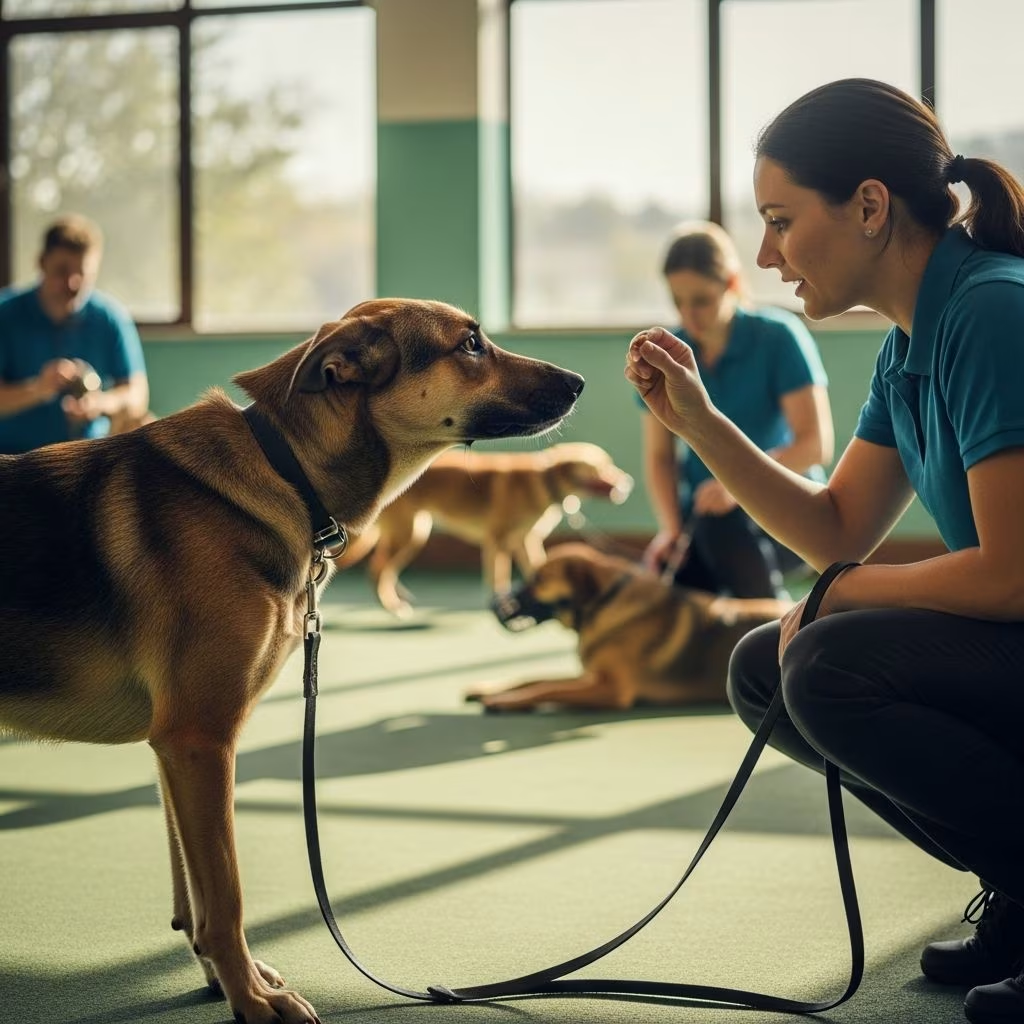
Aggressive behavior in dogs often stems from fear, anxiety, or past experiences, but with structured training, owners can guide their pets toward calmer interactions. This article outlines practical, reward-based approaches to address aggression, emphasizing safety and long-term success.
Understanding the Roots of Canine Aggression
Dog aggression manifests in various forms, including fear-based reactions, resource guarding, or territorial responses. Recognizing these triggers is the foundation of effective rehabilitation. For instance, a dog might growl at strangers due to insufficient socialization or snap over food bowls from protective instincts.
Key types include:
- Fear aggression: Triggered by perceived threats, leading to defensive bites or barking.
- Possessive aggression: Occurs when dogs guard toys, food, or spaces.
- Leash reactivity: Common during walks, where frustration builds from restricted movement.
Early identification through observation helps tailor interventions, preventing escalation.
Foundational Principles for Safe Training
Successful rehabilitation prioritizes positive reinforcement over punishment, fostering trust between dog and owner. Reward calm behaviors with treats, praise, or play to associate good outcomes with non-aggressive responses.
Establish a consistent routine: predictable schedules for meals, walks, and play reduce anxiety. Management tools like leashes, gates, and muzzles ensure safety during initial stages.
| Principle | Benefit | Example Application |
|---|---|---|
| Consistency | Builds predictability | Same command cues daily |
| Positive Rewards | Reduces stress | Treats for ignoring triggers |
| Safety First | Prevents incidents | Muzzle during outings |
Core Techniques: Desensitization and Counter-Conditioning
Desensitization involves gradual exposure to triggers at sub-threshold levels, preventing overwhelm. Start far from the stimulus—say, 50 feet from another dog—then reward relaxation, slowly closing the distance as tolerance builds.
Counter-conditioning pairs triggers with positives: if doorbell ringing sparks barking, offer high-value treats each time it sounds, reshaping emotional responses from fear to anticipation.
Implement in sessions:
- Identify lowest trigger intensity.
- Expose briefly, reward immediately.
- Increase intensity only after success.
- Track via journal or video.
Studies show these methods reduce aggression by up to 35% in 12 weeks.
Building Obedience for Control
Master basic commands to redirect attention: “sit,” “stay,” and “leave it” interrupt aggressive impulses. Practice in low-distraction settings first, then generalize to real scenarios.
For “leave it,” place a treat on the floor, cover if needed, reward from your hand when ignored. This builds impulse control, vital for reactive dogs.
Incorporate operant conditioning: reward desired actions to increase frequency, like settling quietly for attention.
Enhancing Mental and Physical Wellness
Exercise burns energy but must suit the dog’s temperament—avoid high-arousal play. Opt for structured walks and mental games like puzzle toys or scent work to boost confidence.
Create a safe retreat space, such as a crated area with bedding, for overwhelmed moments. Enrichment reduces boredom-fueled aggression.
Daily routine example:
- Morning: Calm walk with commands.
- Midday: Puzzle feeder session.
- Evening: Tethered relaxation training.
Advanced Strategies for Stubborn Cases
For severe aggression, integrate variable rewards to mimic real life, strengthening retention. Shape behaviors incrementally: reward partial successes toward complex goals like polite greetings.
Technology aids: apps track progress; virtual simulations expose safely. Always vet-check for pain contributing to irritability.
Balanced approaches combine positives with clear boundaries, avoiding confrontation.
The Role of Professional Guidance
DIY works for mild cases, but certified trainers assess history, triggers, and health via evaluations. They craft personalized plans, often including in-home sessions.
Seek force-free certified professionals (e.g., CPDT-KA) emphasizing science-backed methods.
Common Pitfalls and How to Avoid Them
Avoid:
- Flooding: Over-exposure causing shutdown or worsening.
- Inconsistency: Mixed signals confuse dogs.
- Punishment: Heightens fear, risking bites.
Progress slowly; plateaus are normal—adjust based on data.
Realistic Expectations and Measuring Success
Rehabilitation takes weeks to months; celebrate small wins like reduced barking duration. Use metrics: frequency of incidents pre/post-training.
Long-term: Maintain routines to prevent regression.
Frequently Asked Questions
Can all aggressive dogs be rehabilitated?
Most can improve significantly with commitment, though rare cases may need permanent management.
Is positive reinforcement enough for dominant aggression?
Yes, it addresses root emotions effectively, outperforming aversives.
How long until I see results?
Noticeable changes in 4-12 weeks with daily practice.
Should I use a muzzle?
Yes, during training for safety; train comfort gradually.
What if my dog bites?
Prioritize safety, consult pros immediately; document for vets/trainers.
References
- Mastering Understanding Dog Aggression Training Techniques Fully — The Collar Club Academy. 2023. https://www.thecollarclubacademy.com/blog/mastering-understanding-dog-aggression-training-techniques-fully
- Effective Aggressive Dog Training Methods for a Safer Home — Mias Muzzles. 2024. https://miasmuzzles.com/effective-aggressive-dog-training-methods-for-a-safer-home/
- Training Aggressive Dogs: Understanding Dominant and Fearful Aggression — The Online Dog Trainer. 2023. https://theonlinedogtrainer.com/training-aggressive-dogs-understanding-dominant-and-fearful-aggression/
- Tackling Dog Aggression With Training — The Dog Wizard. 2024. https://thedogwizard.com/problems/aggression-rehab/
- Positive Reinforcement and Aggressive Dog Training — Michael’s Dogs. 2022-03-09. https://www.michaelsdogs.com/2022/03/09/positive-reinforcement-and-aggressive-dog-training/



