

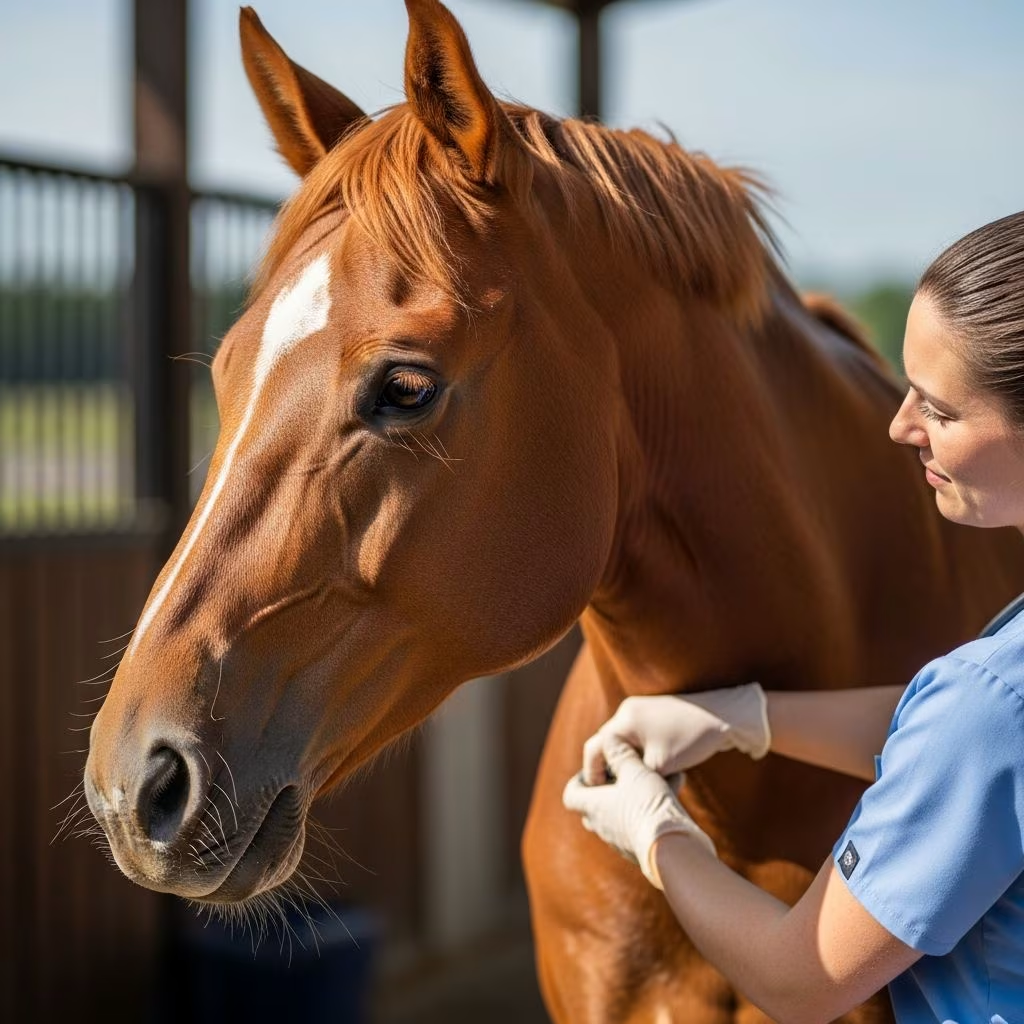
Mares exhibit a unique reproductive pattern known as seasonal polyestry, cycling multiple times during spring and summer months. Effective estrus regulation allows breeders to align ovulation timing with stallion availability, synchronize groups for embryo transfer, or suppress heat in competition horses. This guide delves into physiological foundations, key hormones, protocols, and practical applications for optimal reproductive management.
Understanding the Mare’s Reproductive Physiology
The equine estrous cycle averages 21 days, split into estrus (5-7 days of sexual receptivity) and diestrus (14-16 days of non-receptivity). This rhythm is governed by interactions between the hypothalamus, pituitary gland, ovaries, and uterus.
Daylight length influences the cycle via melatonin suppression in the pineal gland, signaling the brain to initiate gonadotropin-releasing hormone (GnRH) production. GnRH prompts follicle-stimulating hormone (FSH) and luteinizing hormone (LH) release from the pituitary, driving ovarian follicle growth.
- Follicular Phase (Estrus): FSH stimulates multiple follicles to mature; dominant ones produce estrogen, causing behavioral signs like tail raising, frequent urination, and stallion acceptance.
- Ovulation Trigger: Rising estrogen induces an LH surge ~36-48 hours before ovulation, releasing the oocyte from the dominant follicle.
- Luteal Phase (Diestrus): The ruptured follicle forms the corpus luteum (CL), secreting progesterone to maintain uterine receptivity for pregnancy.
- Cycle Reset: Without pregnancy, uterine prostaglandin F2α (PGF2α) lyses the CL, dropping progesterone and restarting estrus.
Transitional periods in early spring feature erratic cycling with multiple small follicles or hemorrhagic anovulatory follicles, complicating natural breeding.
Key Hormones in Estrus Manipulation
Several hormones and analogs mimic or override natural signals to control cycle phases precisely.
| Hormone/Analog | Primary Role | Typical Effect Timeline |
|---|---|---|
| Progestogens (e.g., Altrenogest) | Suppresses LH surge; mimics diestrus | Estrus 2-5 days post-withdrawal |
| Prostaglandin (PGF2α) | Lyses CL; ends diestrus | Estrus in 2-4 days; ovulation 7-12 days |
| hCG or Deslorelin (GnRH agonist) | Induces LH surge for ovulation | Ovulation ~36 hours post-injection |
| FSH/LH Analogs | Stimulates follicle development | Cycling induction in 80% of anestrus mares |
Suppressing Estrus for Performance Horses
Show or racing mares often display disruptive estrus behaviors, impacting focus and safety. Progestogen therapy provides reliable suppression without affecting long-term fertility.
Altrenogest (Regu-Mate®), an FDA-approved oral progestin, is administered daily at 0.044 mg/kg. It elevates progesterone-like activity, blocking LH and estrus signs. Treatment can continue through competition seasons, with mares resuming normal cycles upon cessation.
Historical methods like cattle progesterone implants proved ineffective in equines due to poor absorption and have been discontinued. Combined altrenogest-progesterone formulations from compounding pharmacies offer alternatives for resistant cases, though efficacy varies.
Synchronization Protocols for Breeding Programs
Coordinating estrus in multiple mares maximizes efficiency in artificial insemination (AI), fresh-cooled semen use, or embryo transfer (ET). Synchronization targets donor-recipient ovulation alignment within 1-3 days.
Standard Prostaglandin-Progestogen Protocol
- Administer PGF2α to lyse any existing CL (Day 0).
- Begin daily altrenogest from Day 0 for 10-14 days to mimic diestrus.
- Stop progestogen and give second PGF2α dose on withdrawal day.
- Estrus appears in 2-4 days; monitor follicles via ultrasound.
- Inject hCG or deslorelin when dominant follicle reaches 35-40mm for timed ovulation.
This yields tight estrus groups, reducing breeding attempts per cycle and improving pregnancy rates.
Double Prostaglandin Method (Simpler Option)
For maiden or barren mares without active CLs, two PGF2α doses 14 days apart induce uniform estrus ~3 days after the second injection. Success rates approach 90% in cycling mares.
Inducing Cycling Outside Breeding Season
Anestrus mares (fall/winter) resist natural breeding due to low GnRH/FSH/LH. Light therapy (16 hours/day) combined with hormones advances the breeding season by 1-2 months.
GnRH implants or twice-daily injections initiate cycling in ~80% of treated mares, though early pregnancy loss risks are higher (~50% success). Direct FSH infusions outperform GnRH in some studies, promoting robust follicles even in deep anestrus.
Progestogen priming during anestrus builds pituitary LH stores; abrupt withdrawal triggers a surge, jump-starting the cycle.
Advanced Techniques: Ovulation Induction and ET
Precise ovulation timing is critical for AI with limited semen or ET. Human chorionic gonadotropin (hCG, 1500-3000 IU IV) mimics LH, inducing ovulation in 80-90% of estrus mares with mature follicles. Repeat use may induce antibodies, reducing response.
Deslorelin acetate implants (Ovuplant®) provide sustained GnRH agonism, with ovulation in 36-42 hours. Implants are removed post-ovulation to prevent prolonged LH suppression.
For ET, recipients receive progestogen post-embryo transfer to support implantation until the donor’s CL forms.
Potential Risks and Monitoring
Hormonal therapies are safe when dosed correctly but require veterinary oversight. Altrenogest demands gloves to avoid human progesterone effects. Overuse of hCG risks refractoriness; deslorelin may cause CL anovulation if left in too long.
Ultrasound is essential for follicle tracking (daily from Day 2 post-PGF), progesterone assays confirm CL function, and teasing evaluates receptivity.
- Monitor for injection site reactions or behavioral changes.
- Avoid in pregnant mares unless supplementing low progesterone.
- Transitional mares may need extended protocols.
Practical Considerations for Breeders
Costs vary: altrenogest ~$0.50-1/day/mare; hCG $25-50/dose. Facilities need teasing areas, ultrasound equipment, and hormone storage. Success hinges on mare history, season, and protocol adherence.
Integrate with nutrition (adequate body condition) and health checks to boost conception rates above 70%.
Frequently Asked Questions (FAQs)
Can all mares be synchronized?
Most cycling mares respond well; anestrus or transitional cases may require preliminary induction.
Is Regu-Mate safe for long-term use?
Yes, FDA-approved for mares; no fertility impact post-treatment.
How soon after prostaglandin can I breed?
Estrus starts 2-4 days later; breed on standing heat with ultrasound confirmation.
What if ovulation doesn’t occur after hCG?
Re-treat after 7 days if follicle persists; check for antibodies with serial use.
Does light therapy alone work?
It advances cycles but pairs best with hormones for reliability.
References
- Estrus Manipulation in Horses: Managing the Mare’s Reproductive Cycle — Mad Barn. 2023. https://madbarn.com/estrus-manipulation-in-mares/
- Reproductive Management of the Mare — Oklahoma State University Extension. 2022-10-01. https://extension.okstate.edu/fact-sheets/reproductive-management-of-the-mare.html
- Control of Estrus in Mares — Steinbeck Peninsula Equine Clinics. 2023. https://www.steinbeckpeninsulaequine.com/post/control-of-estrus-in-mares
- The Use of Hormones in Regulating Mares — Mixlab. 2024. https://mixlab.com/blog/the-use-of-hormones-in-regulating-mares
- Hormonal Management of Mares (Proceedings) — DVM360. 2023. https://www.dvm360.com/view/hormonal-management-mares-proceedings
- Anatomy, Physiology and Reproduction in the Mare — Ontario Ministry of Agriculture, Food and Rural Affairs (.gov). 2022. http://www.ontario.ca/page/anatomy-physiology-and-reproduction-mare
- Understanding Reproductive Events in the Mare for Successful Breeding Programs — University of Georgia CAES (.edu). 2023. https://fieldreport.caes.uga.edu/publications/B1434/understanding-reproductive-events-in-the-mare-for-successful-breeding-programs/



