

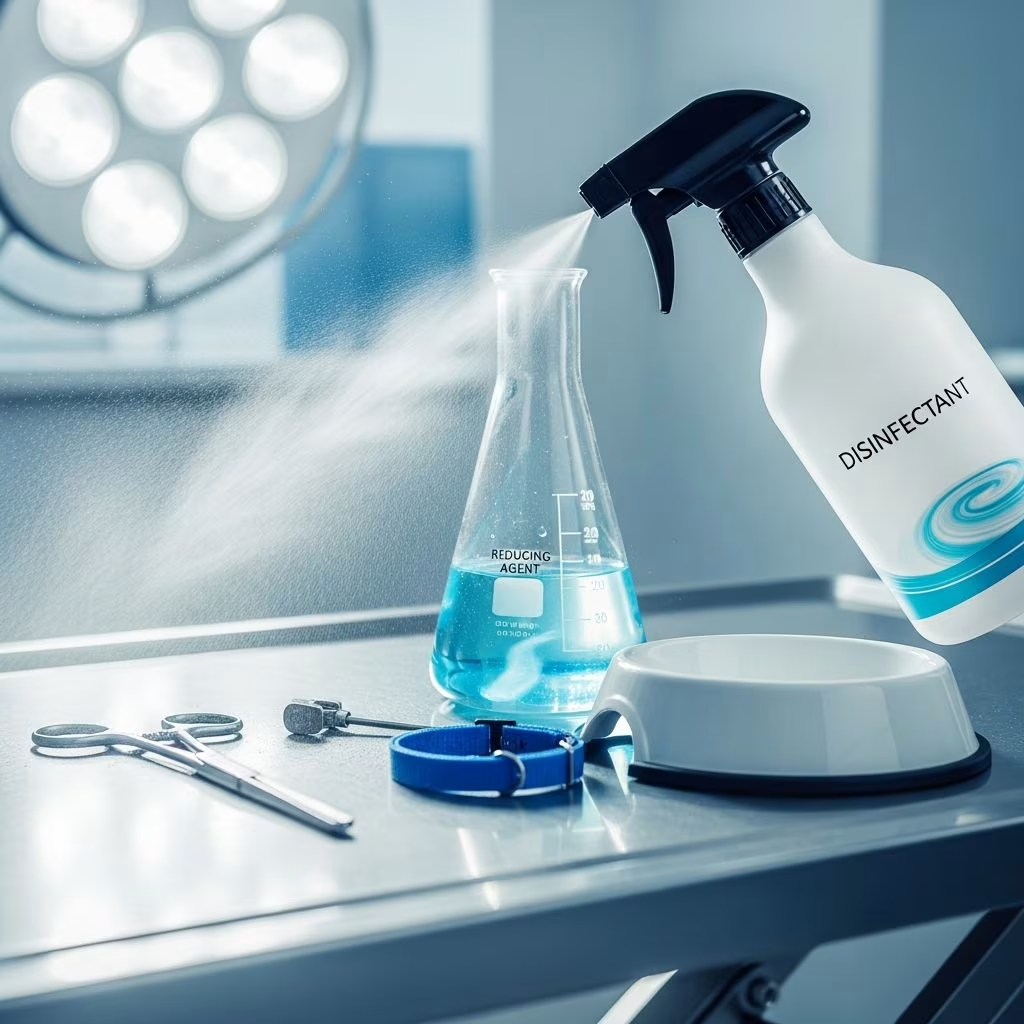
Reducing agents play a crucial role in veterinary medicine by acting as potent antiseptics and disinfectants to combat microbial contamination in animal environments, surgical sites, and instruments. These chemical compounds, primarily aldehydes and related substances, disrupt microbial structures through oxidation-reduction reactions, offering broad-spectrum activity against bacteria, viruses, fungi, and spores.
Understanding Reducing Agents and Their Antimicrobial Power
Reducing agents derive their name from their ability to participate in redox reactions that damage essential components of microorganisms. In veterinary contexts, they are favored for their stability in organic matter and non-corrosive properties on common materials like metals and fabrics. Unlike other disinfectants, these agents maintain efficacy even in challenging conditions, making them indispensable for farms, clinics, and shelters.
Key examples include formaldehyde-based solutions and dialdehydes like glutaraldehyde. These substances cross-link proteins and nucleic acids, halting microbial reproduction and leading to cell death. Their use spans from surface disinfection in livestock facilities to sterilizing endoscopic tools in small animal practices.
Primary Types of Reducing Agents for Animal Use
- Formaldehyde Solutions: Available as formalin, a 37% aqueous solution stabilized with methanol, formaldehyde at 1-10% concentrations serves as a versatile disinfectant. It excels in tissue preservation and combating gram-negative bacteria like those causing footrot in sheep.
- Glutaraldehyde Formulations: Alkaline solutions (pH 7.5-8.5) at 1-2% in isopropanol provide superior germicidal action over formaldehyde, targeting spores and viruses effectively for instrument sterilization.
- Ortho-Phthalaldehyde (OPA): A modern alternative at 0.55% concentration, OPA offers rapid action with minimal odor and irritation, ideal for endoscopes despite potential protein staining.
These agents are selected based on the target pathogen and application site, ensuring optimal microbial reduction without compromising animal or handler safety.
Mechanisms of Action Against Pathogens
Reducing agents penetrate microbial cell walls, alkylating amino and sulfhydryl groups in proteins and nucleic acids. Formaldehyde’s small molecular size allows deep penetration, fixing tissues at 10% while disinfecting at lower dilutions. Glutaraldehyde’s dialdehyde structure enhances reactivity, achieving sporicidal effects in minutes.
In practice, OPA demonstrates faster mycobacterial kill times than glutaraldehyde, though it requires extended contact for resistant Pseudomonas strains. Stability across pH ranges (3-9) makes OPA reliable for diverse veterinary tools.
| Agent | Concentration | Key Targets | Contact Time |
|---|---|---|---|
| Formaldehyde | 1-10% | Bacteria, viruses, footrot agents | Variable, hours for premises |
| Glutaraldehyde | 1-2% | All microbes, spores | 10-30 min |
| OPA | 0.55% | Mycobacteria, resistant strains | 5-15 min |
Applications in Veterinary Settings
In large animal husbandry, 4% formaldehyde footbaths control Dichelobacter nodosus in ovine footrot, preventing lameness outbreaks. Clinics use glutaraldehyde soaks for sterilizing surgical instruments, ensuring asepsis during procedures. OPA’s compatibility with flexible endoscopes supports minimally invasive diagnostics in companion animals.
Premises disinfection in piggeries requires evacuation post-formaldehyde spray due to fumes, prompting research into safer alternatives. For cadavers and histopathology, 10% formalin preserves samples reliably.
Safety Considerations and Hazards
While effective, reducing agents pose risks: formaldehyde is carcinogenic and irritating, necessitating ventilation and PPE. Glutaraldehyde sensitizes skin, causing dermatitis, and irritates airways. OPA, though milder, stains skin gray and demands careful handling.
- Always use gloves and eye protection.
- Ventilate areas thoroughly post-application.
- Monitor for resistance in Pseudomonas, extending OPA exposure to 15 minutes if needed.
Veterinary protocols emphasize dilution accuracy and contact times to balance efficacy and safety.
Comparing Reducing Agents with Other Disinfectants
Reducing agents outperform alcohols in organic-laden environments, where ethanol’s rapid evaporation limits action. Unlike chlorhexidine, which binds to skin for residual effects, aldehydes provide immediate, broad kill but lack persistence.
Peroxides like accelerated hydrogen peroxide (AHP) offer 6-7 log reductions quickly, complementing aldehydes in clinics. Iodophors lose potency in organics, unlike stable formaldehyde.
Best Practices for Implementation
Integrate reducing agents into rotation protocols to prevent resistance. Clean surfaces first to remove organics, then apply disinfectants. Test efficacy via log reduction targets: 4-log for antiseptics, 6-log for high-risk areas.
For footbaths, refresh formaldehyde solutions daily. Sterilize instruments per manufacturer guidelines, rinsing post-glutaraldehyde to avoid residues.
Emerging Alternatives and Innovations
Ongoing research seeks non-toxic substitutes amid formaldehyde bans in some regions. OPA’s rise addresses glutaraldehyde’s irritancy, while peracetic acid provides temperature-independent action. Sodium bicarbonate at 5% achieves 4-log viral reductions affordably for food surfaces.
Frequently Asked Questions (FAQs)
What is the ideal concentration for formaldehyde in animal footbaths?
A 4% solution effectively targets footrot pathogens, refreshed regularly to maintain potency.
Can glutaraldehyde be used on live animal skin?
No, its caustic nature restricts it to inanimate surfaces; use milder antiseptics for wounds.
How does OPA compare to glutaraldehyde in veterinary endoscopy?
OPA acts faster on mycobacteria with less irritation but requires caution against staining.
Are reducing agents effective against spores?
Yes, glutaraldehyde excels sporicidally, outperforming many alternatives.
What precautions mitigate formaldehyde exposure risks?
Evacuate premises, use respirators, and ensure ventilation for hours post-application.
Conclusion: Strategic Use for Microbial Control
Reducing agents remain cornerstones of veterinary disinfection, balancing potency with practical application. By understanding their strengths and limitations, practitioners enhance animal welfare and biosecurity.
References
- Reducing Agents as Antiseptics and Disinfectants for Use With Animals — Merck Veterinary Manual. 2023-10-15. https://www.merckvetmanual.com/pharmacology/antiseptics-and-disinfectants/reducing-agents-as-antiseptics-and-disinfectants-for-use-with-animals
- Overview of Antiseptics and Disinfectants for Use With Animals — Merck Veterinary Manual. 2023-10-15. https://www.merckvetmanual.com/pharmacology/antiseptics-and-disinfectants/overview-of-antiseptics-and-disinfectants-for-use-with-animals
- Antiseptics and Disinfectants — Veterian Key. 2022-05-20. https://veteriankey.com/antiseptics-and-disinfectants/
- GUIDELINE for Disinfectant choice in feline veterinary hospitals — ABCD cats & vets. 2023-01-10. https://www.abcdcatsvets.org/guideline-for-disinfectant-choice-in-feline-veterinary-hospitals-shelters-and-cat-households/
- Small animal patient preoperative preparation: a review — Frontiers in Veterinary Science. 2024-05-15. https://www.frontiersin.org/journals/veterinary-science/articles/10.3389/fvets.2024.1374826/full



