
Redirecting Reactive Dogs: The U-Turn Strategy
Master the U-turn technique to manage reactive behavior and create calmer walks.
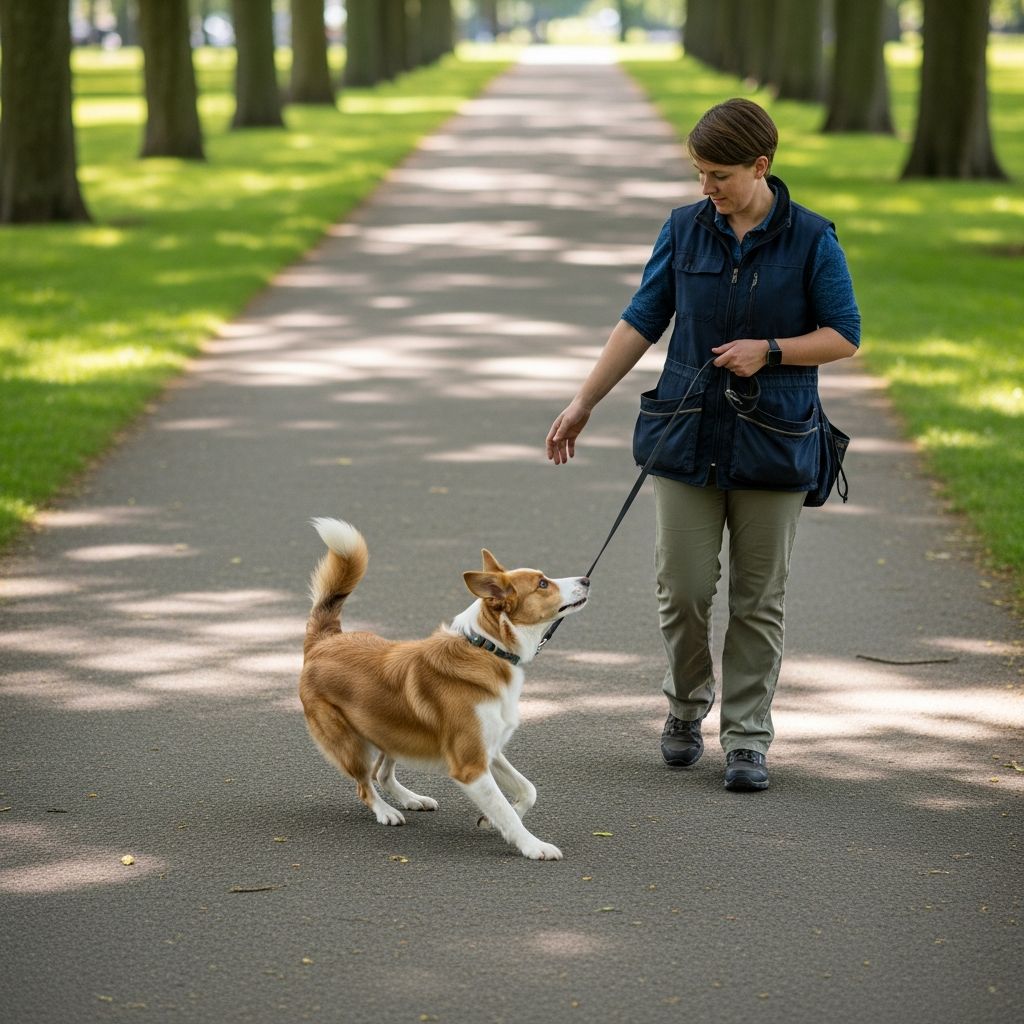
Walking a reactive dog can be stressful and unpredictable. When your dog spots a trigger—whether it’s another dog, a person, or an unfamiliar sound—the instinct is often to freeze, lunge, or pull aggressively. These moments can feel overwhelming for both you and your dog, but there’s an effective tool that many professional trainers recommend: the U-turn cue. This simple yet powerful technique allows you to redirect your dog away from potential conflicts before they escalate, giving you both a sense of control and confidence on your walks.
Understanding the U-Turn as a Management Tool
The U-turn is not a cure for reactivity, but rather a management strategy that provides immediate relief during challenging moments. When you notice your dog becoming uncomfortable or alert to a potential trigger, a well-timed U-turn allows you to create physical distance between your dog and the stimulus. This distance is crucial because it lowers the intensity of your dog’s arousal level and prevents them from crossing their reactivity threshold—the point at which their behavior becomes uncontrollable.
Unlike forcing your dog to face their triggers or yanking them away with tension on the leash, the U-turn employs a collaborative approach. You’re not fighting against your dog’s impulses; instead, you’re redirecting them toward a more desirable behavior. This distinction is important because harsh corrections can actually increase anxiety and make reactivity worse over time.
The Foundation: Building the U-Turn Before You Need It
The most critical mistake many dog owners make is attempting to teach the U-turn for the first time when their dog is already triggered. This approach rarely works because your dog’s brain is in a heightened state of arousal, making it nearly impossible for them to learn or respond to new cues.
Instead, the U-turn must be established as an automatic behavior through consistent practice in low-stress environments. Think of it like teaching any other obedience command: you wouldn’t ask your dog to sit for the first time in a chaotic dog park. Similarly, the U-turn requires a foundation of positive repetitions before being deployed in real-world situations.
Selecting Your Verbal Cue
Your first step is choosing a verbal cue that feels natural and is easy to say with enthusiasm and clarity. Common options include “This way,” “Turn around,” “Let’s go,” or “With me.” The cue should be:
- Short and distinct so your dog can easily distinguish it from other commands
- Natural to your speaking style so you can deliver it with genuine confidence
- Consistent every single time you use it
- Delivered in an upbeat tone that communicates positivity rather than panic
Your tone matters tremendously. When you sound calm and encouraging, your dog will be more likely to respond eagerly. Conversely, if your cue sounds frantic or anxious, your dog will pick up on that tension and may become more reactive rather than cooperative.
The Luring Process
Once you’ve selected your cue, begin practicing in your home or another familiar, quiet space. With your dog walking beside you, say your chosen cue and use a high-value treat held close to their nose to guide them into a U-shaped turn—essentially asking them to rotate and face the direction from which you came.
As your dog follows the treat and completes the turn, mark this success immediately with a “yes” or a clicker sound, then reward generously. Many trainers recommend offering 2-3 treats during the turn rather than a single reward, which helps your dog maintain focus on you and builds the habit of following your directional changes.
Progressive Training Steps
Phase One: Establishing the Behavior
For the first one to two weeks, practice the U-turn in your home, backyard, or a completely quiet, familiar location. Perform multiple repetitions daily—anywhere from 5 to 10 short sessions of 3-5 successful turns each. The goal is to make the behavior feel automatic to your dog.
During this phase, always lure the turn with a treat. Don’t worry about your dog responding without the lure yet; that comes later. Focus on creating a strong association between your verbal cue and the physical action of turning around.
Phase Two: Building Fluency Without the Lure
Once your dog consistently follows the lure and completes the turn, begin gradually removing the treat lure. Say your cue, make the physical turn yourself, and immediately reward your dog for following you. Most dogs will naturally follow their owner, especially if they’ve learned that following results in treats.
Continue practicing in calm environments until your dog responds to the verbal cue alone without needing the visual lure. This typically takes 2-4 weeks of consistent practice, depending on your dog’s learning speed and how frequently you practice.
Phase Three: Adding Mild Distractions
Only after your dog demonstrates reliable U-turn responses at home should you begin introducing minor distractions. Start by practicing on quiet walks where there are fewer variables. Use your U-turn cue occasionally when your dog is calm—not just when they’re about to react. This creates positive anticipation around the cue.
Reward heavily during this phase. Every successful turn, especially in slightly more stimulating environments, deserves multiple treats or praise. You’re building confidence and positive associations.
Recognizing Early Warning Signs
Part of effective U-turn implementation involves learning to recognize the subtle signs that your dog is becoming uncomfortable or alert to a trigger. By catching these early signals, you can execute a U-turn before your dog becomes fully reactive.
Common early warning signs include:
- Sudden tensioning of the leash or body stiffness
- Increased alertness or a shift in ear position
- Whining, growling, or barking
- Changes in breathing or panting
- Prolonged staring or fixation on something
- Pulling in a particular direction
- Avoidance behaviors such as hiding or pulling away
The moment you notice any of these signs, confidently give your U-turn cue and move away. The key is to act before your dog reaches their threshold—that point of no return where reactivity becomes explosive.
The Importance of Reengagement
After successfully executing a U-turn and creating distance, the work isn’t finished. Many handlers make the mistake of simply walking away and assuming the problem is solved. Instead, you should actively reengage your dog’s attention once you’ve moved to a calmer location.
Reengagement might involve:
- Asking for a sit or other known command and rewarding
- Playing a brief game with a toy
- Offering several high-value treats in succession
- Changing your walking direction intermittently to keep their focus on you
This reengagement serves multiple purposes. It signals to your dog that the stressful moment has passed, it redirects their brain away from the trigger entirely, and it reinforces that following your lead results in positive outcomes. Over time, your dog begins to anticipate this positive reengagement, making them more responsive to the U-turn cue.
What to Do When Your Dog Remains Stressed
Sometimes, even after a U-turn and creating distance, your dog may still show signs of anxiety or heightened arousal—tail tucking, continued barking, or reluctance to move forward. When this happens, don’t hesitate to execute another U-turn.
Move even further away from the trigger, or curve diagonally into a more open area where your dog feels less cornered or threatened. The goal is to create enough physical and psychological distance that your dog’s nervous system can begin to regulate. Some dogs require multiple U-turns in succession to reach a calm state.
Critical Principles for Success
While teaching and implementing the U-turn, keep these foundational principles in mind:
| Principle | Application |
|---|---|
| Act Early | Use your U-turn at the first sign of reactivity, not when your dog is fully escalated |
| Never Use Leash Tension | Lure, don’t force. Yanking increases anxiety and worsens reactivity |
| Maintain a Clear Cue | Use the same verbal and physical signals every time for consistency |
| Reward Generously | Every successful turn deserves multiple treats or high-value rewards |
| Meet Your Dog Where They Are | Don’t expect a dog with severe reactivity to perform perfectly immediately |
Common Mistakes to Avoid
Several pitfalls can undermine your U-turn training:
- Training too late: If your dog is already lunging or barking aggressively, the U-turn is much harder to execute effectively. Always aim for prevention.
- Using the leash for power: Dragging or yanking your dog reinforces that reactivity stems from force, not choice.
- Inconsistent practice: If you only use the U-turn during emergencies, your dog won’t have developed the automaticity needed for reliable responses.
- Skipping reengagement: Without refocusing your dog’s attention, they may remain fixated on the trigger even after moving away.
- Delivering the cue without conviction: Uncertain or tentative cues won’t inspire your dog to follow confidently.
Integration Into Daily Walks
Once your dog is reliable with the U-turn in practice settings, begin using it regularly on walks—even when you don’t see an immediate trigger. Occasionally ask your dog to U-turn, then reward heavily. This serves two purposes: it maintains their fluency with the skill, and it prevents your dog from learning to react only to the cue itself when you’re in high-stakes situations.
Think of the U-turn as a communication tool that says, “Hey, let’s go this way instead.” The more casually you use it during calm moments, the more naturally your dog will respond when you really need it.
Complementing Training With Management
The U-turn is best used alongside other reactivity management strategies. Adjust your walking schedule to avoid peak times when other dogs or high traffic is present. Consider using a front-clip harness, which provides better control and discourages pulling. And always maintain loose-leash walking whenever possible, as tension translates to tension in your dog’s nervous system.
Remember that the U-turn addresses immediate situations but doesn’t resolve the underlying reactivity. Pair it with desensitization and counterconditioning work, possibly with a professional trainer, for long-term improvement in your dog’s behavior.
Frequently Asked Questions
How long does it take to teach a U-turn?
Most dogs learn a basic U-turn in 2-4 weeks with consistent daily practice. However, proofing it to work reliably in real-world situations can take several months.
Can older dogs learn the U-turn?
Absolutely. Age doesn’t prevent learning; all dogs can acquire this skill at any stage of life.
What treats work best for U-turn training?
Use treats your dog finds highly rewarding—small pieces of chicken, cheese, or specialized dog treats. Variety keeps training interesting.
Should I always reward the U-turn?
Initially, yes. As your dog becomes more reliable, you can intermittently reward, but consistent reinforcement prevents extinction of the behavior.
References
- The Power of the U-Turn for Reactive Dogs — The Training of Dogs. 2024. https://www.thetrainingofdogs.com/post/the-power-of-the-u-turn-for-reactive-dogs
- Emergency U-Turn — Positively.com (Victoria Stilwell Academy). 2024. https://positively.com/dog-training/article/canine-life-skills-emergency-u-turn
- How to Train an Emergency U-Turn for Better Leash Reactivity Results — YouTube (Training video). 2024. https://www.youtube.com/watch?v=K4oOcv-XMpM
- Teach an Emergency U-Turn — Karen Pryor Academy. 2024. https://karenpryoracademy.com/teach-an-emergency-u-turn/
- Teaching Your Dog A U Turn — YouTube (All Dogs Go to Kevin). 2024. https://www.youtube.com/watch?v=kmwamQ8-FZk
Similar Articles








Read full bio of medha deb




