

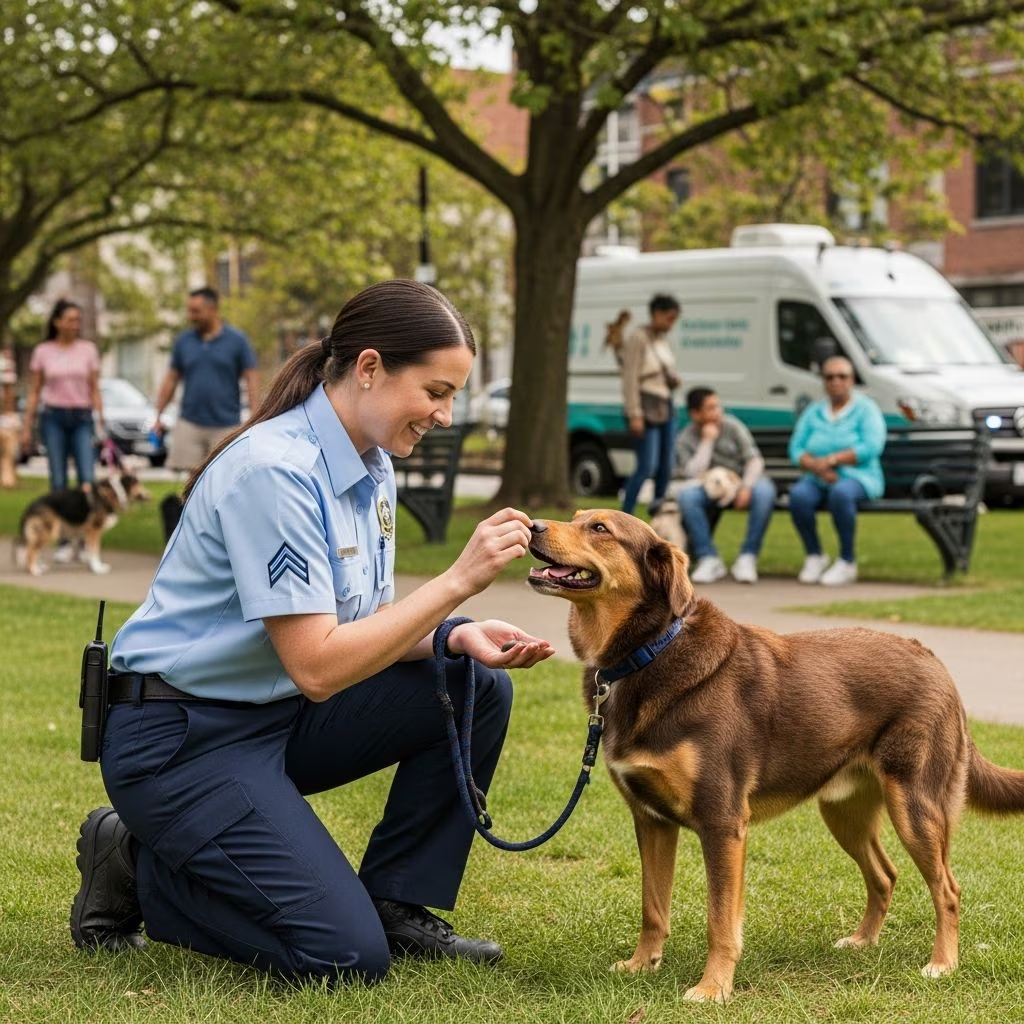
The Evolution of Animal Control: From Dogcatcher to Field Services Liaison
The role of animal control has undergone a dramatic transformation over the past several decades. What began as a position focused solely on removing stray animals from city streets has evolved into a multifaceted profession centered on community engagement, animal welfare, and public health. The term “dogcatcher” evokes images of outdated practices and adversarial relationships between animal control and the communities they serve. Today, forward-thinking agencies are redefining this role as “field services liaisons,” professionals who bridge the gap between communities and animal welfare services. This shift represents more than just a change in terminology; it reflects a fundamental reimagining of how animal control can serve both animals and the communities in which they live.
Understanding this transformation is essential for municipalities, animal welfare organizations, and community members who recognize that traditional approaches to animal control are no longer effective or acceptable. The evolution from dogcatcher to field services liaison encompasses five critical reasons why this role redefinition matters for animal welfare, community safety, and public health.
Reason 1: Shifting from Punishment to Collaboration
Historically, animal control operated under a model that viewed the public with suspicion and relied heavily on punitive measures. This adversarial approach treated community members as part of the problem rather than as potential partners in solving animal welfare issues. The traditional dogcatcher role was primarily concerned with enforcement—catching strays, responding to complaints, and removing animals from the streets. However, this enforcement-first mentality often resulted in unnecessary deaths and strained relationships between animal control agencies and the communities they served.
Modern field services liaisons, by contrast, operate under a collaborative framework that recognizes community members as valuable partners in achieving animal welfare goals. Rather than defaulting to a punitive model, field services professionals work with residents to develop practical solutions to animal-related issues. This might include educating pet owners about proper care, helping them navigate humane deterrents to keep unwanted animals off their property, or assisting in the search for lost pets within their neighborhoods. This collaborative approach has proven far more effective than traditional enforcement methods at addressing root-cause issues that put pets and people at risk.
Reason 2: Prioritizing Return-to-Owner Over Removal
One of the most significant practical differences between traditional dogcatcher roles and modern field services liaisons involves how they handle stray animals. Historically, catching a stray dog meant taking it to a shelter, where many animals faced uncertain fates. Today’s field services officers prioritize what is known as “return-to-home” strategies, attempting to reunite animals with their owners without bringing them into the shelter system at all.
This approach dramatically reduces shelter intake and improves outcomes for animals. Field services officers are trained to thoroughly investigate animal identification, even when pets lack obvious ID tags, microchips, or other conventional markers. They utilize community resources, neighborhood knowledge, and creative problem-solving techniques to locate owners. Agencies across the country have demonstrated that this commitment to field-based return efforts significantly increases success rates for animals without obvious identification. By reducing unnecessary shelter intake, field services liaisons not only save animals from the stress and danger of shelter environments but also free up shelter resources for animals that genuinely need care.
Reason 3: Expanding Services Beyond Animal Capture
The traditional dogcatcher position was narrowly defined: catch stray dogs. Modern field services liaisons, by contrast, provide a comprehensive range of services that reflect contemporary understanding of animal welfare and community needs. These expanded services include investigating allegations of animal abuse and mistreatment, providing rescue services for animals in distress, and offering information and education to pet owners about proper animal care.
Field services officers also play a critical role in investigating animal bites, placing animals under quarantine when necessary, and working to prevent the spread of diseases like rabies. They respond to emergency calls for rescue situations—whether it’s a cat hit by a car, a dog that has fallen through ice, or a wild animal that has become trapped. These rescue operations require specialized training and equipment that go far beyond what traditional dogcatchers were expected to possess. By expanding their role, field services professionals address complex community animal issues that require expertise, compassion, and sophisticated problem-solving skills.
Reason 4: Building Relationships and Community Trust
Field services liaisons understand that their effectiveness depends on the relationships they build within their communities. Unlike traditional dogcatchers, who often operated in relative isolation and were frequently viewed with suspicion or fear, modern field services professionals actively engage with residents. This includes being present in neighborhoods, attending community meetings, offering support when requested, and demonstrating genuine care for both animals and people.
When animal control officers engage meaningfully with their communities, they earn respect and establish the critical relationships necessary for effective service delivery. Community members are more likely to report animal abuse if they trust animal control. They are more willing to cooperate in lost-pet searches if they view officers as allies rather than adversaries. They are more open to receiving education about pet care and animal welfare if they see field services professionals as approachable and trustworthy. This relationship-building approach has transformed animal control from an agency that communities fear or resent into one that communities respect and support.
Reason 5: Enhancing Officer Safety and Professional Development
The expanded role of field services liaisons comes with increased responsibilities that demand professional development and comprehensive training. Traditional dogcatchers often received minimal training, but modern field services officers require education equivalent to municipal police training, particularly when investigating animal cruelty and potential crimes. This elevated standard of training protects both officers and the animals they serve.
Field services officers frequently encounter individuals involved in animal crimes who may also be engaged in other criminal activities, including drug manufacturing, firearms violations, or gang-related operations. These situations can be dangerous, making proper training and appropriate equipment essential. Additionally, officers benefit from collaborative relationships with local law enforcement, creating a supportive network that recognizes both police and animal control as law enforcement authorities working toward community safety. By investing in professional development, agencies demonstrate that they value their officers and recognize the importance and complexity of their work.
Key Responsibilities of Modern Field Services Liaisons
The position of field services liaison encompasses far more than the traditional dogcatcher role. These professionals handle a diverse array of responsibilities that require different skill sets and approaches:
- Lost and Found Pet Services: Utilizing community networks and resources to reunite lost pets with their families
- Stray Animal Response: Safely capturing and assessing stray animals, prioritizing return-to-owner outcomes
- Animal Rescue Operations: Responding to emergency situations requiring specialized training and equipment
- Abuse Investigations: Conducting thorough, professional investigations into allegations of animal cruelty and mistreatment
- Bite Investigations: Documenting incidents, conducting interviews, and placing animals under quarantine when necessary
- Community Education: Providing information and resources about pet care, humane animal handling, and responsible pet ownership
- Dangerous Dog Assessments: Making fair, evidence-based determinations about animal dangerousness based on behavior rather than breed
- Emergency Response: Providing 24-hour availability for animal-related emergencies and rescue situations
The Impact of Community-Based Field Services
The shift from traditional dogcatcher roles to community-based field services liaisons has produced measurable improvements in animal welfare outcomes. Agencies that have adopted this approach report significant reductions in shelter intake, increased return-to-owner rates, and improved community satisfaction. These outcomes demonstrate that redefining the role of animal control is not merely philosophical—it produces concrete, practical benefits for animals, communities, and the agencies themselves.
Community-supported sheltering represents a natural evolution in animal welfare work. By viewing community members as partners rather than adversaries, and by empowering residents through involvement in animal welfare efforts, agencies maximize the resources available for protecting vulnerable animals. This approach acknowledges that more than two-thirds of people consider pets to be beloved family members and that communities have both the capacity and desire to support animal welfare initiatives.
Professional Standards for Field Services Officers
Modern field services liaisons meet professional standards that reflect the complexity and importance of their work. The Best Friends Animal Society and other leading animal welfare organizations have developed comprehensive training programs and best practices that ensure officers are equipped to handle the diverse responsibilities of this role. These standards include:
- Criminal investigation training and certification
- Animal behavior assessment and handling techniques
- Community policing and engagement strategies
- Emergency response and rescue training
- Humane investigation protocols
- De-escalation and conflict resolution skills
- Understanding of local animal ordinances and laws
- Cultural competency and community relations training
Frequently Asked Questions About Field Services Liaisons
Q: What is the main difference between a dogcatcher and a field services liaison?
A: Traditional dogcatchers focused primarily on removing stray animals from streets through capture and shelter intake. Field services liaisons employ a community-based approach prioritizing return-to-owner, animal rescue, abuse investigation, and community engagement to achieve better outcomes for animals and safer, healthier communities.
Q: How do field services liaisons improve animal outcomes?
A: By prioritizing return-to-home strategies, offering rescue services, investigating abuse, and building community partnerships, field services liaisons significantly reduce unnecessary shelter intake and increase the likelihood that lost pets are reunited with their families.
Q: What training do field services officers receive?
A: Modern field services officers receive professional training equivalent to police officer training, including criminal investigation skills, animal behavior assessment, emergency response techniques, and community engagement strategies.
Q: How do community-based field services affect shelter operations?
A: When field services officers successfully return animals to their owners in the field, shelter intake decreases, allowing shelter staff to focus resources on animals that genuinely need care and services.
Q: Why is community engagement important for animal control?
A: Community members are more likely to report animal abuse, cooperate in lost-pet searches, and support animal welfare initiatives when they trust and respect their local animal control officers, making engagement essential for effectiveness.
Q: Are field services officers available 24/7?
A: Depending on agency size and call volume, many field services departments provide 24-hour coverage to respond to emergency situations, animal rescues, and urgent animal welfare concerns.
Q: How has the role of animal control changed regarding dangerous dog determinations?
A: Modern field services professionals make evidence-based assessments of animal dangerousness based on individual behavior and circumstances rather than breed, utilizing fair definitions that include consideration of “justified provocation.”
Conclusion: A New Era for Animal Control
The transformation from dogcatcher to field services liaison represents a fundamental shift in how communities approach animal welfare and public safety. This evolution reflects growing recognition that punitive enforcement is less effective than collaborative problem-solving, that community members are partners rather than adversaries, and that comprehensive professional services produce better outcomes for all stakeholders. As more agencies adopt the field services liaison model, communities benefit from safer neighborhoods, reduced animal shelter intake, improved animal welfare outcomes, and strengthened relationships between residents and the agencies that serve them. The redefinition of the dogcatcher role is not simply modernization—it is recognition that effective animal control is fundamentally about building community, preventing problems, and treating both animals and people with dignity and respect.
References
- Humane Animal Control Manual — Best Friends Animal Society and National Animal Care and Control Association. 2019. https://www.nacanet.org/wp-content/uploads/2019/03/Best-Friends-Humane-Animal-Control-Manual.pdf
- Redefining the Role of the ‘Dogcatcher’ — Best Friends Animal Society. https://bestfriends.org/network/resources-tools/redefining-role-dogcatcher
- Beyond the Scanner Webinar: Advanced Field Return to Home Techniques — Best Friends Animal Society. https://bestfriends.org/network/webinars-videos/beyond-scanner-webinar
- Field Services & Officers — Best Friends Animal Society. https://bestfriends.org/network/issues/field-services-officers
- Community-Supported Sheltering — Best Friends Animal Society. https://bestfriends.org/network/resources-tools/community-supported-sheltering



