

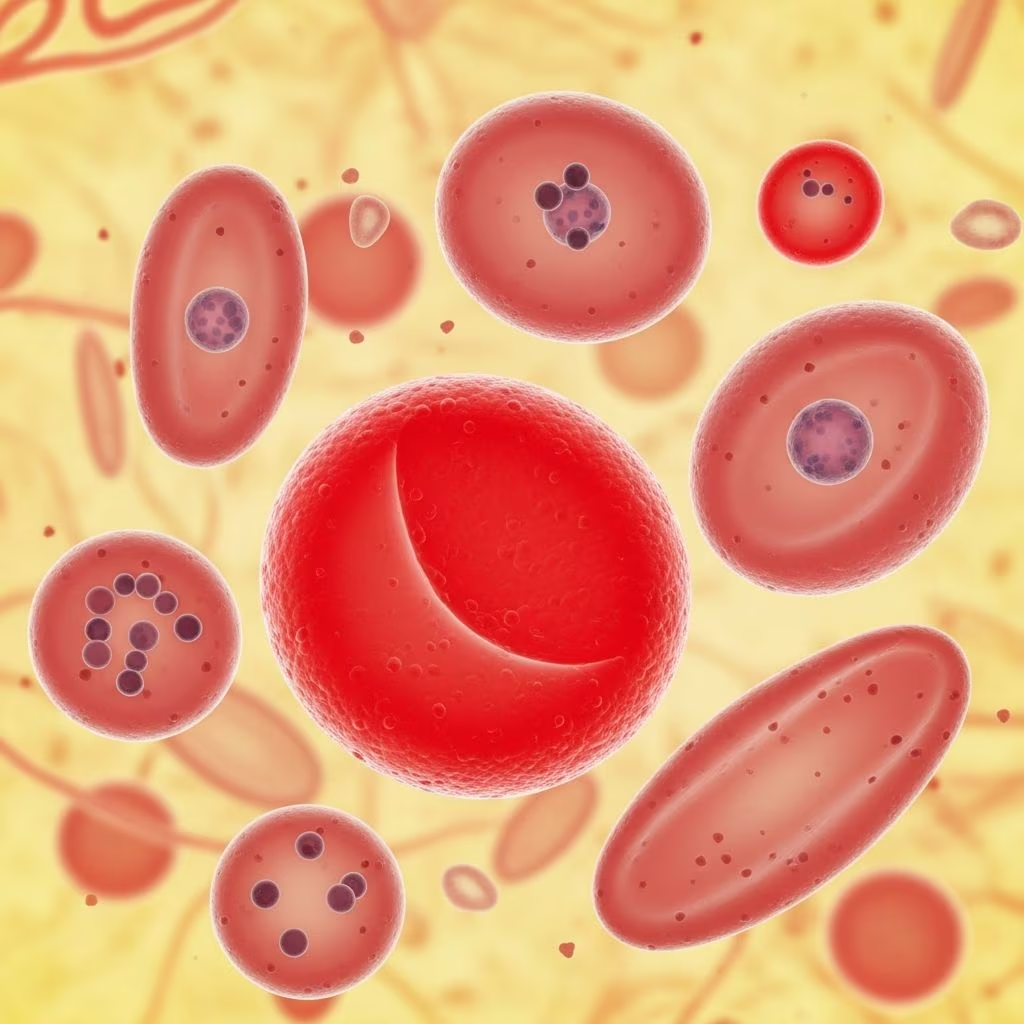
Red blood cells, known scientifically as erythrocytes, serve as the primary carriers of oxygen throughout an animal’s body. These specialized cells ensure that tissues receive the oxygen necessary for energy production and metabolic functions. Without them, vital processes would halt, leading to severe health issues.
The Essential Role of Erythrocytes in Oxygen Delivery
Erythrocytes are engineered for efficiency in transporting oxygen from the lungs to peripheral tissues. At the core of this function is **hemoglobin**, an iron-rich protein that binds oxygen molecules in the lungs and releases them where needed. This reversible binding allows hemoglobin to pick up oxygen under high-pressure conditions in the pulmonary capillaries and deliver it at lower pressures in systemic tissues, facilitating rapid diffusion.
In mammals, erythrocytes adopt a unique biconcave disc shape, which maximizes surface area for gas exchange while enabling flexibility to navigate narrow capillaries. This shape also aids in stacking, or rouleaux formation, which streamlines blood flow. Species variations exist: camelids like llamas and alpacas have oval-shaped cells, while avian erythrocytes retain nuclei and appear as large ovals, adapting to their high metabolic demands.
Production Process: From Stem Cells to Mature Cells
The journey of erythrocyte production, termed **erythropoiesis**, originates in the bone marrow. It begins with pluripotent stem cells that differentiate into committed erythroid progenitors. These progenitors undergo multiple divisions and maturation stages, culminating in the extrusion of the nucleus to form mature, anucleate erythrocytes in most mammals.
Regulation of this process hinges on **erythropoietin (EPO)**, a glycoprotein hormone primarily secreted by the kidneys in response to hypoxia. Low oxygen levels trigger renal sensors to boost EPO release, stimulating marrow proliferation and differentiation. In chronic kidney disease, diminished EPO production often results in non-regenerative anemia. Other factors, such as nutrient availability (iron, folate, vitamin B12), also influence production rates.
- Key stages of erythropoiesis: Stem cell commitment, progenitor proliferation, hemoglobin synthesis, nuclear extrusion, reticulocyte release.
- Reticulocytes, immature forms with residual RNA, mature in circulation over 1-2 days.
- Daily production matches destruction to maintain steady-state RBC mass.
Structural Adaptations Across Species
| Species Group | RBC Shape | Nucleus | Key Adaptation |
|---|---|---|---|
| Mammals (most) | Biconcave disc | Anucleate | High flexibility for microcirculation |
| Camelids | Oval/elliptical | Anucleate | Resistance to osmotic stress in arid environments |
| Birds | Oval | Nucleated | Sustained metabolism during flight |
| Reptiles/Amphibians | Oval | Nucleated | Variable oxygen affinity |
These adaptations reflect evolutionary pressures. Nucleated cells in non-mammals support longer lifespans and protein synthesis capabilities, while mammalian anucleate designs prioritize deformability.
Metabolic Machinery Sustaining RBC Function
Despite lacking mitochondria and nuclei, erythrocytes rely on anaerobic glycolysis as their primary energy pathway. Glucose, entering via facilitated diffusion independently of insulin, is metabolized to produce ATP and NADH. ATP powers ion pumps (Na+/K+ ATPase) that maintain membrane integrity, cell volume, and shape.
The hexose monophosphate shunt (pentose phosphate pathway) generates NADPH, crucial for countering oxidative stress by regenerating reduced glutathione. This antioxidant system protects hemoglobin and the membrane from damage by reactive oxygen species. Deficiencies in glycolytic enzymes, like pyruvate kinase, lead to ATP depletion, membrane rigidity, and hemolytic anemia.
Lifespan, Aging, and Removal Mechanisms
Mature erythrocytes circulate for 100-150 days in most mammals, varying by species (e.g., shorter in dogs at ~130 days, longer in horses at ~145 days). Senescence markers include reduced membrane flexibility, exposure of phosphatidylserine, and decreased ATP levels, signaling macrophages in the spleen, liver, and bone marrow for phagocytosis.
Extravascular hemolysis predominates: macrophages engulf aged cells, lysing them and processing hemoglobin into heme and globin. Iron recycles to marrow via transferrin, while heme converts to bilirubin, transported bound to albumin to the liver for conjugation and biliary excretion. A minor intravascular hemolysis (~1%) releases hemoglobin, bound by haptoglobin for hepatic uptake.
Imbalances cause pathology: accelerated destruction shortens lifespan, depleting RBC mass; insufficient production fails to compensate.
Disorders of Red Blood Cell Mass
Anemia: Reduced Oxygen-Carrying Capacity
**Anemia** manifests as fatigue, pallor, and tachycardia due to low RBC count or hemoglobin. Classified by mechanism:
- Blood loss (hemorrhagic): Acute trauma or chronic GI bleeding.
- Hemolytic: Immune-mediated, toxins, infections, or inherited (e.g., pyruvate kinase deficiency).
- Production defects: Nutrient deficiencies, bone marrow failure, renal disease.
Regenerative anemias show reticulocytosis; non-regenerative lack it.
Polycythemia: Excessive RBC Production
Conversely, **polycythemia** (erythrocytosis) thickens blood, risking thrombosis. Primary forms are rare myeloproliferative disorders; secondary arise from hypoxia (high altitude, heart disease) or EPO-secreting tumors. Relative polycythemia stems from hemoconcentration via dehydration or splenic contraction.
Hemoglobin Variants and Rare Pathologies
Most animals express normal hemoglobin, but **porphyria**, a heme synthesis disorder, causes photosensitizing porphyrin accumulation, notably in cattle with skin lesions upon sunlight exposure. This is the primary naturally occurring hemoglobinopathy.
Diagnostic Approaches to RBC Abnormalities
Veterinarians assess packed cell volume (PCV), hemoglobin concentration, and RBC indices (MCV, MCHC). Blood smears reveal morphology: spherocytes in immune hemolysis, schistocytes in microangiopathy. Reticulocyte counts gauge regeneration; bone marrow analysis confirms production issues.
Therapeutic Strategies
Treatment targets etiology: fluids for hemoconcentration, immunosuppressants for immune-mediated hemolysis, EPO supplementation for renal anemia, or transfusions for severe cases. Nutritional support addresses deficiencies.
FAQs
What is the main function of red blood cells in animals?
They transport oxygen bound to hemoglobin from lungs to tissues and assist in CO2 return.
How do kidneys influence RBC production?
Kidneys produce erythropoietin in response to hypoxia, stimulating bone marrow.
What causes hemolytic anemia in pets?
Immune reactions, toxins, infections, or enzyme defects like pyruvate kinase deficiency.
Why do bird RBCs have nuclei?
Nucleated design supports higher metabolic rates and longer circulation times.
How is old hemoglobin recycled?
Via macrophage phagocytosis, iron reuse, and bilirubin formation for excretion.
Conclusion
Understanding erythrocyte biology is foundational to veterinary medicine, enabling effective diagnosis and management of hematologic disorders. Ongoing research refines our knowledge of species-specific adaptations and therapies.
References
- Red Blood Cells of Dogs – Dog Owners — Merck Veterinary Manual. 2023. https://www.merckvetmanual.com/dog-owners/blood-disorders-of-dogs/red-blood-cells-of-dogs
- Red Blood Cells in Animals – Circulatory System — Merck Veterinary Manual. 2023. https://www.merckvetmanual.com/circulatory-system/hematopoietic-system-introduction/red-blood-cells-in-animals
- Red Blood Cells in Animals – Circulatory System — MSD Veterinary Manual. 2023. https://www.msdvetmanual.com/circulatory-system/hematopoietic-system-introduction/red-blood-cells-in-animals
- Red Blood Cell Function and Dysfunction: Redox Regulation — PMC (NIH). 2017-05-19. https://pmc.ncbi.nlm.nih.gov/articles/PMC5421513/



