

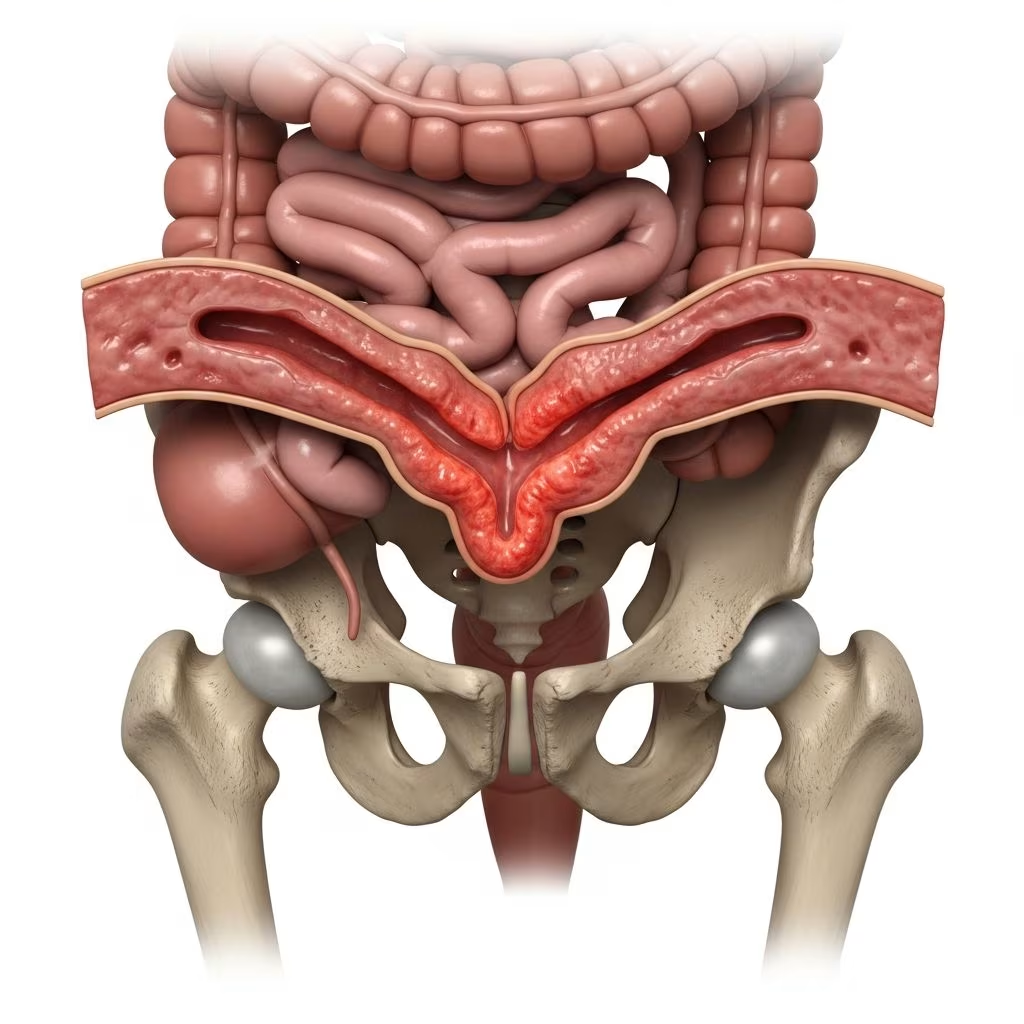
Rectal strictures represent a severe narrowing of the rectal passage in pigs, primarily affecting growing and post-weaning animals. This condition arises from healing responses to trauma or infection, resulting in fibrous tissue buildup that obstructs feces passage. Without intervention, it leads to chronic constipation, abdominal bloating, and eventual death from starvation or secondary complications.
Primary Causes and Pathophysiology
The development of rectal strictures typically stems from two main pathways: physical trauma from rectal prolapse or infectious damage disrupting rectal blood flow. In cases of prolapse, the exposed rectal tissue suffers severe injury, often from drying, friction, or predation by pen mates. When the prolapsed segment sloughs off, the remaining tissue heals excessively with scar formation, creating a tight annular ring 2-5 cm inside the anus.
Infectious causes, particularly bacterial enterocolitis, play a significant role in outbreaks. Salmonella typhimurium frequently precedes strictures, causing ulcerative proctitis that evolves into ischemic necrosis and fibrosis. Studies from affected farms show this pathogen in most cases, with inflammation leading to endothelial changes and leukocyte invasion in rectal walls. Other pathogens may contribute, but Salmonella remains a key trigger in epidemic scenarios.
The healing process backfires: excessive collagen deposition forms a cicatrix, compressing the lumen. This results in obstipation, colonic dilatation, and visceral atrophy due to prolonged inanition. Unlike sporadic prolapse cases, infections can affect multiple pigs simultaneously, amplifying herd impacts.
Recognizing Clinical Manifestations
Affected pigs exhibit progressive signs starting 4-8 weeks after initial enteric disease. Early indicators include severe diarrhea from underlying infection, transitioning to constipation and abdominal enlargement. The belly becomes taut and distended, sometimes outlining the swollen colon through the skin.
- Emaciation and lethargy: Pigs appear pot-bellied yet thin, standing depressed in pen corners.
- Defecation issues: No feces or dribbling of bubbly, ribbon-like stools if partially patent.
- Respiratory compromise: Thoracic compression reduces lung size from abdominal pressure.
In groups, several bloated individuals signal an outbreak. Pigs over 5 weeks with dull coats and no weight gain warrant suspicion. Necropsy reveals gas-filled, green-feces-laden colons and a pinpoint rectal narrowing with possible abscessation.
Diagnostic Approaches in Practice
Diagnosis combines history, clinical exam, and postmortem confirmation. Key is a recent history of diarrhea or prolapse outbreaks. Physical exam involves digital palpation: insert a gloved finger or thermometer 2-5 cm into the rectum; resistance indicates stricture.
Radiography or ultrasound may visualize distension but is rarely practical on-farm. Weight monitoring helps: two consecutive weekly weights showing no gain suggest re-narrowing post-initial passage. Necropsy provides definitive evidence, showing annular fibrosis and upstream dilatation. Differential diagnoses include other obstructions like intussusception or parasites, but stricture’s location and fibrosis are pathognomonic.
Treatment Limitations and Outcomes
Treatment is challenging and rarely economical. Supportive care like stool softeners offers minimal relief for complete blockages. Probing through the stricture seldom succeeds long-term.
Surgical options include transecting the rectum proximal to the stricture and anastomosing to perineal skin, forming a new anus, or colostomy via caecum exteriorization. These require anesthesia, skilled veterinary intervention, and post-op monitoring for pain, stooling, and recurrence. Success varies: some pigs gain market weight rapidly, but others redevelop strictures within weeks, necessitating euthanasia.
Given costs and risks, humane euthanasia is standard for confirmed cases, prioritizing herd health.
Prevention: The Cornerstone of Control
Prevention targets root causes through biosecurity, management, and timely intervention. Early diarrhea treatment is critical, using antibiotics against Salmonella if indicated.
| Prevention Strategy | Details | Expected Impact |
|---|---|---|
| All-in/all-out production | Empty pens between groups for full sanitation | Breaks infection cycles |
| Housing improvements | Avoid slippery floors to prevent prolapse; ensure space | Reduces trauma risk |
| Feed medication timing | Oxytetracycline 500g/tonne for 2 weeks pre-risk period | Cuts outbreaks if >2% affected |
| Prolapse management | Immediate reduction and monitoring post-event | Prevents stricture formation |
Monitor for trigger periods, like 3 weeks before typical outbreaks, and apply interventions preemptively. Sanitation and ventilation curb bacterial spread.
Economic and Welfare Implications
Rectal strictures cause significant losses: mortality, culls, and growth delays in 1-21% of at-risk pigs per studies. In outbreaks, multiple cases per pen disrupt production flow. Welfare suffers from pain, hunger, and bloating, underscoring prevention’s ethical imperative.
Producers should track incidence; rates over 2% demand protocol reviews. Integrating prevention into herd health plans yields best ROI.
Research Insights and Future Directions
Historical data from 1970s Indiana farms links strictures to Salmonella across 23 necropsied pigs. Recent discussions affirm prolapse (21% progression risk) and infection as primaries. Ongoing needs include vaccines against key pathogens and less invasive therapies, though surgery remains marginal.
Multidisciplinary approaches—veterinarians, nutritionists, geneticists—could breed prolapse-resistant lines or refine microbiomes against pathogens.
Frequently Asked Questions (FAQs)
What triggers rectal strictures most commonly?
Trauma from rectal prolapse or Salmonella-induced proctitis are leading causes.
How do I spot it on-farm?
Look for bloated, emaciated growers; confirm with rectal palpation resistance 2-5 cm in.
Is surgery viable?
Possible but costly with recurrence risk; euthanasia often preferred.
How to prevent outbreaks?
Use all-in/all-out, early antibiotic for diarrhea, and prolapse vigilance.
Does it affect all ages?
Mainly post-weaning growers; rare in sows or neonates.
References
- The pathogenesis of porcine rectal stricture. I. The gross lesions — PubMed/NCBI. 1977. https://pubmed.ncbi.nlm.nih.gov/850993/
- Rectal Strictures in Pigs — Merck Veterinary Manual. 2023 (accessed 2026). https://www.merckvetmanual.com/digestive-system/intestinal-diseases-in-pigs/rectal-strictures-in-pigs
- Rectal Stricture — Pig Progress. 2023 (accessed 2026). https://www.pigprogress.net/topic/rectal-stricture/
- EP 42: Porcine Rectal Strictures in Swine — YouTube/Pet Care Partners. 2025-10-19. https://www.youtube.com/watch?v=_MPjf70uCyc
- Rectal and Anorectal Strictures in Animals — MSD Veterinary Manual. 2023 (accessed 2026). https://www.msdvetmanual.com/digestive-system/diseases-of-the-rectum-and-anus/rectal-and-anorectal-strictures-in-animals
- In a Tight Spot! Rectal Stricture in the Canine Patient — Mississippi State University College of Veterinary Medicine. 2018-10-12. https://www.vetmed.msstate.edu/sites/www.vetmed.msstate.edu/files/presentations/10.12.18%20Rectal%20Stricture%20in%20the%20Canine%20Patient%20(Olivia%20Mann).pdf
- Rectal Stricture — The Pig Site. 2023 (accessed 2026). https://www.thepigsite.com/disease-guide/rectal-stricture



