

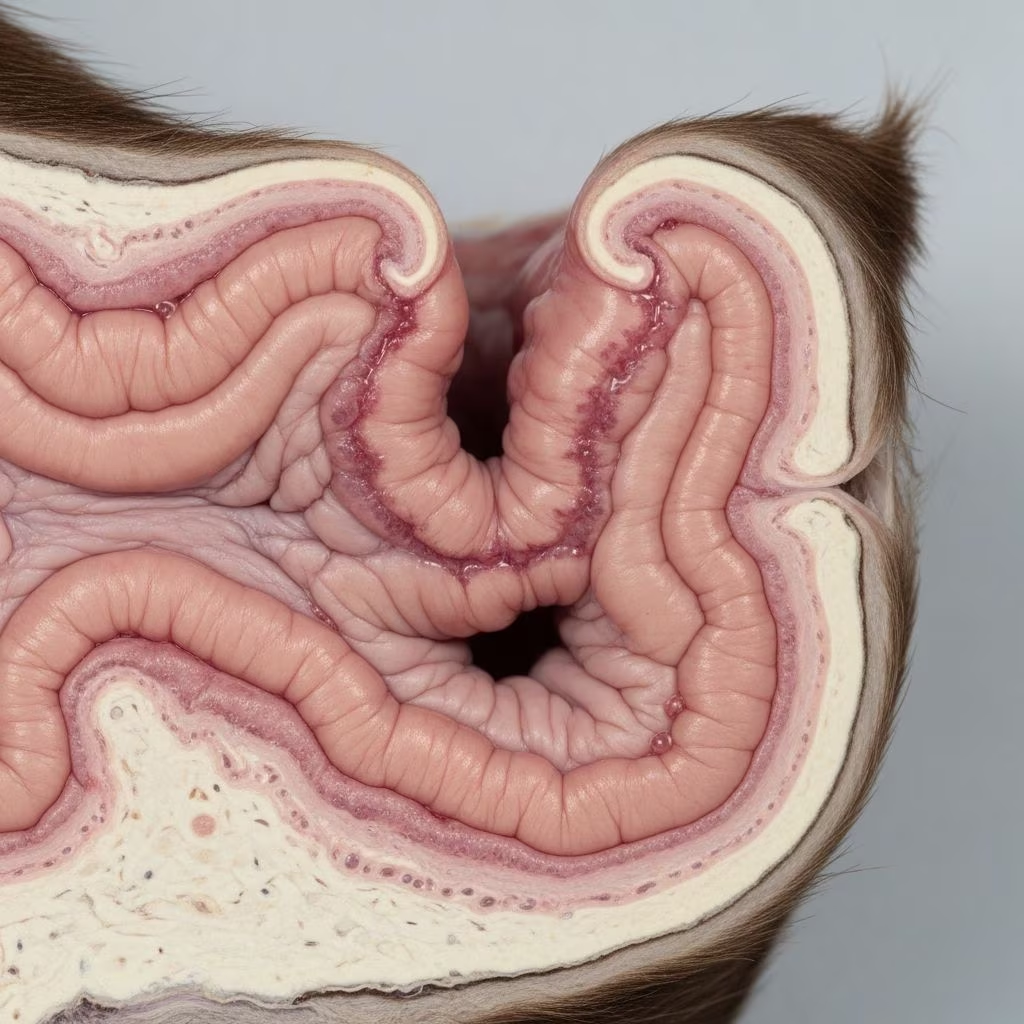
Rectal and anorectal strictures represent a significant challenge in veterinary medicine, characterized by abnormal narrowing of the rectal or anorectal lumen due to scar tissue formation. These conditions disrupt normal defecation, leading to discomfort and potential complications in affected animals. While uncommon, they occur across species including dogs, cats, cattle, and pigs, often stemming from trauma, inflammation, or other underlying pathologies. Early recognition and targeted interventions can greatly improve quality of life and prevent secondary issues like megacolon.
Understanding the Anatomy and Pathophysiology
The rectum serves as the final segment of the large intestine, facilitating stool storage and expulsion. Anorectal strictures involve fibrotic constriction at the junction of the rectum and anus, often resulting from an exaggerated healing response to injury or chronic irritation. Inflammatory processes trigger fibroblast proliferation, depositing collagen that forms a rigid ring, impeding fecal passage. In severe cases, involvement of sphincter muscles or nerves can lead to incontinence.
This fibrotic response is not species-specific but varies in prevalence. Small animals like dogs and cats more frequently experience anorectal involvement, while large animals face rectal strictures from trauma or necrosis. Pathophysiologically, ischemia, repeated mechanical stress, or persistent infection perpetuates the cycle of inflammation and scarring.
Common Causes Across Species
Multiple etiologies contribute to stricture development, categorized by species for clarity:
- Dogs: Trauma from foreign bodies, surgical procedures, or enemas; chronic proctitis; anal sac abscesses; rarely neoplasia.
- Cats: Inflammation from colitis, perianal injuries, or post-surgical complications; aggressive cancers in advanced cases.
- Cattle: Trauma during parturition, fat necrosis impinging the lumen, or neoplastic growths.
- Pigs: Secondary to enterocolitis, rectal prolapse repairs, or salmonella-induced ulcerative proctitis.
Predisposed breeds in dogs include German Shepherds, Beagles, and Poodles, possibly due to conformational factors or higher incidence of perianal diseases. Idiopathic cases occur, but most trace to identifiable insults like accidental injuries or iatrogenic events.
Clinical Presentation and Signs
Owners typically notice progressive defecatory difficulties. Key symptoms include:
- Fecal **tenesmus** (straining without productive defecation).
- **Dyschezia** (painful defecation).
- Narrow, ribbon-like stools or liquid diarrhea from partial obstruction.
- Constipation escalating to megacolon in chronic cases.
- Hematochezia (fresh blood in stool) or mucohemorrhagic discharge if inflammation persists.
- Fecal incontinence if sphincters are compromised.
In large animals, signs manifest as reduced feed intake, colic-like behavior, or rectal tears from forceful straining. Systemic signs are rare unless neoplasia or severe obstruction intervenes.
Diagnostic Approaches
Diagnosis begins with a thorough history and physical exam, focusing on rectal palpation under sedation or anesthesia to detect non-relaxing constrictions. Digital examination reveals a firm, annular narrowing, often 2-5 cm from the anus in small animals.
Advanced imaging enhances accuracy:
| Method | Purpose | Species Suitability |
|---|---|---|
| Contrast Radiography (Barium Enema) | Visualizes luminal narrowing post-enema prep. | Dogs, Cats, Pigs |
| Endoscopy | Direct visualization and biopsy for neoplasia exclusion. | Small Animals |
| Ultrasonography | Assesses wall thickening or extraluminal masses. | All Species |
| CT/MRI | Detailed stricture mapping pre-surgery. | Dogs, Cats |
Biopsies are crucial to differentiate benign fibrosis from malignancy. In cattle, exploratory laparotomy may be needed for proximal strictures.
Conservative and Minimally Invasive Treatments
For benign strictures, non-surgical options prioritize dilation and anti-inflammatory measures. Performed under general anesthesia, digital bougienage involves gentle finger dilation, repeatable as needed. Balloon dilation, adapted from human and esophageal protocols, uses graduated balloons (18-35 mm based on patient size). Studies report 62% resolution after one session in dogs, with minimal complications like transient mucosal tears.
Intralesional corticosteroids (e.g., triamcinolone) reduce fibrosis, though efficacy varies. Cats have shown success with combined balloon dilation and steroid injection, offering a less invasive alternative to surgery. Supportive care includes stool softeners (lactulose), low-residue diets, and antibiotics for concurrent infections.
Surgical Interventions
When conservative methods fail or malignancy is present, surgery is indicated. Techniques vary by species and stricture location:
- Small Animals: Resection-anastomosis via puborectalis approach or rectal pull-through; stenting for inoperable cases.
- Large Animals: Stricturotomy with resection or pull-through procedures.
Puborectalis access in dogs involves pelvic osteotomy for exposure, resecting 2+ cm margins, and end-to-end anastomosis. Postoperative care emphasizes monitoring for dehiscence, infection, and recurrence—risks inherent to colonic healing. Prognosis improves with early intervention, but restricture rates necessitate long-term follow-up.
Species-Specific Management Strategies
Dogs and Cats
In canines, inflammatory strictures respond well to ballooning (success in 62% after single treatment). Felines benefit from similar endoscopic approaches, especially post-traumatic cases. Breed predispositions guide screening in at-risk populations.
Large Animals
Cattle strictures from fat necrosis often require aggressive resection due to luminal impingement. Pigs post-prolapse need vigilant monitoring during recovery to prevent fibrosis.
Prognosis and Long-Term Outlook
Benign strictures carry a guarded to good prognosis with dilation (recurrence possible but manageable). Malignant cases depend on tumor type and resectability. Recurrence risk underscores the need for dietary management and serial exams. Owners should watch for straining or stool changes, prompting prompt veterinary consultation.
Prevention Tips for Animal Owners
- Avoid traumatic enemas or foreign body risks.
- Treat perianal infections aggressively.
- Monitor post-surgical patients closely.
- Maintain high-fiber diets to prevent constipation in predisposed breeds.
Frequently Asked Questions (FAQs)
What is the most common cause of rectal stricture in dogs?
Trauma from surgery, foreign bodies, or chronic inflammation tops the list, with anal abscesses also frequent.
Can rectal strictures be cured without surgery?
Yes, balloon dilation and bougienage resolve many benign cases, especially in small animals, with repeat sessions if needed.
Is rectal stricture painful for my pet?
Pain manifests as dyschezia and tenesmus; affected animals strain uncomfortably during defecation.
How do I know if my cat has a rectal stricture?
Look for ribbon stools, straining, or blood; confirm via rectal exam and contrast studies.
What breeds are prone to anorectal strictures?
German Shepherds, Beagles, and Poodles show higher incidence in dogs.
Emerging Therapies and Research Directions
Endoscopic stenting and novel anti-fibrotic agents hold promise, mirroring human advancements. Veterinary studies emphasize minimally invasive protocols to reduce morbidity. Ongoing research into balloon dilation protocols refines success rates, particularly for inflammatory etiologies.
References
- Rectum: stricture in Dogs (Canis) — Vetlexicon. Accessed 2026. https://www.vetlexicon.com/canis/gastrohepatology/articles/rectum-stricture/
- Rectal and Anorectal Strictures in Animals — MSD Veterinary Manual. Accessed 2026. https://www.msdvetmanual.com/digestive-system/diseases-of-the-rectum-and-anus/rectal-and-anorectal-strictures-in-animals
- Rectal Stricture in the Canine Patient — Mississippi State University College of Veterinary Medicine. 2018-10-12. https://www.vetmed.msstate.edu/sites/www.vetmed.msstate.edu/files/presentations/10.12.18%20Rectal%20Stricture%20in%20the%20Canine%20Patient%20(Olivia%20Mann).pdf
- Narrowing of the Anal or Rectal Opening in Cats — PetMD. Accessed 2026. https://www.petmd.com/cat/conditions/digestive/c_ct_rectal_stricture
- Balloon dilation and intralesional steroid for benign rectal stricture — PMC (PubMed Central). 2024. https://pmc.ncbi.nlm.nih.gov/articles/PMC10911487/



