

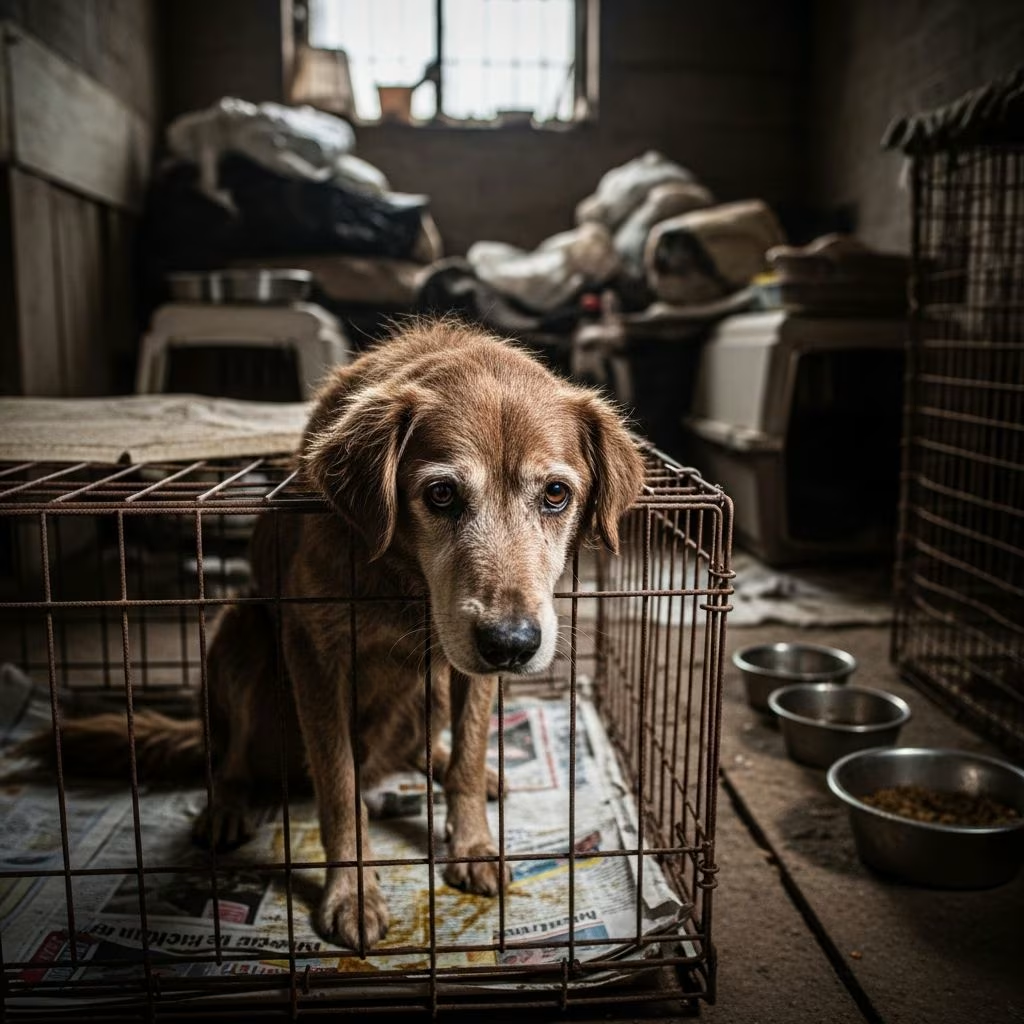
When searching for a new canine companion, many prospective owners focus primarily on finding the right breed or appearance without considering where the puppy originates. Unfortunately, millions of dogs are bred in large-scale commercial facilities prioritizing profit over animal welfare, often resulting in severe health and behavioral problems for the puppies sold to unsuspecting families. Understanding how to identify these operations is crucial for both animal welfare and your own peace of mind as a pet owner.
Understanding Large-Scale Commercial Breeding Facilities
Unethical breeding operations are fundamentally different from responsible breeders in their approach to dog reproduction and animal care. These facilities operate on a model focused entirely on volume and profitability rather than genetic health, breed standards, or individual animal welfare. The distinction between legitimate breeding programs and problematic operations often comes down to motivations: ethical breeders carefully select breeding pairs to improve breed characteristics and reduce genetic diseases, while commercial operations prioritize producing as many puppies as possible with minimal investment in care.
These breeding facilities can range dramatically in scale and appearance. Some operate from large industrial-style buildings, while others function from farms, residential properties, or converted warehouses. The common thread is the emphasis on quantity over quality, with little regard for the living conditions, socialization, or health screening of the animals involved.
Physical Living Conditions and Housing Concerns
The environment where breeding dogs spend their lives reveals much about an operation’s commitment to animal welfare. In unethical facilities, dogs typically endure severely restricted living spaces that fail to meet basic psychological and physiological needs.
Common housing deficiencies include:
- Small cages or wire hutches barely larger than the dogs themselves, sometimes allowing only six inches of space on all sides
- Stacked caging systems where feces from upper cages falls onto dogs housed below
- Wire or mesh flooring that causes foot injuries and provides no comfort or security
- Absence of temperature control in breeding sheds, exposing dogs to extreme heat and cold
- Accumulation of urine and feces creating dangerously high ammonia levels that damage respiratory systems and skin
- Minimal or nonexistent bedding, leaving dogs standing on hard surfaces continuously
- No outdoor access, exercise areas, or space for natural behaviors like running or playing
- Inadequate shelter from weather elements when dogs are kept outdoors
These conditions create an environment completely contrary to dogs’ natural instincts and emotional needs. Dogs are social animals requiring space, environmental enrichment, and the ability to engage in normal behaviors. When confined to these restrictive cages for years, they experience profound psychological distress.
Health and Veterinary Care Gaps
Inadequate medical attention represents one of the most damaging aspects of unethical breeding operations. These facilities view veterinary care as an expense to minimize rather than an essential component of responsible animal husbandry.
Health-related red flags include:
- No genetic or health screening of breeding dogs before reproduction
- Absence of veterinary records or documentation for breeding animals
- Sick or injured dogs left untreated, suffering from infections, injuries, or parasites
- Visible health problems in puppies such as eye infections, ear disease, or skin conditions
- Puppies offered without current vaccinations or with vaccinations administered by non-veterinarians
- No health guarantees or warranties offered on puppies
- Breeding of dogs known to carry genetic disorders without attempting to eliminate these traits
- Malnourished breeding females showing signs of poor nutrition and overbreeding
The consequences of these practices are severe. Puppies born to unscreened parents inherit genetic predispositions to hip dysplasia, heart defects, eye problems, and various hereditary conditions. Additionally, puppies raised in unsanitary conditions frequently develop infections, parasites, and immune system deficiencies that persist throughout their lives.
Breeding Practices and Reproductive Exploitation
Understanding how breeding dogs are treated within these operations reveals the fundamental disregard for animal welfare. Female dogs in commercial breeding facilities experience relentless reproductive cycles designed to maximize output rather than ensure health.
Problematic breeding practices include:
- Breeding females every heat cycle without recovery time between litters
- Maintaining inadequate nutritional standards during pregnancy and nursing periods
- Prematurely weaning puppies before they are developmentally ready
- Continuing to breed dogs until they can no longer produce viable litters
- Disposing of breeding females through auction, abandonment, or euthanasia when productivity declines
- Producing multiple generations without genetic testing or selective elimination of inherited diseases
- Breeding incompatible animals purely for desired appearance traits regardless of health consequences
This approach treats breeding dogs as production machines rather than living beings requiring recovery, care, and dignity. The repeated pregnancies without adequate nutrition or rest cause severe physical and psychological damage to mothers, while the emotional trauma of early weaning affects both mothers and puppies.
Behavioral and Psychological Consequences
Puppies born and raised in unethical breeding environments face significant behavioral challenges that extend throughout their lives. The lack of early socialization, combined with the stress of living in confined spaces, creates lasting psychological damage.
Behavioral issues commonly observed include:
- Extreme fear and anxiety around unfamiliar people, animals, or environments
- Compulsive behaviors such as excessive pacing, circling, or self-injury
- Difficulty with basic house training due to being raised in unsanitary cages
- Reduced trainability and responsiveness to commands
- Aggression toward humans or other animals
- Inability to adapt to normal household activities and environments
- Shutdown behavior when exposed to new situations
- Long-term psychological trauma requiring extensive rehabilitation
These behavioral problems develop because puppies miss critical developmental periods for learning social skills and exposure to diverse environments. When they transition to homes, they lack fundamental understanding of how to interact with people, navigate new spaces, or process normal household stimuli.
Red Flags in Breeder Communication and Business Practices
Evaluating how a breeder communicates with potential buyers provides valuable insight into their operation’s legitimacy. Unethical operations employ specific business practices designed to move inventory quickly while avoiding transparency.
| Legitimate Breeders | Unethical Operations |
|---|---|
| Meet buyers in person at their facility | Refuse visits or offer only limited viewing areas |
| Encourage questions about breeding program and genetics | Discourage inquiries or provide vague responses |
| Maintain detailed health and genetic records | Provide minimal or no documentation |
| Offer contracts with health guarantees | Require minimal paperwork or no contract |
| Pre-screen buyers for appropriate homes | Accept payment from anyone without questions |
| Specialize in one or two breeds | Have multiple unrelated breeds available simultaneously |
| Puppies available at appropriate ages | Offer puppies younger than 8 weeks |
| Maintain consistent availability | Always have puppies ready for immediate purchase |
Sales Channels and Purchasing Methods
Where puppies are sold often indicates their origin. Unethical operations utilize distribution channels that provide distance between themselves and buyers, reducing accountability and enabling deception.
Concerning sales channels include:
- Pet store sales, where animals are typically sourced from unethical breeders
- Online classifieds and marketplace platforms with limited seller accountability
- Social media selling without verifiable breeder information
- Shipping puppies via courier services without in-person meetings
- Flea market and temporary sales venues indicating no permanent facilities
- Third-party brokers claiming to represent multiple breeders
Responsible breeders typically sell only directly to buyers, allowing face-to-face meetings and relationship building. They maintain permanent facilities openly available for inspection and prioritize placing puppies in suitable homes over rapid sales.
Pricing Inconsistencies and Financial Red Flags
Pricing patterns can reveal an operation’s nature. Unethical facilities often employ pricing strategies designed to either seem irresistibly cheap or to exploit high demand for trendy breeds, neither of which aligns with responsible breeding economics.
Pricing concerns include:
- Significantly lower prices than breed standards suggest, indicating cost-cutting in care
- Extraordinarily high prices for common breeds or mixed breeds
- Willingness to negotiate price dramatically when questioned
- No transparency regarding what costs are included in the price
- Premium pricing for trendy or designer breed combinations
- Unwillingness to discuss breeding program expenses or quality standards
Legitimate breeders price puppies to reflect their investment in health screening, veterinary care, socialization, genetic planning, and ethical practices. They can articulate why their puppies cost what they do and maintain consistent pricing reflecting their program’s value.
Making Ethical Purchasing Decisions
Protecting animal welfare begins with informed consumer choices. Before purchasing any puppy, prospective owners should conduct thorough investigations into the puppy’s origins.
Steps for ethical puppy acquisition:
- Request to visit the breeder’s facility in person and meet both parents
- Ask for comprehensive health testing documentation for breeding animals
- Require references from previous puppy buyers
- Insist on a written contract including health guarantees
- Verify that puppies have age-appropriate vaccinations by veterinarians
- Ask detailed questions about breeding program goals and genetic health focus
- Consider adoption from rescue organizations specializing in breed placement
- Avoid purchasing from pet stores or online-only sellers without facility access
- Expect the breeder to ask you detailed questions about your home and lifestyle
Choosing to support ethical breeding practices supports the larger movement toward responsible animal treatment while protecting yourself from the substantial medical and behavioral expenses associated with unethically bred dogs.
Frequently Asked Questions
What is the primary difference between a backyard breeder and a large-scale commercial operation?
While both prioritize profit over welfare, commercial operations breed on a much larger scale with hundreds or thousands of dogs, while backyard breeders may operate with fewer dogs. However, the fundamental problems with animal care and breeding practices remain similar.
How can I verify a breeder’s legitimacy?
Request facility visits, ask for health documentation, require written contracts, and seek references from previous buyers. Legitimate breeders welcome these inquiries and provide comprehensive information.
What long-term health problems do puppies from unethical operations typically face?
Common issues include hip dysplasia, heart defects, eye problems, chronic infections, parasites, immune deficiencies, and behavioral issues requiring ongoing management.
Are puppies from pet stores definitely from unethical operations?
Nearly all pet store puppies originate from large-scale commercial breeding operations. Responsible breeders do not sell through pet stores, making this a reliable red flag.
Is adoption a viable alternative to purchasing puppies?
Yes, numerous rescue organizations and shelters have puppies and young dogs available for adoption. This option supports animal welfare and reduces demand for unethical breeding operations.
References
- Puppy Mill Rescue Team — Puppy Mill Rescue Team. Accessed January 2026. https://puppymillrescueteam.org/about-puppy-mills/
- Puppy Mills — People for the Ethical Treatment of Animals (PETA). Accessed January 2026. https://www.peta.org/issues/animal-companion-issues/pet-trade/puppy-mills/
- How to Identify a Puppy Mill — Zoetis Petcare. Accessed January 2026. https://www.zoetispetcare.com/blog/article/how-identify-puppy-mill



