

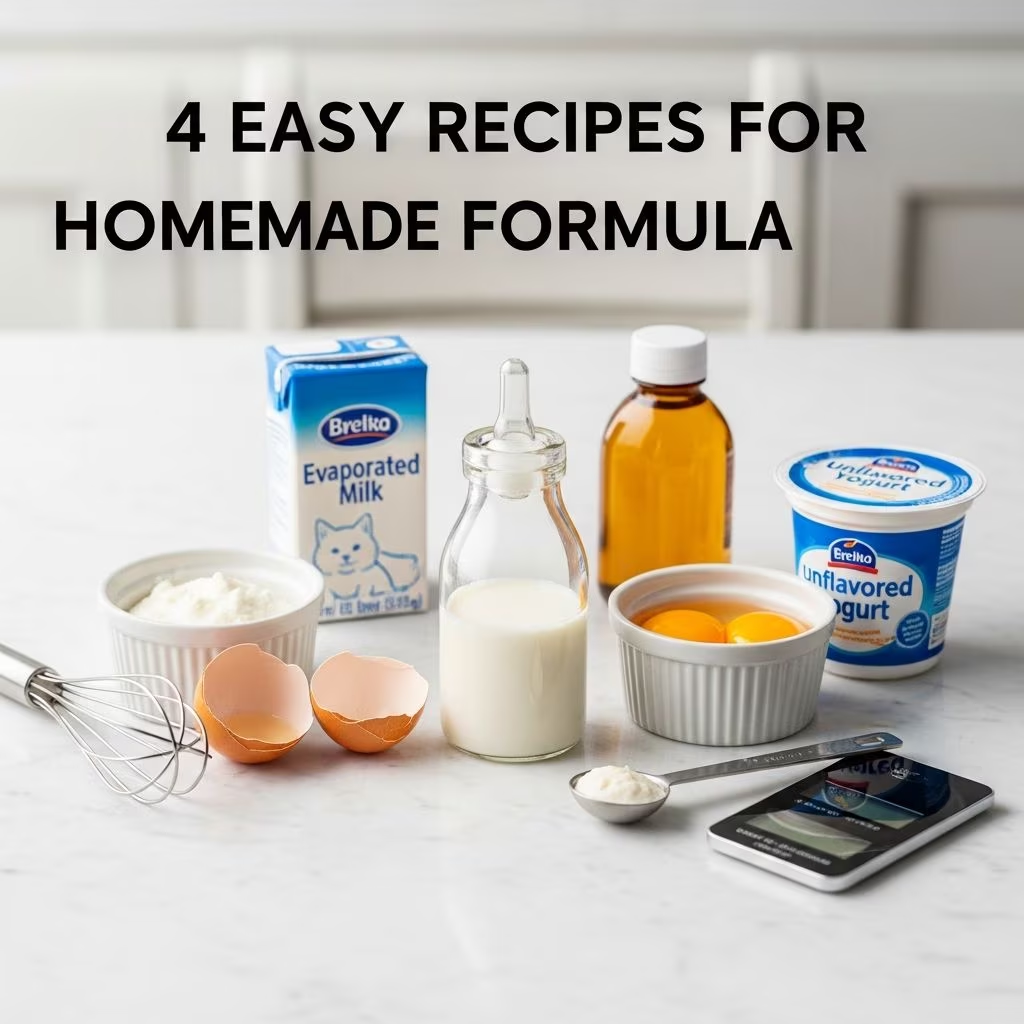
Orphaned or abandoned kittens require immediate nutritional support to survive their critical early weeks. While the gold standard is mother’s milk from a nursing queen, the next best is commercial kitten milk replacer (KMR). In emergencies—such as when pet stores are closed or delivery is delayed—homemade kitten formula can bridge the gap. These recipes provide temporary nutrition but should never replace professional veterinary care or long-term commercial products.
Newborn kittens cannot digest cow’s milk effectively due to lactose intolerance, leading to diarrhea and dehydration. Homemade formulas aim to mimic the protein, fat, and calorie content of queen’s milk (approximately 1 kcal/ml, with kittens needing 20-26 kcal per 100g body weight daily). Always transition to KMR as soon as possible, and consult a vet for fostering advice.
Why Homemade Kitten Formula? When to Use It
Homemade formulas are a last resort for situations like finding a litter without their mother at night or during holidays when supplies are unavailable. Kittens under 4 weeks need feeding every 2-4 hours, including nights, consuming 2-4ml per feeding initially, scaling up with age and weight.
- Pros: Quick to make with pantry staples; cost-effective emergency option.
- Cons: Not nutritionally complete; risk of imbalances if used long-term; potential for bacterial growth if not handled properly.
Monitor kittens for steady weight gain (4-10g daily), bright eyes, and firm stools. Weigh before/after feedings and track totals. Dehydration signs include tacky gums or sunken eyes—seek vet help immediately.
Essential Equipment for Feeding Orphan Kittens
Proper tools ensure safe, hygienic feeding mimicking nursing.
- Bottles and Nipples: Pet-store kitten bottles with preemie/human newborn nipples (hole size allows 1 drop/second flow). Avoid cow bottles—too fast.
- Syringes: 3-10ml oral syringes (no needle) for tiny kittens or precise dosing. Pharmacy staple.
- Scale: Digital kitchen scale for gram-accurate weights.
- Thermometer: To confirm formula at 95-100°F (35-38°C).
- Containers: Sterilize glass jars/bowls for mixing/storage.
- Warm Water Bath: Bowl for gentle heating—never microwave formula directly (hot spots burn mouths).
Stimulate urination/defecation post-feeding by gently rubbing genital area with warm damp cloth, imitating mother’s licking.
Recipe 1: Simple Milk & Eggs Kitten Formula
This basic blend uses condensed milk, yogurt, and eggs for fats and proteins. Yields ~1 cup; refrigerate up to 24 hours.
Ingredients
- 6 tablespoons (90ml) condensed milk
- 6 tablespoons (90ml) water
- ½ cup (120ml) plain full-fat yogurt (not low-fat)
- 3 large or 4 small egg yolks (discard whites to avoid biotin deficiency)
Instructions
- Whisk ingredients until smooth, no lumps.
- Warm in hot water bath to 95-100°F. Test on wrist—should feel lukewarm.
- Feed via bottle/syringe. Discard leftovers after 24 hours.
Notes
- Ideal for newborns; high digestibility.
- Strain if egg bits remain.
- Calories approximate 0.9-1.0 kcal/ml.
Recipe 2: Kitten Formula with Gelatin
Gelatin adds taurine-supporting structure for growing bones/muscles. Optional vitamins boost nutrition.
Ingredients
- 1 cup (240ml) whole cow’s milk (full-fat)
- 3 egg yolks
- 1 tablespoon (15ml) corn oil
- Small pinch of salt
- 1 drop multivitamin (e.g., PET-TINIC®, Liqui-Tinic™, Hi-Vite™ if available)
Instructions
- Blend until uniform.
- Add vitamin drop.
- Heat gently to 95-100°F via water bath.
- Store refrigerated 24 hours max.
Notes
Best for 1-3 week olds; oil provides essential fatty acids.
Recipe 3: Whole Goat Milk (Simplified Option)
Not a mixed recipe but a crisis standby. Goat milk closely matches queen’s milk pH/proteins, easier on kitten digestion than cow.
Instructions
- Warm whole goat milk to 95-100°F in water bath.
- Feed directly; discard unused after 24 hours.
Notes
- Superior to cow milk; use plain, unhomogenized if possible.
- Transition to KMR promptly.
Recipe 4: Whole Cow Milk (Emergency Backup)
Last choice due to lactose issues, but full-fat versions provide calories short-term.
Instructions
- Select plain whole cow milk (no skim/low-fat).
- Warm to 95-100°F.
- Limit to 24-48 hours max.
Warnings
May cause loose stools; monitor closely.
Bonus Emergency Recipes from Rescue Experts
Additional vetted options for variety.
Goat Milk with Gelatin (Kitten Rescue Formula #1)
- 1 quart whole goat’s milk
- 1 tsp light Karo syrup
- 1 tbsp nonfat plain yogurt
- 1 egg yolk
- Knox gelatin (age-adjusted: 1-4 pkgs)
Heat milk/gelatin to dissolve, mix rest, refrigerate 1 week.
Homogenized Milk Emergency (#2)
- 8 oz whole homogenized milk
- 2 egg yolks
- 1 tsp salad oil
- 1 drop pediatric vitamins (opt.)
Feeding Guidelines by Age and Weight
Divide daily intake (20-26ml/100g body weight) into feedings. Example table:
| Age | Weight (g) | Daily Formula (ml) | Feedings/Day | Per Feeding (ml) |
|---|---|---|---|---|
| Newborn-1wk | 100-150 | 20-39 | Every 2hrs (12x) | 2-3 |
| 2wks | 200-250 | 40-65 | Every 3hrs (8x) | 5-8 |
| 3-4wks | 300-400 | 60-104 | Every 4hrs (6x) | 10-17 |
Source: Adapted from commercial KMR guidelines.
How to Feed Orphaned Kittens Safely
- Prepare sterile workspace; wash hands/tools.
- Warm formula; test temp on inner wrist.
- Hold kitten belly-down, head slightly elevated (never on back—risk aspiration).
- Let suckle; bubble gently if needed.
- Burp by patting; stimulate elimination.
- Clean face; house in warm (85-90°F), draft-free box with low bed.
Frequently Asked Questions (FAQs)
Can I use regular cow milk for kittens long-term?
No—causes digestive upset. Temporary only.
How warm should kitten formula be?
95-100°F (body temp); wrist-test for lukewarm.
What if my kitten won’t eat homemade formula?
Check temp/flow; try syringe. Vet if lethargic.
How long can I store homemade formula?
24 hours refrigerated; discard leftovers.
Is yogurt safe in kitten formula?
Full-fat plain only; aids probiotics short-term.
Warnings and When to See a Vet
Homemade formulas lack complete taurine, vitamins—risks include growth stunting, heart issues. Signs of trouble: crying excessively, cold extremities, diarrhea, no weight gain. Never force-feed; vaccinate/deworm via vet by 6-8 weeks. Weaning starts at 4 weeks with gruel.
For litters >2, foster with nursing queen if possible. These recipes saved countless kittens in rescues but prioritize KMR.
References
- 4 Easy Recipes for Homemade Kitten Formula: Our Vet Answers — Catster (Ask the Vet). 2023. https://www.catster.com/ask-the-vet/recipes-for-homemade-kitten-formula/
- Recipes for Emergency Kitten Formula — Kitten Rescue. 2023. https://kittenrescue.org/recipes-emergency-kitten-formula/
- Homemade Kitten Milk Replacer Guide — Top Dog Tips (via YouTube transcript). 2023. https://www.youtube.com/watch?v=7wTbYFdlBhI
- Orphaned Kittens: Care & Feeding — ASPCA. 2024. https://www.aspca.org/pet-care/cat-care/orphaned-kittens
- Nutritional Requirements of Kittens — Merck Veterinary Manual. 2025-01-10. https://www.merckvetmanual.com/cat-owners/disorders-affecting-multiple-body-systems-of-cats/nutritional-requirements-of-kittens



