

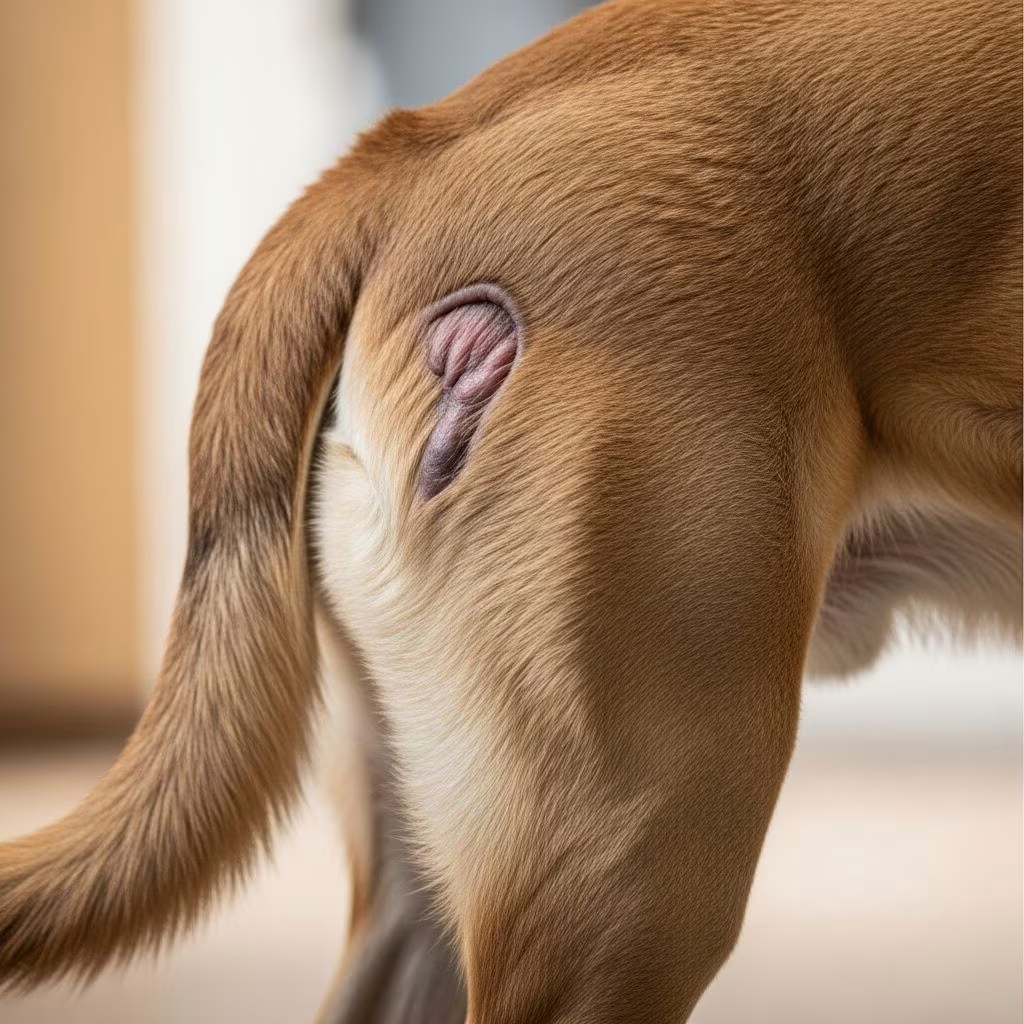
Understanding Vulvar Anatomy and the Condition
The vulva represents the external component of a female dog’s reproductive system, consisting of two prominent folds of connective tissue known as labia that converge to form a cone-shaped opening. Under normal anatomical circumstances, this structure remains visibly positioned between a dog’s hind legs and serves as a protective barrier for sensitive internal tissues. The vulva houses the vaginal opening as well as the urethra, which facilitates bladder drainage. When a dog experiences a recessed vulva—referred to interchangeably as a hooded, hypoplastic, inverted, or juvenile vulva—the anatomical positioning becomes significantly altered.
In dogs with this condition, the vulva becomes sunken inward or partially obscured by excessive perivulvar skin folds surrounding it. This structural deviation can range from mild to severe, with some cases involving complete obscuration of the vulvar opening. Rather than protruding naturally, the tissue becomes tucked inward, fundamentally changing how the region functions and potentially predisposing the area to complications.
Prevalence and Risk Factors Associated with Recessed Vulva
Recessed vulva stands as a relatively common conformational abnormality observed in female canines, with particular prevalence in spayed dogs. Research suggests a direct correlation between the timing of spaying and the likelihood of developing this condition, with earlier surgical intervention appearing to increase susceptibility. The condition demonstrates greater frequency in medium to large-breed dogs, and body weight status appears to influence both occurrence and severity of presentation.
While the exact genetic mechanisms remain incompletely understood, veterinary professionals recognize a probable hereditary component to this condition. Dogs carrying predisposing genetic traits combined with environmental or physiological factors—such as obesity or the structural changes resulting from ovariohysterectomy—show heightened vulnerability to vulvar recession.
The Infection Cascade: How Structure Leads to Disease
The fundamental issue with recessed vulva stems not from the anatomical variation itself, but rather from the secondary complications that frequently develop as a consequence of the altered structure. The excess perivulvar skin folds function similar to a barrier, creating a microenvironment that promotes bacterial proliferation and infectious processes.
This enclosed space establishes conditions ideal for bacterial colonization and growth:
- Accumulation of moisture that cannot evaporate normally
- Elevated local temperature within the skin fold pocket
- Absence of adequate light exposure to the region
- Collection of skin debris, cellular material, and discharge
- Reduced air circulation preventing natural drying
Bacteria thrive within this protected environment, multiplying rapidly. When bacterial populations reach significant levels, they migrate upward from the vulvar region into the vagina and potentially ascend further into the urinary tract, establishing secondary infections that cause clinical disease manifestations.
Clinical Presentation and Behavioral Signs
Dogs experiencing a recessed vulva display varied clinical presentations depending on the severity of their condition and whether secondary infections have developed. The most obvious diagnostic indicator involves direct visual observation—the vulva may be partially or completely obscured by surrounding skin when examining the dog’s perineal region.
Common behavioral indicators include excessive licking directed toward the vulvar area, as affected dogs instinctively attempt to address discomfort or irritation. Scooting behavior, wherein the dog drags its hindquarters across surfaces, frequently accompanies vulvar discomfort and represents an attempt to relieve itching or irritation in the affected region.
Physical examination findings often reveal a malodorous discharge originating from the vulvar region. This odor results from bacterial overgrowth and infection rather than normal physiological secretions. The tissue may appear darkened or discolored, creating a visibly “dirty” appearance despite adequate grooming, as accumulated material and inflammation persist within the skin folds.
Secondary Infections and Associated Complications
Perivulvar Dermatitis
The moist environment surrounding the recessed vulva creates an ideal substrate for dermatologic infection. Perivulvar dermatitis develops when bacterial organisms colonize and multiply within the skin folds, causing inflammation, redness, and irritation. This localized skin infection functions as a bacterial reservoir, continuously seeding the area with pathogenic organisms.
Vaginitis and Vaginal Inflammation
Bacterial migration into the vaginal canal produces vaginitis—infection and inflammation of vaginal tissues. Dogs with this complication may demonstrate increased vaginal discharge, discomfort during urination, and persistent vulvar irritation. The discharge may appear purulent or blood-tinged, indicating active infection and tissue inflammation.
Urinary Tract Infections
Perhaps the most significant consequence of recessed vulva involves recurrent or persistent urinary tract infections (UTIs). Bacteria ascending from the vagina through the urethra establish infection within the bladder and urinary system. These infections may occur independently or develop concurrently with perivulvar dermatitis and vaginitis, creating a complex infection pattern.
Clinical signs of secondary UTIs include:
- Increased urinary frequency with small-volume eliminations
- Urinary accidents in previously housetrained dogs
- Straining or difficulty initiating urination
- Hematuria (visible blood in urine)
- Dribbling urine, particularly during sleep or rest periods
- Vocalization or whimpering associated with urination
- Noticeably foul-smelling urine
- Fever in cases of upper urinary tract involvement
Urinary Incontinence
Some dogs develop urinary incontinence as either a direct consequence of the recessed vulva or as a secondary complication of chronic infections. This may manifest as involuntary leakage during sleep, during periods of excitement, or as constant dribbling throughout the day. The incontinent urine further worsens the moist environment and perpetuates bacterial growth.
Diagnostic Approaches and Veterinary Evaluation
Diagnosis of recessed vulva typically begins with a thorough physical examination. Visual assessment of the perineal region often reveals the characteristic sunken or obscured vulvar opening. In some cases, gentle separation of the perivulvar skin folds allows better visualization of the underlying vulvar structure.
When secondary infections are suspected, additional diagnostic testing becomes necessary:
- Urinalysis and urine culture to identify bacterial UTIs
- Vaginal cytology or culture to characterize vaginal infections
- Dermatologic evaluation to assess skin fold involvement
- Abdominal ultrasound or radiographs if upper urinary tract involvement is suspected
A comprehensive history often reveals recurrent infection patterns, with owners reporting multiple courses of antibiotics or persistent clinical signs despite treatment.
Conservative Management Strategies
For dogs with recessed vulva but minimal clinical signs, conservative management focuses on preventing secondary infections and maintaining the affected region in the best possible condition. Regular vulvar hygiene protocols involve gentle cleaning of the perivulvar skin folds with appropriate cleansing solutions to remove accumulated debris and reduce bacterial load.
Weight management plays a crucial supportive role, particularly in overweight dogs where excess adipose tissue contributes to the severity of skin fold involvement. Gradual, supervised weight loss can sometimes improve the anatomical positioning and reduce the depth of skin fold pockets.
Environmental modifications may include increasing frequency of elimination breaks to reduce urine retention within the skin folds and maintaining high standards of perineal hygiene. Some owners report benefit from absorbent pad systems or frequent bathing to manage moisture accumulation.
Medical Treatment for Secondary Infections
When secondary infections develop, pharmacologic intervention becomes necessary. Systemic antibiotics selected based on culture and sensitivity testing address bacterial overgrowth, though treatment often requires extended courses beyond standard infection protocols due to the persistent environmental factors promoting reinfection.
Topical antimicrobial treatments applied directly to the perivulvar region complement systemic therapy by reducing local bacterial populations. Anti-inflammatory medications may reduce tissue irritation and discomfort associated with dermatitis or vaginitis.
Recurrent infections may warrant consideration of prophylactic antibiotic protocols or extended preventive treatment to break infection cycles and allow tissue healing. However, the underlying anatomical abnormality persists regardless of medical intervention.
Surgical Intervention and Definitive Treatment
For dogs experiencing persistent or recurrent infections unresponsive to conservative management, surgical intervention may become necessary. Surgical vaginoplasty or vulvaplasty procedures aim to correct the underlying anatomical abnormality by externally repositioning the vulva, removing excess perivulvar skin, or both approaches combined.
These procedures typically involve:
- Excision of redundant perivulvar skin tissue
- Repositioning of vulvar structures for improved external prominence
- Modified surgical techniques tailored to the specific anatomical variant
- Careful closure techniques promoting proper healing and maintained positioning
Surgical candidates generally include dogs with moderate to severe clinical signs, those experiencing recurrent infections despite medical management, or individuals with quality-of-life impacts from chronic symptoms. Success rates vary depending on the surgical technique employed and the underlying severity of the anatomical abnormality.
Long-Term Prognosis and Management Considerations
Dogs with uncomplicated recessed vulva without secondary infection may experience minimal impact on quality of life and require only routine monitoring. However, those experiencing recurrent infections face a chronic condition requiring ongoing management throughout their lifetime.
The condition itself—the recessed vulva—represents a permanent anatomical characteristic that will not resolve without surgical intervention. Therefore, management strategies focus on preventing or minimizing secondary complications rather than correcting the underlying structural abnormality through medical means alone.
Prevention of recurrent infections involves:
- Regular veterinary monitoring and assessment
- Prompt treatment of emerging infections
- Consistent perineal hygiene maintenance
- Weight optimization and general health maintenance
- Consideration of surgical correction in appropriate candidates
Frequently Asked Questions
Can recessed vulva be prevented through breeding practices?
While the hereditary component suggests selective breeding against this trait would theoretically reduce prevalence, no definitive breeding recommendations currently exist as the genetic mechanisms remain incompletely understood. Responsible breeders should prioritize normal vulvar conformation in breeding selections.
Does spaying cause recessed vulva to develop?
Evidence indicates that spaying, particularly when performed early in a dog’s life, increases susceptibility to recessed vulva development. However, not all spayed dogs develop the condition, suggesting that genetic predisposition also plays an important role. The structural changes accompanying ovariohysterectomy may exacerbate underlying anatomical tendencies.
Are certain breeds predisposed to recessed vulva?
Medium to large-breed dogs show higher prevalence rates than small-breed dogs. Certain breeds may carry genetic predispositions, though specific breed susceptibilities have not been formally documented in veterinary literature.
What is the success rate for surgical correction?
Success rates vary significantly depending on the surgical technique employed, the severity of the condition, and the specific surgeon’s experience. Many dogs experience substantial improvement in infection frequency following surgical intervention, though complete resolution is not guaranteed.
Can recessed vulva cause infertility?
The condition itself does not typically cause infertility, though repeated infections may impact reproductive function. Breeding decisions should consider the apparent hereditary component of this condition to avoid perpetuating the trait in future generations.
References
- Recessed Vulva in Dogs: Signs, Symptoms, Treatment — American Kennel Club. 2024. https://www.akc.org/expert-advice/health/recessed-vulva-in-dogs/
- Recessed Vulva — VCA Animal Hospitals. 2024. https://vcahospitals.com/know-your-pet/recessed-vulva
- Hypoplastic (Recessed) Vulva in Dogs: Symptoms and Treatment — Embrace Pet Insurance. 2024. https://www.embracepetinsurance.com/health/hypoplastic-(recessed)-vulva
- Vaginal Hypoplasia — Wikipedia. 2024. https://en.wikipedia.org/wiki/Vaginal_hypoplasia



