

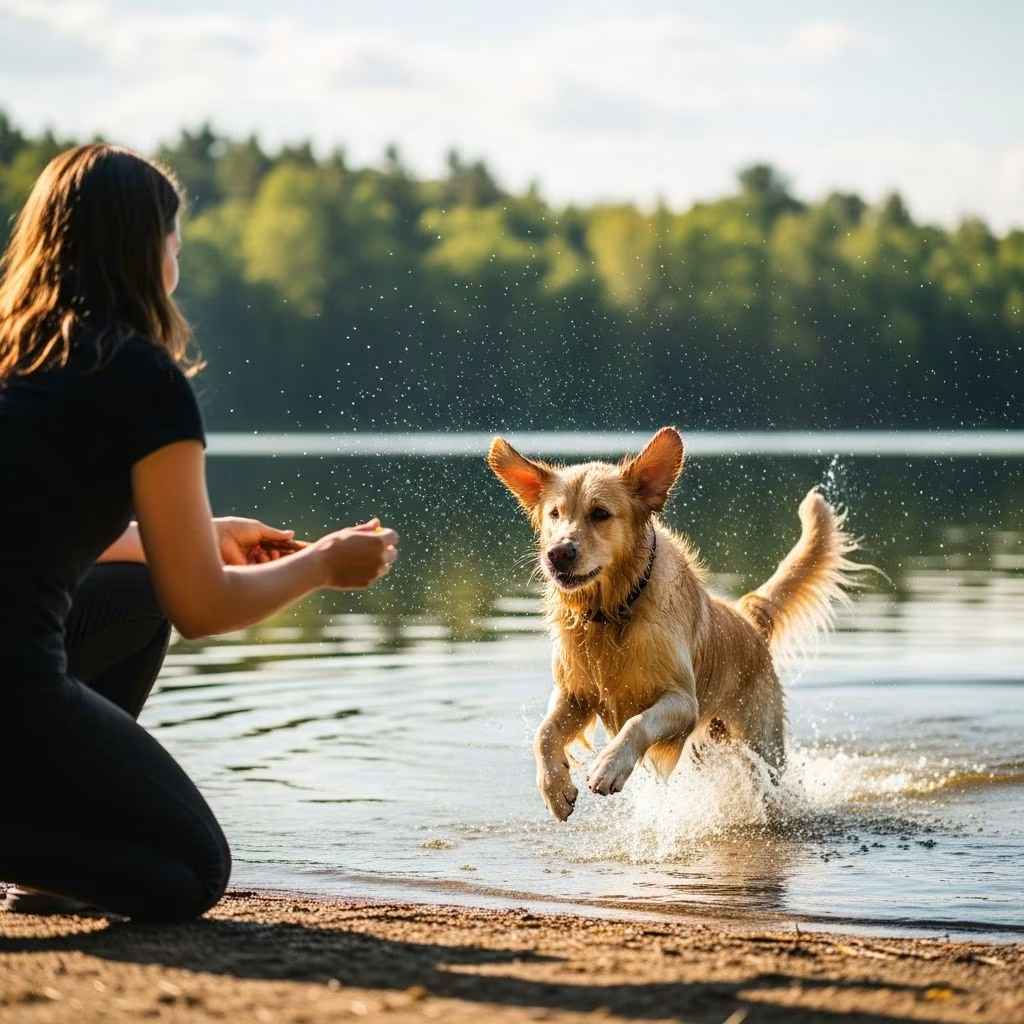
Water activities represent some of the most enjoyable experiences a dog can have, offering excitement, exercise, and mental stimulation all in one engaging environment. However, the allure of aquatic settings—complete with splashing water, floating objects, and wildlife—can easily overwhelm even the most well-trained canine companion. The difference between a controlled, enjoyable water outing and a potentially dangerous situation often comes down to one critical skill: reliable recall. This foundational obedience command becomes exponentially more important when your dog is in an environment where distractions multiply and consequences can be serious.
Understanding Why Water Environments Present Unique Challenges
When a dog enters a water environment, their sensory experience intensifies dramatically. The novelty of splashing sensations, the movement of floating objects, and the presence of wildlife can trigger instinctual behaviors that bypass training. Even dogs with stellar land-based recall records may find themselves caught between their training and their excitement when faced with a flock of ducks to chase or a toy floating temptingly out of reach.
The problem intensifies when considering that recall training is fundamentally about competing motivations. Your presence and your commands must become more rewarding than any environmental distraction. In water settings, where excitement levels run high and natural prey drive can be activated, this balance becomes considerably more challenging to maintain. A dog that responds perfectly to recall in your backyard may demonstrate disappointing results when surrounded by the sensory overload of a lake or beach environment.
The Foundation: Building a Maintenance-Based Training Philosophy
Many dog owners approach training as a finite project with a definitive endpoint. They invest time and effort until their dog demonstrates consistent obedience, then assume the skill is established permanently. This approach inevitably leads to disappointment, particularly with critical commands like recall. The reality is that obedience commands require ongoing reinforcement throughout your dog’s entire life to remain sharp and reliable.
Dedicating just ten to fifteen minutes daily to recall training can dramatically improve your dog’s responsiveness in challenging situations. This isn’t about intensive training sessions or complex exercises. Rather, it’s about consistent, regular practice that keeps the skill active in your dog’s memory and maintains their motivation to respond. Think of recall training as similar to maintaining physical fitness—even brief, regular exercise maintains muscle memory and capability far more effectively than sporadic intense sessions.
The key is integrating recall practice into your daily routine in ways that feel natural and rewarding for both you and your dog. Brief training sessions scattered throughout the day often prove more effective than longer, single sessions because they maintain consistent reinforcement and prevent the training from feeling like work.
Transitioning from Controlled Practice to Real-World Distractions
A fundamental error in recall training involves practicing in environments that don’t resemble real-world scenarios. Traditional recall training often follows a predictable pattern: the dog remains in a stationary position while the owner moves away, then calls the dog to return. This structured setup bears little resemblance to actual situations where distractions appear suddenly and your dog must choose between those distractions and responding to your call.
Effective recall training for water activities requires practicing in progressively more challenging environments with increasing levels of distraction. This graduated approach might begin in a quiet indoor space, progress to your backyard, then advance to parks with other dogs and people present, and eventually include water environments where natural stimuli create genuine competing motivations.
The goal is teaching your dog to deliberately redirect their attention away from fascinating environmental elements toward you and your commands. This demands practice scenarios where your dog must actively choose you over tempting alternatives, not simply a rehearsed response to a predictable cue.
Progressive Distraction Training Phases
- Phase One—Controlled Environments: Begin recall training in quiet spaces with minimal distractions. Establish the basic command-response pattern and reward consistency.
- Phase Two—Low-Level Distractions: Introduce minor environmental elements like other people or stationary objects. Practice recall with these elements present but not directly competing for attention.
- Phase Three—Active Distractions: Incorporate moving elements such as other dogs or toys. Challenge your dog to maintain focus on your commands despite active competition for attention.
- Phase Four—High-Drive Scenarios: Practice in environments with strong natural motivators, including water settings with toys, wildlife, or other dogs engaged in play.
The Reward Economy: Creating Lasting Motivation
A common misconception about dog training suggests that once a behavior is established, intermittent rewards suffice for maintenance. However, recall training—particularly in high-distraction environments like water settings—functions more like a bank account. Each time your dog responds to your recall command, they’re making a withdrawal from their motivation account. To keep that account solvent and ensure reliable responses, you must continuously make substantial deposits through generous rewards.
The quality and consistency of rewards directly influence your dog’s motivation to respond to your recall command when competing distractions are present. A dog that has only received modest praise or occasional treats when responding to recall will naturally prioritize more immediately rewarding environmental stimuli. In contrast, a dog whose recall responses consistently result in genuinely exciting experiences—premium treats they rarely receive otherwise, extended play sessions, enthusiastic praise—builds powerful motivation to respond even when distractions are significant.
The types of rewards that matter most vary considerably among individual dogs. Some respond powerfully to specific food items they find irresistible, others value play and interaction most highly, while many dogs appreciate a combination approach. The essential principle involves understanding what genuinely excites your particular dog and making that reward contingent on reliable recall responses.
Reward Strategy Components
| Reward Element | Application Strategy | Effectiveness in Water Environments |
|---|---|---|
| High-Value Treats | Reserve special food items exclusively for recall rewards; never give these items casually | Highly effective; waterproof treat pouches allow consistent rewarding |
| Enthusiastic Verbal Praise | Use animated, excited tone with genuine emotional engagement | Moderate effectiveness; can be diminished by water sounds and distance |
| Physical Affection | Combine petting, play, and interaction with other rewards | Very effective once dog is out of water; establishes positive association with coming ashore |
| Play Engagement | Incorporate favorite toys and games as recall rewards | Highly effective; can use floating toys to reinforce water-based recall |
Strategic Use of Long Lines: A Practical Safety Tool
When initially introducing water environments or practicing recall in new settings, long lines provide an essential safety bridge between complete freedom and traditional leashing. A long line allows your dog to experience the water environment with considerable freedom and exploration while maintaining a safety mechanism if recall fails or unexpected situations arise.
This tool proves particularly valuable during the early stages of water play when you’re uncertain how land-based training will transfer to aquatic environments. The long line allows your dog to build confidence and experience the water while you maintain ultimate safety control. As your dog demonstrates consistently reliable recall responses in the water environment, you can gradually phase out the long line dependency.
Additionally, many locations have legal requirements prohibiting off-leash dogs, particularly at public beaches and designated swimming areas. In these situations, long lines offer a practical solution that respects local regulations while maximizing your dog’s freedom and enjoyment within legal boundaries.
When to Seek Professional Guidance
Despite diligent training efforts, some dogs struggle to develop reliable recall responses, particularly in high-distraction environments like water settings. If you find your dog consistently ignoring recall commands or demonstrating inconsistent responses despite ongoing practice, consulting with a qualified professional trainer becomes a valuable investment.
Professional trainers bring specialized knowledge about learning theory, individual dog temperament variations, and systematic approaches that may address underlying issues affecting recall development. A trainer can assess your specific dog’s motivational drives, identify potential training errors in your approach, and develop customized strategies suited to your dog’s particular learning style and personality.
Look specifically for trainers who employ positive reinforcement methods rather than aversive or punishment-based approaches. These trainers understand that reliable recall stems from the dog genuinely wanting to return to you, not from fear of punishment. This distinction becomes particularly important in water environments where you need your dog to seek you out eagerly rather than respond grudgingly.
Preparing for Water Season Success
Incorporating systematic recall preparation into your routine before water season arrives ensures you’re ready for safe, enjoyable aquatic activities. This preparation involves honest assessment of your dog’s current recall reliability, honest assessment of your commitment to daily practice, and realistic evaluation of what environments and situations you’ll encounter.
Begin water season preparation several weeks in advance, allowing adequate time to address any gaps in your dog’s training. This timeline provides opportunity to build confidence, practice in progressively more challenging environments, and identify any issues requiring professional attention before you’re in actual water situations with your dog.
Common Recall Challenges and Solutions
| Challenge | Root Cause | Recommended Solution |
|---|---|---|
| Inconsistent responses | Irregular reinforcement or variable rewards | Establish daily training routine; ensure consistent, generous rewards |
| Ignoring commands near distractions | Distractions offer greater reward than recall | Practice with graduated distractions; increase reward value for recall responses |
| Slow response time | Low motivation or competing interests | Increase reward excitement; practice in less distracting environments initially |
| Compliance only with specific reward types | Limited motivation diversity | Vary reward types; find multiple high-value motivators specific to your dog |
Creating Your Water Safety Protocol
Beyond recall training, establishing a comprehensive water safety protocol ensures your dog’s wellbeing throughout aquatic activities. This protocol should include evaluating water conditions and potential hazards, determining appropriate supervision levels, identifying exit strategies if your dog becomes distressed, and having contingency plans for unexpected situations.
Your protocol might include considerations such as water temperature, presence of strong currents, depth variations, and proximity to wildlife or other dogs. Each water environment presents unique variables that should influence your decisions about off-leash freedom and the level of active supervision your dog requires.
Additionally, understanding your individual dog’s capabilities and limitations prevents situations where you ask your dog to handle environmental challenges beyond their abilities. A dog with poor water confidence shouldn’t be exposed to situations involving deep water or strong currents, regardless of their recall training. Realistic assessment of your dog’s physical capabilities and comfort level ensures you’re making decisions that prioritize their safety and wellbeing.
Frequently Asked Questions
How long does reliable recall training typically require?
The timeline for developing reliable recall varies significantly based on individual dog factors, prior training experience, and consistency of practice. Most dogs benefit from several weeks of dedicated training, though some may require months to develop truly reliable responses in high-distraction environments like water settings. Regular daily practice significantly accelerates the development timeline.
Can older dogs learn reliable recall?
Absolutely. Dogs of any age can learn or improve recall responses with consistent training and appropriate motivation. Older dogs sometimes demonstrate advantages in training because they may have reduced energy levels and fewer competing drives. However, older dogs with established poor recall habits may require more patient, extended training approaches.
Is it safe to rely entirely on recall without other safety measures?
While strong recall significantly improves water safety, relying entirely on recall without additional safety measures isn’t advisable. Consider recall as one component of a comprehensive safety approach that may include long lines, life jackets, and careful environmental selection. This layered approach ensures safety even if recall occasionally fails.
What should I do if my dog ignores recall during water play?
If your dog ignores recall during water play, avoid chasing or displaying anger, as this can turn the situation into a game or create negative associations with recall. Instead, calmly retrieve your dog using a long line or other means, then pause water activities temporarily. This teaches your dog that ignoring recall results in activity termination rather than additional fun.
References
- A Strong Recall is Critical During Your Dog’s Water Play — Whole Dog Journal. Accessed March 2026. https://www.whole-dog-journal.com/training/a-strong-recall-is-critical-during-your-dogs-water-play/
- The Importance of Recall Training for Dogs — Pooches At Play. Accessed March 2026. https://poochesatplay.com/training-behaviour/importance-recall-training/
- The Benefits of Water Play for Dogs: Exercise, Relaxation, and Bonding — Lazy Dog Loungers. Accessed March 2026. https://lazydogloungers.com/blogs/news/the-benefits-of-water-play-for-dogs-exercise-relaxation-and-bonding
- Splish Splash! The Benefits of Water Play for Dogs in the Summer — Sea Paws Dog Resort. Accessed March 2026. https://seapawsdogresort.com/splish-splash-the-benefits-of-water-play-for-dogs-in-the-summer
- The Joys and Benefits of Water Play for Dogs — Playful Pups Retreat. Accessed March 2026. https://www.playfulpupsretreat.com/blog/the-joys-and-benefits-of-water-play-for-dogs/
- Recall Training Guide: Teaching a Dog to Come When Called — CareCredit. Accessed March 2026. https://www.carecredit.com/well-u/pet-care/recall-training-dog-guide/



