

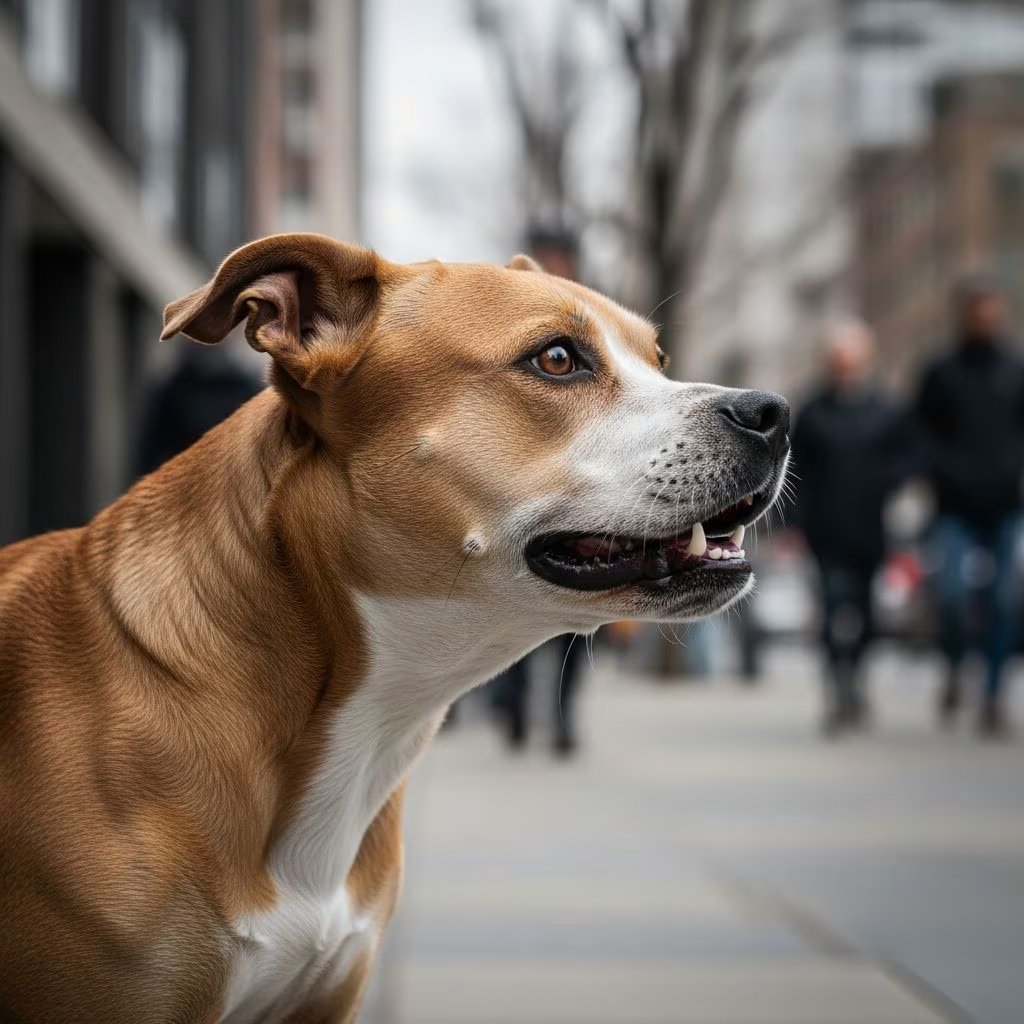
Reactivity in dogs manifests as exaggerated responses to everyday stimuli, such as barking intensely at passersby or lunging toward other animals on walks. Unlike typical excitement, these reactions stem from underlying emotions like fear or frustration, often escalating beyond control.
Defining Canine Reactivity
At its core, a reactive dog displays responses that are disproportionate to the trigger, rooted in emotional distress rather than deliberate aggression. This overreaction might involve prolonged vocalizations or physical outbursts that persist even after the stimulus fades. Experts distinguish it from aggression by noting that reactivity arises from heightened arousal impairing rational decision-making, leading to instinctive behaviors like fight or flight.
Common triggers include leashes, fences, or barriers that prevent natural movement, amplifying frustration. Dogs unable to approach or retreat may redirect energy into dramatic displays, appearing aggressive but driven by unmet needs for control or safety.
Spotting the Signs of Reactivity
Owners often first notice reactivity during routine outings. Key indicators include:
- Excessive barking or growling: Directed at dogs, people, or noises, lasting longer than warranted.
- Lunging or pulling: Strong forward charges on leash, even at distant objects.
- Body language cues: Stiff posture, raised hackles, dilated pupils, or avoidance turning into explosive energy.
- Physiological signs: Panting, trembling, or shedding fur excessively due to stress-induced cortisol spikes.
- Post-reaction recovery: Difficulty calming down, ignoring commands, or zoning out.
These behaviors signal an internal overload, where the dog’s emotional threshold is breached, shutting down higher brain functions.
| Reactive Behavior | Normal Excitement |
|---|---|
| Out-of-control lunging, oblivious to owner | Brief alert, responds to cues |
| Prolonged barking after trigger gone | Quick return to calm |
| High stress signals (shaking, drooling) | Mild tail wag, play bow |
Genetic Foundations of Reactivity
Breed predispositions play a significant role, as genetics shape sensory processing and neurotransmitter balance. Herding breeds may overreact to movement due to innate drive, while others inherit heightened sensitivity to sounds or smells. Variations in dopamine, serotonin, and GABA levels can predispose dogs to anxiety or poor impulse control.
Fear-based traits, like resource guarding, can pass through generations, though not deterministically. A puppy from reactive parents faces elevated risk, but early intervention can mitigate this blueprint. Sensory genetics amplify everyday stimuli into threats for some dogs, explaining why certain lines react more to fireworks or traffic.
Environmental and Experiential Triggers
While genes set the stage, environment directs the performance. Insufficient puppy socialization leaves dogs unprepared for novel encounters, fostering uncertainty. Overstimulating settings, like crowded dog parks, can sensitize sensitive pups through repeated negative interactions.
Leash reactivity exemplifies barrier frustration: restrained dogs can’t signal boundaries naturally, leading to defensive posturing. Classical conditioning pairs triggers (e.g., approaching dogs) with stress, while operant learning reinforces barking when it drives threats away. Poor resilience from inconsistent handling compounds this, turning mild arousal into full-blown episodes.
The Impact of Trauma and Learned Responses
Trauma is subjective—what overwhelms one dog might not faze another. Invaded personal space without escape options builds defensive habits. Passive dogs may internalize anxiety, becoming shut down, while confident ones externalize it as reactivity.
Learned helplessness emerges from inescapable stress, like forced greetings on leash, prompting preemptive aggression. Negative past events with dogs or people create anticipatory fear, where mere sight predicts discomfort. Breaking this cycle requires addressing root emotions, not just surface behaviors.
Distinguishing Reactivity from True Aggression
Reactivity mimics aggression but differs fundamentally: the former is emotional overflow without intent to harm, the latter involves purposeful conflict. Reactive dogs risk crossing into bites during peak arousal, as rational thought yields to instinct.
Aggression types like territorial guarding or maternal protection have clear motivations, often bite-oriented. Reactivity, conversely, spans contexts—on-leash greetings, fence lines, or home intrusions—fueled by barrier-induced frustration or under-socialization.
Strategies for Managing Reactive Dogs
Effective management starts with prevention: control exposure to sub-threshold levels where reactions don’t ignite. Use counter-conditioning to rewire associations, pairing triggers with rewards before arousal builds. Desensitization gradually increases exposure intensity while maintaining calm.
Tools like front-clip harnesses reduce pulling leverage. Training emphasizes emotional regulation via relaxation protocols, teaching ‘look at me’ cues for focus redirection. Avoid punishment, which heightens fear; opt for positive reinforcement to build confidence.
Daily Management Tips
- Choose quiet walk times and routes.
- Maintain distance from triggers (threshold training).
- Practice impulse control games at home.
- Enrich environment with puzzle toys to lower baseline stress.
Training Protocols for Lasting Change
Professional guidance accelerates progress. Behaviorists tailor plans using Learning Theory: BAT (Behavior Adjustment Training) allows controlled choices, fostering self-control. Medication may support severe cases, addressing chemical imbalances.
Track progress with journals noting trigger distance, duration, and intensity. Consistency across family members prevents mixed signals. Long-term, social skills classes in controlled settings rebuild positive associations.
FAQs on Reactive Dogs
Can all reactive dogs be rehabilitated?
Most improve significantly with science-based methods, though genetics limit full elimination in some cases. Early detection yields best outcomes.
Is reactivity the same as leash aggression?
Often overlapping; leashes amplify frustration by restricting natural responses, turning reactivity outward.
Should I muzzle my reactive dog?
Consider basket muzzles for safety during training; they allow panting and treats, reducing stress.
How long does training take?
Months to a year, depending on severity, consistency, and underlying causes. Patience is key.
Does neutering help reactivity?
It may reduce hormone-driven elements but doesn’t address fear or frustration roots.
Building a Balanced Lifestyle
Holistic approaches enhance training: balanced nutrition supports neurotransmitter health, exercise outlets pent-up energy, and mental stimulation prevents boredom-induced reactivity. Routine fosters security, minimizing surprises.
Owner education is crucial—understanding reactivity empowers empathetic responses over frustration. Celebrate small wins, like voluntary check-ins during walks, reinforcing progress.
References
- Causes of Reactive Dog Behavior and How to Train Accordingly — Whole Dog Journal. 2023. https://www.whole-dog-journal.com/behavior/causes-of-reactive-dog-behavior-and-how-to-train-accordingly/
- What Is a Reactive Dog? Signs and How To Help — PetMD. 2024-05-15. https://www.petmd.com/dog/behavior/reactive-dog
- Causes of Canine Reactivity — Canine Behavior Counseling. 2023. https://caninebehaviorcounseling.com/causes-of-canine-reactivity/
- What Is a Reactive Dog? Signs, Causes, and More — Rover.com. 2024. https://www.rover.com/blog/reactive-dog/
- Understanding the Difference Between Reactivity and Aggression — American Kennel Club (AKC). 2023-11-20. https://www.akc.org/expert-advice/training/reactivity-vs-aggression/
- Signs your dog is reactive and what to do if they are — Dogs Trust. 2024. https://www.dogstrust.org.uk/dog-advice/training/unwanted-behaviours/reactive-dog



