

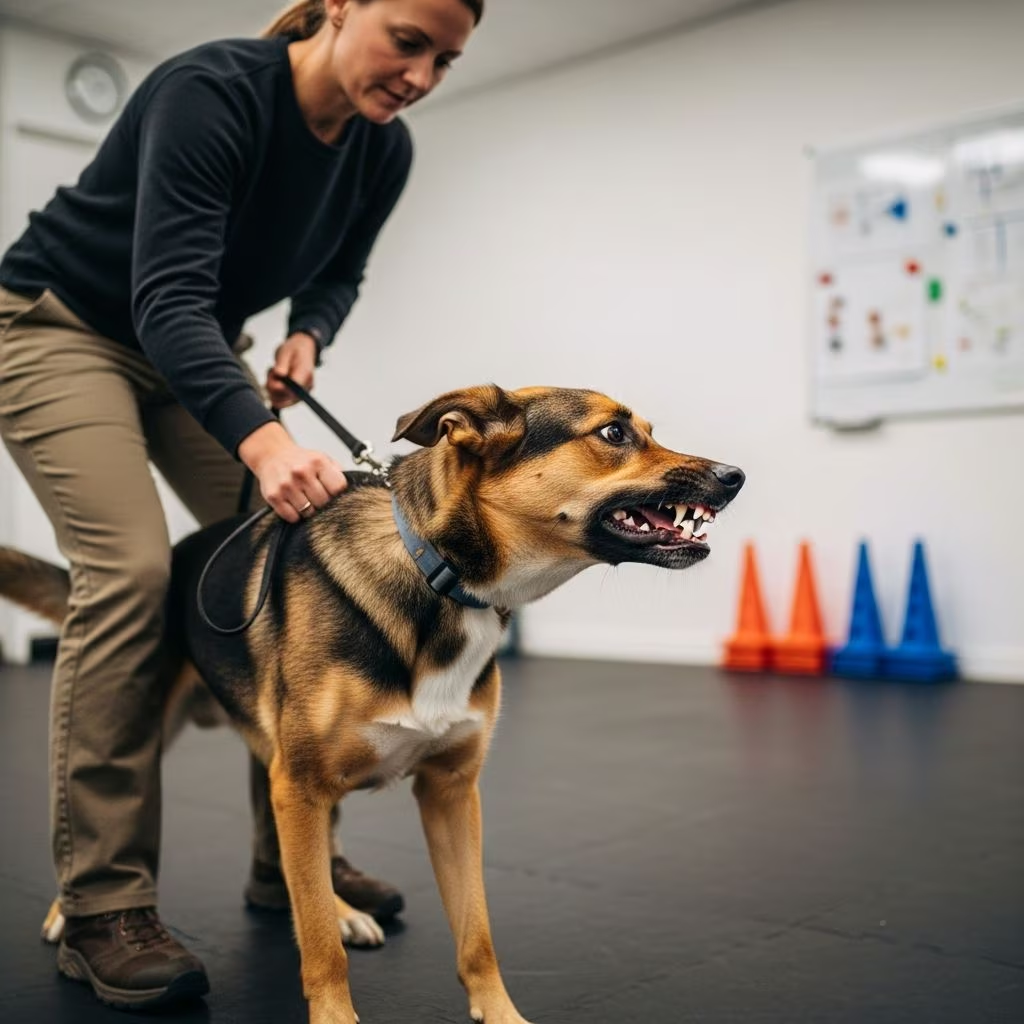
Reactive dogs display exaggerated responses to everyday stimuli, often barking, lunging, or growling in ways that seem disproportionate. This behavior stems from underlying emotions like fear, frustration, or excitement rather than true aggression, though it can escalate if unmanaged.
Recognizing Reactivity in Your Dog
Dogs naturally react to their surroundings, but reactivity crosses into abnormal territory when responses become intense and uncontrolled. A reactive dog might explode into a frenzy at the sight of another dog on a walk, ignoring commands and endangering itself or others. Key signs include:
- Excessive vocalization: Prolonged barking, whining, or howling that persists after the trigger is gone.
- Physical lunging or pulling: Straining against a leash with stiff body posture and forward ears.
- Hypervigilance: Constant scanning of the environment, unable to relax even in safe spaces.
- Physiological signs: Panting, drooling, trembling, or even vomiting from stress.
- Displacement behaviors: Spinning in circles, chasing tails, or fixating on shadows as a stress outlet.
These reactions often look aggressive but are typically rooted in distress. For instance, a dog behind a fence might charge and bark not to attack, but because barrier frustration amplifies its emotions.
The Science Behind Canine Reactivity
Reactivity arises from a complex interplay of biology and experience. At its core, it’s an emotional overreaction where the dog’s arousal spikes faster and higher than normal, impairing rational decision-making.
Neurological and Emotional Drivers
When triggered, a reactive dog’s brain floods with stress hormones like cortisol, elevating heart rate and shutting down higher thinking centers. This fight-or-flight state makes calm responses impossible, leading to instinctive outbursts. Emotions fueling reactivity include:
- Fear: The most common trigger, often from poor socialization or past scares.
- Frustration: Common on-leash, where dogs can’t approach or retreat freely.
- Excitement: High-energy dogs overwhelmed by stimuli like visitors or toys.
Unlike aggression, which aims to cause harm (e.g., resource guarding or territorial defense), reactivity is about emotional overflow.
Genetic Foundations of Reactivity
Breed and lineage play a pivotal role. Herding breeds like Border Collies may fixate intensely on movement, while terriers inherit high prey drive that amplifies reactions to small animals. Key genetic factors:
| Genetic Trait | Impact on Reactivity | Example Breeds |
|---|---|---|
| Sensory Sensitivity | Heightened response to noises, sights, smells | German Shepherds, Collies |
| Neurotransmitter Imbalance | Low serotonin or GABA leads to anxiety | Many working breeds |
| Inherited Behavioral Traits | Fear or guarding passed down generations | Guardians like Rottweilers |
Genetics set the stage, but they’re not destiny. A genetically predisposed dog in a calm home may never show issues.
Environmental and Experiential Causes
While genes provide the blueprint, environment shapes expression. Puppies need broad socialization between 3-12 weeks to build confidence; misses here breed uncertainty.
- Poor Socialization: Limited exposure to people, dogs, or novel stimuli creates fear of the unknown.
- Traumatic Events: Attacks, abuse, or repeated invasions of space teach defensive reactivity.
- Barrier Frustration: Leashes, fences block natural movement, turning greetings into blowups.
- Overstimulation: Chaotic homes or dog parks overwhelm sensitive dogs, leading to shutdown or outbursts.
Learned behaviors reinforce this: Barking scares off triggers, so it repeats via operant conditioning. Classical conditioning pairs stimuli (e.g., strangers) with stress.
Distinguishing Reactivity from True Aggression
Many confuse the two, but differences are clear:
| Aspect | Reactivity | Aggression |
|---|---|---|
| Motivation | Emotional arousal (fear/frustration) | Intent to harm/control |
| Body Language | High energy, averted gaze possible | Direct stare, wrinkled muzzle |
| Outcome | Rare bites, mostly noise/posturing | Biting, injuring |
| Triggers | Distance/sudden stimuli | Proximity/resources |
Reactivity can evolve into aggression if chronic stress erodes impulse control, especially in high-risk scenarios.
Practical Management Strategies
Addressing reactivity requires countering root emotions with science-based methods. Start with a vet check to rule out pain.
Desensitization and Counter-Conditioning
Gradually expose your dog to triggers at sub-threshold levels while pairing with rewards. For dog-reactive pups:
- Spot triggers from afar (e.g., 50 feet).
- Feed high-value treats as trigger appears.
- Repeat, closing distance slowly over weeks.
This rewires associations from threat to good things.
Impulse Control Training
Build self-regulation:
- Focus Games: ‘Look at me’ cues amid distractions.
- Leash Skills: Loose-leash walking with turns away from triggers.
- Relaxation Protocols: Mat training for calm stays.
Use positive reinforcement only; punishment heightens fear.
Environmental Adjustments
Reduce triggers proactively:
- Walk during quiet hours.
- Use visual barriers like baby gates.
- Muzzle train for safety (force-free method).
Tools like front-clip harnesses aid control without pain.
Advanced Interventions
For severe cases, consult certified behaviorists (CPDT-KA or veterinary behaviorists). Medications like fluoxetine may stabilize emotions alongside training. Consistency across family prevents mixed signals.
FAQs
Can all reactive dogs be fixed?
Most improve significantly with patient, professional-guided efforts, though some manage lifelong with strategies.
Is reactivity breed-specific?
Common in high-drive breeds, but any dog can develop it from experiences.
How long does training take?
Weeks to months; progress varies by case severity and commitment.
Should I use a shock collar?
No; it worsens fear. Stick to reward-based methods.
Can puppies become reactive?
Yes, early intervention prevents escalation.
Success Stories and Realistic Expectations
Owners report calmer walks after 3-6 months. Track via reactivity logs: note triggers, distance, duration. Celebrate small wins like quieter responses.
Reactivity isn’t a character flaw—it’s a mismatch between dog and world. With understanding, most thrive.
References
- Causes of Reactive Dog Behavior and How to Train Accordingly — Whole Dog Journal. 2023. https://www.whole-dog-journal.com/behavior/causes-of-reactive-dog-behavior-and-how-to-train-accordingly/
- What Is a Reactive Dog? Signs and How To Help — PetMD. 2024-01-15. https://www.petmd.com/dog/behavior/reactive-dog
- Causes of Canine Reactivity — Canine Behavior Counseling. 2023. https://caninebehaviorcounseling.com/causes-of-canine-reactivity/
- What Is a Reactive Dog? Signs, Causes, and More — Rover.com. 2024. https://www.rover.com/blog/reactive-dog/
- Understanding the Difference Between Reactivity and Aggression — American Kennel Club (AKC). 2023-05-10. https://www.akc.org/expert-advice/training/reactivity-vs-aggression/
- Reactive Dog — Dogs Trust. 2024. https://www.dogstrust.org.uk/dog-advice/training/unwanted-behaviours/reactive-dog



