

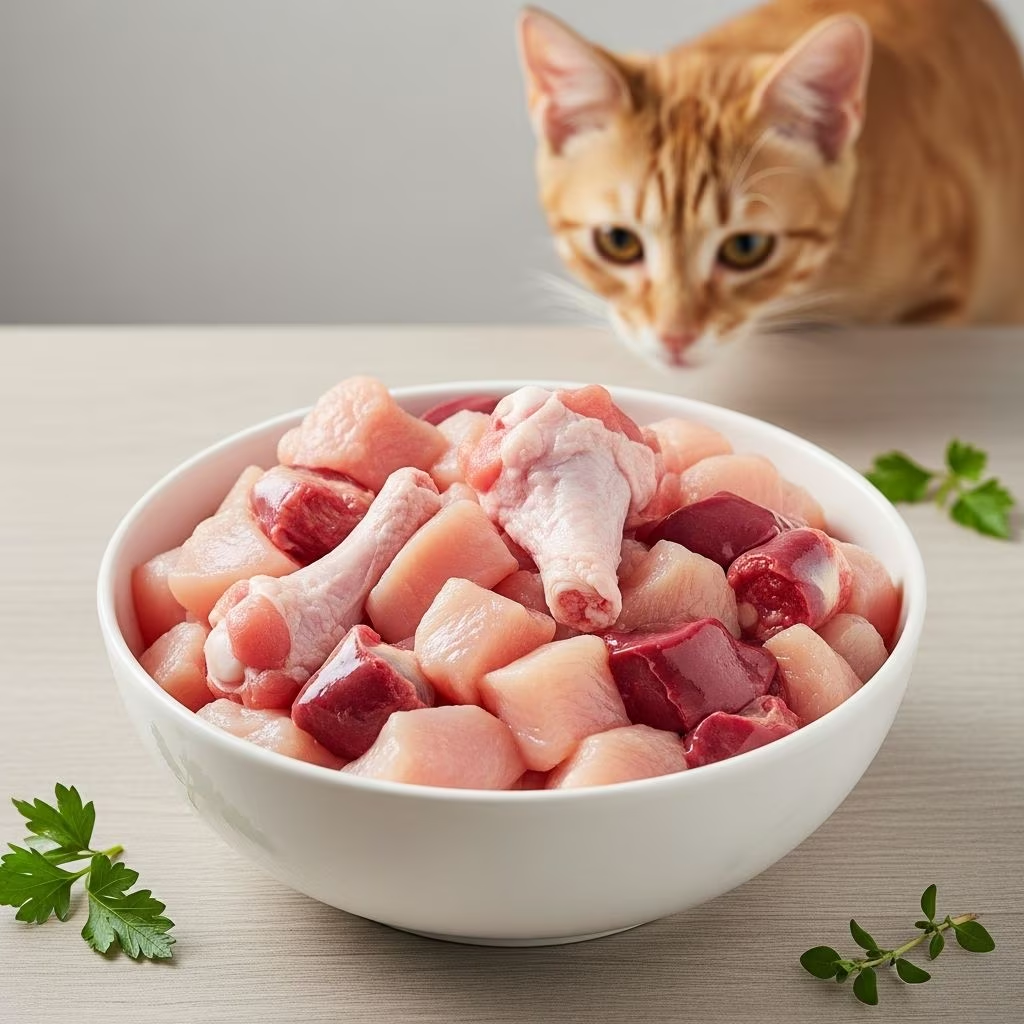
The question of whether domesticated cats should consume raw chicken has sparked considerable debate among pet owners and veterinary professionals. While cats are naturally equipped as carnivores with digestive systems designed to process raw meat, the safety and nutritional completeness of feeding raw chicken in a home environment presents complex considerations that extend beyond simple biological capability.
Understanding Feline Carnivore Digestive Biology
Cats are classified as obligate carnivores, meaning their bodies have evolved specifically to derive essential nutrients from animal tissue. In their natural state, wild cats routinely hunt and consume raw prey, including small mammals and birds, without any food preparation. This evolutionary history has shaped their digestive physiology in ways that differ substantially from human digestion.
The feline digestive system includes several characteristics that support raw meat consumption: stronger stomach acid, shorter digestive tract length, and specialized enzymes designed to break down animal proteins efficiently. When a wild cat consumes a freshly caught mouse or bird, it obtains complete nutrition including muscle tissue, organs, and bones in their natural raw state.
However, the leap from wild hunting to feeding domesticated store-purchased raw chicken involves significant practical differences that cannot be overlooked. The microbiological environment of commercially raised and processed chicken differs substantially from freshly killed wild prey, introducing contamination risks that wild cats would rarely encounter.
Bacterial Contamination: The Primary Health Concern
The most significant risk associated with feeding raw chicken to domestic cats involves pathogenic bacteria that may contaminate commercial poultry products. Multiple bacterial species pose serious health threats to both cats and their human families.
Salmonella represents the most commonly discussed bacterial concern in raw chicken discussions. While a cat’s intestinal tract naturally contains various bacteria kept in balance by beneficial microorganisms, exposure to elevated levels of salmonella can overwhelm these protective mechanisms. When harmful bacteria exceed the population of beneficial gut bacteria, cats may experience severe gastrointestinal distress.
Listeria presents another significant bacterial threat found in raw poultry. This pathogen can cause more severe systemic illness than salmonella, potentially affecting multiple organ systems.
Campylobacter and E. coli also frequently contaminate raw chicken products and can cause illness in feline digestive systems. These bacteria typically result in gastrointestinal symptoms including vomiting, diarrhea, and dehydration.
An often-overlooked aspect of raw chicken feeding involves asymptomatic bacterial shedding. A cat consuming contaminated raw chicken may not display obvious illness signs while still harboring and transmitting harmful bacteria through its feces, saliva, and fur. This creates a genuine public health concern, particularly affecting vulnerable household members including young children, elderly individuals, and immunocompromised family members.
Professional Veterinary Guidance and Recommendations
Major veterinary organizations have evaluated raw meat feeding practices and issued official recommendations. The American Veterinary Medical Association (AVMA) and the American Animal Hospital Association (AAHA) both advise against feeding uncooked poultry to cats and dogs, citing bacterial contamination risks affecting both animal and human health. These recommendations carry weight based on documented cases of illness linked to raw meat feeding practices.
The AVMA’s official position emphasizes that meat intended for pet consumption should undergo treatment to eliminate harmful bacteria. Some therapy animal programs have established explicit policies prohibiting animals on raw diets from participating in clinical settings due to contamination concerns.
Veterinary consensus acknowledges that while cats possess digestive capabilities to process raw meat, the practical risks of commercially available poultry outweigh the theoretical advantages of mimicking wild feeding patterns.
Nutritional Completeness and Dietary Adequacy
Beyond bacterial safety, nutritional completeness represents another critical consideration. Plain raw chicken breast, while providing excellent protein content, does not constitute a nutritionally complete meal for cats.
Feline nutritional requirements extend far beyond simple protein provision. Cats require carefully balanced levels of:
- Taurine—an essential amino acid critical for heart function and vision
- Calcium and phosphorus in appropriate ratios for skeletal health
- Vitamins A, D, and E in precise quantities
- Specific fatty acid profiles for metabolic function
- Appropriate mineral content including magnesium, potassium, and zinc
A diet consisting exclusively of raw chicken breast lacks many of these essential nutrients in proper proportions. Research examining homemade raw diets found that approximately 60 percent contained significant nutritional imbalances. For kittens, whose growth and development demands are substantially higher than adult cats, these nutritional deficiencies can create serious health consequences including weak bone development, vision impairment, and cardiac dysfunction.
Physical Safety Hazards Associated with Raw Poultry
Beyond microbiological and nutritional concerns, raw chicken presents physical hazards that pet owners must actively manage. Small bone fragments may become embedded in raw chicken portions and pose serious risks if they lodge in the digestive tract, potentially requiring surgical intervention.
This differs fundamentally from whole prey consumption in wild settings, where entire skeletons are consumed with appropriate tissue support. Commercially processed raw chicken may contain small fractured bone pieces invisible to casual inspection.
Interestingly, cooked chicken bones present even greater dangers than raw bones, as the cooking process renders bones brittle and prone to splintering once swallowed. This creates internal perforation risk that exceeds raw bone hazards. Therefore, if raw chicken is selected, bone removal must be meticulous, and cooked chicken bones should never be offered.
Cross-Contamination and Household Health Implications
Handling raw chicken for pet consumption introduces cross-contamination risks throughout the household. Bacteria present on raw poultry can transfer to kitchen surfaces, utensils, hands, and other food preparation areas. Unlike commercial pet food processing, which includes pathogen elimination steps, home preparation of raw diets places the burden of contamination prevention entirely on the pet owner.
Research indicates that salmonella bacteria can survive on household surfaces for up to four days, creating an extended contamination window. Comprehensive hygiene protocols necessary to minimize these risks include:
- Employing separate, dedicated utensils exclusively for raw meat preparation
- Preparing raw pet food in isolated kitchen areas when possible
- Wearing disposable gloves during all raw meat handling
- Immediately disinfecting all surfaces, food bowls, and utensils after raw meat contact
- Regularly sanitizing door handles, floors, and high-touch surfaces in preparation areas
- Storing raw meat in tightly sealed freezer containers to prevent leakage
Many pet owners underestimate the hygiene rigor required to safely manage raw feeding, leading to potential contamination of the broader household.
Safer Meat Options for Raw Feeding
If a pet owner determines that raw feeding aligns with their goals after consulting with their veterinarian, certain meat options present lower risk profiles than others.
Recommended Raw Meat Choices
Chicken and Turkey: When sourced from reliable suppliers and handled with appropriate food safety protocols, fresh chicken and turkey represent the safest raw poultry options. However, this assumes stringent safety measures and veterinary guidance.
Beef: Fresh beef from trustworthy sources may present lower salmonella risk than poultry, though other pathogens may still be present.
Meat Options to Avoid Entirely
Raw Pork: Pork carries parasitic risks including Trichinella infection, making raw consumption inadvisable.
Raw Fish: Certain fish species contain thiaminase enzymes that destroy vitamin B1, an essential nutrient for cats. Additionally, raw fish frequently carries parasitic contamination.
Processed Meats: Bacon, deli meats, cured products, and any meat seasoned with garlic or onions present multiple health hazards and should never be offered in raw or cooked form.
Practical Implementation: If You Choose Raw Feeding
Should a cat owner decide to proceed with raw chicken feeding after veterinary consultation, specific implementation strategies can reduce—though not eliminate—health risks.
Sourcing and Handling Protocols
- Select chicken from suppliers that can guarantee freshness and freedom from bacterial contamination
- Maintain frozen storage until immediately before feeding to minimize bacterial growth
- Inspect portions carefully for bone fragments, removing any detected fragments
- Consider grinding raw chicken into paste form, which eliminates bone hazards and improves digestibility
- Use only soft bones such as chicken necks or wings if bones are included
- Never offer cooked bones under any circumstances
Monitoring and Supervision
- Supervise cats during raw food consumption to monitor for choking or distress
- Observe litter box habits for signs of digestive upset
- Watch for behavioral changes suggesting systemic illness
- Maintain regular veterinary check-ups with specific mention of raw feeding practices
Superior Alternatives to Raw Feeding
Given the multiple risks associated with raw chicken feeding, commercially prepared cat foods offer substantial advantages in safety, nutritional completeness, and convenience.
High-quality commercial cat foods—whether dry kibble or wet formulations—are formulated by veterinary nutritionists to meet the Association of American Feed Control Officials (AAFCO) standards for complete and balanced nutrition. These foods undergo rigorous testing and quality control protocols to eliminate pathogens. Most cats thrive exceptionally well on properly selected commercial diets that provide all essential nutrients in appropriate proportions.
For cats with specific health conditions or dietary sensitivities, prescription diets formulated by veterinary nutritionists address individual health needs without the safety and nutritional concerns associated with raw feeding.
Consultation with Veterinary Professionals
Any consideration of raw feeding should begin with consultation with a qualified veterinarian who understands your individual cat’s health status, age, and specific nutritional requirements. Kittens, senior cats, pregnant or nursing females, and cats with compromised immune systems face elevated risks from raw feeding practices and typically require professional guidance.
Veterinarians can evaluate whether raw feeding aligns with your cat’s specific health profile and, if chosen, provide guidance on sourcing, preparation, and monitoring strategies specific to your circumstances.
Addressing Common Raw Feeding Arguments
Raw feeding advocates often cite the evolutionary history of cats as carnivores consuming raw prey. While this biological reality cannot be disputed, domesticated cats’ current environment, food sources, and health management capabilities differ substantially from wild predecessors. Modern veterinary medicine prioritizes preventing documented disease patterns observed in raw-fed populations.
The assertion that raw feeding improves coat quality, dental health, or energy levels lacks robust scientific validation. Cats consuming properly formulated commercial foods display these same positive attributes without the associated health risks.
References
- Can Cats Eat Raw Chicken? A Guide to Safety — Purina US. Retrieved from https://www.purina.com/articles/cat/feeding/can-cats-eat/raw-chicken
- Can cats eat raw chicken? All the advice you need — Untamed. Retrieved from https://untamed.com/blogs/nutrition/can-cats-eat-raw-chicken
- Can Cats Eat Raw Chicken? Yes, but They Need More Than That — HowStuffWorks Animals. Retrieved from https://animals.howstuffworks.com/pets/can-cats-eat-raw-chicken.htm
- American Veterinary Medical Association Guidelines on Pet Nutrition — AVMA. Retrieved from official AVMA resources on raw feeding recommendations.
- Raw Chicken for Cats – Safety, Risks & Feeding Tips — MichuPet. Retrieved from https://michupet.com/blogs/nutrition/can-cats-eat-raw-chicken



