

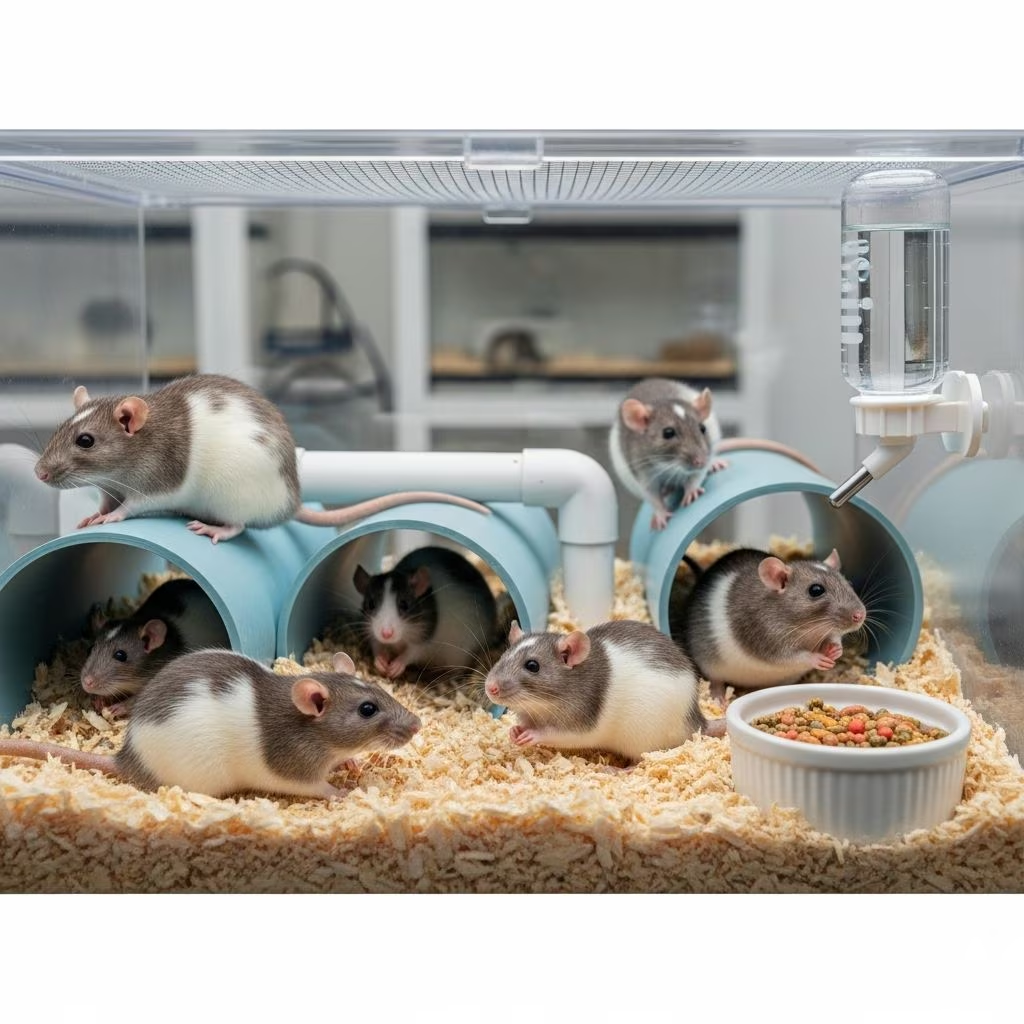
Rats exhibit one of the most efficient reproductive systems among mammals, enabling them to produce multiple litters annually with short gestation periods and large litter sizes. This guide delves into the intricacies of rat mating, pregnancy, delivery, and offspring development, drawing on established biological insights for pet owners and enthusiasts.
Understanding Sexual Maturity in Rats
Rats achieve sexual maturity remarkably early, typically between 5 and 6 weeks of age, allowing them to begin breeding shortly after weaning. Female rats, known as does, enter their first estrus cycle around this time, while males, or bucks, become fertile soon after. This rapid onset contributes to their prolific breeding potential, with females capable of producing up to eight litters per year under ideal conditions.
The estrous cycle in female rats lasts 4-5 days, divided into proestrus, estrus, metestrus, and diestrus phases, with ovulation occurring spontaneously during estrus. Monitoring vaginal cytology can help identify the optimal mating window, though for pet owners, observing behavioral cues is more practical.
Mating Behaviors and Processes
Mating in rats is a nocturnal activity driven by the female’s estrus phase, during which she becomes receptive to the male. The male mounts the female, who responds with lordosis—arching her back to facilitate copulation. These sessions are brief but frequent, often repeating 60-100 times in a single night, lasting from 2 to 24 hours overall.
Fertilization happens swiftly, with ovulation 8-12 hours into estrus and pregnancy possible within 24 hours of mating. Notably, females experience a postpartum estrus within 48 hours of giving birth, enabling back-to-back pregnancies if mated then. This trait, called continuous pairing, results in litters born about 21 days apart.
- Female receptivity: Marked by increased activity and mounting acceptance.
- Male indicators: Vocalizations, chasing, and penile erection via baculum bone stiffening.
- Success factors: Healthy diet, stress-free environment, and genetic diversity to avoid inbreeding.
The Gestation Period: What Happens Inside
Rat gestation spans 21-26 days, averaging 22-23 days, during which the female’s body undergoes profound changes. Early post-fertilization (days 1-7), zygotes divide into blastulas that implant in the uterine horns by day 7. By days 19-22, embryos reach 20-40 mm, with developing nervous systems.
Physical signs emerge around day 12, confirmable by gentle abdominal palpation. Mammary glands swell by week 2 as milk production ramps up, and the mother may lose nipple hair days before birth to aid nursing. Pregnant does eat more, nest-build, and reduce activity.
| Gestation Stage | Key Developments | Duration |
|---|---|---|
| Days 1-7 | Zygote division, blastula formation, implantation | First week |
| Days 8-18 | Embryo growth, organogenesis | Mid-gestation |
| Days 19-23 | Fetal maturation, milk prep, nesting | Late gestation |
Birthing: The Delivery Process
Labor lasts 1-2 hours, involving uterine contractions that expel 6-12 pups (average 8-10) through the vagina. Pups emerge hairless, blind (eyelids sealed), and deaf (ear canals closed), entirely dependent on maternal care.
The mother cleans each pup, stimulates breathing, and severs the umbilical cord. Postpartum estrus follows quickly, but separating pairs prevents immediate re-breeding unless intended. Complications like dystocia are rare in healthy rats but warrant veterinary attention if prolonged.
Newborn Care and Lactation
For the first 16 days, pups rely on mother’s milk from swollen mammary glands producing colostrum initially. Does nurse frequently, especially at night, while pups huddle for warmth. Owners should provide high-protein diets, quiet spaces, and avoid handling to minimize stress.
Weaning occurs at 21-23 days, when pups begin nibbling solid food and are fully independent by 45 days. Early separation (before 21 days) risks malnutrition and poor socialization.
Pup Growth Milestones
Rat pups develop swiftly: eyes open at 14-16 days, ears at 3 weeks, fur by week 2, and mobility soon after. By 50-60 days, they reach sexual maturity, mirroring parental cycles.
Monitor for healthy weight gain (birth: 5-6g; weaning: 50-70g) and behaviors like play-fighting, which build social skills. Lifespan averages 2-3 years, influenced by genetics and care.
- Birth to Day 7: Nursing, bonding, weight doubling.
- Weeks 2-3: Sensory development, weaning start.
- Weeks 4-6: Independence, maturity approach.
- Adulthood: Full size, breeding readiness.
Health Considerations in Breeding
Breeding requires vet checks for parasites, tumors, and reproductive health. Obesity delays maturity; poor nutrition shrinks litters. Polyestrous nature demands controlled pairings to avoid exhaustion—limit to 4-6 litters lifetime for pets.
Risks include cannibalism under stress or mastitis. Quarantine new rats prevents disease spread. Spaying/neutering non-breeders curbs overpopulation.
FAQs
How many pups in a rat litter?
Typically 6-12, averaging 8-10, varying by health and age.
Can rats breed year-round?
Yes, as polyestrous breeders with 4-5 day cycles.
When to separate rat pups?
Males from females at 5 weeks to prevent inbreeding; wean at 21 days.
Signs of rat pregnancy?
Weight gain, nesting, palpable fetuses post-day 12.
Ideal breeding age for pet rats?
Females 10-12 weeks first litter; up to 9-12 months total.
Responsible Breeding Tips
Select proven parents, ensure spacious habitats (minimum 2 sq ft per rat), and plan homes for pups. Overbreeding fuels feral populations, so prioritize welfare. Consult vets for protocols.
References
- The Lifespan and Reproduction Cycle of Rodent Species — Flick.com.au. 2024. https://www.flick.com.au/blog/the-lifespan-and-reproduction-cycle-of-rodents/
- How Fast Do Rats Reproduce? Insights into Rapid Rat Reproduction — 1st Pest Control. 2024-01-10. https://www.1stpestcontrol.ca/2024/01/10/how-fast-do-rats-reproduce-insights-into-rapid-rat-reproduction/
- RAT BREEDING COLONY MANAGEMENT — McGill University. N/D. https://www.mcgill.ca/research/files/research/609-_rat_breeding_colony_management.pdf
- Rat Reproduction — Carolina Knowledge Center. N/D. https://knowledge.carolina.com/discipline/life-science/rat-reproduction/
- Mating – Rat Guide — RatGuide.com. N/D. https://ratguide.com/breeding/breeding_rats/mating.php



