

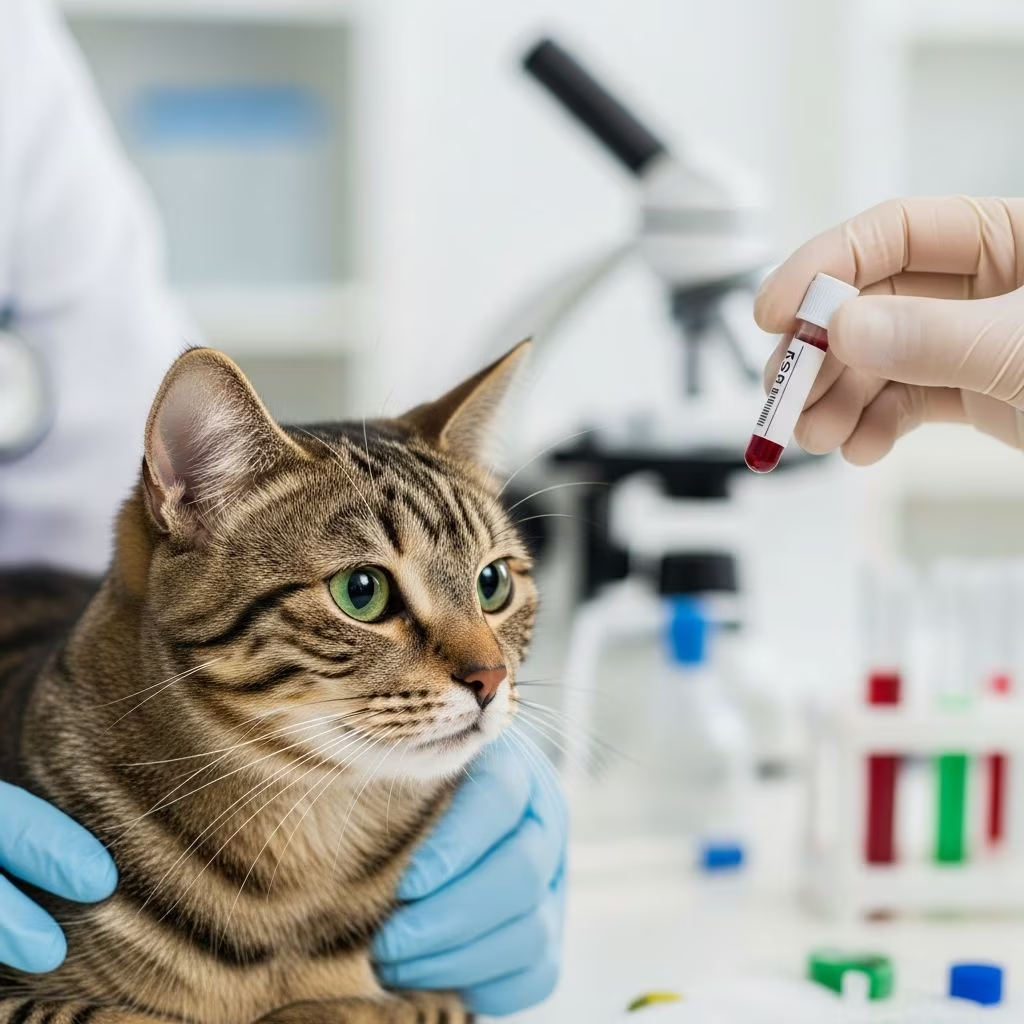
RAST Testing in Cats: Understanding Radioallergosorbent Testing
Cat allergies can cause significant discomfort and health complications for your feline companion. When your cat exhibits signs of allergic reactions, your veterinarian may recommend various diagnostic tests to identify the underlying cause. One commonly recommended test is RAST (Radioallergosorbent) testing, a blood-based diagnostic tool designed to help identify specific allergens affecting your cat. Understanding how RAST testing works, its benefits, and its limitations can help you make informed decisions about your cat’s healthcare.
What is RAST Testing?
RAST, which stands for Radioallergosorbent test, is a blood test used to determine whether a cat is allergic to specific antigens. The test measures levels of IgE, a specific type of immunoglobulin in the cat’s immune system. When cats are exposed to allergens, their immune system produces IgE antibodies in response. By measuring these antibodies in the bloodstream, veterinarians can identify which specific substances your cat may be allergic to.
The term “radioallergosorbent” comes from the original testing method, which used radioactive isotopes to detect IgE. Modern versions of this test, often referred to as serum allergy tests or blood allergy tests, use advanced laboratory techniques to achieve similar results without radioactive materials. These contemporary blood tests analyze a small sample of your cat’s serum to identify sensitivities to various potential allergens.
How RAST Testing Works
The RAST testing process begins with a simple blood draw from your cat. Your veterinarian will collect a small blood sample, typically from a vein in your cat’s leg or neck. Unlike intradermal skin testing, which requires sedation and direct injection of allergens into the skin, RAST testing is a non-invasive procedure that requires minimal handling of your cat.
Once the blood sample is collected, it is sent to a specialized laboratory for analysis. The laboratory technicians expose the serum to various allergen extracts and use sophisticated testing methods to detect and measure allergen-specific IgE antibodies. The test can evaluate sensitivity to numerous common feline allergens, including pollen from trees, grasses, and weeds, as well as fungi, house dust mites, and various food ingredients. The results typically indicate which allergens your cat reacted to and the relative strength of each reaction.
Common Allergens Tested
RAST testing can evaluate your cat’s reaction to a wide range of environmental and food-related allergens. Common environmental allergens assessed include:
- Tree pollens (oak, cedar, birch)
- Grass pollens (timothy, bermuda, ryegrass)
- Weed pollens (ragweed, lamb’s quarters)
- Mold spores
- Dust mites
- Cockroaches
- Feathers
For food allergy testing, the test evaluates reactions to common protein and carbohydrate sources found in commercial cat foods, such as beef, chicken, fish, wheat, corn, and soy. Your veterinarian can also request testing for specific allergens based on your cat’s individual history and suspected triggers.
Accuracy and Reliability of RAST Testing
The reliability of RAST testing varies depending on the type of allergy being investigated. RAST testing is generally accurate for diagnosing environmental allergies, making it particularly useful for identifying atopic dermatitis or inhalant allergies in cats. Many veterinarians consider blood testing especially valuable for cats that cannot be safely sedated for intradermal skin testing or for those with widespread skin irritation that makes skin testing impractical.
However, RAST testing is not as reliable for food allergy testing. Research has demonstrated that intradermal skin testing, serum allergy testing, and other diagnostic methods are unreliable for detecting adverse food reactions in allergic patients. The only definitive way to diagnose food allergies in cats is through a food elimination trial, where your cat is fed a novel diet containing ingredients it has not previously consumed, and symptoms are monitored over time.
It is important to understand that allergy testing cannot actually diagnose allergies on its own. Rather, allergy testing is used to identify offending allergens after a clinical diagnosis of allergy has been made through physical examination and symptom observation. A positive RAST result alone does not confirm an allergy; clinical signs must be present in combination with positive test results.
When Your Veterinarian Recommends RAST Testing
Your veterinarian may recommend RAST testing for your cat under several circumstances. If your cat displays signs of allergic reactions such as persistent itching, red or inflamed skin, excessive grooming, hair loss, chronic ear infections, or facial swelling, your vet may suggest allergy testing to identify the cause.
RAST testing is particularly beneficial when intradermal skin testing is not a viable option. Cats that are overly anxious, have severe skin lesions, are pregnant, or are very young or very old may not be suitable candidates for intradermal testing, which requires sedation and shaving of fur. In these situations, RAST testing offers a practical alternative that still provides valuable diagnostic information.
Your veterinarian may also recommend RAST testing when your cat’s symptoms suggest environmental allergies rather than food allergies. If seasonal patterns are evident in your cat’s symptoms, or if symptoms persist year-round despite dietary changes, environmental allergies are more likely, and RAST testing can be particularly helpful in identifying specific environmental triggers.
RAST Testing Compared to Other Allergy Diagnostics
| Diagnostic Method | How It Works | Environmental Allergies | Food Allergies | Advantages | Disadvantages |
|---|---|---|---|---|---|
| RAST/Serum Testing | Blood test measuring IgE antibodies | Generally Accurate | Not Reliable | No sedation needed, convenient, useful for cats with skin lesions | Less accurate for food allergies, may produce false positives |
| Intradermal Skin Testing | Allergen injections into shaved skin | Gold Standard | Not Recommended | Highly accurate for environmental allergies, immediate results | Requires sedation, may not be suitable for all cats, causes temporary discomfort |
| Elimination Diet | Feeding novel protein and carbohydrate | Not Applicable | Gold Standard | Only reliable method for diagnosing food allergies, non-invasive | Requires strict compliance, takes 8-12 weeks for results, cannot reintroduce previous diet |
Understanding Your RAST Test Results
When your veterinarian receives your cat’s RAST test results, the report will indicate which allergens your cat reacted to and typically assign a score or level to each reaction. Results are usually categorized as negative, borderline, or positive, with some laboratories providing more detailed scoring systems.
A positive result indicates that your cat has IgE antibodies against that particular allergen, suggesting that your cat may be allergic to it. However, a positive RAST result does not automatically mean your cat is clinically allergic to that substance. Some cats may have IgE antibodies to allergens they are not actually sensitive to clinically. Your veterinarian will interpret the results in context with your cat’s clinical signs, medical history, and environmental exposure.
False positives can occur with RAST testing, meaning the test may indicate an allergy that your cat does not actually have. This underscores the importance of working closely with your veterinarian to correlate test results with actual clinical symptoms. Your vet may recommend allergen avoidance or immunotherapy based on the combination of clinical signs and positive test results rather than relying on test results alone.
Allergen-Specific Immunotherapy Based on RAST Results
One of the primary reasons veterinarians perform RAST testing is to potentially develop an allergen-specific immunotherapy (ASIT) program for your cat. Immunotherapy, also called allergy shots or allergy desensitization, involves gradually introducing small amounts of the allergen to help your cat’s immune system become less reactive over time.
Immunotherapy has been used since 1941 and is generally regarded as safe. Success rates vary, with approximately 50-80% of cats showing improvement with allergen-specific immunotherapy. The results of RAST testing help your veterinarian identify which specific allergens to include in your cat’s customized immunotherapy formula. Cats that receive regular monitoring, maintain strict compliance with treatment protocols, and avoid concurrent use of systemic corticosteroids typically show the best results with immunotherapy.
Modern immunotherapy options include injectable allergy shots as well as sublingual (under-the-tongue) allergy drops, which offer an alternative for cats that may be difficult to treat with injections.
Limitations and Considerations
While RAST testing provides valuable diagnostic information, it is important to understand its limitations. The test cannot definitively diagnose food allergies in cats, so additional diagnostic methods such as elimination diets are necessary for suspected food-related allergies. Additionally, very young cats (under 12 months of age) may have incomplete immune responses and could yield different results if retested after 18 months of age.
RAST testing results must always be interpreted in conjunction with your cat’s clinical signs and history. A positive result alone does not confirm an allergy, and a negative result does not completely rule out an allergy if clinical signs are present. Your veterinarian’s clinical judgment, combined with test results, diagnostic history, and response to treatment trials, provides the most accurate overall assessment of your cat’s allergic condition.
The Diagnostic Process: Beyond RAST Testing
Diagnosing cat allergies typically involves multiple steps and diagnostic approaches. Before recommending allergy testing, your veterinarian will first rule out non-allergenic causes of your cat’s symptoms. This may include performing skin scrapings to identify mange, fungal cultures to identify ringworm, microscopic examination for parasites, and other tests based on your cat’s specific clinical presentation.
Secondary bacterial or yeast infections are common complications of allergies in cats and must be identified and treated during the diagnostic process. Treating these infections early helps ensure an accurate assessment of your cat’s response to allergy diagnostics and treatment.
Frequently Asked Questions About RAST Testing in Cats
Q: Is RAST testing painful for my cat?
A: No, RAST testing involves only a simple blood draw, which causes minimal discomfort. No sedation is required, making it a relatively comfortable diagnostic procedure for most cats. The brief needle stick is usually well-tolerated, especially compared to intradermal skin testing which requires sedation.
Q: How long does it take to get RAST test results?
A: Most laboratories return RAST test results within 1-2 weeks after receiving the blood sample. Your veterinarian will contact you with the results and discuss the findings and recommended treatment options based on your cat’s specific results.
Q: Can RAST testing definitively diagnose food allergies in cats?
A: No, RAST testing is not reliable for diagnosing food allergies in cats. The only definitive way to diagnose food allergies is through a food elimination trial lasting 8-12 weeks. Your veterinarian will recommend a novel diet and monitor your cat’s response to identify the specific food causing the allergic reaction.
Q: What if my cat has a negative RAST result but still shows allergy symptoms?
A: A negative RAST result does not completely rule out allergies. Your veterinarian will continue investigating using other diagnostic methods, such as elimination diets for suspected food allergies or environmental modifications to test for environmental allergen involvement. Clinical signs are equally important as test results in the diagnostic process.
Q: Can RAST testing results change over time?
A: Yes, RAST testing results can change, particularly in young cats. Kittens under 12 months of age may show different results if retested after 18 months when their immune system has fully matured and they have been exposed to a complete cycle of seasonal allergens.
Q: How much does RAST testing cost?
A: The cost of RAST testing varies depending on your veterinary clinic and the specific laboratory used, but typically ranges from $200-$400. Your veterinarian can provide you with a specific cost estimate before performing the test.
References
- Cat Allergies: Diagnosis and Treatment — Taylor Animal Hospital. November 28, 2025. https://www.tahofparkville.com/services/cats/allergies
- Understanding Allergy Testing for Dogs and Cats — Golden Heart Veterinary Care. November 28, 2025. https://www.goldenheartvetcare.com/blog/understanding-allergy-testing-for-dogs-and-cats
- Allercept™ Testing: Reference Lab Diagnostics — Antech Diagnostics. November 28, 2025. https://www.antechdiagnostics.com/antech-product/allercept-testing/
- Allergy Testing for Dogs & Cats in Orange Park — Animal Friends Dermatology. March 22, 2024. https://www.animalfriendsdermatology.com/site/blog/2024/03/22/allergy-testing-pets
- Food Allergy in the Cat: A Diagnosis by Elimination — PMC/NIH. November 28, 2025. https://pmc.ncbi.nlm.nih.gov/articles/PMC11220937/
- What do I Need to Know About Allergy Testing? — Veterinary Practice. November 28, 2025. https://www.veterinary-practice.com/article/what-do-i-need-to-know-about-allergy-testing
- Allergies of Cats – Cat Owners — Merck Veterinary Manual. November 28, 2025. https://www.merckvetmanual.com/cat-owners/skin-disorders-of-cats/allergies-of-cats



