

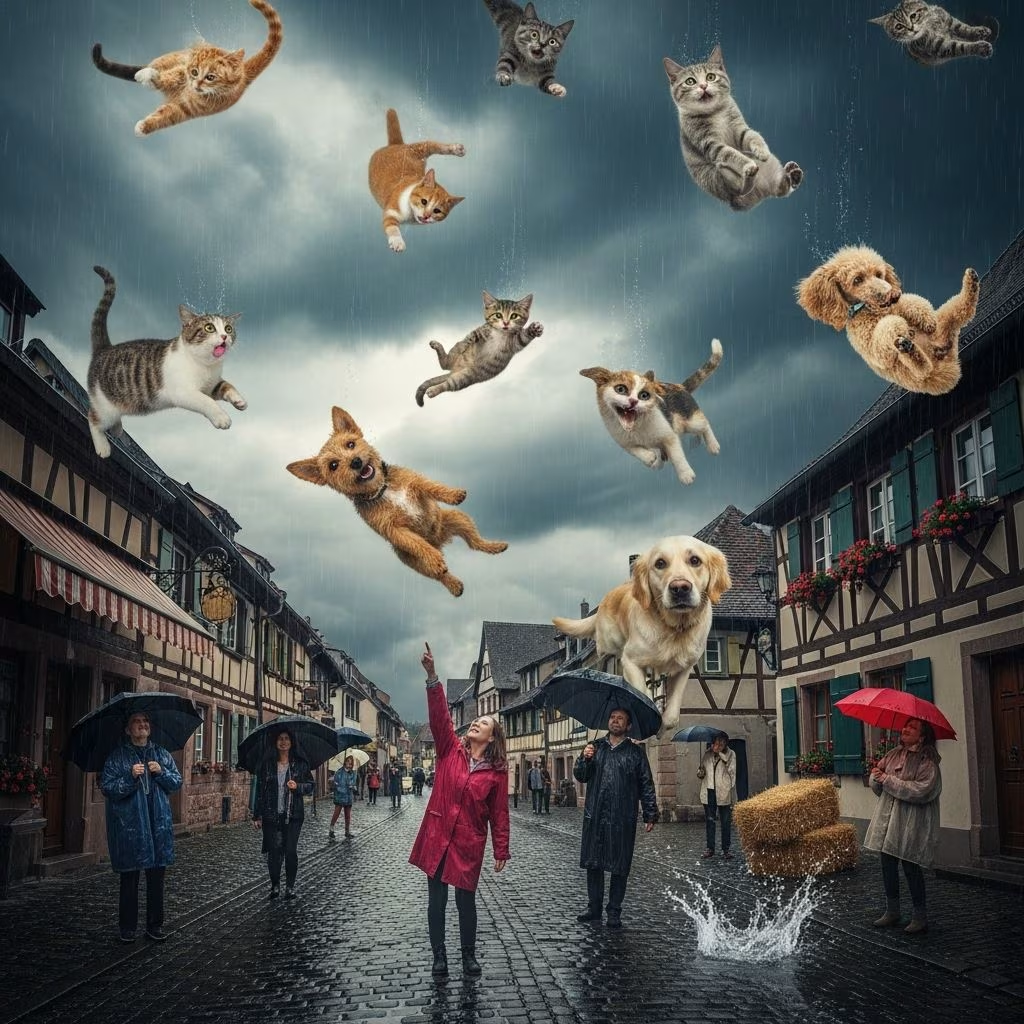
The expression “it’s raining cats and dogs” vividly captures the chaos of a heavy downpour, evoking images of pets plummeting from the sky. This idiom, deeply embedded in English vernacular, has puzzled linguists for centuries due to its unclear beginnings. While no single explanation holds definitive proof, a blend of literary evidence, folk beliefs, and word evolution offers compelling insights into its development.
Earliest Literary Appearances in English Texts
The phrase’s documented history traces back to the mid-17th century, marking its emergence in British literature. In 1651, Welsh poet Henry Vaughan published Olor Iscanus, a collection where he described a sturdy roof capable of withstanding “dogs and cats rained in shower.” This early variant suggests the imagery was already circulating orally.
Just a year later, in 1652, playwright Richard Brome incorporated a similar notion into his comedy City Witt, stating, “It shall rain dogs and polecats.” Polecats, weasel-like creatures prevalent in Britain until the late 19th century, substituted for cats, indicating flexibility in the animal references during this period.
These instances predate the modern form, implying the idiom evolved from spoken language into written records. By the 18th century, it gained traction through satirist Jonathan Swift. In his 1738 work A Complete Collection of Genteel and Ingenious Conversation, a character laments the possibility of it raining “cats and dogs.” Scholars debate if Swift invented it or popularized an existing cliché, but his influence likely cemented its place in popular culture.
Mythological Influences from Norse Legends
One captivating theory links the phrase to Norse mythology, where weather gods embodied animal symbols. Odin, the chief deity associated with storms, thunder, and winds, was frequently depicted alongside wolves and dogs as harbingers of fierce gales. Sailors and farmers interpreted these canines as omens of turbulent weather.
Complementing this, folklore portrayed witches riding broomsticks through storms, accompanied by black cats—symbols of torrential rain. For maritime communities, spotting such signs foretold violent tempests: dogs for wind, cats for deluge. This dual symbolism could explain why household pets became metaphors for extreme precipitation, blending superstition with observation.
Linguistic Roots: From Ancient Words to Modern Slang
Beyond myths, etymologists point to phonetic and semantic shifts from obsolete terms. The Old English word “catadupe,” meaning a cascading waterfall or cataract, bears striking resemblance to “cats and dogs.” This term echoed across languages: Latin catadupa derived from Greek katadoupous, describing the Nile River’s mighty falls.
- Catadupe evolution: Pronounced similarly to “cats doop,” it evoked roaring waters, transforming into the animal-paired idiom over time.
- Greek cata doxa: Meaning “contrary to expectation,” this phrase captured the absurdity of feline and canine rainfall, fitting freakish storms.
These linguistic threads suggest the expression metaphorically denoted overwhelming floods, not literal pet showers. Heavy rains resembling waterfalls aligned perfectly with rural experiences of sudden, biblical deluges.
Urban Floods and Swift’s Descriptive Poetry
Jonathan Swift’s 1710 poem Description of a City Shower provides another contextual clue. It depicts London streets awash after intense rain, with debris—including drowned animals—swept along gutters. Observers might have quipped about “raining cats and dogs” upon seeing carcasses dislodged by floodwaters, fueling the phrase’s gritty, urban origin.
This scenario resonated in pre-sewage era cities, where poor drainage turned downpours into hazardous torrents. Dead strays, common in streets, bobbed in the currents, visually linking animals to precipitation without implying aerial descent.
Debunking the Popular Thatch Roof Myth
A persistent but unfounded tale claims cats and dogs sheltered in thatched roofs, only to tumble out during storms. Proponents argue medieval homes had straw roofs where pets nested, and rain loosened them.
However, experts refute this: well-constructed thatch is sloped, dense, and water-repellent, preventing easy slippage. Animals would seek interior warmth, not precarious external perches amid lightning. No historical records corroborate mass pet ejections, branding it folk etymology—charming fiction without evidence.
| Theory | Supporting Evidence | Credibility |
|---|---|---|
| Thatch Roof Fall | Anecdotal stories | Low – Debunked by roof mechanics |
| Norse Mythology | Folklore of Odin/witches | Medium – Symbolic but speculative |
| Catadupe/Waterfall | Linguistic parallels | High – Historical word usage |
| Swift’s Satire | Printed records from 1738 | High – Earliest full phrase |
Global Cousins: Similar Idioms Worldwide
English isn’t alone in animal-rain metaphors. French speakers say “il pleut des cordes” (raining ropes), evoking sheet-like downpours. Germans use “Es regnet wie aus Eimern” (raining buckets), while Spaniards note “llover a cántaros” (raining pitchers).
In Asia, Mandarin employs “下倾盆大雨” (bucket-tipping rain), paralleling the intensity. These cross-cultural expressions highlight humanity’s universal awe—and frustration—with violent storms, adapting local imagery for hyperbole.
Evolution in American English and Pop Culture
Transatlantic migration carried the idiom to America, where it flourished in 19th-century newspapers describing Midwestern deluges. Mark Twain and other humorists wielded it for comedic effect, embedding it in folklore.
Today, media amplifies it: weather apps, films like Singin’ in the Rain parodies, and cartoons depict literal cats-and-dogs showers. Its endurance stems from phonetic punch—rhythmic alliteration—and visual absurdity, making mundane rain reports memorable.
Why Cats and Dogs? Psychological Appeal
Psycholinguists note the phrase’s stickiness due to schema activation: everyone visualizes beloved pets, heightening emotional impact. Dual animals create balance—cats for stealthy drizzle buildup, dogs for thunderous onslaught—mirroring storm phases.
Alternatives like “raining pitchforks” or “stair-rods” (thin, vertical rain) exist but lack charm. Swift’s version won for its whimsy, outlasting rivals in collective memory.
Modern Usage and Linguistic Shifts
In 21st-century speech, the idiom persists informally, though meteorologists favor “torrential” or “monsoon-like.” Climate change intensifies storms, reviving its aptness for record deluges. Dictionaries like Oxford label its origin “obscure,” honoring etymological humility.
Social media memes literalize it with Photoshopped pet storms, sustaining relevance. As English evolves, this relic endures, bridging folklore and forecast.
Frequently Asked Questions (FAQs)
What is the first recorded use of “raining cats and dogs”?
Henry Vaughan’s 1651 poem in Olor Iscanus mentions “dogs and cats rained in shower,” the earliest variant.
Did animals really fall from roofs?
No, this myth is false; thatch roofs are waterproof and slanted, unlikely to dislodge sheltered pets.
Is it related to Greek or Latin words?
Yes, possibly from “catadupe” (waterfall) or cata doxa (contrary to belief).
Who popularized the phrase?
Jonathan Swift in 1738, via satire, likely boosted its fame.
Are there similar idioms elsewhere?
Yes, like French “raining ropes” or German “raining buckets.”
References
- What is the origin of the phrase “it’s raining cats and dogs?” — Library of Congress. 2023. https://www.loc.gov/everyday-mysteries/meteorology-climatology/item/what-is-the-origin-of-the-phrase-its-raining-cats-and-dogs/
- Why do we say ‘raining cats and dogs’? — HistoryExtra (BBC History Revealed). 2023-10-01. https://www.historyextra.com/period/early-modern/why-do-we-say-raining-cats-and-dogs/
- Idiom: It’s raining cats and dogs! – YouTube — Literal Phrasing. 2023. https://www.youtube.com/watch?v=zuTtFsCtB6c



