

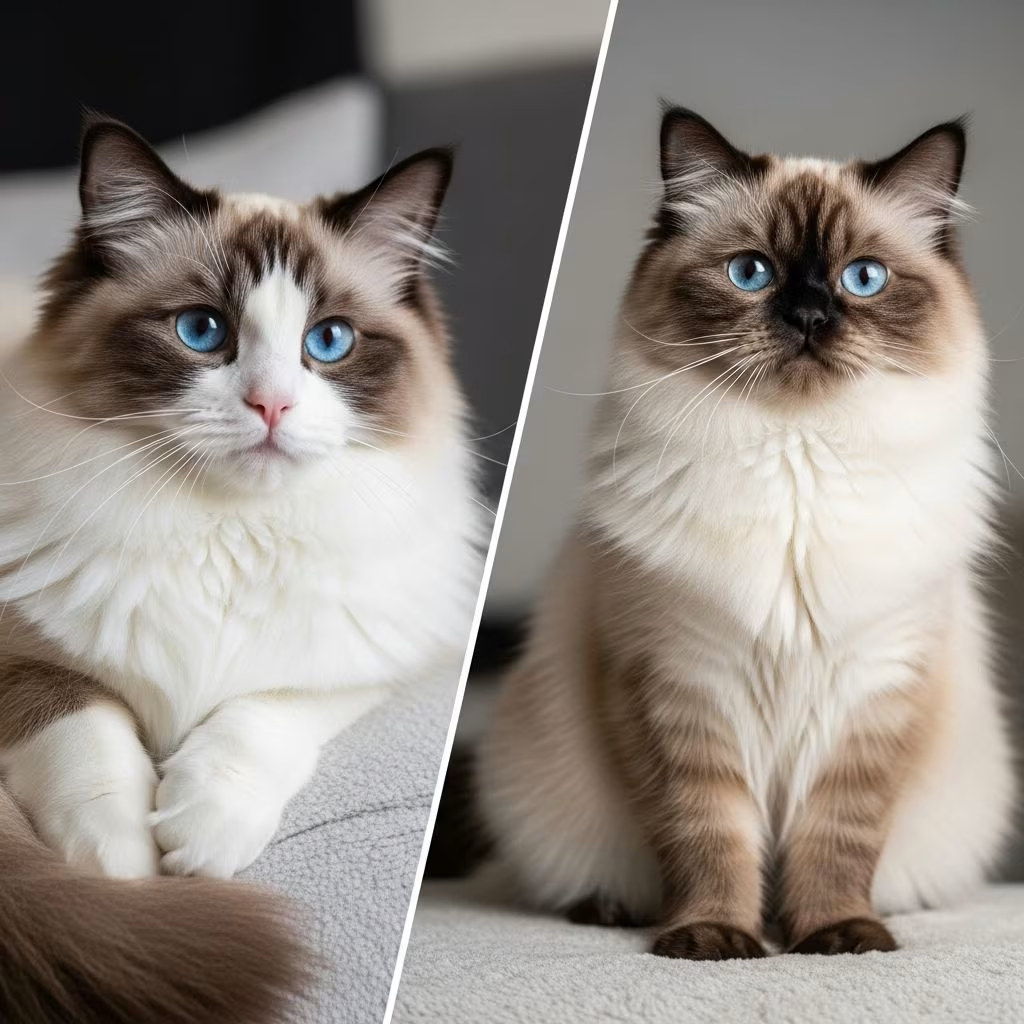
Both Ragdoll and Himalayan cats captivate with their striking colorpoint coats and affectionate natures, making them top choices for loving homes. Ragdolls offer a playful, adaptable vibe ideal for active families, while Himalayans provide serene companionship for quieter settings. This guide dives deep into their origins, physical features, behaviors, maintenance, health profiles, and living needs to help you select the perfect match.
Origins and Development of These Iconic Breeds
The Ragdoll breed emerged in the 1960s in California, credited to breeder Ann Baker. She crossed a white longhaired cat named Josephine with Birman or Burmese types, selecting for docile traits and the signature limp “ragdoll” flop when picked up. Recognized by cat fancies like the Cat Fanciers’ Association (CFA) in the 1990s, Ragdolls quickly gained fame for their dog-like loyalty and social demeanor.
Himalayans trace roots to the 1930s, when breeders aimed to blend Persian luxury with Siamese colorpoint patterns. Crossing Persians and Siamese yielded the pointed longhair look, officially recognized as a distinct CFA breed in 1957. Often viewed as a Persian variant, Himalayans retain the stocky build and plush coat but with vivid blue eyes and darker extremities.
These histories shape their traits: Ragdolls prioritize sociability from hybrid vigor, while Himalayans emphasize refined beauty from selective Persian-Siamese breeding.
Physical Characteristics and Appearance Breakdown
Ragdolls boast a substantial, muscular frame with males often reaching 15-20 pounds and females 10-15 pounds. Their semi-longhair coat lacks a dense undercoat, appearing silky and plush without extreme volume. Heads form a gentle wedge with oval blue eyes, medium ears, and substantial whiskers. Bodies are rectangular, legs sturdy, tails plumed.
Himalayans present a cobby, compact body weighing 7-12 pounds, with a broad chest and short, thick legs. Their hallmark is the flat, brachycephalic face—round with large, round blue eyes, tiny nose, and small ears set wide. The double coat is exceptionally long and thick, creating a mane-like ruff and voluminous tail.
| Feature | Ragdoll | Himalayan |
|---|---|---|
| Body Type | Large, rectangular, muscular | Medium, cobby, stocky |
| Head Shape | Wedge/triangular, oval eyes | Round, flat-faced, round eyes |
| Coat Length | Medium-long, silky | Long, dense double coat |
| Adult Weight | 10-20 lbs | 7-12 lbs |
| Height | 9-11 inches | 9-10 inches |
Colorpoints unite them: both display seal, blue, chocolate, lilac, cream, red, tortie, and lynx points in solid, mitted, bicolor, or van patterns. Ragdolls uniquely offer these in pointed, mitted, bicolor, and lynx varieties, while Himalayans stick to traditional Persian points.
Temperament and Behavioral Traits
Ragdolls embody friendliness, often following owners room-to-room and greeting strangers warmly. Their calm, patient nature suits families with children or dogs; they play gently without aggression. Intelligent and trainable, they master tricks, leashes, and fetch. While loving laps, they adapt to independence.
Himalayans exude quiet elegance, preferring peaceful lounging on laps or sofas. Affectionate yet reserved with newcomers, they bond deeply with familiar humans. Less playful than Ragdolls, they enjoy interactive toys but tire quickly, thriving in low-energy homes. Vocalization is minimal—soft trills over meows.
- Ragdoll strengths: Social, kid-friendly, adaptable to bustle.
- Himalayan strengths: Gentle, devoted, low-activity.
Both score high on affection but diverge in energy: Ragdolls engage actively, Himalayans relax passively.
Grooming Demands and Coat Maintenance
Ragdoll coats resist matting thanks to minimal undercoat; weekly brushing suffices to remove moderate shedding. Bathing is rare, as they self-groom efficiently. Their fur lies flat, minimizing litter and furniture fluff.
Himalayans demand daily combing to prevent severe matting in their thick undercoat. Heavy, constant shedding produces long strands that embed everywhere. Brachycephalic faces require daily wiping for tear stains and debris buildup.
| Aspect | Ragdoll | Himalayan |
|---|---|---|
| Brushing Frequency | Weekly | Daily |
| Shedding Level | Moderate | Heavy |
| Bathing Needs | Occasional | Monthly |
| Face/Eye Care | Minimal | Daily wiping |
Allergy sufferers note neither is hypoallergenic, but Ragdolls may suit better due to less airborne dander.
Health Profiles and Lifespan Expectations
Ragdolls average 12-17 years, prone mainly to hypertrophic cardiomyopathy (HCM), screened via DNA tests and echoes by ethical breeders. Their moderate build avoids respiratory or dental extremes.
Himalayans span 8-11 years typically, inheriting Persian issues: polycystic kidney disease (PKD), respiratory woes from flat faces, tear duct problems, dental malocclusion, eye ulcers, and heat sensitivity. Moderate-faced lines fare better, but risks persist.
Responsible breeding mitigates genetics; annual vet checks are vital for both.
Lifestyle Fit and Family Compatibility
Ragdolls flourish in dynamic homes—apartments to farms—with kids, seniors, or multi-pet setups. They crave interaction but handle alone time well.
Himalayans prefer sedate environments: quiet adults or empty nesters. They’re less tolerant of chaos, rough play, or heat.
- Choose Ragdoll for: Busy schedules, families, social settings.
- Choose Himalayan for: Calm routines, lap-focused bonding, grooming commitment.
Training, Exercise, and Daily Enrichment
Both breeds respond to positive reinforcement. Ragdolls excel in leash walks, puzzle feeders, and agility play, needing 20-30 minutes daily. Himalayans suffice with gentle wand toys or laser pointers, favoring mental over physical stimulation.
Provide scratching posts, high perches, and window views for contentment.
Nutrition and Care Essentials
High-quality, protein-rich kibble or wet food supports their sizes. Ragdolls benefit from joint formulas due to heft; Himalayans need dental treats for crowded teeth. Portion control prevents obesity in both.
Cost of Ownership Overview
Kittens cost $800-$2500 from reputable breeders. Annual expenses: Ragdolls ~$700-1200 (food, litter, vet); Himalayans ~$1000-2000+ (grooming tools, frequent vet for health issues).
Frequently Asked Questions
Which breed is larger, Ragdoll or Himalayan?
Ragdolls are notably bigger, with males up to 20 pounds versus Himalayans’ 12-pound max.
Are Himalayans harder to groom than Ragdolls?
Yes, daily brushing and face cleaning are essential for Himalayans’ dense coat, unlike Ragdolls’ weekly routine.
Do both have blue eyes?
Absolutely—vibrant blue eyes define both breeds’ standards.
Which is better for allergies?
Neither is truly hypoallergenic, but Ragdolls shed less intensely.
What’s the average lifespan?
Ragdolls: 12-17 years; Himalayans: 8-11 years.
Are they good with children?
Ragdolls excel with kids; Himalayans prefer gentle interactions.
Final Thoughts on Choosing Your Cat
Weigh your lifestyle: opt for a Ragdoll’s versatility or a Himalayan’s poise. Visit breeders, meet adults, and prioritize health-tested lines for joy-filled years ahead.
References
- Ragdoll vs Himalayan: What’s the Difference? — Almonte Cats. 2023. https://almontecats.com/ragdoll-vs-himalayan/
- Ragdoll Cats vs Himalayan Cats — Floppycats. 2022-10-15. https://www.floppycats.com/ragdoll-cats-vs-himalayan-cats.html
- Himalayan vs. Ragdoll Cat: Main Differences — Hepper. 2024. https://articles.hepper.com/himalayan-vs-ragdoll-cat/



