

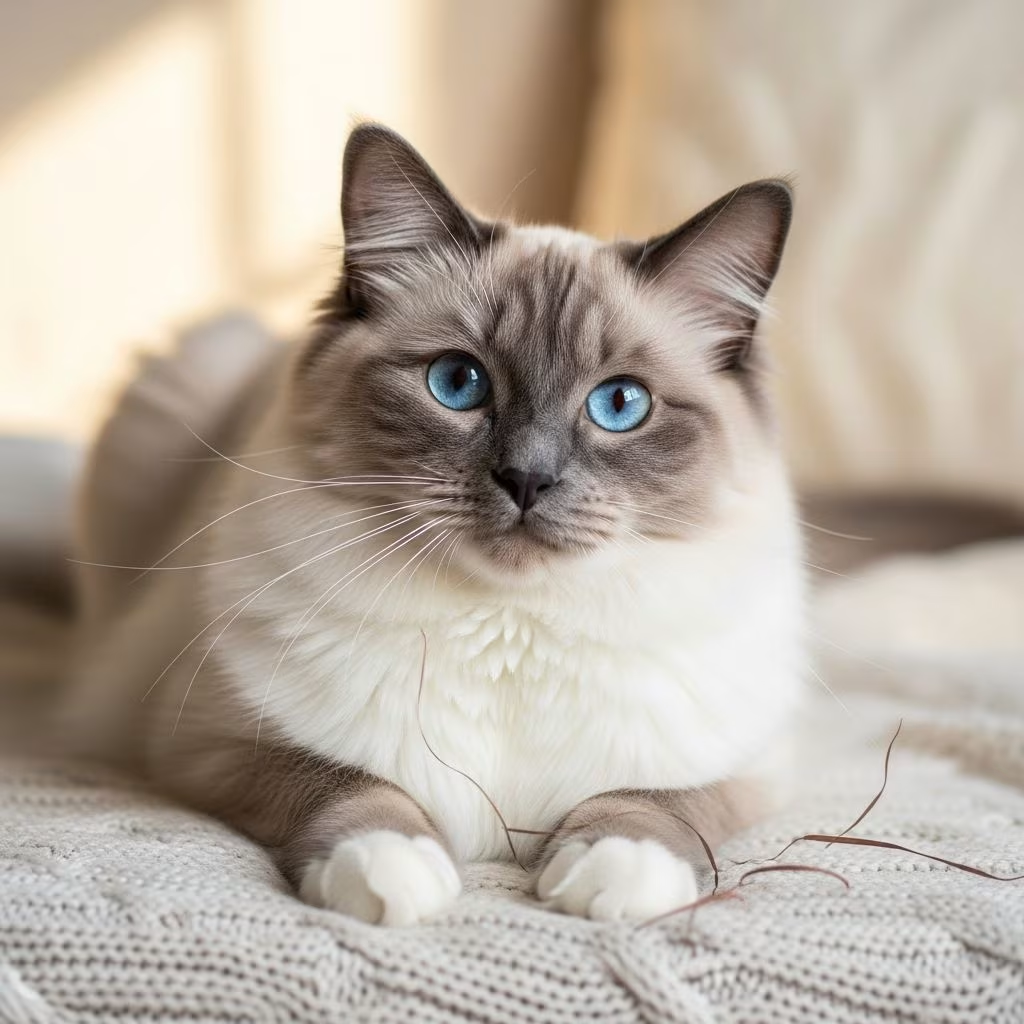
Ragdoll cats stand out as one of the most beloved domestic breeds due to their striking appearance, oversized build, and exceptionally mellow demeanor. Originating in mid-20th-century America, these felines earned their name from a peculiar habit of relaxing completely when lifted, resembling a soft child’s toy. This article delves into their background, physical qualities, behavioral patterns, maintenance requirements, and more, drawing from established breed records to offer prospective owners a thorough overview.
The Birth of a Breed in California
The story of the Ragdoll begins in Riverside, California, during the early 1960s, credited to breeder Ann Baker. Baker, who worked at a local laundromat, became intrigued by a white longhaired cat named Josephine owned by a neighbor. Josephine, described as an Angora-type stray with no formal pedigree, survived a car accident and reportedly produced litters of kittens exhibiting unusual calmness and affection after recovery. Baker selectively bred these offspring, noting their tendency to go limp when handled, which she attributed to unique genetic traits possibly enhanced by Josephine’s mishap.
Key foundation cats emerged from Josephine’s lineage. A black male called Blackie or Daddy Warbucks sired early kittens, including bi-color female Fugianna and darker Buckwheat. These pairings formed the basis of the breed, with all modern Ragdolls tracing ancestry back to them. Baker trademarked the name “Ragdoll” and established strict breeding rules, including franchised sales that required specific line breedings for generations. Tensions arose as she patented patterns like colorpoint, mitted, and bicolor in 1975, limiting dissemination.
By the late 1960s, breeders like Laura and Denny Dayton acquired initial stock, such as seal colorpoint male Buddy and mitted female Rosie under the Blossom-Time prefix. Their efforts helped popularize the breed beyond Baker’s control. In 1966, the National Cat Fanciers’ Association (NCFA, now CFA) registered the first Ragdolls: Daddy Warbucks and Fugianna. The breed spread internationally, reaching the UK in 1981 via imports from Blossom-Time lines, leading to the British Ragdoll Club’s founding in 1987 and GCCF recognition in 1990.
Physical Characteristics That Define Ragdolls
Ragdolls are renowned for their substantial size and elegant proportions. Males typically weigh 12-20 pounds, females 8-15 pounds, with a muscular yet semi-foreign body type—longer than stocky, rectangular rather than square. They possess large, broad heads with rounded contours, prominent whisker pads, and medium-sized ears set wide apart. Their most captivating feature: vivid blue eyes, a hallmark of pointed breeds, set in an oval shape for an alert expression.
The coat is semi-long, plush, and silky, requiring minimal grooming despite its length. It’s denser at the ruff, flanks, and belly, earning the “bunny coat” nickname for its soft texture. Colorpoint patterns dominate, where body fur remains pale (ivory to cream) while ears, face, legs, and tail darken with age due to temperature-sensitive pigmentation—cooler areas develop deeper hues.
| Pattern | Description |
|---|---|
| Colorpoint | Dark extremities with minimal white; classic pointed look. |
| Mitted | White paws, chin, and sometimes inverted V on face; balanced white accents. |
| Bicolor | Extensive white on belly, legs, and face; often 40-50% white coverage. |
Traditional colors include seal (dark brown-black), blue (diluted gray), chocolate (warm brown), and lilac (frosty pinkish-gray). Later developments introduced red, cream, tortie (red-black mix), and lynx (tabby-pointed) variants through controlled outcrosses, now accepted by major registries like CFA.
Personality: The Ultimate Lap Cats
What truly sets Ragdolls apart is their dog-like sociability and unflappable calm. They crave human interaction, often following owners room-to-room, yet remain undemanding. Their signature “ragdoll flop” occurs when picked up under the armpits—they melt into a boneless state, trusting completely. This docility stems from early handling and possible genetic factors, though myths of pain insensitivity persist unfoundedly; some breeders selectively reduce extreme limpness for welfare.
- Affectionate: Greet family with purrs and head-butts; thrive on pets and play.
- Gentle: Ideal with children, dogs, and strangers; rarely scratch or hiss.
- Playful yet Low-Energy: Enjoy interactive toys but prefer lounging over high jumps.
- Intelligent: Learn tricks like fetch; adaptable to routines.
Unlike aloof breeds, Ragdolls bond deeply, sometimes shadowing owners outdoors on leashes. Their composure shines in multi-pet homes, though early socialization ensures confidence.
Health and Wellness Considerations
Ragdolls enjoy relatively robust health, with a lifespan of 12-17 years, but inherit predispositions from pointed lineage. Hypertrophic cardiomyopathy (HCM), a heart muscle thickening, affects 15-30% screened; genetic testing via MyBPC3 mutation is recommended. Polycystic kidney disease (PKD) and urinary issues occur less frequently than in Persians but warrant ultrasounds.
Obesity risks loom due to sedentary tendencies and large frames—measured feeding prevents this. Dental hygiene combats plaque from rich diets; annual vet checks monitor eyes (progressive retinal atrophy rare) and joints (hip dysplasia occasional in oversized males). Spay/neuter mitigates cancers, and flea/tick preventives suit their fluffy coats.
Caring for Your Ragdoll Companion
These cats adapt well to apartments or houses, needing vertical spaces like cat trees for mild climbing. Weekly brushing distributes oils and reduces shedding; baths are rare, as they self-groom efficiently. High-quality protein-rich food supports growth—kittens reach maturity by 3-4 years.
Enrichment includes puzzle feeders, wand toys, and window perches. Training succeeds with positive reinforcement; litter training is instinctive. As family pets, they excel with respectful kids, but supervise toddlers to avoid tail pulls.
Acquiring a Ragdoll: Breeder vs. Adoption
Reputable breeders provide health guarantees, pedigrees, and socialization. Expect $1,200-$2,500 for kittens; waitlists common. Verify CFA/TICA registration, parental HCM tests. Shelters occasionally house Ragdolls or mixes—adoption fees lower, supporting rescues.
Red flags: impulse sales, no contracts, or untested parents. Post-acquisition, microchip, vaccinate (FVRCP, rabies), and deworm.
Fun Facts and Breed Variations
- First Ragdoll patent: 1975 by Ann Baker for three patterns.
- UK arrival: 1981, spawning dedicated clubs.
- Not all blue-eyed: Lynx points may dilute to aqua.
- Size record: Males up to 25+ pounds reported anecdotally.
Frequently Asked Questions
Are Ragdolls good with kids?
Yes, their patient nature makes them excellent family pets; they tolerate gentle handling well.
Do Ragdolls shed a lot?
Moderately; their coat sheds seasonally but brushes easily without mats.
How often should I groom a Ragdoll?
Brush 1-2 times weekly; nails monthly, teeth daily ideally.
Can Ragdolls go outside?
Leash-trained yes, but indoor preferred for safety given docile temperament.
What’s the difference between Ragdoll and Ragamuffin?
Ragamuffins derive from Ragdolls but allow diverse patterns/colors; Ragdolls stick to pointed blues.
References
- Ragdoll – Wikipedia — Wikipedia contributors. 2023-10-15. https://en.wikipedia.org/wiki/Ragdoll
- History of the Ragdoll Breed — Ragtastic Cattery. Accessed 2026. https://www.ragtastic-cattery.com/ragdoll-breed-history
- The True History of the Ragdoll Cat — Pastel Ragdolls. Accessed 2026. https://www.pastelragdolls.com/blog/the-true-history-of-the-ragdoll-cat-ann-baker-and-the-mysterious-origins-of-the-breed
- Controversial History of the Ragdoll Cat Breed — Riverside Rags. Accessed 2026. https://riversiderags.com/controversial-history-of-the-ragdoll-cat-breed/
- Ragdoll Cat Facts: History, Personality, Health & More — RAWZ Natural Pet Food. Accessed 2026. https://rawznaturalpetfood.com/ragdoll-cat-facts-history-personality-health-more/
- Ragdoll — The Cat Fanciers’ Association. Accessed 2026. https://cfa.org/breed/ragdoll/



