

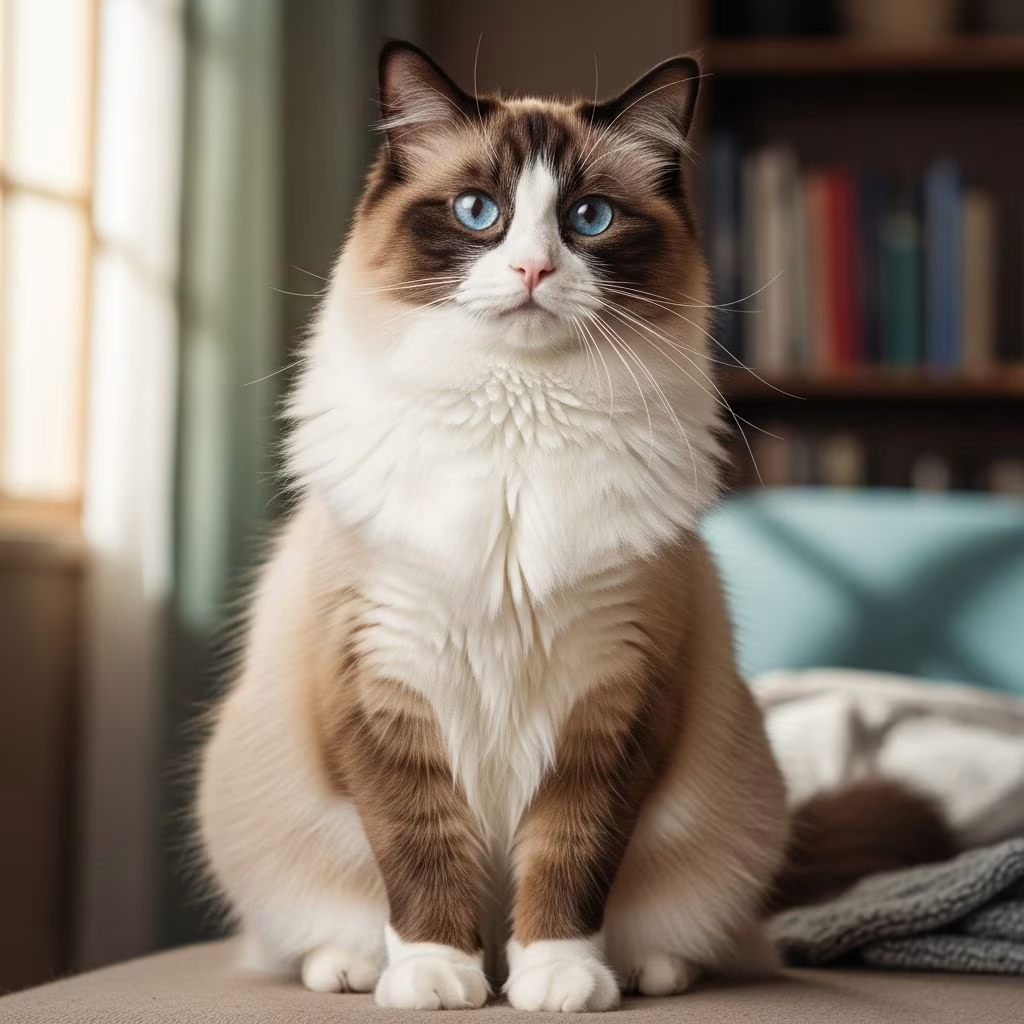
Ragdoll cats stand out as one of the most endearing domestic breeds, celebrated for their striking blue eyes, plush semi-long fur, and remarkably relaxed demeanor. Originating in the 1960s, these large felines earned their name from the way they go limp when picked up, much like a soft toy. This guide delves into their background, physical features, behavioral quirks, care requirements, and more to help prospective owners understand why Ragdolls make exceptional pets.
Origins and Development of the Ragdoll Breed
The story of the Ragdoll begins in Riverside, California, during the early 1960s with breeder Ann Baker. Working near a neighbor with numerous semi-feral cats, Baker became intrigued by a white longhaired female named Josephine. This Angora-type cat produced litters noted for their unusually docile and affectionate natures after an incident involving a car accident, according to Baker’s accounts.
Baker crossed Josephine with cats like a black Persian-lookalike named Blackie and a seal mitted male called Daddy Warbucks. The resulting kittens displayed consistent traits of calmness and floppiness, laying the foundation for the breed. While Baker spun tales of genetic mutations from Josephine’s injury granting pain immunity and super-relaxed offspring, experts attribute the temperament to selective breeding with relaxed breeds like Persians and Birmans.
Disputes arose over breeding rights, leading Baker to trademark the name and impose strict controls. In 1969, Laura and Denny Dayton acquired early Ragdolls, establishing the Blossom-Time cattery and helping disseminate the breed beyond Baker’s influence. By the 1970s, patterns like colorpoint, mitted, and bicolor were formalized, with a patent filed by Baker in 1975. The breed spread internationally, reaching the UK in 1981 and gaining recognition from bodies like the Cat Fanciers’ Association (CFA) and Governing Council of the Cat Fancy (GCCF).
Distinctive Physical Characteristics
Ragdolls are among the largest domestic cat breeds, with males typically weighing 12 to 20 pounds and females 8 to 15 pounds upon maturity. They possess sturdy, muscular builds with moderately long bodies, making them appear substantial yet graceful. Full growth takes 3 to 4 years, with their semi-long, silky coats developing fully around age three.
Signature features include vivid blue eyes—a hallmark of pointed breeds—and colorpoint patterns where fur is darkest on extremities (ears, face, legs, tail) due to temperature-sensitive pigmentation. Recognized colors encompass seal, blue, chocolate, lilac, red, and tortie, often modified by white overlays in mitted or bicolor varieties. Genetics play a key role: dominant black (B) and non-dilute (D) genes produce seal points, while recessives (b, d) yield lilac.
| Pattern | Description | Example Colors |
|---|---|---|
| Colorpoint | Dark points with white body | Seal, Blue |
| Mitted | White paws, chin, and inverted V on face | Chocolate Mitted, Lilac Mitted |
| Bicolor | White legs, belly, and facial markings | Seal Bicolor, Red Tabby Bicolor |
This table outlines the primary patterns, which CFA standards emphasize for balance without extremes.
Temperament and Behavioral Traits
Ragdolls epitomize the gentle giant archetype: affectionate, intelligent, and sociable without clinginess. They thrive on human interaction, often following owners room-to-room and curling up for laps. Their floppy relaxation when held stems from early socialization and genetics, not insensitivity to pain—a common myth.
- Playful Yet Grounded: Prefer ground-level games like fetching toys, remaining active into seniority unlike high-energy jumpers.
- Family-Friendly: Gentle with children and tolerant of dogs, though supervision is advised.
- Docile but Alert: Relaxed at home, they vocalize softly to communicate needs.
- Intelligent Learners: Trainable for tricks, doors, and leashes due to their Persian-Birman heritage.
Unlike independent breeds, Ragdolls bond deeply, sometimes shadowing family members. They adapt well to multi-pet homes but dislike solitude.
Grooming and Daily Care Essentials
The Ragdoll’s plush, bunny-like coat requires weekly brushing to prevent mats, especially around the ruff and britches. Bathing is infrequent thanks to minimal shedding, but tools like slicker brushes and de-shedding combs help maintain silkiness. Nail trims every 10-14 days, ear cleaning monthly, and dental care via brushing or additives promote hygiene.
Litter training comes naturally; provide spacious, uncovered boxes. They favor low-dust, clumping litters. Nutrition demands high-protein diets for muscle maintenance, with portion control to avoid obesity in their large frames—aim for 300-500 calories daily, adjusted for age and activity.
Health Considerations and Lifespan
Ragdolls enjoy a lifespan of 12-17 years with proper care, though hypertrophic cardiomyopathy (HCM), a heart condition, affects some lines. Annual vet checks, including echocardiograms, screen for this. Other risks include polycystic kidney disease (PKD) from Persian ancestry and obesity. Responsible breeders perform genetic testing.
- Exercise via interactive play prevents weight gain.
- Vaccinations and parasite prevention are crucial.
- Spaying/neutering reduces cancers and roaming.
Pet insurance covers breed-specific issues like HCM, easing financial burdens.
Bringing a Ragdoll into Your Home
Select breeders affiliated with CFA or TICA for health guarantees and pedigrees. Kittens cost $1,200-$2,500, reflecting quality. Prepare with scratching posts, cat trees, and pheromone diffusers for smooth integration. Early exposure socializes them ideally.
Suitable for apartments due to low vocalization, but they flourish in homes with gardens or playrooms.
Fun Facts About Ragdolls
- Named for their ragdoll-like limpness when cuddled.
- One of the slowest-maturing breeds, fully adult at 4 years.
- Blue eyes persist lifelong, unlike some pointed cats.
- Often mistaken for pain-insensitive, but they feel normally.
- Excel in cat shows for balanced conformation.
Frequently Asked Questions (FAQs)
Are Ragdolls good with kids?
Yes, their patient, gentle nature makes them excellent with children, though teach gentle handling.
How often do Ragdolls need grooming?
Weekly brushing suffices; daily during shedding seasons.
Do Ragdolls get along with other pets?
Typically yes, especially if socialized young; they tolerate dogs well.
What is the average Ragdoll lifespan?
12-17 years with veterinary care and balanced diet.
Are Ragdolls hypoallergenic?
No, but low-shedding coats reduce allergens compared to short-haired breeds.
Why Choose a Ragdoll?
Ragdolls offer companionship that’s profoundly rewarding—their loyalty rivals dogs, paired with feline independence. From origins shrouded in California lore to global popularity, they embody poise and warmth, ideal for diverse households seeking a serene, loving pet.
References
- Ragdoll Cats [An In-Depth Look] — TheCatSite. Accessed 2026. https://thecatsite.com/c/ragdoll-cats/
- History of the Ragdoll Breed — Ragtastic Cattery. Accessed 2026. https://www.ragtastic-cattery.com/ragdoll-breed-history
- The True History of the Ragdoll Cat — Pastel Ragdolls. Accessed 2026. https://www.pastelragdolls.com/blog/the-true-history-of-the-ragdoll-cat-ann-baker-and-the-mysterious-origins-of-the-breed
- Ragdoll Cat Breed: The Complete Guide — Pearls Ragdolls. Accessed 2026. https://pearlsragdolls.com/ragdoll-cat-breed/
- Ragdoll – The Cat Fanciers’ Association — CFA.org. Accessed 2026. https://cfa.org/breed/ragdoll/



