

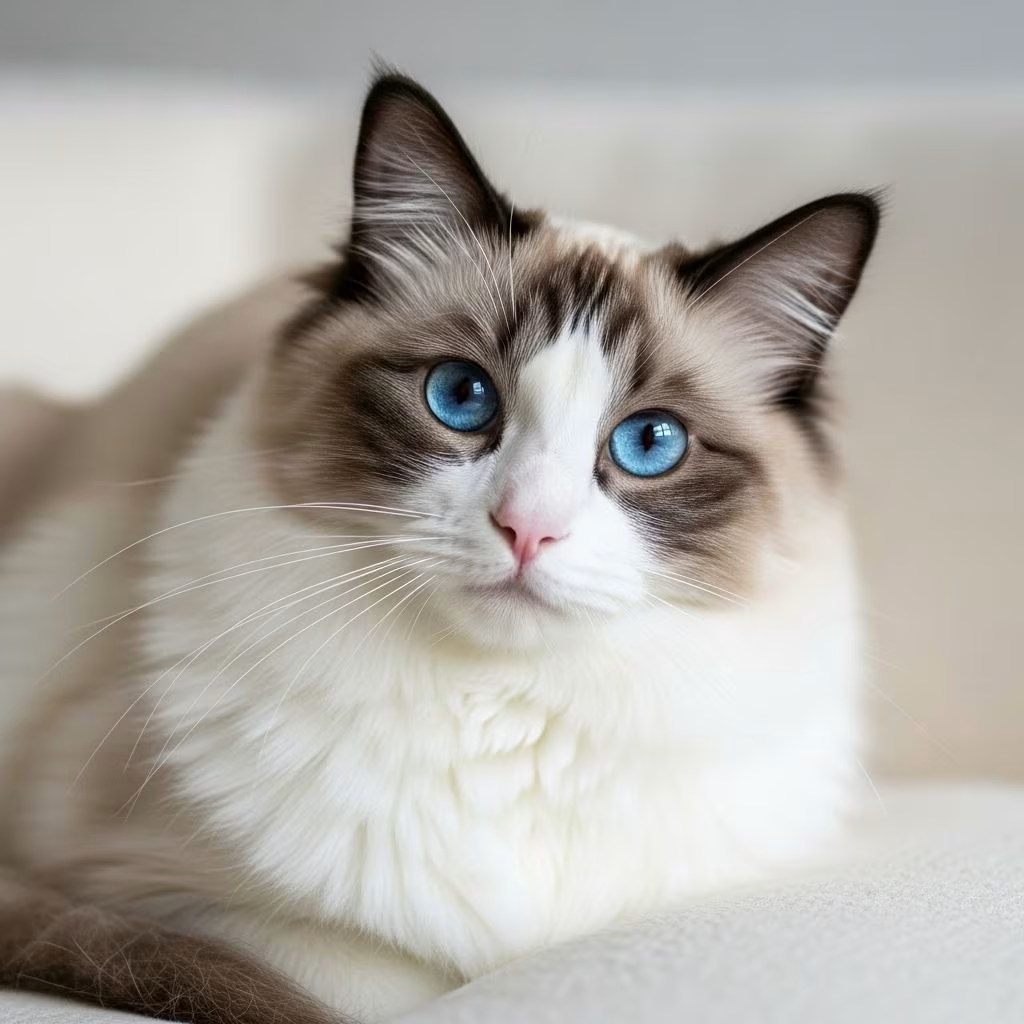
Ragdoll cats captivate owners with their plush coats, docile nature, and often mesmerizing blue eyes, but the idea that every Ragdoll has blue eyes is a common misconception. While blue eyes define the traditional variety, genetic variations like Mink and Sepia patterns introduce aqua, green, or gold hues, as confirmed by breed genetics and standards from organizations such as The Cat Fanciers’ Association (CFA).
The Allure of Ragdoll Eye Colors
Ragdolls stand out in the feline world for their striking appearance, where eye color plays a pivotal role. Traditional Ragdolls feature vivid blue eyes ranging from pale ice to deep sapphire, a trait tied directly to their pointed color pattern. This colorpoint gene, known as the Siamese allele (cs), restricts melanin production in cooler body areas, including the eyes, resulting in the signature blue. However, not all Ragdolls conform to this standard, revealing the breed’s genetic diversity.
Breed enthusiasts often associate blue eyes with purity, but modern breeding has expanded the palette. Understanding these variations helps prospective owners set realistic expectations when selecting a kitten.
Genetics Behind Ragdoll Eye Colors
Eye color in Ragdolls stems from complex genetic interactions involving melanin inhibition. The cs gene in pointed Ragdolls limits pigment in the iris, producing blue eyes across colors like Seal Point, Blue Point, Chocolate Point, and Lilac Point. CFA standards explicitly require blue eyes for all recognized pointed patterns, emphasizing their role in breed identification.
In contrast, non-traditional patterns introduce the Burmese allele (cb). Mink Ragdolls, carrying one cs and one cb gene, typically display aqua eyes blending blue and green tones. Sepia Ragdolls, with two cb genes, often have green or gold eyes, diverging sharply from the blue norm. These patterns arose from experimental crosses, enriching the breed while challenging the blue-eye myth.
| Pattern Type | Genetic Basis | Typical Eye Color | CFA Recognition |
|---|---|---|---|
| Traditional Pointed | cs/cs (Siamese) | Blue | Yes |
| Mink | cs/cb (Burmese hybrid) | Aqua/Blue-Green | Limited |
| Sepia | cb/cb (Burmese) | Green/Gold | Limited |
This table summarizes key differences, highlighting how genetics dictate eye outcomes.
Traditional Pointed Ragdolls and Their Blue-Eyed Standard
Pointed Ragdolls represent the breed’s foundation, with bodies lighter than darker points on ears, face, legs, and tail due to the temperature-sensitive cs gene. CFA lists varieties like Seal Point (ivory body, dark points, blue eyes), Blue Point (bluish-white body, deep blue points, blue eyes), and others including Chocolate, Lilac, and Red Point, all mandating blue eyes.
- Seal Point: Darkest points, milk-chocolate tones in variants, blue eyes essential.
- Blue Point: Cold-toned bluish white body, slate paw pads, striking blue eyes.
- Lilac Point: Frosty grey points with pinkish tinge, lavender-pink pads, blue eyes.
- Tortie and Lynx Points: Mottled or striped patterns, still requiring blue eyes per standards.
These cats embody the classic Ragdoll look, with blue eyes confirming their pointed heritage.
Exploring Mink and Sepia Variations
Mink and Sepia Ragdolls challenge the blue-eye rule through Burmese genetics. Minks exhibit warmer, shaded coats without stark points, and their eyes span aqua to blue-green shades, rarely pure blue. Sepias display even coloration from nose to tail, with green or gold eyes dominating.
Though beautiful, these patterns face limited acceptance in major registries like CFA, which prioritizes traditional pointed types with blue eyes. Breeders offering Minks or Sepias often cater to pet homes valuing unique aesthetics over show eligibility.
Unexpected Eye Colors in Mixed and Rare Ragdolls
Mixed-breed Ragdolls, resulting from crosses with non-pointed cats, may inherit green, hazel, or gold eyes from dominant pigments overriding the cs gene. Heterochromia— one blue eye and one differently colored—occurs rarely, adding intrigue but signaling potential mixed lineage.
Albinism can produce pale blue eyes in non-pedigree cats mimicking Ragdolls, but true Ragdolls avoid this through selective breeding. Owners spotting non-blue eyes should verify pedigrees to distinguish purebreds from mixes.
Ragdoll Color Genetics: A Deeper Dive
Ragdoll colors derive from alleles like B (black, dominant), b (chocolate), b’ (cinnamon), D (undiluted), and d (diluted). Combined with point genes, they yield Seal (B-D), Blue (B-d), Chocolate (b-D), Lilac (b-d), and rarer Fawn or Cinnamon. Eye color remains tied to the point gene: cs for blue, cb for alternatives.
Patterns further diversify: Colorpoint (no white), Mitted (white feet/belly), Bicolor (extensive white). Predicting kitten eyes requires parental genotyping, as recessive traits surprise breeders.
Breed Standards and Recognition
CFA and TICA uphold blue eyes for show-quality pointed Ragdolls, penalizing deviations. Traditional patterns dominate competitions, while Minks/Sepias thrive in pet or alternative registries. This preserves the breed’s identity amid growing diversity.
Caring for Ragdoll Eyes and Coat
Regardless of color, Ragdoll eyes demand vigilant care. Blue eyes may signal light sensitivity, necessitating shaded environments. All varieties risk tear staining; gentle cleansing prevents buildup. Their semi-long coats require weekly brushing to manage shedding, especially in pointed types with contrast-prone fur.
Health screenings for hypertrophic cardiomyopathy (HCM), common in Ragdolls, ensure eye and overall vitality. Nutrition supporting coat sheen enhances eye prominence.
Choosing Your Ragdoll: Eye Color Considerations
Prospective owners prioritize temperament over eyes—Ragdolls’ ragdoll-like floppiness defines them. Seek reputable breeders providing genetic testing for cs/cb status. Blue-eyed kittens suit show ambitions; aqua or green appeal for novelty.
- Verify CFA/TICA registration for traditional blue eyes.
- Request parent eye color photos and DNA results.
- Consider pet-quality mixes for budget-friendly options with varied eyes.
Frequently Asked Questions (FAQs)
Do all purebred Ragdoll cats have blue eyes?
No, only traditional pointed Ragdolls do per CFA standards; Minks and Sepias have aqua, green, or gold.
Can Ragdoll kittens change eye color?
Kittens start with blue eyes that stabilize by 8-12 weeks, but genetics dictate the final hue.
Are non-blue eyed Ragdolls less valuable?
Value depends on pedigree and purpose; show cats need blue, pets vary widely.
What causes heterochromia in Ragdolls?
Rare genetic anomalies or mixed breeding lead to one blue and one non-blue eye.
How do I identify a traditional Ragdoll?
Look for colorpoint pattern, blue eyes, and large size per breed standards.
References
References
- Do All Ragdoll Cats Have Blue Eyes? Unpacking the Myth — For the Love of Peteragdolls. 2023. https://fortheloveofpeteragdolls.com/do-all-ragdoll-cats-have-blue-eyes-unpacking-the-myth/
- The Distinctive Traits of Ragdoll Cats: What Sets Them Apart — Bayou Ragdolls. 2023. https://www.bayouragdolls.com/post/what-is-the-difference-between-a-ragdoll-and-other-long-hair-cats-with-blue-eyes
- Ragdoll Breed Standard — The Cat Fanciers’ Association (CFA). 2024. https://cfa.org/breed/ragdoll/
- Ragdoll Cat Breed: The Complete Guide — Pearls Ragdolls. 2023. https://pearlsragdolls.com/ragdoll-cat-breed/
- Ragdoll Cat Colors – Explaining the Breeder Jargon — Masterpiece Ragdolls. 2023. https://www.masterpieceragdolls.com/ragdoll-cat-colors/
- Ragdoll Colors / Markings & Eyes — Aspen Ragdolls. 2023. https://www.aspenragdolls.com/ragdoll-colors–markings–eyes.html



