

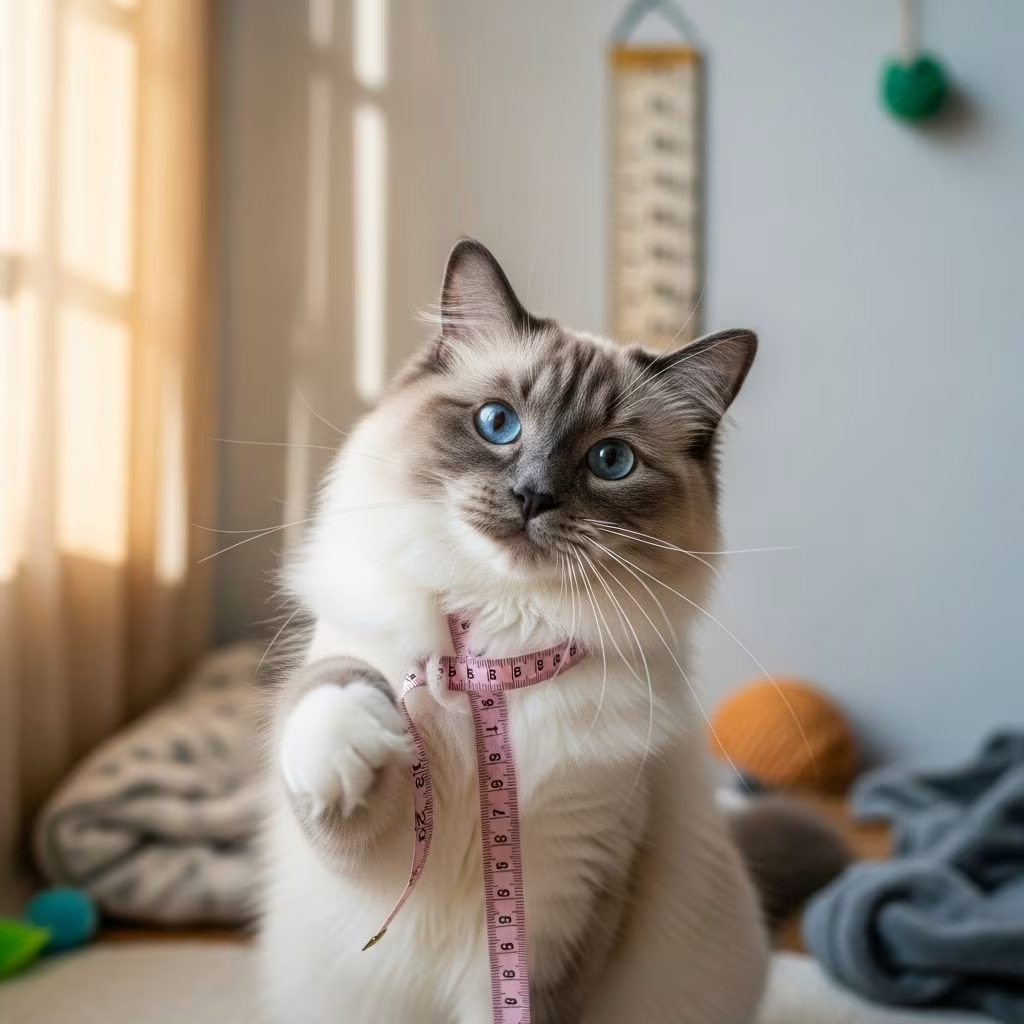
Ragdoll cats have earned their reputation as gentle giants in the feline world, representing one of the largest domesticated cat breeds available today. Their impressive physical stature combines with their calm, docile temperament to create a distinctly appealing companion for cat enthusiasts. However, many prospective owners underestimate just how substantial these cats become, particularly when considering their remarkable length and weight gain throughout their development years. Understanding the full scope of Ragdoll dimensions helps potential owners prepare their homes and expectations appropriately.
Physical Measurements of Adult Ragdolls
Ragdoll cats possess distinctive physical proportions that set them apart from typical household felines. While they may not tower significantly higher than average cats, their body composition reveals their true size through length and muscular density. Adult Ragdolls exhibit a unique build characterized by heavy bone structure and substantial muscle development.
Height Specifications
The vertical measurement of a Ragdoll cat typically ranges from 8 to 14 inches in height, though some sources document measurements extending to 16 inches for males. This dimension closely resembles that of average domestic cats, which stand approximately 10 inches tall. The relatively modest height of Ragdolls can be deceptive, as it represents only one component of their overall impressive size. Many people express surprise upon learning that Ragdolls are not significantly taller than standard cats, since their presence conveys a much larger impression.
Length and Body Proportions
Where Ragdolls truly demonstrate their substantial nature is in body length, where they significantly exceed typical domestic breeds. The average Ragdoll measures 16 to 21 inches in body length, excluding their distinctive plumed tail. When including tail measurement, total length can reach an impressive 40 inches, approaching the dimensions of Maine Coon cats. This extended body structure creates a horizontal rather than vertical presence, explaining why these cats appear so prominent despite modest height measurements.
Weight Ranges
Perhaps the most telling indicator of Ragdoll size is their substantial weight. Males typically weigh between 12 to 20 pounds, with some individuals reaching up to 25 pounds. Female Ragdolls, contrary to many cat breeds where sexual dimorphism is pronounced, can achieve weights of 9 to 15 pounds. The heavy-boned structure of Ragdolls contributes significantly to their weight, creating muscular, athletic physiques rather than fat accumulation in healthy specimens.
Gender Differences in Size Development
Sexual dimorphism plays a measurable role in Ragdoll size variations, though less dramatically than in some other large breeds. Understanding these differences helps potential owners make informed decisions about which sex might better suit their living situation.
Male Ragdoll Characteristics
Male Ragdolls consistently display larger frames than their female counterparts, typically weighing 3 to 5 pounds more. On average, males reach the upper end of the weight spectrum at 12 to 20 pounds, with potential to exceed 25 pounds in some cases. They also tend to feature more robust bone structure and broader chests, creating an imposing physical presence. Males typically measure 18 to 21 inches in body length and stand 10 to 16 inches in height.
Female Ragdoll Characteristics
Female Ragdolls, while still qualifying as large cats by domestic standards, present a somewhat more delicate appearance than males. Their weight typically ranges from 9 to 15 pounds, placing them at the lower end of the breed spectrum. Despite this size difference, female Ragdolls maintain the characteristic heavy-boned structure and muscular development of their breed, ensuring they remain substantially larger than average female domestic cats. The distinction between genders is often perceptible through body composition rather than dramatic size divergence.
Developmental Timeline and Growth Stages
Ragdolls follow a notably prolonged growth trajectory compared to most other cat breeds, with significant implications for owners regarding nutrition, exercise, and environmental adaptation.
Kitten Through Young Adulthood
Ragdoll kittens begin life at typical sizes but experience gradual but consistent growth through their first years. These cats do not achieve sexual maturity until several months old, yet their skeletal and muscular development continues well into their later years.
Full Maturity Achievement
The defining characteristic of Ragdoll growth patterns is their extended maturation period. Unlike many cat breeds reaching full size by 12 to 18 months, Ragdolls require 3 to 4 years to achieve complete physical development. During the adulthood years spanning from approximately 2 to 6 years old, Ragdolls continue building muscle mass and increasing in overall size and density. This extended growth window requires owners to adjust feeding quantities and monitor body condition throughout these years, as inappropriate nutrition during this period can result in obesity rather than appropriate size development.
Senior Years and Physical Changes
As Ragdolls enter their senior years beyond 6 years of age, muscle mass gradually declines and physical activity naturally reduces. During this phase, owners should carefully monitor appetite and adjust exercise routines to maintain healthy body composition. The transition to senior years does not typically involve dramatic size reduction but rather shifts in muscle-to-fat ratio and overall physical capability.
Comparative Analysis: Ragdolls Versus Standard Domestic Cats
Understanding how Ragdolls compare to typical household cats provides valuable context for appreciating their true magnitude. Most pet owners have limited direct experience with large-breed cats, making accurate size assessment challenging without explicit comparisons.
| Measurement Category | Ragdoll Cats | Standard Domestic Cats |
|---|---|---|
| Height | 8-16 inches | ~10 inches |
| Body Length (excluding tail) | 16-21 inches | 15-20 inches |
| Total Length (including tail) | Up to 40 inches | Typically 25-30 inches |
| Weight Range | 9-20+ pounds | 6-12 pounds |
The data reveals that while height differences are minimal, Ragdolls dramatically exceed domestic cats in weight and total length. A 15-pound domestic cat would likely be obese, whereas a healthy Ragdoll of identical weight represents appropriate size development. This distinction highlights why experienced observers quickly recognize the substantial nature of Ragdoll physiology.
Factors Influencing Individual Size Variation
Ragdoll cats display considerable individual variation within their breed standards, influenced by multiple environmental and genetic factors.
Nutritional Impact on Growth
Diet significantly influences how large individual Ragdolls become and their body composition quality. Low-quality cat foods high in carbohydrates may lead to excessive fat accumulation rather than appropriate muscle development. Proper nutrition during the extended growth period ensures cats develop lean muscle mass and achieve optimal breed-standard dimensions. High-quality protein sources support healthy growth and maintenance of the heavy-boned structure characteristic of the breed.
Genetic Predisposition
Parental genetics strongly influence offspring size potential, with Ragdolls from larger-framed parents typically achieving the upper size ranges. Responsible breeders maintain size standards through selective breeding practices, yet individual variation remains substantial within any given litter.
Activity Level and Exercise
Physical activity influences how effectively Ragdolls build and maintain muscle mass. Active cats tend to develop more defined muscular physiques, while sedentary cats may experience excessive fat accumulation despite identical caloric intake. Indoor Ragdolls may require structured play opportunities to maintain healthy body composition.
Health Considerations Related to Size
The substantial size of Ragdoll cats carries implications for various health and management considerations that owners should understand and address proactively.
- Joint stress: Larger body mass places greater stress on skeletal structures, making proper nutrition and controlled exercise particularly important
- Mobility requirements: Spacious environments with appropriate furniture accommodations become more essential for large cats
- Litter box specifications: Standard-sized litter boxes may prove inadequate for cats measuring up to 21 inches in body length
- Carrier transportation: Specialized carriers may be necessary for veterinary visits and travel
- Furniture and fixtures: Scratching posts and climbing structures must be sturdy enough to support 20-pound cats
Frequently Asked Questions
How does a Ragdoll’s size compare to a Maine Coon?
While Ragdolls are impressive in size, Maine Coons typically exceed them slightly in average weight and height. Maine Coons represent the largest domestic cat breed, though Ragdolls closely approach their dimensions in total length.
At what age do Ragdolls stop growing?
Ragdolls reach full physical maturity at approximately 3 to 4 years of age, considerably later than most other domestic cat breeds. This extended growth period requires patience and appropriate care through multiple developmental stages.
Is a 20-pound Ragdoll cat considered obese?
No, a healthy 20-pound Ragdoll represents appropriate size development for males of this breed. The heavy-boned structure and muscular composition of Ragdolls means their weight distributions differently than standard cats. A 15-pound domestic cat would likely be overweight, while an equivalent-weight Ragdoll remains within healthy parameters.
Do female Ragdolls grow as large as males?
Female Ragdolls can approach or match male sizes in some cases, though they typically remain 3 to 5 pounds lighter on average. Individual variation means some females may exceed some males in size and weight.
What living space do Ragdoll cats require?
Their substantial length and muscular build mean Ragdolls benefit from spacious environments with appropriate furniture, though they can adapt to smaller spaces if provided adequate enrichment and exercise opportunities.
Visual Presentation and Fur Contribution to Apparent Size
The semi-long, silky coat characteristic of Ragdolls significantly contributes to their impressive visual appearance. Owners often express surprise upon first handling a Ragdoll, as the substantial volume created by their luxurious fur sometimes exceeds perceived body mass. The plumed tail, tufted ears, and bushy paws add to their overall visual presence. The pointed coloration pattern, with darker head, ears, legs, and tails contrasting against lighter body colors, further emphasizes their distinctive silhouette and contributes to their “fancy” appearance.
Selecting Appropriate Housing for Large Cats
Potential Ragdoll owners should evaluate their living spaces with size considerations in mind. The 40-inch total length when extended requires adequate horizontal space, particularly for cats that enjoy stretching across furniture. Apartments and smaller homes can still accommodate Ragdolls provided owners commit to appropriate vertical enrichment through cat trees and wall-mounted shelving. The breed’s calm temperament means they adapt reasonably well to indoor apartment living despite their size, unlike some large breeds requiring substantial outdoor access.
References
- Ragdoll Cat Size: How Big Can They Get? Adult Size & Weight — Litter Robot. https://www.litter-robot.com/blog/ragdoll-cat-size/
- How Big Are Ragdoll Cats? – Ragdoll Size Chart — Pastel Ragdolls. https://www.pastelragdolls.com/blog/how-big-are-ragdoll-cats-ragdoll-size-chart
- Ragdoll: Cat Breed Traits & Characteristics — Whiskas UK. https://www.whiskas.co.uk/cat-breeds/ragdoll
- Ragdoll — Wikipedia. https://en.wikipedia.org/wiki/Ragdoll
- Soft, Social, Serene: The Ragdoll Cat — Los Angeles Times. https://www.latimes.com/companion-animals/cats/breeds/story/ragdoll-cat-breed-guide
- Ragdoll Cat Breed Guide — PrettyLitter. https://www.prettylitter.com/blog/ragdoll-cat-breed-guide
- How Big Are Ragdoll Cats? 5 Amazing Growth & Size Facts (2026) — Wise Acres Ragdolls. https://wiseacresragdolls.com/how-big-are-ragdoll-cats/



