

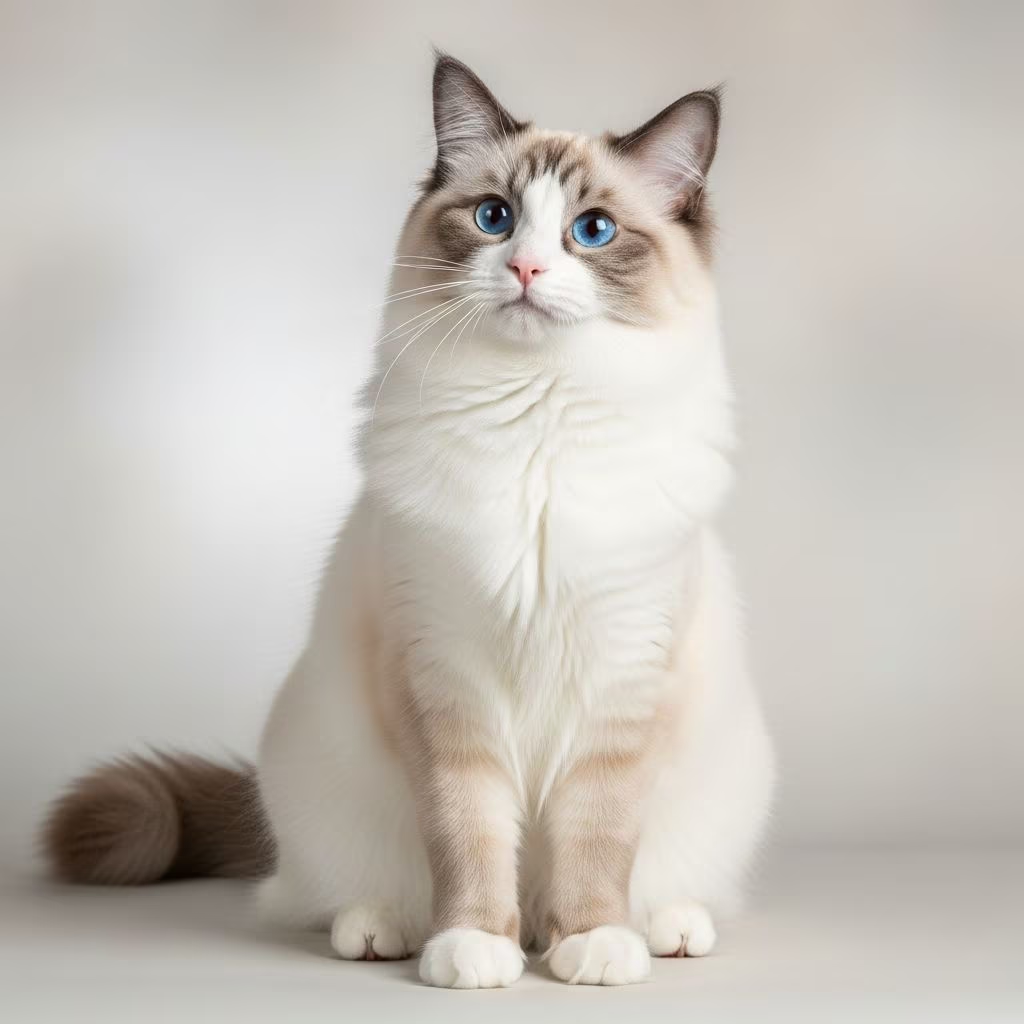
Ragdoll cats captivate with their semi-long, plush coats displaying a spectrum of colors and patterns influenced by intricate genetics. These felines, known for their striking blue eyes and relaxed demeanor, exhibit colorpoints where cooler body areas like ears, face, legs, and tail develop darker shades over time due to a temperature-sensitive pigmentation process.
The Science Behind Ragdoll Coat Development
Ragdoll coats evolve gradually, often reaching maturity between 2-3 years. Kittens are born nearly white because the pointed gene restricts melanin production to extremities where body heat dissipates most effectively. This Himalayan pattern, stemming from a tyrosinase enzyme mutation, ensures warmer body cores remain lighter while points darken with age.
Key genetic loci dictate these traits: the B-series for base colors (B for black/seal, b for chocolate, b’ for cinnamon), D-series for dilution (D undiluted, d diluted), and the C-series for point restriction (cs for colorpoint). Sex-linked O gene introduces red/cream, adding complexity especially in females.
Primary Point Colors in Ragdolls
Ragdolls feature six main point colors, each with dominant and recessive expressions. Seal, the darkest, arises from dominant black-based genes (B- D-), presenting deep brown-black points. Blue results from dilution (B- dd), softening to slate-gray. Chocolate (bb D-) yields warm milk-chocolate tones, lilac (bb dd) a delicate dove-gray.
Red and cream introduce vibrancy via the O gene. Red points glow orange-red, cream their pastel counterpart (O- dd). These are rarer in females, requiring the gene on both X chromosomes.
| Color | Genotype Example | Description |
|---|---|---|
| Seal | B- D- cs/cs | Darkest points: rich brown-black |
| Blue | B- dd cs/cs | Diluted seal: cool blue-gray |
| Chocolate | bb D- cs/cs | Warm brown points |
| Lilac | bb dd cs/cs | Diluted chocolate: pinkish-gray |
| Red | O- cs/cs | Orange-red points, sex-linked |
| Cream | O- dd cs/cs | Pale diluted red: creamy buff |
Classic Patterns: Defining Ragdoll Variety
Patterns overlay colors, controlled by white spotting and glove genes. Colorpoint (ss) shows no white, full points on paws, ears, mask, and taild the purest traditional look, rarest today.
- Mitted: White paws (gloves), chin, and bib (s^m s). High-mitted extends white up legs, blending toward bicolor.
- Bicolor: Extensive white on belly, chest, and often face (Ss or high white variations), creating inverted V on face.
- Van/High White: Mostly white body with colored head and tail (SS), dramatic and uncommon.
These arise from white spotting factor (WSF) interactions, with DNA testing distinguishing visually similar high-mitted from bicolors.
Tabby and Lynx Variations
The agouti gene (A-) introduces banded hairs forming stripes, swirls, and an M-mark on the forehead, termed lynx in pointed cats. Lynx points blend tabby over colorpoints: seal lynx shows tawny with dark stripes, blue lynx silvery-blue barred patterns.
Tortoiseshell-lynx (tortie-lynx) merges black/red mosaics with tabby, exclusive to females due to X-inactivation randomness, yielding unique brindle patches.
Solid and Mink Exceptions
Solid Ragdolls lack point restriction (CC or variants), born full color without darkening pointsd a dominant trait allowing solids in mitted or bicolor patterns.
Mink, from Burmese influence (C^b), displays even shading darker than points but uniform, with kittens showing color at birth and aqua eyes maturing from blue. Sepia (two C^b) intensifies this further.
Rare and Emerging Shades
Cinnamon (b’ ) and fawn (diluted cinnamon) are scarcest, requiring double recessives. Silver genes add shimmering white undercoats, while dominant white can produce blue-eyed whites masking other colors.
Breeding charts predict outcomes: seal x blue yields 50% blue, 50% seal; chocolate carriers introduce surprises like 25% lilac.
Visual Identification and Breeding Tips
Distinguish via nose leather and paw pads: seal black, blue slate, chocolate pinkish, lilac lavender, red brick-red. Patterns: mitted have symmetrical gloves, bicolors asymmetrical white.
For breeders, track pedigrees: females tortie often carry red, passing to sons. Dilution and chocolate recessives hide in seals, emerging in progeny.
| Parent Combo | Offspring Possibilities |
|---|---|
| Seal Colorpoint x Blue Mitted | 50% Seal Mitted, 50% Blue Mitted |
| Chocolate Tortie x Seal Bicolor | Varied: Seal, Chocolate, Tortie points |
| Red x Cream Lynx | Red/Cream lynx, potential tortie |
Frequently Asked Questions
Do all Ragdolls have blue eyes?
Traditional colorpoints do, from cs/cs. Odds, minks, and solids may have green/gold; torties vary.
How to predict kitten colors?
Use Punnett squares on B/D/O loci and patterns. DNA tests confirm carriers.
Are there miniature Ragdolls?
No recognized minis; all follow standard size, colors uniform across.
Can Ragdolls be black all over?
Solid blacks exist via CC, no points, but uncommon in show lines.
Why do points darken with age?
Temperature-sensitive melanin: cooler points produce more pigment as cats mature.
Caring for Ragdoll Coats
Despite patterns, all benefit from weekly brushing to manage semi-long fur. Colors hold vibrancy with quality diet; avoid sun fading reds/creams. Health screens for HCM ensure genetic lines stay strong.
References
- Exploring the Unique Colours and Patterns of Ragdolls: A Genetic Perspective — Dream Angel Cattery. 2023. https://www.dreamangelcattery.co.nz/post/exploring-the-unique-colours-and-patterns-of-ragdolls-a-genetic-perspective
- Ragdoll Cat Breed: The Complete Guide — Pearls Ragdolls. 2024. https://pearlsragdolls.com/ragdoll-cat-breed/
- Ragdoll Cat Colors – Explaining the Breeder Jargon — Masterpiece Ragdolls. 2023. https://www.masterpieceragdolls.com/ragdoll-cat-colors/
- Ragdoll Patterns and Genetics — Cosmic Ragdolls. 2024. https://cosmicragdolls.com/ragdoll-patterns-and-genetics
- Genetics • Ragdoll Cats — Ragdoll Queen. 2022. https://www.ragdollqueen.com/en/ragdoll-cats/genetics
- Ragdoll Colors and Patterns — Snoot Boop Ragdolls. 2023. https://www.snootboopragdolls.com/colors-and-patterns



