

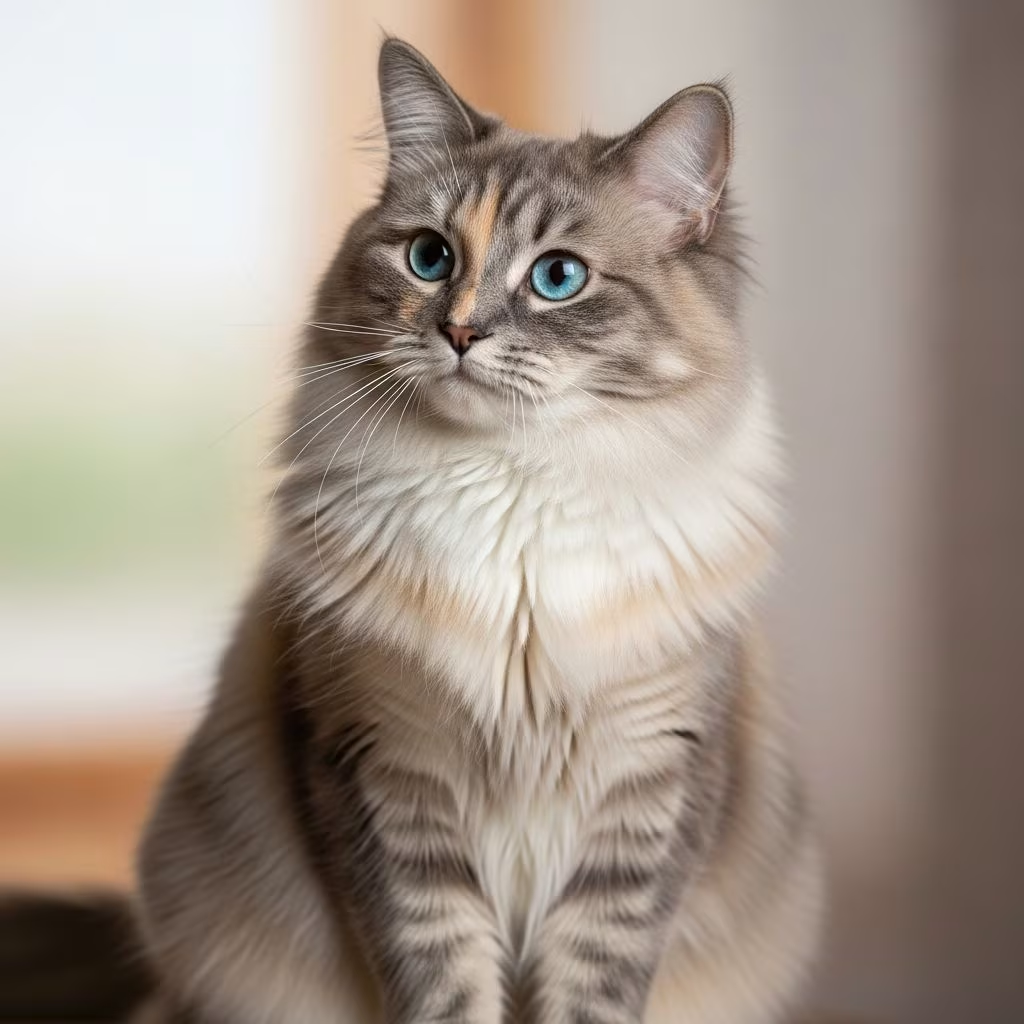
The Ragamuffin cat captivates with its plush, silky coat available in an extensive palette of colors and patterns, setting it apart as one of the most visually diverse breeds. Unlike many pedigreed cats restricted to specific hues, Ragamuffins embrace nearly every combination imaginable, from deep solids to intricate tabby designs and striking multi-color displays.
Understanding the Ragamuffin Breed Basics
Ragamuffins trace their roots to the Ragdoll lineage but evolved into a distinct breed emphasizing boundless color variety and a gentle temperament. These medium-to-large felines feature rectangular bodies, substantial bone structure, and full, rabbit-like fur that lengthens into a ruff around the neck and plumes the tail. Their broad heads, walnut-shaped eyes, and puffy whisker pads contribute to an endearing ‘sweet expression’ that pairs beautifully with their coat diversity.
Recognized by organizations like The Cat Fanciers’ Association (CFA), Ragamuffins prioritize health, balance, and affection over rigid color limits. Kittens often emerge with lighter fur that darkens as they mature, revealing full patterns around two to three years old. This slow development allows owners to watch their cat’s unique coloration unfold over time.
Solid Colors in Ragamuffin Coats
Solid colors form the foundation of many Ragamuffin appearances, offering uniform elegance across the breed. These shades must be even, with no ghost tabby markings or brindling, adhering to strict standards for depth and brilliance.
- Black: Deep, lustrous blue-black without rust or brown tones, fading subtly to gray at the roots.
- Blue: A soft, even lavender-blue from dilution of black, uniform from roots to tips.
- Red: Rich, vivid orange-red, brightest on back and head, with undercoat matching the top.
- Cream: Pale, creamy buff without yellow or pinkish hues, even throughout.
White Ragamuffins qualify as solids too, featuring pure, glossy white fur with pink skin and no pigmentation spots. Nose leather and paw pads remain pink, enhancing their pristine look. These solids highlight the breed’s silky texture, making the fur appear even plusher.
Shaded, Smoke, and Ticked Variations
Beyond basics, shaded and smoke patterns add dimension. Shaded coats show a pale undercoat with color concentrated on the upper back, sides, and tail tip, while smokes reveal a white undercoat visible when fur parts.
| Pattern Type | Description | Key Features |
|---|---|---|
| Shaded Silver | White undercoat with black tipping | Bright silver ground, mantle down back and head |
| Smoke Blue | White base with blue tipping | Pale blue upper side, deep blue tail |
| Ticked | Uniform bands, no tabby marks, warm tones |
Ticked Ragamuffins mimic wild rabbit fur, with each hair featuring multiple color bands for a shimmering effect. These patterns suit the breed’s robust build, drawing attention to their expressive eyes.
Tabby Patterns: The Spotted and Striped Beauties
Tabby markings dominate Ragamuffin shows, showcasing bold, defined lines prized for clarity and contrast. Classic, mackerel, spotted, and patched varieties all appear, each with specific traits.
Classic Tabby: Features swirls, a butterfly on shoulders, and an ‘M’ on the forehead. Dense markings contrast sharply against the ground color, with legs barred and tails ringed.
Mackerel Tabby: Narrow stripes and bars, resembling a fish skeleton, with bold lines from head to tail.
Brown tabby grounds glow coppery brown with black markings, while blue tabby offers pale ivory bases with blue-gray stripes. Fawn, red, and cream tabbies provide softer palettes, all enhancing the cat’s plush appearance.
Parti-Color, Tortoiseshell, and Calico Designs
Parti-colors blend solids with white, creating piebald effects where colored patches mingle with unpigmented areas. Tortoiseshell (tortie) Ragamuffins display intermingled red and black for a brindled mosaic, often with glowing undertones.
- Calico: Distinct patches of white, black, and red, with white predominant underneath.
- Bi-Color: Any solid or tabby with white, unbrindled and balanced.
- Tortie: Blended cream and blue for dilute versions.
These multi-hued coats exemplify the breed’s genetic versatility, inherited from Ragdoll ancestors but expanded without pointed restrictions.
Mink, Sepia, and Other Rare Patterns
Hypoallergenic-like minks and sepias offer graduated color from pale roots to darker tips, mimicking shaded but with warmer bases. Parti versions incorporate white for added variety. CFA disqualifies pointed patterns, preserving the breed’s all-over color focus.
How Coat Color Influences Ragamuffin Personality and Care
Though color doesn’t alter their core traits—docile, people-loving, and adaptable—darker coats may show dirt more readily, necessitating frequent grooming. All Ragamuffins sport medium-long, plush fur requiring weekly brushing to prevent mats, especially around the ruff and britches.
Bathing every few months preserves silkiness, while diet controls their tendency for abdominal fat pads without compromising health. Their colors remain vibrant with high-quality nutrition supporting coat sheen.
Choosing Your Ragamuffin by Color Preference
Prospective owners often select based on hue harmony with home decor or personal taste. Solids suit minimalists, tabbies appeal to pattern lovers, and calicos dazzle with vibrancy. Ethical breeders provide color predictions from parent photos and genetics.
Ragamuffins mature slowly, reaching full size and color by age four, so patience yields stunning results. Their 12-18 year lifespan allows ample time to enjoy evolving beauty.
Frequently Asked Questions About Ragamuffin Colors
Are all Ragamuffin colors accepted in shows?
Yes, CFA accepts all except pointed patterns and short-haired disqualifiers, emphasizing variety.
Do Ragamuffin kittens match adult colors?
No, they lighten initially then develop full patterns by 2-3 years.
How do I groom a tabby Ragamuffin coat?
Brush weekly, focus on ruff and tail; use de-shedding tools for density.
Can Ragamuffins have blue eyes regardless of color?
Eye color is independent, often vivid blues or odds, enhancing any coat.
Are white Ragamuffins prone to deafness?
Unlike some breeds, Ragamuffins rarely face this, thanks to non-dominant white genetics.
Health Considerations Tied to Coat Genetics
Color genes rarely impact health in Ragamuffins, selected for robustness. Hypertrophic cardiomyopathy screening remains key, unrelated to hue. Diverse colors promote genetic health via outcrossing.
References
- Ragamuffin Cat Breed – Hill’s Pet Nutrition — Hill’s Pet Nutrition. 2023. https://www.hillspet.com/cat-care/cat-breeds/ragamuffin
- RagaMuffin Cat Breed Information — Purina UK. 2023. https://www.purina.co.uk/find-a-pet/cat-breeds/ragamuffin
- RagaMuffin Breed Standard — The Cat Fanciers’ Association. 2024-10-01. https://cfa.org/breed/ragamuffin/
- Ragamuffin Cats: Facts, Personality, and Breed Guide — Litter-Robot. 2023. https://www.litter-robot.com/blog/ragamuffin-cat/
- RagaMuffin – The Governing Council of the Cat Fancy — GCCF. 2023. https://www.gccfcats.org/getting-a-cat/choosing/cat-breeds/ragamuffin/



