

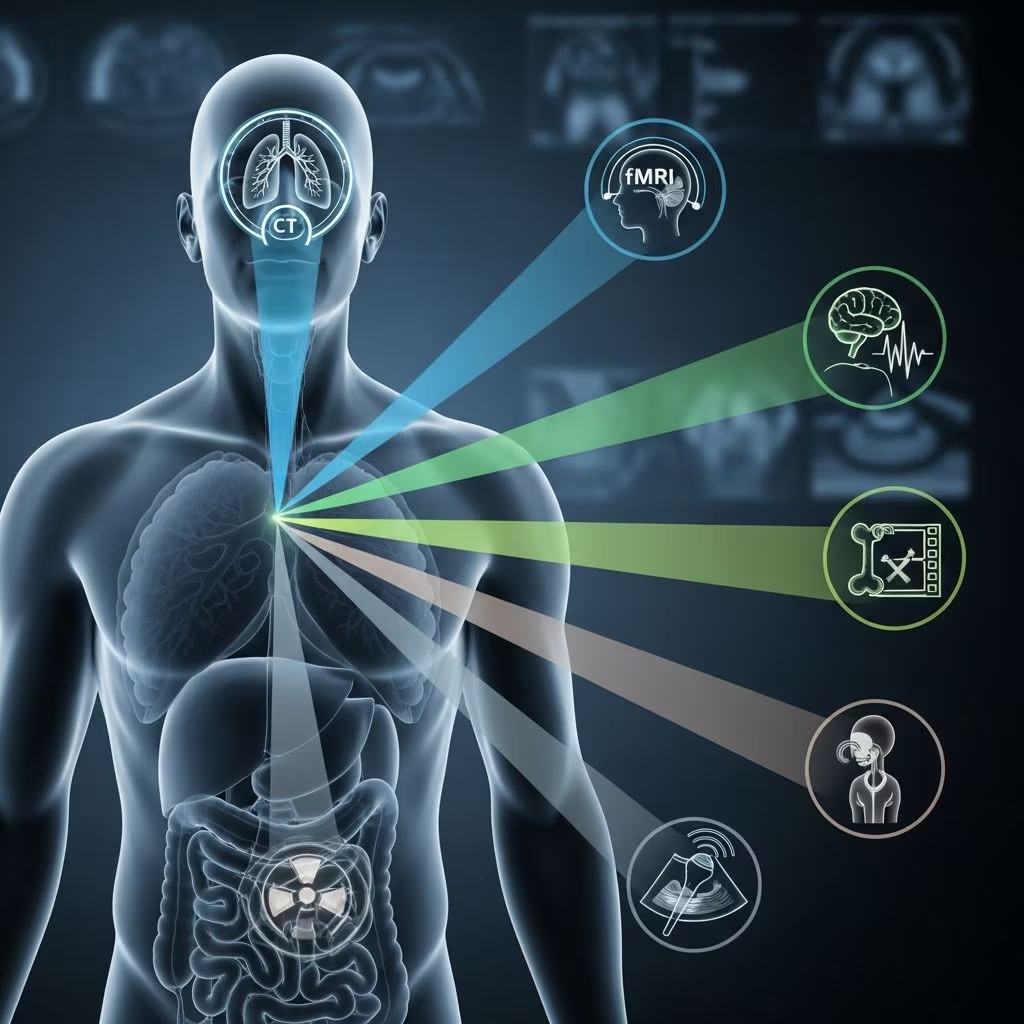
Modern medicine relies heavily on radiology to visualize the body’s internal structures, diagnose conditions, and deliver targeted treatments. Within this broad field, three primary branches stand out: diagnostic radiology, interventional radiology, and therapeutic radiology (often called radiation oncology). Each plays a distinct role, employing advanced imaging and radiation technologies in unique ways to enhance patient care.
Foundations of Diagnostic Radiology
Diagnostic radiology serves as the cornerstone for identifying diseases and injuries through non-invasive imaging. Professionals in this area capture detailed pictures of bones, organs, tissues, and blood vessels using modalities like X-rays, computed tomography (CT) scans, magnetic resonance imaging (MRI), ultrasound, and fluoroscopy. These tools allow clinicians to detect fractures, tumors, infections, and vascular issues without surgery.
The process begins with patient preparation, where radiographers explain procedures and ensure safety, particularly regarding radiation exposure. For instance, X-rays provide quick snapshots ideal for bone assessments, while MRI offers superior soft tissue contrast using magnetic fields and radio waves. CT scans combine X-rays from multiple angles to create cross-sectional images, proving invaluable for complex cases like internal bleeding or lung diseases.
- Common applications: Evaluating chest pain, abdominal trauma, neurological disorders, and routine screenings.
- Patient experience: Typically brief visits with minimal discomfort, enabling fast referrals to specialists.
- Professional duties: Operating equipment, positioning patients, and sometimes preliminary image assessments before radiologists interpret results.
Diagnostic radiologists, who are physicians, review these images to formulate diagnoses, guiding subsequent treatments. This branch’s speed and versatility make it essential in emergency departments and outpatient clinics.
Interventional Radiology: Precision Through Guidance
Interventional radiology elevates diagnostic imaging into therapeutic action by using real-time visuals to perform minimally invasive procedures. Specialists thread catheters, needles, or wires through small incisions, guided by fluoroscopy, ultrasound, CT, or MRI, to treat conditions ranging from blocked arteries to tumors.
This approach minimizes risks associated with open surgery, offering shorter recovery times and fewer complications. Procedures include angioplasty to widen narrowed vessels, embolization to block abnormal blood flow in aneurysms or bleeding sites, stent placements, biopsies, and abscess drainages. For cancer patients, it enables targeted drug delivery or tumor ablation using heat or cold.
| Procedure | Purpose | Guiding Imaging |
|---|---|---|
| Angiogram | Visualize and treat vessel blockages | Fluoroscopy |
| Biopsy | Sample tissue for analysis | CT or Ultrasound |
| Embolization | Stop bleeding or shrink tumors | Fluoroscopy |
| Stent Placement | Open narrowed ducts or arteries | Fluoroscopy/MRI |
Interventional radiologists undergo extensive training in both imaging interpretation and procedural skills. They collaborate with surgeons and oncologists, often providing same-day treatments that improve outcomes while reducing hospital stays. Patient benefits include less pain, lower infection rates, and quicker return to normal activities.
Therapeutic Radiology: Harnessing Radiation for Treatment
Therapeutic radiology, synonymous with radiation oncology, employs high-energy radiation to eradicate cancer cells and manage other diseases. Radiation oncologists design plans using ionizing radiation like X-rays, gamma rays, or protons to damage tumor DNA, preventing cell division while sparing healthy tissue.
Treatment modalities vary: external beam radiation directs beams from machines like linear accelerators at the tumor; brachytherapy places radioactive sources inside the body; and systemic therapy uses radioactive drugs. Sessions occur over weeks, with daily doses calibrated for efficacy and safety.
- External beam techniques: Intensity-modulated radiation therapy (IMRT) shapes beams to conform to tumor contours; stereotactic body radiation therapy (SBRT) delivers precise, high doses in fewer sessions.
- Internal methods: Seeds or applicators position radiation near targets for concentrated effects.
- Role in care: Often combined with chemotherapy or surgery for curative or palliative aims.
Radiation therapists administer these under oncologist supervision, monitoring side effects like fatigue or skin irritation. Long-term patient relationships foster emotional support during extended courses.
Key Distinctions Across Branches
Though interconnected, these specialties diverge in focus, execution, and patient interaction. Diagnostic radiology emphasizes detection via imaging; interventional blends diagnosis with intervention; therapeutic prioritizes radiation-based eradication.
| Aspect | Diagnostic | Interventional | Therapeutic |
|---|---|---|---|
| Primary Goal | Diagnosis | Minimally invasive procedures | Cancer treatment |
| Radiation Use | Low-dose for imaging | Guidance, not primary treatment | High-dose therapeutic |
| Patient Contact | One-time scans | Procedure-based | Ongoing sessions |
| Team Involvement | Radiographers, radiologists | Multidisciplinary procedures | Oncologists, therapists, physicists |
Diagnostic work is fast-paced with diverse cases; interventional demands technical dexterity; therapeutic involves meticulous planning and follow-up. Technological integration, like AI-enhanced imaging, bridges them further.
Career Paths and Educational Requirements
Entering these fields requires rigorous training. Diagnostic radiographers earn associate or bachelor’s degrees, focusing on imaging tech. Radiologists complete medical school, residency, and fellowships.
Interventional radiologists pursue additional procedural fellowships post-diagnostic training. Radiation oncologists follow medical paths with oncology specialization, collaborating with physicists for dosimetry.
- Skills needed: Anatomy knowledge, technical proficiency, patient communication, attention to radiation safety.
- Work environments: Hospitals, clinics, cancer centers.
- Job outlook: Strong demand due to aging populations and cancer prevalence.
Patient Safety and Technological Advances
Safety protocols minimize risks across branches. ALARA (As Low As Reasonably Achievable) governs radiation doses; protective gear and shielding protect staff. Advances like 4D imaging track organ motion, and proton therapy offers pinpoint accuracy.
AI algorithms now aid image analysis, reducing errors and speeding workflows. Hybrid suites combine imaging with intervention for seamless care.
FAQs
What is the main difference between diagnostic and therapeutic radiology?
Diagnostic uses low-dose imaging for detection; therapeutic applies high-dose radiation for treatment.
Is interventional radiology surgery?
No, it uses tiny incisions and imaging guidance for less invasive alternatives.
How long does radiation therapy last?
Typically 3-8 weeks, with daily sessions of minutes each.
Are there side effects from diagnostic imaging?
Minimal; radiation doses are very low, comparable to background exposure.
Can these branches overlap?
Yes, diagnostic images inform interventional procedures and therapeutic plans.
References
- Therapeutic vs. Diagnostic Radiography: Understanding the key differences — Queen Margaret University. 2023. https://www.qmu.ac.uk/campus-life/blogs/staff-catherine-mcclintick/therapeutic-vs-diagnostic-radiography-understanding-the-key-differences
- Radiologist vs. Radiation Therapist: Understanding the Differences — Indeed. 2024-02-15. https://www.indeed.com/career-advice/finding-a-job/radiologist-vs-radiation-therapist
- Radiology Specialties: What are the Differences Between Diagnostic, Interventional, and Therapeutic Radiology? — IHCL. 2024. https://ihcl.com/resources/blog/radiology-specialties-what-are-the-differences-between-diagnostic-interventional-and-therapeutic-radiology/
- The Difference Between Diagnostic Radiology, Radiation Therapy & Interventional Radiology — Albany Medical Center. 2017-11-15. https://www.amcny.org/blog/2017/11/15/difference-diagnostic-radiology-radiation-therapy-interventional-radiology/
- Diagnostic Radiography and Radiation Therapy: What Goes Behind the Scenes — YouTube (Singapore Institute of Technology). 2022. https://www.youtube.com/watch?v=i-EfoR22i2s
- Why is a radiation oncologist not a radiologist — OncoDaily. 2024. https://oncodaily.com/oncolibrary/radiotherapy/radiation-oncologist
- Radiation Oncology vs. Radiology: What’s the Difference? — Cancer Treatment Centers of America. 2023-10. https://www.cancercenter.com/community/blog/2023/10/radiation-oncology-vs-radiology



