

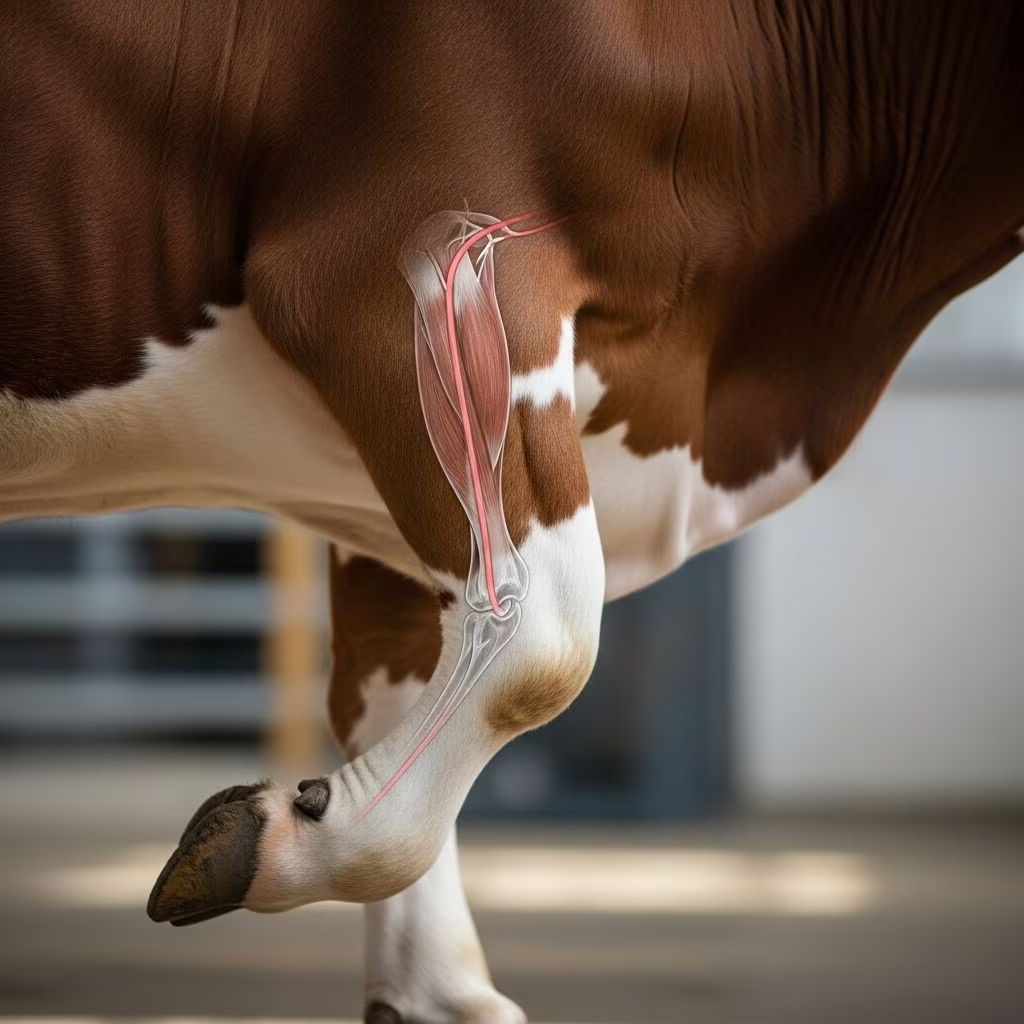
Radial nerve paralysis represents a significant challenge in bovine veterinary practice, often resulting from compression or trauma that disrupts motor and sensory functions in the forelimb. This condition manifests as pronounced lameness, with affected animals displaying an inability to properly extend key joints, leading to dragging of the limb and potential secondary injuries. Understanding its pathophysiology, clinical presentation, and management is crucial for livestock producers to minimize economic losses associated with reduced mobility and productivity.
Understanding the Radial Nerve’s Role in Bovine Anatomy
The radial nerve, a major branch of the brachial plexus originating from spinal segments C7, C8, and T1, plays a pivotal role in forelimb extension. It innervates critical extensor muscles such as the triceps brachii, extensor carpi radialis, and digital extensors, enabling the animal to straighten the elbow, carpus, and digits for weight-bearing and locomotion. Sensory fibers supply the cranial and lateral aspects of the antebrachium and foot, providing proprioception and pain response.
In cattle, this nerve courses along the lateral humerus, making it vulnerable to compressive forces during prolonged lateral recumbency or direct impacts. Unlike more distal nerves, radial nerve damage affects multiple joints simultaneously, producing a characteristic posture that aids in differentiation from other lameness causes.
Primary Causes of Radial Nerve Damage
Compression ischemia from extended periods of lateral recumbency remains the most frequent etiology, particularly in adult cattle recovering from illness, calving complications, or anesthesia. The nerve’s position over the humeral shaft exposes it to sustained pressure against the ground or bedding, leading to ischemic necrosis if unresolved.
Traumatic injuries, including blows to the shoulder from aggressive herd mates, collisions in handling facilities, or entrapment in feeders, constitute another key trigger. In beef herds, horned cattle have been implicated in inflicting shoulder trauma on peers, as observed in isolated cases without prior recumbency. Humeral fractures or iatrogenic damage during restraint in crushes can also sever or contuse the nerve.
- Prolonged recumbency: Common post-parturition or illness, compressing nerve over humerus.
- Direct trauma: Shoulder impacts from fights, poor facilities, or foot-trimming yokes.
- Fractures or entrapments: Humeral breaks or compression between scapula and ribs.
Recognizing Clinical Signs and Symptoms
Affected cattle exhibit a distinctive gait and stance: the shoulder remains extended, the elbow drops noticeably, and the carpus and fetlock are carried in partial flexion or dragged. This results in knuckling of the digits, with the dorsal hoof surface scraping the ground, causing fetlock abrasions and hair loss.
While animals may refuse to bear weight initially, many can support the limb if manually positioned underneath, distinguishing proximal radial lesions from brachial plexus avulsions or humeral fractures where weight-bearing is impossible. Sensory deficits include analgesia on the lateral leg, from mid-humerus to digits, confirmed by lack of response to pinprick.
| Sign | Description | Differentiating Feature |
|---|---|---|
| Dropped elbow | Elbow hangs low, unable to extend | Unlike fractures, no crepitus or deformity |
| Dragging fetlock | Carpus flexed, digits knuckled | Abrasion on dorsal fetlock |
| Weight-bearing ability | Possible if limb placed forward | Absent in plexus damage |
| Muscle atrophy | Triceps, extensors waste over time | Prominent scapular spine |
Acute cases arise suddenly post-recumbency, while chronic ones show muscle wasting and a prominent scapular spine due to disuse atrophy.
Differential Diagnosis Strategies
Distinguishing radial nerve paralysis from similar conditions requires systematic evaluation. Brachial plexus injuries present with complete flaccid paralysis and no weight-bearing capacity, often with Horner syndrome (ptosis, miosis). Humeral fractures involve pain on manipulation, crepitus, and radiographic confirmation.
Assess spinal reflexes: absent patellar reflex suggests higher lesions, while preserved superficial sensation proximal to the elbow points to peripheral radial damage. Compare with contralateral limb and rule out musculoskeletal issues via flexion tests and hoof examination.
- Neurologic exam: Test elbow extension, sensory dermatomes.
- Imaging: Radiographs for fractures; ultrasound for nerve swelling.
- History: Recent recumbency or trauma?
Management and Supportive Care Options
Early intervention improves outcomes. Provide deep bedding in loose housing to prevent further compression. Non-steroidal anti-inflammatory drugs (NSAIDs) like flunixin meglumine reduce swelling and pain, promoting nerve recovery within hours in mild cases.
Mechanical support is essential: bandaging the limb from carpus to fetlock, or applying a splint/cast to maintain extension, prevents knuckling and abrasions. Hobble if needed to encourage use, monitoring for pressure sores. Nutritional support with balanced rations aids muscle regeneration.
Severe cases may require sling assistance for standing, but prolonged support risks atrophy. Differentiate high (proximal) vs. low lesions: proximal recover better due to shorter regeneration distance.
Prognosis and Factors Influencing Recovery
Prognosis varies from good to grave. Mild compressions resolve in days with NSAIDs and rest; severe traumas with axonotmesis may take months or fail, leading to permanent lameness. Key factors include:
- Onset duration: Acute <48 hours: 80-90% recovery.
- Lesion site: Distal better than proximal.
- Muscle status: Minimal atrophy favors success.
- Environment: Straw yards outperform concrete.
Dairy cattle with partial recovery often fail in high-production settings, necessitating culling. Beef animals tolerate better if pasture-raised.
Prevention Measures for Herd Health
Minimize recumbency risks by promptly treating illnesses and using padded recovery areas post-anesthesia. Design handling facilities with rounded corners, adequate space, and non-slip floors to avert trauma. Dehorn cattle to reduce fights, and monitor horned groups closely.
Regular foot care in well-ventilated crushes prevents yoke-related injuries. Post-calving vigilance identifies at-risk cows early.
Case Studies: Real-World Applications
In a small beef herd, two mature cows developed right forelimb lameness without recumbency history. Both showed dropped elbows and dragging but bore weight when positioned. An aggressive horned cow was suspected, leading to separation and full recovery in weeks.
Contrastingly, post-recumbency dairy cases respond to splinting and NSAIDs, with 70% returning to milk string if treated within 24 hours.
FAQs on Radial Nerve Paralysis
Q: How quickly does recovery occur?
A: Mild cases: 24-72 hours with NSAIDs; severe: 2-6 months or permanent.
Q: Can affected cattle be salvaged?
A: Yes, for breeding/beef if partial function returns; cull high-producers with residuals.
Q: Is surgery an option?
A: Rarely; neurolysis for entrapments, but supportive care primary.
Q: How to test for radial nerve damage?
A: Observe dropped elbow/knuckling; check lateral sensation loss; ensure weight-bearing when supported.
Q: Prevention in dairy vs. beef?
A: Dairy: padded stalls; Beef: dehorning, spacious paddocks.
Long-Term Impacts on Herd Management
Radial nerve cases underscore the need for holistic lameness protocols. Integrate mobility scoring, early intervention teams, and facility audits to cut incidence by 50%. Economic analysis reveals treatment costs ($200-500/case) vs. cull value, favoring salvage where feasible.
Research gaps persist in regenerative therapies like stem cells, but current protocols suffice for most.
References
- Diagnosing and treating downer cattle (Proceedings) — DVM360. 2023-05-01. https://www.dvm360.com/view/diagnosing-and-treating-downer-cattle-proceedings
- Radial nerve paralysis cattle — Flock and Herd. 2017-11-20. http://www.flockandherd.net.au/cattle/ireader/radial-nerve-paralysis.html
- Radial limb paralysis in Cows (Bovis) — Vetlexicon. 2024-01-15. https://www.vetlexicon.com/bovis/musculoskeletal/articles/radial-limb-paralysis/
- Calving Part 3 – Nerve Damage — NADIS. 2022-03-10. https://www.nadis.org.uk/disease-a-z/cattle/calving-module/calving-part-3-nerve-damage/
- Limb Paralysis in Animals — Merck Veterinary Manual. 2025-02-01. https://www.merckvetmanual.com/nervous-system/limb-paralysis/limb-paralysis-in-animals
- Knuckling — Veterinary Handbook. 2023-08-12. https://www.veterinaryhandbook.com.au/Diseases.aspx?diseasenameid=154



