

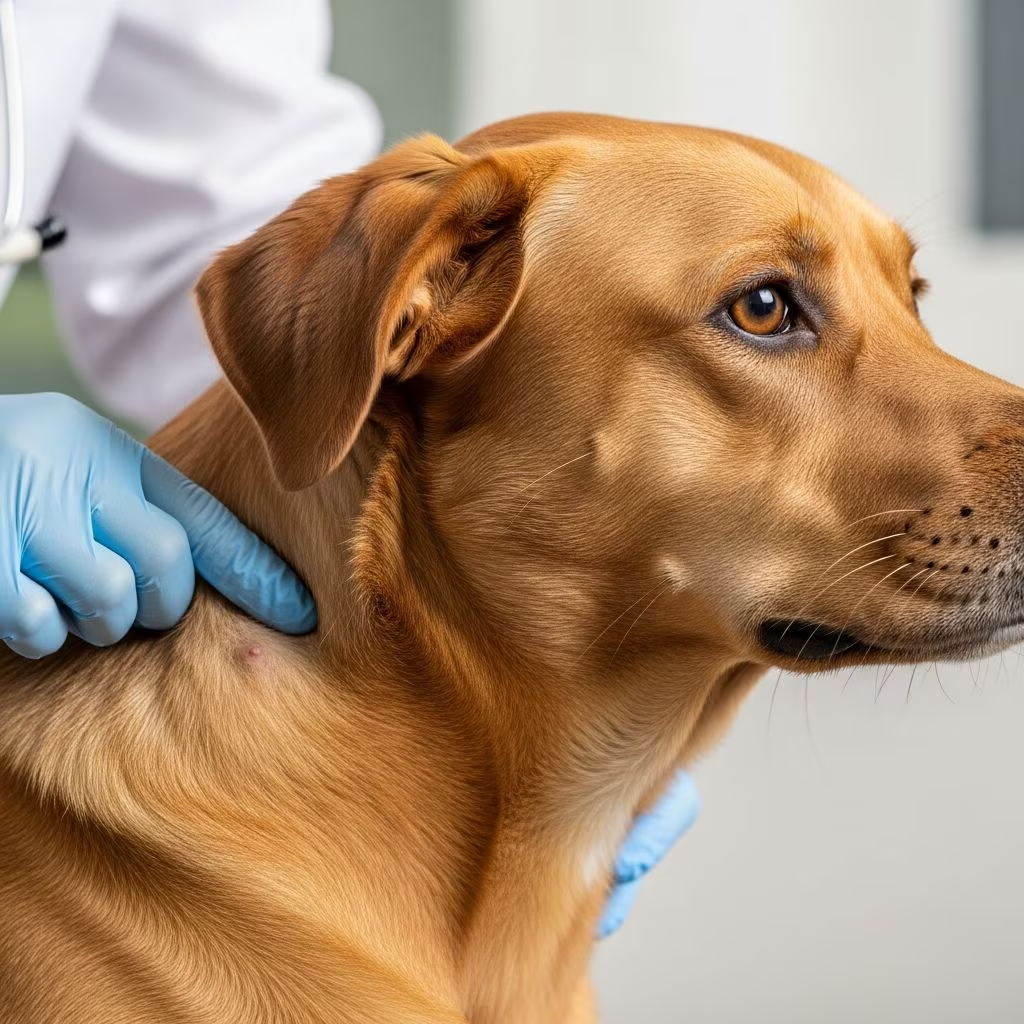
When your dog receives a rabies vaccination, you may notice a small lump developing at the injection site within days of the appointment. This observation can understandably cause concern for pet owners, but understanding what causes these lumps and recognizing which ones require veterinary attention is essential for your dog’s health and your peace of mind.
The Immune Response Behind Vaccination Lumps
A lump that appears after your dog receives a rabies vaccine is most often a completely normal physical manifestation of how your dog’s immune system responds to vaccination. Vaccines work by introducing a substance that stimulates the immune system to develop protection against specific diseases. When the rabies vaccine is injected into your dog’s body, it triggers an inflammatory response at the injection site as the immune system mobilizes to process the vaccine material.
This inflammatory reaction causes localized swelling and the formation of a firm lump under the skin. Think of this lump as evidence that your dog’s immune system is actively working to build immunity against rabies. The body is mounting a protective response, which is exactly what you want to happen when vaccinating your pet.
Most of these lumps are small, firm to the touch, and will gradually diminish over time. Pet owners should understand that this type of post-vaccination swelling is a recognized and expected occurrence rather than a sign of a serious problem.
Timeline for Normal Lump Resolution
Understanding how long these lumps typically persist can help you determine whether your dog’s reaction falls within normal parameters. In most cases, a small firm lump at the rabies vaccination site will resolve within a couple of weeks. Some dogs may experience lump persistence for a few days to several weeks depending on their individual immune response and the severity of the localized swelling.
During the first few days following vaccination, you might notice additional symptoms accompanying the lump. Your dog may experience mild tenderness or sensitivity at the injection site, which could cause them to be reluctant to allow you to touch the area or may result in slightly reduced playfulness. The area around the lump might also display mild redness or warmth, which typically subsides within one to two days.
It’s important to remember that if the lump begins to shrink and the surrounding area returns to normal within this timeframe, your dog is displaying a typical vaccination response and no intervention beyond home care is necessary.
Home Care Strategies for Managing Injection Site Lumps
While most vaccination lumps require no treatment and will resolve independently, you can take steps to support your dog’s comfort during the healing process. Implementing appropriate temperature-based therapies during the right phase of healing can potentially accelerate resolution and minimize discomfort.
Cold Compress Application: During the immediate post-vaccination period, typically the first two to three days, applying a cold compress to the lump can help reduce swelling and provide comfort. Cold therapy constricts blood vessels and decreases inflammation, which may limit the size and discomfort of the injection site reaction.
Warm Compress Transition: After the initial two to three day period, switching to warm compress therapy becomes more beneficial. Warm compresses encourage increased blood flow to the affected area, bringing healing substances and immune cells that facilitate the body’s natural process of breaking down and absorbing the lump. This transitional approach optimizes your dog’s natural healing mechanisms.
Beyond temperature-based care, allowing your dog appropriate rest and avoiding vigorous exercise during the immediate post-vaccination period can help minimize inflammation and support recovery.
Distinguishing Normal Lumps from Concerning Symptoms
While most post-vaccination lumps are benign, recognizing which characteristics warrant veterinary evaluation is crucial for responsible pet ownership. Several features can distinguish a normal post-vaccination reaction from a situation requiring professional assessment.
| Characteristic | Normal Vaccination Response | Concerning and Requires Evaluation |
|---|---|---|
| Lump Size | Small and firm | Growing in size or enlarging over time |
| Duration | Resolves within 2-4 weeks | Persists beyond 4 weeks without improvement |
| Pain Level | Mild sensitivity that improves | Severe pain or increasing discomfort |
| Additional Symptoms | Mild fever or reduced appetite for 1-2 days | Fever lasting beyond 48 hours or systemic signs |
| Appearance | Normal skin appearance over lump | Skin ulceration, discharge, or draining |
A lump that continues to grow despite the passage of several weeks represents a reason to schedule a veterinary appointment. Similarly, if the lump shows no signs of improvement after four weeks or continues to cause significant pain or discomfort to your dog, professional evaluation is warranted.
Beyond Vaccine Reactions: Alternative Causes for Post-Injection Lumps
While vaccination-related inflammation is the most common cause of lumps appearing after your dog receives an injection, other medical conditions can produce similar-appearing lumps at injection sites. Recognizing these alternative possibilities helps explain why veterinary assessment may be necessary in certain situations.
Abscess Formation: If improper injection technique was used or if the needle was not sterile, bacteria can be introduced into the tissue, potentially leading to abscess development. An abscess represents a localized collection of pus and represents a true infection requiring veterinary treatment with antibiotics.
Allergic Reactions: Some dogs develop allergic responses to vaccine components. While hives (firm lumps distributed across the body rather than localized to the injection site) represent one manifestation of allergic reaction, localized allergic swelling at the injection site can also occur.
Other Dermatological Issues: The lump appearing after vaccination might not be related to the injection at all. Insect bites, environmental allergies, wounds, or other skin conditions can coincidentally develop near the injection site and could be misattributed to the vaccination.
Serious but Rare: Vaccine-Associated Sarcoma
While extremely uncommon, one serious condition that veterinary professionals and pet owners should understand is vaccine-associated sarcoma, a cancerous tumor that can develop at vaccination sites in some dogs. This condition represents a rare adverse effect associated with certain vaccines, particularly rabies vaccinations.
Vaccine-associated sarcomas typically present as lesions that persist and grow in size at the exact location where vaccinations were administered. In advanced stages, these lesions may become fixed to underlying tissue and occasionally develop ulceration. The risk of developing vaccine-associated sarcoma may increase with the frequency and number of vaccinations administered to the same site.
The critical distinction between a normal post-vaccination lump and a potential sarcoma relates to progression. A normal lump appears relatively quickly post-vaccination, stabilizes, and gradually diminishes over weeks. A sarcoma, by contrast, continues to grow and fails to resolve through the expected timeline. Any lump that continues enlarging weeks after vaccination or that persists beyond one month absolutely requires veterinary evaluation to rule out this serious condition.
Additional Vaccine Reactions You Should Monitor
While injection site lumps represent the most common local reaction to rabies vaccination, several other side effects can occur as your dog’s immune system responds to the vaccine. Awareness of these potential reactions helps you identify situations requiring veterinary attention.
Common Mild Reactions: Most dogs experience minimal side effects from rabies vaccination. Mild fever, slight reduction in appetite, and mild to moderate energy loss can occur for 24 to 36 hours following vaccination. These symptoms are typically self-limiting and resolve without intervention.
Soreness and Localized Swelling: Beyond lumps, dogs may experience general soreness at the injection site and mild swelling of the surrounding area. This soreness may cause your dog to move less or walk gingerly, particularly if the rabies vaccine was administered in the rear leg area.
Rare But Serious Reactions: While uncommon, rabies vaccination can trigger more serious allergic or inflammatory reactions requiring immediate veterinary attention. These serious reactions include hives appearing across the body surface, vomiting, diarrhea, facial swelling affecting the muzzle or eyes, severe pain or swelling at the injection site, coughing, or collapse. If your dog experiences any of these signs, immediate emergency veterinary care is necessary.
Neurological Complications: One particularly concerning though rare reaction involves posterior paralysis affecting the rear legs, a condition that can develop following rabies vaccination. Dogs experiencing this reaction show loss of function in their hind limbs and require immediate veterinary evaluation.
Practical Guidance for Post-Vaccination Monitoring
Establishing a monitoring routine after your dog receives a rabies vaccination helps you track recovery and identify any concerning developments early. During the first 48 hours following vaccination, check the injection site daily for progressive changes. Note the lump’s size, firmness, and surrounding skin condition, and monitor your dog’s behavior, appetite, and energy levels for any concerning changes.
Keep records of vaccination dates and injection sites, which becomes particularly valuable if your dog develops a lump that fails to resolve normally. This information helps veterinary professionals assess whether repeated injections in the same location might be contributing to a prolonged or unusual reaction.
Contact your veterinarian if a lump shows any of the warning signs discussed previously, including continued growth after the first week, persistence beyond four weeks, associated severe pain, or if your dog develops signs of systemic illness accompanying the injection site lump.
Frequency of Vaccination and Injection Site Management
Modern veterinary practice increasingly emphasizes appropriate rabies vaccination intervals to minimize unnecessary immune stimulation and reduce the already small risk of injection site complications. Rather than administering rabies boosters annually, many protocols now recommend three-year intervals following initial vaccination series completion.
When rabies vaccines must be administered, using rotating injection sites—such as alternating between front leg and rear leg locations—may help reduce the cumulative impact on any single area. This practice becomes particularly relevant for senior dogs or those with a history of prolonged or problematic injection site reactions.
When Professional Evaluation Becomes Essential
Your veterinarian possesses the expertise to distinguish between normal post-vaccination lumps and situations requiring medical intervention or further diagnostic testing. Schedule a veterinary appointment if your dog’s lump exhibits any of these characteristics: continued growth beyond the first two weeks, complete lack of improvement after four weeks, severe associated pain limiting your dog’s normal function, discharge or skin breakdown over the lump, or presence of systemic illness signs like fever, vomiting, or behavior changes.
Additionally, if you have any uncertainty about whether a lump represents a normal post-vaccination response or something requiring attention, scheduling a quick veterinary evaluation provides valuable peace of mind. Your veterinarian can perform a physical examination, may recommend diagnostic testing if warranted, and can provide specific guidance tailored to your individual dog’s health status and history.
Summary: Normal Expectations and Action Items
Post-rabies vaccination lumps represent a normal immune response in most cases, typically appearing as small, firm swellings at the injection site that gradually resolve within two to four weeks. Implementing appropriate home care using cold compresses initially and warm compresses after the first few days can support your dog’s comfort. Most post-vaccination lumps require no treatment beyond observation and home care, and they resolve completely without intervention.
However, lumps that continue growing, persist beyond one month, cause severe pain, or are accompanied by concerning systemic symptoms warrant veterinary evaluation. Your veterinarian can assess whether a persistent lump represents a normal delayed response, an infection, an allergic reaction, or a more serious condition requiring treatment. Understanding these distinctions empowers you to make informed decisions about your dog’s health while maintaining appropriate perspective about the safety and necessity of rabies vaccination.
References
- Is A Dog Vaccine Lump Normal? — Loveland Regional Animal Hospital. 2024. https://lovelandregional.com/blog/dog-vaccine-lump/
- Side Effects of Rabies Vaccines in Dogs — Hill’s Pet Nutrition. 2024. https://www.hillspet.com/dog-care/healthcare/dog-rabies-vaccine-side-effects
- Tumor Related to Vaccinations in Dogs — PetMD. 2024. https://www.petmd.com/dog/conditions/cancer/c_dg_vaccine_sarcoma
- A Dog with Rash + Skin Lump after Vaccination — Our Pets Health. September 3, 2019. https://www.youtube.com/watch?v=kEdmqCkEwgk
- Injection-Site Sarcoma in a Dog: Clinical and Pathological Findings — PubMed Central/National Institutes of Health. 2019. https://pmc.ncbi.nlm.nih.gov/articles/PMC6005287/
- How to Care for Dog Vaccine Injection Sites — Minnieville Animal Hospital. 2024. https://minnievilleah.com/blog/how-to-care-for-dog-vaccine-injection-sites/
- Vaccine Reactions in Dogs: Everything You Should Know — Queens Animal Hospital. March 29, 2024. https://www.queensanimalhospital.com/site/blog/2024/03/29/vaccine-reactions-dogs



