Rabbit Weight Check Guide: 5 Simple Home Assessments
Learn simple, effective ways to assess your rabbit's body condition and spot obesity early for a healthier, happier life.
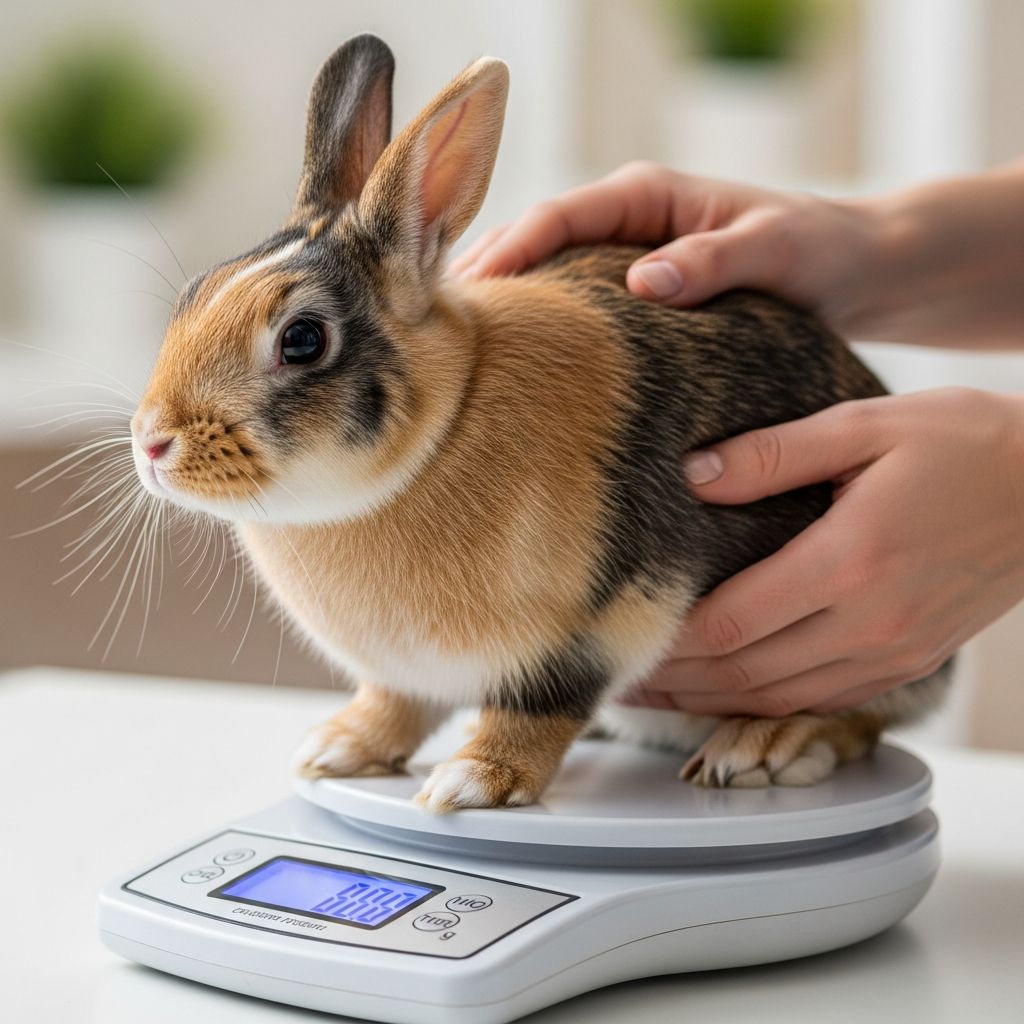
Rabbits often gain excess weight silently, but owners can identify issues early through simple at-home evaluations. This guide provides tools to assess body condition accurately and take action.
Understanding Rabbit Body Condition
Maintaining an ideal weight is crucial for rabbits, as obesity affects nearly one in three pet rabbits. A healthy rabbit displays a defined waistline and easily palpable ribs without excess fat. Overweight rabbits lose these features, appearing rounder with fat deposits around the hips and spine.
Veterinarians recommend the Body Condition Score (BCS) system, a standardized scale from 1 to 9 where 4-5 indicates ideal weight, 6-7 overweight, and 8-9 obese. This method outperforms mere scale readings by accounting for muscle and fat distribution specific to rabbits.
Step-by-Step Home Assessment
Perform these checks weekly to monitor your rabbit’s weight trends. No special tools are needed beyond your hands and eyes.
- Visual Inspection from Above: Look for a noticeable waist narrowing behind the ribs. Healthy rabbits show a gentle hourglass shape; overweight ones resemble cylinders.
- Visual Inspection from Side: Observe an abdominal tuck where the belly rises toward the hindquarters. A sagging belly signals excess fat.
- Hands-On Rib Check: Run fingers along the ribcage. Ribs should feel like fingertips under a thin fat layer—prominent yet padded. Thick padding or invisibility points to overweight status.
- Hip and Spine Palpation: Feel the hips and lower spine. Bony prominences covered lightly indicate health; heavy padding suggests obesity.
- Weight Tracking: Use a kitchen scale: weigh yourself, then with rabbit. Record monthly. Sudden gains over 10-15% of ideal weight warrant attention.
These steps align with veterinary BCS protocols, enabling owners to score accurately before professional visits.
BCS Chart for Rabbits
| BCS Score | Description | Visual/Tactile Signs | Action Needed |
|---|---|---|---|
| 1-3 (Underweight) | Emaciated/Thin | Ribs, spine, hips sharply visible; no fat cover; muscle loss | Increase calories; vet check for illness |
| 4-5 (Ideal) | Healthy | Ribs palpable with light fat; visible waist and tuck; energetic | Maintain current diet/exercise |
| 6-7 (Overweight) | Moderately Heavy | Ribs hard to feel; waist subtle; slight belly sag | Reduce treats; add exercise; recheck in 4 weeks |
| 8-9 (Obese) | Severely Overweight | No waist/tuck; ribs buried; fat rolls at hips/neck | Vet consultation; diet overhaul immediately |
This table adapts the 9-point BCS for rabbits, validated across species for consistency.
Health Risks of Rabbit Obesity
Excess weight shortens lifespan and invites complications. Obese rabbits face heightened arthritis risk from joint stress, pododermatitis (sore hocks) from uneven pressure, and gastrointestinal stasis where fat impedes gut motility.
- Cardiovascular strain leading to heart enlargement.
- Reduced grooming ability, causing fur mats and skin issues.
- Breeding difficulties and higher anesthesia risks during surgery.
- Diabetes-like insulin resistance in severe cases.
Early detection via BCS prevents these; studies show 30% over ideal weight marks clinical obesity.
Diet Strategies for Weight Management
Rabbits thrive on 80-90% hay, 5-10% pellets, and minimal veggies/treats. Overfeeding pellets or fruits causes rapid gain.
- Unlimited timothy/orchard hay for fiber and low calories.
- Pellets: 1/8 cup per 2 lbs body weight daily, high-fiber only.
- Veggies: Leafy greens like romaine (1 cup per 2 lbs), avoiding high-sugar carrots.
- No muesli mixes or bread—these spike obesity rates.
Transition gradually over 7-10 days to avoid digestive upset. Measure portions precisely.
Exercise and Enrichment Ideas
Inactive indoor rabbits pack on pounds. Aim for 3-5 hours daily activity.
- Supervised Free-Roam: Rabbit-proof one room for hopping exploration.
- Tunnels and Hides: Cardboard tubes encourage burrowing.
- Foraging Toys: Scatter hay in litter boxes to mimic wild grazing.
- Obstacle Courses: Use safe boxes/straw for jumping.
- Companion Play: Paired rabbits exercise more naturally.
Track improvements: agile movement and interest in play indicate progress.
Role of Veterinary Guidance
Consult vets for personalized plans, especially with breeds like Lionheads prone to fat accumulation. They calculate ideal weights (e.g., 2-4 kg for dwarfs, 4-5.5 kg for giants) and rule out hypothyroidism or dental issues mimicking obesity.
Regular BCS during check-ups tracks trends; APOP advocates routine assessments.
Tracking Progress and Milestones
Reassess BCS biweekly. Safe loss is 0.5-1% body weight weekly. Use apps or journals for data.
| Week | Target Weight Loss | BCS Goal | Notes |
|---|---|---|---|
| 1-2 | 1-2% | Drop 1 point | Monitor stool/feces |
| 3-6 | 5-10% total | Reach 5 | Increase playtime |
| 6+ | Maintain | Hold 4-5 | Annual vet weighs |
FAQs
How often should I check my rabbit’s weight?
Weekly visuals, monthly weighs for adults; daily for growing kits.
Are all rabbit breeds equally prone to obesity?
Dwarfs and lop-eared breeds gain faster due to genetics and lower activity.
What if my rabbit refuses hay during weight loss?
Mix in herbs; ensure fresh water. Vet if persistent.
Can spayed/neutered rabbits lose weight easier?
Sterilization reduces roaming urge, so pair with strict diet.
Is obesity reversible in senior rabbits?
Yes, with gentle exercise and vet-monitored low-cal diets.
References
- When Is My Pet Overweight? Signs & Management — The Bon Pet. 2023. https://thebonpet.com/blogs/news/when-is-my-pet-overweight-signs-management
- Obesity Position Statement — BSAVA. 2024-10-01. https://www.bsava.com/position-statement/obesity/
- Global Pet Obesity Initiative — Association for Pet Obesity Prevention. 2023. https://www.petobesityprevention.org/global-pet-obesity-initiative-apop
- Companion Animal Obesity — SaskSPCA. 2022-05-15. https://saskspca.ca/resource/companion-animal-obesity/
- How to Tell if Your Dog or Cat is Overweight — Animal Medical Center of New York. 2019-10-01. https://www.amcny.org/blog/2019/10/01/how-to-tell-if-your-dog-or-cat-is-overweight/
- How to identify, treat, and prevent dog and cat obesity — 24PetWatch. 2024. https://www.24petwatch.com/ca/blog/dog-and-cat-obesity
Similar Articles








Read full bio of medha deb