Rabbit Teeth: Complete Guide To Care, Problems, And Prevention
Understanding your rabbit's unique dental anatomy and keeping those chompers healthy.
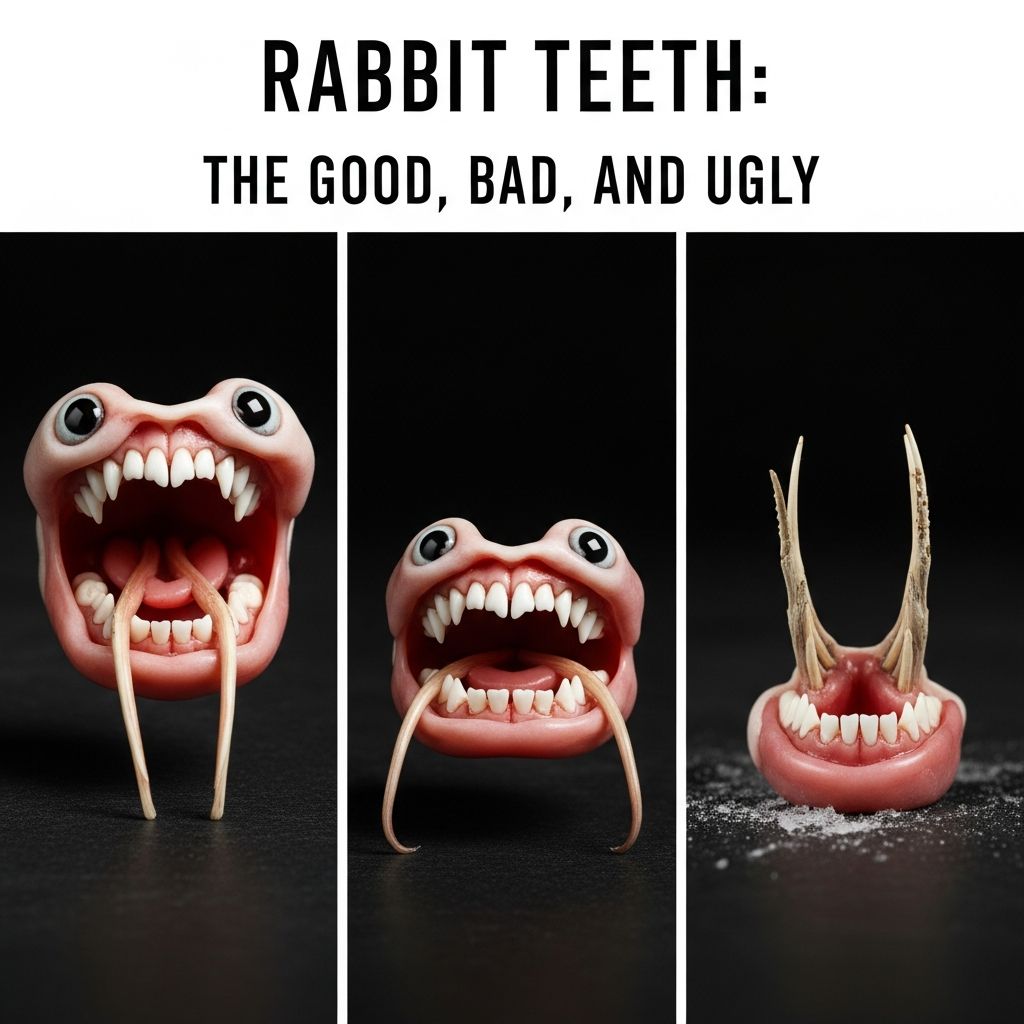
Rabbit Teeth: The Good, Bad, and Ugly
When you look at your rabbit’s adorable face, one of the first things you notice are those prominent front teeth—often affectionately called ”buck teeth.” But there’s much more to your bunny’s dental anatomy than meets the eye. Understanding how rabbit teeth work, why they grow the way they do, and how to keep them healthy is essential for providing excellent care to your furry companion. This comprehensive guide explores everything you need to know about rabbit teeth, from their fascinating structure to common problems and prevention strategies.
Understanding Rabbit Dental Anatomy
Rabbits have a unique dental structure that’s perfectly adapted to their herbivorous diet. Unlike humans, dogs, and cats, rabbits possess a specialized type of teeth called aradicular hypsodont teeth, which means their teeth have open roots and continue to grow throughout their entire lifetime. This continuous growth is one of the most distinctive features of rabbit dentistry.
An adult rabbit has exactly 28 teeth in total, distributed across different types that serve specific functions in the grinding and cutting of food. Let’s break down the dental formula and understand each tooth type:
The Four Main Tooth Types
Incisors: These are the prominent front teeth that most people recognize. Rabbits have four larger incisor teeth—two on the upper jaw (maxilla) and two on the lower jaw (mandible). These large teeth are used to grasp, tear, and slice through tough vegetation. Behind the two larger upper incisors sits a second, smaller pair of teeth called peg teeth, which are a unique characteristic of rabbits. When a rabbit closes its mouth at rest, the mandibular incisors normally position themselves between the first and second maxillary incisors.
Cheek Teeth: The term ”cheek teeth” refers collectively to the premolars and molars, which are anatomically indistinguishable in rabbits. Rabbits have three pairs of premolars on the upper jaw and two pairs on the lower jaw, along with three pairs of molars on both the upper and lower jaws. These grinding teeth are positioned toward the back of the mouth and function as a single unit to crush and grind fibrous food materials.
Notable Absence: Unlike dogs, cats, and humans, rabbits do not have canine teeth. Instead, there is a distinctive gap called the diastema between the incisors and the premolars. This gap is actually quite helpful when veterinarians need to administer syringe-fed medications to rabbits.
Why Are Rabbit Teeth So Big?
If you’ve ever wondered why rabbits have such prominently large front teeth, the answer lies in their evolutionary adaptation to their herbivorous diet. Rabbits are designed to consume fibrous foods that require serious chomping power. The size of their incisors isn’t just for show—it’s functional and necessary for their survival in the wild.
The large front incisors are specifically designed to cut through tough vegetation like grasses, clover, and woody plants. Meanwhile, the premolars and molars located toward the back of their mouth work to break down the tough, coarse grasses and other vegetation into smaller, manageable pieces for digestion. This combination of cutting and grinding teeth allows rabbits to efficiently process their high-fiber diet.
The remarkable size and structure of rabbit teeth are complemented by their unique growth pattern, which we’ll explore in the next section.
The Continuous Growth Factor
One of the most fascinating aspects of rabbit teeth is that they never stop growing. This is a critical characteristic that every rabbit owner should understand. Rabbits have what’s known as elodont teeth, which means they possess open roots that continuously produce new tooth material throughout the rabbit’s entire life.
How does this work? Germinal tissue located at the apices (tips) of the teeth continuously forms enamel to cover each tooth as the teeth constantly grow. Because of this unique structure, there is no anatomic difference in the tooth above or below the gum line. The enamel remains free of pigment, which is why rabbit teeth appear white.
To maintain proper tooth length and health, rabbits rely on the natural wear that occurs through chewing. Normal grinding motions during chewing produce sufficient wear to keep incisors at the proper length in healthy animals. This is why a proper diet rich in hay and fibrous vegetation is so important—it provides the natural abrasion necessary to keep teeth at an appropriate length.
Interestingly, the lower teeth grow at a different rate than the upper teeth. The mandible teeth grow up to one and a half times faster than the maxillary teeth. Additionally, there are more teeth on the maxilla than on the mandible, and the mandible is narrower than the maxilla. Because of these discrepancies, abnormalities in one jaw may affect multiple teeth in the opposite jaw.
How Rabbit Teeth Function During Eating
Understanding how rabbits use their teeth to process food provides insight into why dental health is so important. When a rabbit eats, their teeth work in a coordinated and specialized manner that’s quite different from human or dog dentition.
The Cutting Process: When a rabbit begins to eat, they use their four larger incisor teeth to grasp, tear, and slice food. The grass and hay must be sliced into short sections by these incisors before being passed back to the cheek teeth for further processing.
The Grinding Process: Once food is cut by the incisors, it moves back to the cheek teeth where the real work happens. The cheek teeth grind the food using a lateral (side-to-side) chewing motion. This grinding motion is crucial because it increases the surface area of the food, thereby increasing the rate of reaction with digestive enzymes. Normal crushing of food produces adequate wearing of the continually growing cheek teeth in healthy animals.
Jaw Positioning: To accomplish this dual function, rabbits have developed a remarkable jaw mechanism. The cheek teeth are brought into alignment (occlusion) when the mandible (jaw) is slightly retracted and angled so that the jaw joint (temporomandibular joint) can reposition itself, allowing the cheek teeth to come together while at the same time separating the incisors. This positioning prevents the incisors from interfering with the lateral grinding motion of the cheek teeth.
Pelleted foods are usually quickly crushed by the cheek teeth, but because this crushing process involves significantly reduced lateral chewing motion compared to hay consumption, it results in only partial tooth wear and provides potential for the development of painful spurs.
The Good: Healthy Rabbit Teeth
Healthy rabbit teeth have specific characteristics that indicate your bunny’s dental wellness:
– White, continuously growing incisors with no discoloration- Proper alignment with mandibular incisors resting between the first and second maxillary incisors- A slight central longitudinal groove on the labial aspect of the maxillary first incisors- Normal molars with longitudinal grooves on the buccal aspect and flat, irregular occlusal surfaces that help crush hard, fibrous food- No interproximal space between incisor or cheek teeth- Proper tooth wear maintained through regular chewing of hay and fibrous vegetation
To maintain healthy teeth, rabbits should spend several hours a day chewing grasses and leafy vegetation. This natural chewing activity provides the essential wear necessary to keep teeth at appropriate lengths and prevent overgrowth.
The Bad: Common Dental Problems
Despite their impressive dental structure, rabbits are susceptible to various dental problems, many of which can become quite serious if left untreated.
Overgrown Teeth
One of the most common dental issues in rabbits is overgrown teeth. This typically occurs when rabbits don’t receive adequate fibrous material in their diet or when they have underlying anatomical issues that prevent proper wear. Rabbits with overgrown teeth may have difficulty eating, experience pain, or develop secondary infections.
Malocclusion
Malocclusion occurs when the teeth don’t align properly. When a rabbit closes its mouth, the maxillary incisors should properly cover the front of the mandibular incisors. Misalignment can prevent normal tooth wear and lead to overgrowth and pain. Incisor malocclusion is one of the most common dental abnormalities observed in rabbits.
Dental Spurs
When rabbits don’t receive enough hay or fibrous material, their cheek teeth may not wear properly, leading to the development of sharp projections called dental spurs. These can be painful and may interfere with normal chewing function.
Exceptions and Variations
Exceptions to normal dental anatomy are common and may include absence of peg teeth, missing cheek teeth, extra teeth, or misshapen teeth. Some rabbits are born with these variations, while others develop them over time due to trauma or disease.
The Ugly: Severe Dental Disease
When dental problems progress untreated, rabbits can develop serious complications that significantly impact their quality of life and health.
Infection and Inflammation
Overgrown or misaligned teeth can lead to oral infections and chronic inflammation. These conditions cause pain, reduce appetite, and may lead to systemic health problems affecting other organs.
Impact on Digestion
The function of teeth is to physically break down food into smaller pieces. When teeth are diseased or misaligned, rabbits cannot properly process their food, leading to digestive upset, bloating, and malnutrition. Because digestion begins in the mouth with chewing, dental disease directly impacts nutrient absorption and overall health.
Weight Loss and Anorexia
Rabbits with severe dental disease often stop eating due to pain, leading to dramatic weight loss and nutritional deficiencies. In severe cases, this can become life-threatening.
Prevention: Keeping Your Rabbit’s Teeth Healthy
The best approach to rabbit dental health is prevention. Here are key strategies to maintain optimal dental health:
– Provide abundant high-quality hay as the primary diet component- Include fresh leafy vegetables and grasses for additional fiber- Limit pellets to appropriate portions- Avoid sugary treats and processed foods- Provide safe chewing materials like untreated wood or cardboard- Schedule regular veterinary check-ups to monitor dental health- Watch for signs of dental problems including reduced appetite, drooling, or behavioral changes- Maintain proper weight through appropriate feeding
Treatment Goals and Veterinary Care
When dental problems do occur, the goals of treatment are to return teeth to their normal anatomy and to control inflammation and infection, thereby returning the teeth to normal function. This may involve professional veterinary procedures, dietary modifications, or ongoing monitoring. Regular veterinary care is essential for maintaining and restoring rabbit dental health.
Frequently Asked Questions About Rabbit Teeth
Q: How often should I have my rabbit’s teeth checked by a veterinarian?
A: Healthy rabbits should have annual dental examinations. Rabbits with known dental issues may require more frequent check-ups, sometimes every 3-6 months, depending on their specific condition.
Q: Can rabbit teeth be trimmed or filed?
A: While veterinarians can trim overgrown teeth, this is not an ideal long-term solution. The underlying cause of overgrowth must be addressed through diet and possibly orthodontic correction. Improper trimming can damage the teeth and cause pain.
Q: What percentage of hay should be in my rabbit’s diet?
A: Hay should make up approximately 80-90% of your rabbit’s diet. It provides essential fiber for digestive health and natural tooth wear necessary to prevent dental problems.
Q: How can I tell if my rabbit has a dental problem?
A: Signs of dental problems include reduced appetite, drooling, pawing at the mouth, difficulty chewing, weight loss, or behavioral changes. If you notice any of these signs, contact your veterinarian immediately.
Q: Do rabbit teeth need to be brushed?
A: Unlike human teeth, rabbit teeth don’t require brushing. The natural chewing of hay and fibrous materials provides adequate cleaning and wear. Focus on diet and monitoring rather than manual cleaning.
Q: Why do some rabbits need their incisors trimmed regularly?
A: Rabbits may need regular incisor trimming if they have underlying anatomical issues, malocclusion, or inadequate chewing activity. This is a symptom of an underlying problem that should be investigated and addressed.
Conclusion
Your rabbit’s teeth are truly remarkable adaptations to their herbivorous lifestyle, but they also require proper care and attention to maintain optimal health. Understanding the good aspects of healthy rabbit dentition, recognizing bad signs early, and preventing the ugly complications of advanced dental disease will help ensure your bunny enjoys a healthy, comfortable life. By providing appropriate diet, monitoring for problems, and working with your veterinarian, you can keep those adorable ”buck teeth” in excellent condition for years to come.
References
- Bunny Teeth: A Guide to Your Rabbit’s Chompers — Chewy Education. 2024. https://www.chewy.com/education/small-pet/rabbit/rabbit-teeth-good-bad-and-ugly
- Rabbit Teeth: How They Work — Missouri House Rabbit Society (MOHRS). 2024. https://mohrs.org/rabbit-teeth-how-they-work/
- The Teeth That Keep Growing: Understanding Rabbit Dental Structure — University of Minnesota Open Textbook Library. 2024. https://open.lib.umn.edu/bunnybellies/chapter/teeth/
- Dentistry of Rabbits: Normal Dental Anatomy and Physiology — DVM360. 2024. https://www.dvm360.com/view/dentistry-rabbits-proceedings
- Rabbit Dentistry: Anatomy and Treatment Goals — Today’s Veterinary Nurse. 2024. https://todaysveterinarynurse.com/dentistry/rabbit-dentistry/
- Domestic Rabbit Dentition — Michigan State University College of Agriculture and Natural Resources. 2024. https://www.canr.msu.edu/uploads/219/38708/Domestic_Rabbit_Dentition_x_Dr_Jay_Hreiz_0001.pdf
- Dental Anatomy of Rabbits and Rodents — LafeberVet. 2024. https://lafeber.com/vet/dental-anatomy-of-rabbits-and-rodents/
Similar Articles








Read full bio of Sneha Tete