Rabbit Nutrition Guide: 4 Essential Diet Components
Comprehensive guide to feeding rabbits for optimal health, covering hay, veggies, pellets, and life-stage needs.
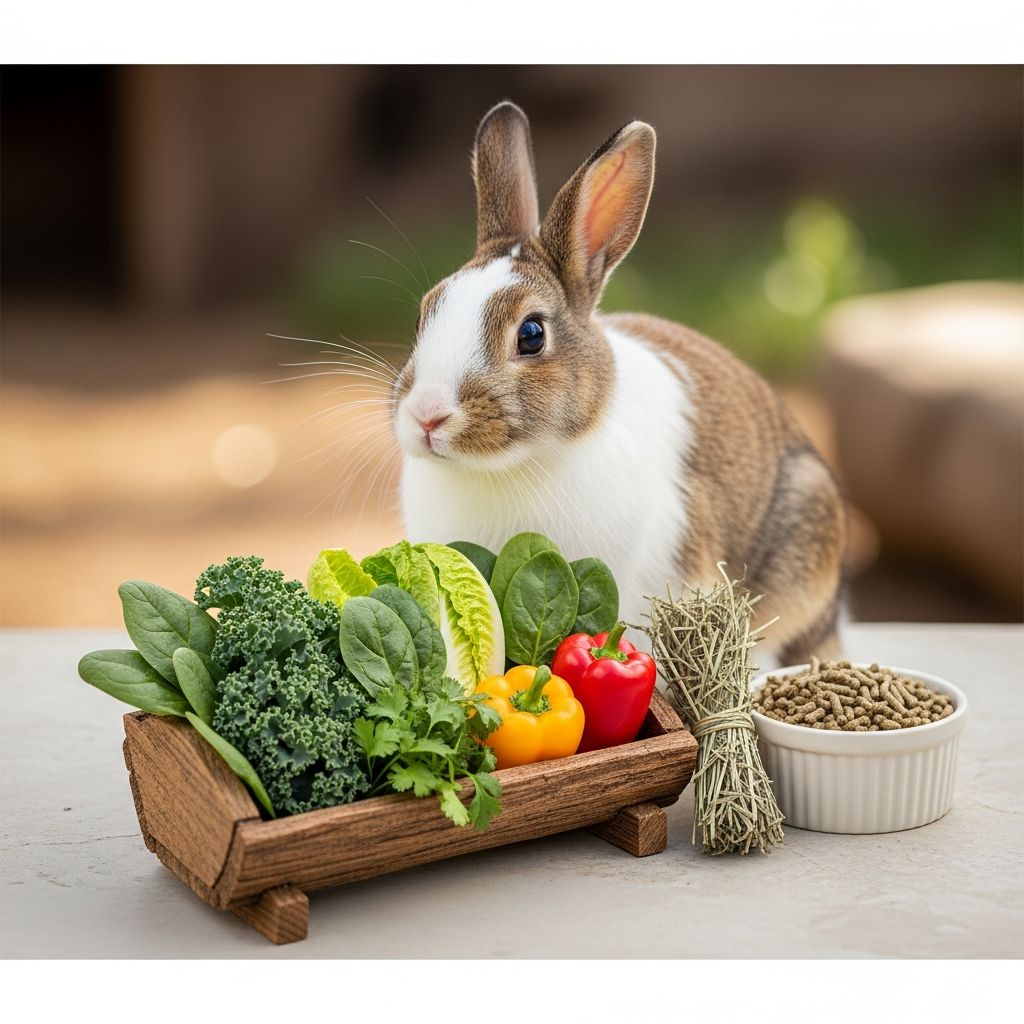
Rabbits thrive on high-fiber, plant-based diets mimicking their natural grazing habits. A proper feeding regimen supports digestion, dental health, and overall vitality, with
hay
forming the foundation at 80-90% of intake.Core Components of a Balanced Rabbit Diet
Every rabbit’s meals should prioritize fiber-rich foods to maintain gut motility and wear down ever-growing teeth. Key elements include unlimited access to suitable hays, measured fresh produce, minimal commercial pellets, and constant fresh water.
- Hay: Essential for all life stages; provides bulk and nutrients.
- Vegetables: Deliver hydration and vitamins; rotate varieties daily.
- Pellets: Nutrient-dense supplement; limit to avoid obesity.
- Fruits/Treats: Occasional only, due to high sugars.
Hay: The Dietary Cornerstone
**Grass hays** like timothy, orchard, oat, or meadow should dominate an adult rabbit’s diet, comprising unlimited quantities equivalent to their body size daily. These promote chewing, reducing dental overgrowth risks, and support hindgut fermentation for energy extraction.
For young rabbits under 6 months or lactating does, introduce
alfalfa hay
higher in protein and calcium to fuel growth and milk production. Transition to grass hays post-weaning to prevent urinary calculi from excess minerals.| Hay Type | Best For | Fiber Content | Notes |
|---|---|---|---|
| Timothy | Adults | High (32%+) | Ideal staple; low calcium |
| Orchard | All ages | High | Sweet flavor encourages eating |
| Alfalfa | Young/Lactating | Medium | Rich in protein/calcium; limit in adults |
| Oat | Adults | High | Good for variety |
Store hay in dry conditions and refresh frequently to ensure palatability and hygiene. Lack of hay intake often leads to life-threatening gastrointestinal stasis.
Fresh Vegetables: Variety and Moderation
Incorporate
leafy greens
at 1-2 cups per 6 pounds body weight daily for adults, providing essential moisture and micronutrients. Aim for 3-5 types to balance calcium, oxalates, and vitamins, introducing new ones gradually to monitor tolerance.Safe options include:
- Romaine lettuce, parsley, cilantro
- Dandelion greens, chicory, arugula
- Celery leaves, fennel, watercress
- Summer/zucchini squash (non-leafy, limited)
Moderation is crucial for high-oxalate greens like spinach, chard, or mustard (1-2x/week max) to avoid bladder stones. Non-leafy veggies should not exceed 15% of produce intake.
Pellets: A Controlled Supplement
High-quality, timothy-based pellets with
18%+ fiber
and 16-18% protein serve as a vitamin/mineral source but should not exceed 1/4 cup per 6 pounds body weight daily for adults. Juveniles and breeders may need more alfalfa-based formulas.Avoid mixes with seeds, nuts, fruits, yogurt, or grains, as they promote selective feeding and obesity. Free-choice pellets suit rabbits under 6 months; ration thereafter.
Treats and Fruits: Sparingly for Enrichment
Fruits and starchy veggies like carrots, apples, or bananas offer behavioral rewards but cap at 1-2 teaspoons daily, 1-2x/week, due to sugar content risking enterotoxemia. Safe choices:
- Berries (strawberries, blueberries)
- Apple/peach slices (no seeds/pits)
- Melon, pineapple (small pieces)
Herbs like basil or mint provide low-calorie variety.
Water: Vital for Hydration
Supply unlimited fresh water via sipper bottles (preferred for cleanliness) or heavy bowls. Daily intake varies (50-100ml/lb body weight), increasing with greens or heat. Monitor for reduced consumption signaling illness.
Nutritional Needs by Life Stage
Tailor diets to physiological demands for peak performance.
Growing Rabbits (Weanlings to 6 Months)
Require 16-18% protein, higher calcium; unlimited alfalfa hay/pellets, plus growing greens.
Adult Maintenance (1-5 Years)
12-15% protein, 20-27% fiber; grass hay dominant, limited pellets/greens.
Pregnant/Lactating Does
Boost to 16-20% protein, 15-20% fiber; alfalfa hay, increased pellets/feed.
Seniors (5+ Years)
Emphasize easy-to-chew hays, softened pellets if needed; monitor weight loss.
| Life Stage | Protein % | Fiber % | Key Adjustments |
|---|---|---|---|
| Growing | 16-18 | 15-20 | Alfalfa, unlimited pellets |
| Adult | 12-15 | 20-27 | Grass hay focus |
| Breeding | 16-20 | 15-20 | Extra energy sources |
| Senior | 12-16 | 25+ | Soft foods, vet check |
Breeds and Special Considerations
Dwarf breeds need scaled-down portions (1 cup greens/6lbs equivalent); giants like Flemish require more volume. Obesity-prone breeds (e.g., mini lops) demand strict pellet limits. Lab or show rabbits may follow production rations with 12-20% protein blends.
Daily Feeding Routine
Establish consistency:
- Morning: Fresh hay pile, water refill, greens portion.
- Evening: Pellets measured, additional greens if split-feeding.
- Throughout: Unlimited hay/water access.
Hand-feed treats for bonding. Weigh monthly; ideal body condition shows palpable spine/hips without prominence.
Health Risks from Poor Nutrition
Imbalances cause:
- GI Stasis: Low fiber; symptoms: no feces, bloating.
- Obesity: Excess pellets/treats; reduces lifespan.
- Dental Disease: Insufficient hay chewing.
- Urinary Issues: High calcium/oxalate imbalance.
Consult vets for symptoms like diarrhea or lethargy.
FAQs
Can rabbits eat carrots daily?
No; limit to treats due to starch content.
How much hay is enough?
Body-sized bundle daily, unlimited access.
Are pellets necessary?
Yes, for balanced nutrients; choose high-fiber.
What if my rabbit refuses hay?
Mix varieties, ensure freshness; vet for dental issues.
Switching diets safely?
Gradual over 7-14 days to prevent upset.
Storage and Safety Tips
Store pellets airtight (cool/dry); wash produce; discard spoiled hay/greens. Avoid toxic plants (e.g., rhubarb, avocado).
References
- Rabbit Tracks: Feeds and Feeding — MSU Extension. 2023. https://www.canr.msu.edu/resources/rabbit_tracks_feeds_and_feeding
- Diet – House Rabbit Society — House Rabbit Society. 2024. https://houserabbit.org/diet
- Rabbit Nutrition: Tips For Hastings MN Pet Owners — Town & Country Vet. 2025-06-11. https://towncountryvet.com/2025/06/11/rabbit-nutrition-tips-for-hastings-mn-pet-owners/
- The Ultimate Guide to Rabbit Nutrition — Kavee. 2024. https://kavee.com/blogs/the-bunny-blog/rabbit-nutrition-guide
- Rabbit Diet: What to Feed a Pet Bunny — Best Friends Animal Society. 2024. https://bestfriends.org/pet-care-resources/rabbit-diet-what-feed-pet-bunny
- Rabbit Care | Diet | Nutrition — Winter Park Veterinary Hospital. 2024. https://wpvet.com/rabbit-care-guides/rabbit-nutrition/
Similar Articles








Read full bio of medha deb