Rabbit Housing: Essential Guide To Safe, Comfortable Enclosures
Discover optimal housing solutions for rabbits to promote health, comfort, and natural behaviors in various settings.
Rabbits require thoughtfully designed living spaces that support their physical health, mental stimulation, and social needs. Proper housing prevents stress-related illnesses and promotes longevity, with guidelines emphasizing ample space, secure enclosures, and controlled environments.
Key Principles of Effective Rabbit Housing
Creating a suitable habitat for rabbits involves balancing space, security, and enrichment. Rabbits are active animals that need room to hop, dig, and hide, mimicking their natural burrowing instincts. Inadequate housing leads to obesity, pododermatitis (sore hocks), and behavioral issues like bar biting.
- Space Allocation: Minimum dimensions ensure freedom of movement; smaller areas increase stress.
- Security Features: Protection from predators and escape-proof designs are critical.
- Environmental Controls: Temperature, ventilation, and lighting must align with rabbit physiology.
Minimum Enclosure Sizes and Dimensions
Space requirements vary by rabbit size, age, and housing context. Veterinary standards recommend basing enclosure size on adult weight to accommodate full growth.
| Adult Weight | Minimum Floor Area per Rabbit (ft²) | Minimum Height (in) | Equivalent for Pairs (m x m x m) |
|---|---|---|---|
| < 2 kg (< 4.4 lbs) | 1.5 | 14 | 3 x 2 x 1 |
| 2-5.4 kg (4.4-11.9 lbs) | 3-5 | 14-18 | 4 x 2 x 1.2 |
| > 5.4 kg (> 11.9 lbs) | 7.5 | 18 | 4 x 3 x 1.5 |
| Nursing Female + Litter | 4-8 | 14-18 | N/A |
These metrics derive from established welfare protocols, ensuring rabbits can perform essential behaviors. For bonded pairs, combine individual minima and add 50% more space to prevent territorial disputes. Indoor setups should include daily access to proofed rooms exceeding 2m x 2m for exercise.
Indoor Housing Options for Urban Rabbit Owners
Indoor living offers superior climate control and predator protection, ideal for apartments or cold climates. Rabbits thrive in homes where they integrate as family members.
- Dedicated Enclosures: Use pens or crates expanded to at least 2m x 2m, with solid flooring covered in absorbent bedding like fleece liners or paper pellets.
- Free-Roam Integration: Rabbit-proof rooms by securing wires, removing toxic plants, and providing platforms. Supervised playtime enhances bonding.
- Multi-Level Designs: Incorporate ramps and shelves for vertical space, but ensure stability to avoid falls.
Avoid wire bottoms, which cause foot injuries; opt for solid surfaces with resting mats. Temperature should stay between 60-70°F (15-21°C), with humidity under 55%.
Outdoor Housing: Safe and Weather-Proof Setups
Outdoor housing suits mild climates but demands rigorous protection. Never house rabbits below 50°F (10°C) without insulation or above 80°F (27°C) without shade and cooling.
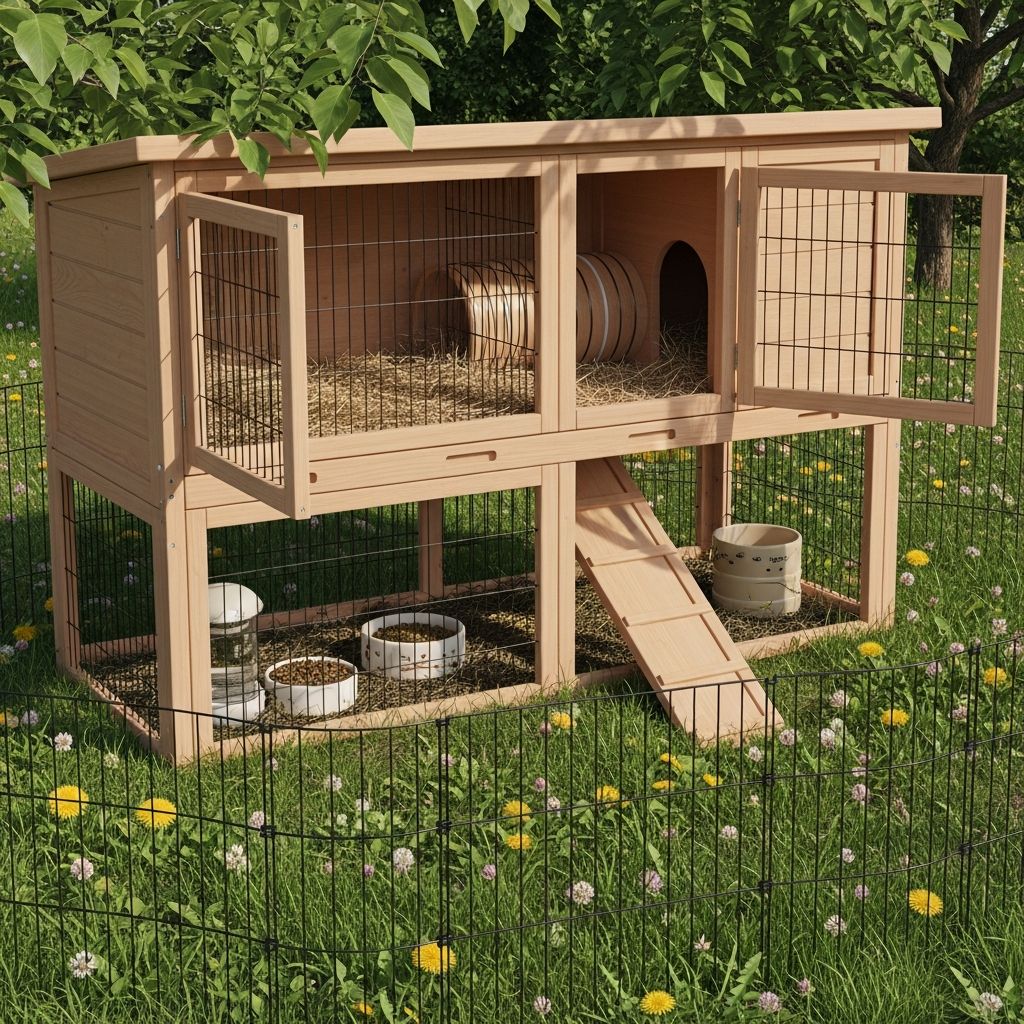
- Hutch + Run Combinations: Hutches need 1-2m² sleeping space; runs at least 3m x 2m x 1m tall with roofs to thwart predators.
- Shelter Provisions: Include hide boxes, tunnels, and partial covers for rain/sun evasion. Overhead roofing prevents aerial threats.
- Predator Deterrents: Bury wire bases 30cm deep and use secure latches.
Daily monitoring for frostbite or heatstroke is essential; supplemental heating or fans may be required.
Environmental Factors for Rabbit Comfort
Ventilation and Air Quality
Fresh air circulation prevents ammonia buildup from urine. Aim for 10-15 air exchanges per hour in housing areas, using fans or open designs without drafts. High humidity fosters respiratory issues, so maintain dry bedding.
Lighting and Noise Management
Provide 12-14 hours of light daily, with natural spectrum bulbs for circadian health. Minimize noise from traffic or predators, as rabbits startle easily, elevating cortisol levels.
Temperature Regulation
Rabbits lack sweat glands, relying on panting and ear circulation for cooling. Insulate outdoor hutches with straw; indoors, avoid direct AC vents.
Enrichment and Behavioral Needs
Boredom leads to destructive habits. Enrich enclosures to encourage natural foraging.
- Hiding Spots: Boxes, tunnels, and igloos for security.
- Chew Toys: Untreated wood, apple branches to wear down teeth.
- Digging Zones: Sand pits or fleece mats with hidden treats.
- Social Considerations: House compatible pairs; singles need extra human interaction.
Varied flooring (tiles, grass mats) supports foot health and exploration.
Special Considerations for Vulnerable Rabbits
Adjust housing for life stages:
- Kits and Juveniles: Group litters until weaning, then transition to individual or compatible setups with nursing doe space of 4ft²+.
- Seniors and Disabled: Low-entry ramps, softer bedding, and heated pads.
- Pregnant Does: Nesting boxes in spacious enclosures; isolate post-kindling.
- Shelter Rabbits: Minimum 30x36x18 inches per cage, indoors away from dogs.
Cleaning and Sanitation Protocols
Daily spot-cleaning and weekly deep cleans prevent disease. Use rabbit-safe disinfectants; remove soiled litter promptly. Solid-bottom cages with absorbent substrates reduce bacterial growth.
Group Housing and Social Dynamics
Bonded rabbits benefit from shared space but monitor for aggression. Ensure per-rabbit minima are met; introduce gradually in neutral areas. Does and bucks must be separated unless breeding intentionally.
Common Housing Pitfalls and Solutions
| Issue | Consequence | Solution |
|---|---|---|
| Too Small Space | Obesity, stress | Upgrade to 3x2x1m minimum |
| Wire Flooring | Sore hocks | Solid mats + litter boxes |
| Poor Ventilation | Respiratory disease | 10+ air exchanges/hour |
| Extreme Temps | Heatstroke/frostbite | Insulation + monitoring |
FAQs on Rabbit Housing
Can rabbits live outdoors year-round?
In mild climates yes, with insulated hutches and weatherproof runs meeting size guidelines. Insulate for winter; provide shade for summer.
What’s the best bedding for rabbits?
Paper-based or hemp litters; avoid pine/cedar shavings due to respiratory risks. Hay-topped for litter training.
How often should I clean the enclosure?
Spot clean daily, full change weekly. Monitor for ammonia smells.
Are multi-level cages safe for rabbits?
Yes, with sturdy ramps and no high drops. Enhances space utilization.
Can I house rabbits with other pets?
No; separate from cats/dogs to reduce stress and injury risk.
Transitioning to Ideal Housing
Upgrade gradually: measure current space, add extensions, then enrich. Consult vets for breed-specific needs. Proper housing boosts adoption rates in shelters and happiness for pets.
References
- New Guidelines Provide a Blueprint for Humane Rabbit Housing in Animal Shelters — Shelter Medicine, UC Davis. 2023. https://www.sheltermedicine.com/new-guidelines-provide-a-blueprint-for-humane-rabbit-housing-in-animal-shelters/
- Housing Guidelines — Westley’s World. Accessed 2026. https://www.westleysworld.com/thefiles/housing-guidelines
- The Ultimate Guide to Rabbit Housing — Rabbit Awareness Action Group. Accessed 2026. https://rabbitawarenessactiongroup.co.uk/rabbit-welfare/environment/the-guide-to-rabbit-housing/
- Husbandry Care of Rabbits — UC Davis Research. 2010 (authoritative standard). https://research.ucdavis.edu/wp-content/uploads/SC-32-100.pdf
- ARBA Recommendations for the Care of Rabbits and Cavies — American Rabbit Breeders Association. 2019. https://arba.net/wp-content/uploads/2019/05/rabbit-care-recommendations.pdf
- Caring for Rabbits in Animal Shelters — House Rabbit Society. Accessed 2026. https://rabbit.org/rescue/caring-for-rabbits-in-animal-shelters/
- 9 CFR Part 3 Subpart C — Specifications for the Humane Handling — eCFR (U.S. Government). Current as of 2026. https://www.ecfr.gov/current/title-9/chapter-I/subchapter-A/part-3/subpart-C
Similar Articles








Read full bio of medha deb