

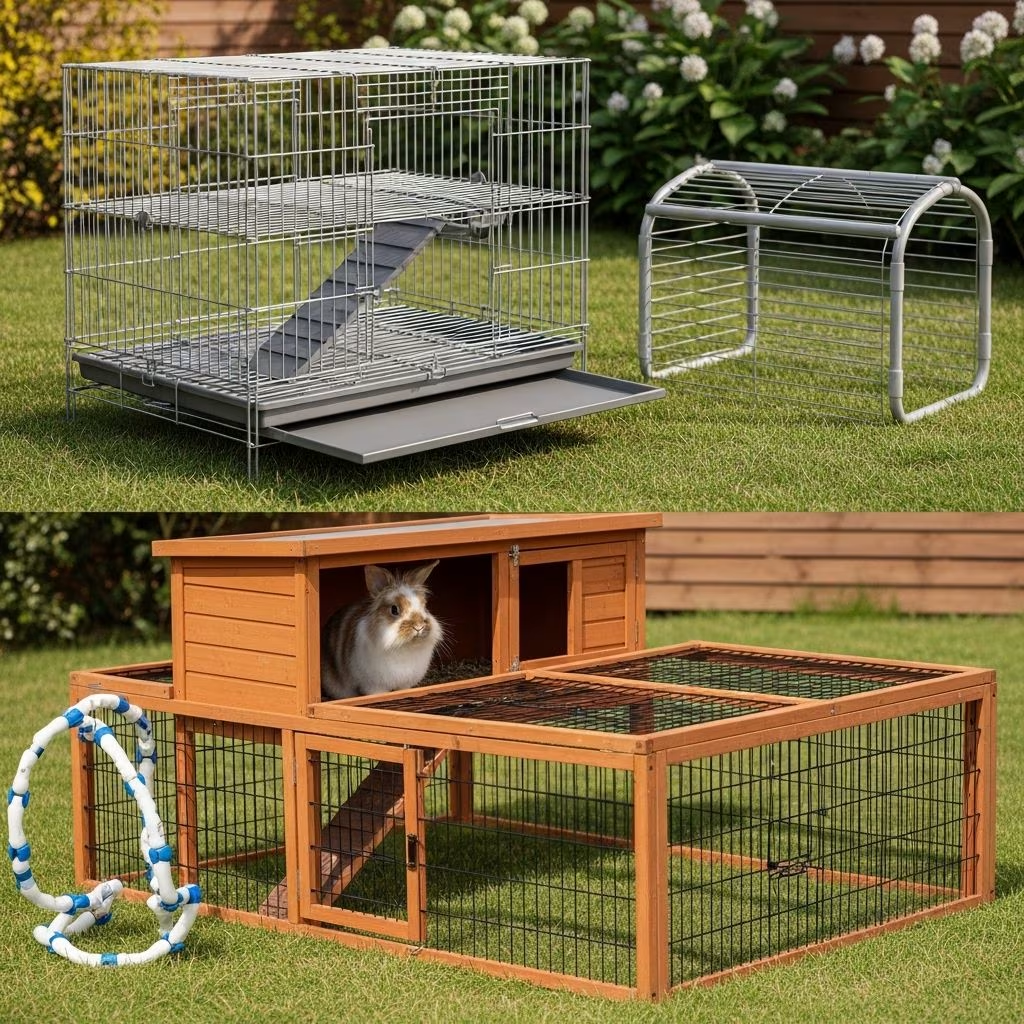
Rabbit Housing: Cages, Hutches, Pens, and More
Choosing the right housing for your pet rabbit is one of the most important decisions you’ll make as a bunny parent. Because rabbits are prey animals, their living environment plays a crucial role in their physical and emotional well-being. Unlike many people assume, rabbits shouldn’t be confined to small cages or kept exclusively outdoors in hutches. Living outdoors, even in a secure hutch, can be extremely stressful and potentially dangerous for rabbits. The best approach is to provide your bunny with spacious indoor housing where they can feel safe, secure, and connected to family life.
When selecting rabbit housing, it’s essential to understand that rabbits are social creatures who thrive when they’re part of the household. This guide will help you navigate the various housing options available and make an informed decision that prioritizes your rabbit’s comfort, health, and happiness.
Understanding Rabbit Housing Guidelines
Before investing in any type of rabbit enclosure, familiarize yourself with the fundamental guidelines that ensure humane and appropriate housing for your bunny:
Size Requirements
One of the most common mistakes rabbit owners make is providing enclosures that are far too small. Many rabbit cages available in pet stores simply don’t meet the space requirements for humane housing. Your rabbit’s home or enclosure must be large enough for your bunny to stretch out completely, with their back legs fully extended. A helpful rule of thumb is to ensure the space is at least the length of one rabbit when they’re fully stretched out, multiplied by one. This gives you a minimum baseline for appropriate sizing.
Beyond length, your rabbit’s home must also be tall enough to allow your bunny to stretch to their full height when standing on their hind feet. Rabbits naturally stand on their back legs to look around and survey their environment, so adequate vertical space is essential for their psychological well-being.
Essential Features for Comfort
A well-designed rabbit home includes several important features that contribute to your bunny’s comfort and well-being. Providing a wooden shelf or platform gives your rabbit an opportunity for exercise and mental stimulation, even when confined to their home. Rabbits love hopping up and down on different levels, which helps them stay active and engaged.
The enclosure must have an opening or door that’s large enough for a litter box to pass through easily. This practical consideration is often overlooked but is critical for maintenance and your rabbit’s comfort. The door should also be sized so you can remove your bunny without causing injury to either you or your pet.
Flooring Considerations
One of the most important aspects of rabbit housing that many owners don’t consider is the flooring material. Wire bottoms are highly uncomfortable for rabbits and can lead to painful sore feet, a condition that can become chronic and problematic. If your rabbit’s house features a wire bottom, cover at least half of it with Plexiglas, a wood platform, or washable towels and blankets. The ideal solution is to invest in a home with a solid metal or plastic tray bottom, which is significantly healthier and more comfortable for your rabbit’s sensitive feet.
Essential Equipment and Setup
Beyond the basic structure, your rabbit’s home needs to be properly equipped to support their daily needs and enrichment. You’ll need to provide a litter box, a food dish, and a ceramic bowl for water. Rabbits also benefit tremendously from bunny toys and enrichment items that keep them mentally stimulated. Interestingly, even with all these necessary items in place, your bunny should still have enough space to stretch out comfortably. This underscores the importance of selecting appropriately sized housing from the start.
Indoor Housing Options for Rabbits
Several excellent housing options are available for rabbit owners who want to provide their bunnies with comfortable, spacious indoor environments. Each option has unique advantages and considerations:
Traditional Indoor Rabbit Cages
When selecting a traditional rabbit cage, remember that bigger is always better. Look for cages specifically designed for rabbits rather than generic small animal cages. Ensure the cage meets or exceeds the size guidelines mentioned earlier. Quality rabbit cages often feature multiple levels, good ventilation, and solid flooring. While traditional cages work well for housing, keep in mind that your rabbit should never be confined to their cage for extended periods. Rabbits need several hours of supervised time outside their housing daily for exercise and social interaction.
X-Pens and Dog Pens for Bunnies
One of the most popular and flexible housing options for rabbits is a dog pen, commonly known as an X-pen. These spacious, modular enclosures provide significantly more room than traditional cages and have become increasingly popular among rabbit owners who want to give their bunnies more space and freedom.
X-pens offer numerous advantages for rabbit housing. They provide spacious enclosures with ample room for all necessities, including toys, litter boxes, food and water dishes, and even a wooden or cardboard house where your rabbit can retreat for privacy. The modular design means you can easily rearrange or move the pen from room to room, making it flexible as your needs change. Some rabbit owners use X-pens in different areas of their home depending on where they’re spending time.
One consideration with X-pens is that some rabbits are excellent jumpers and may be able to escape from standard-height pens. If your rabbit is particularly athletic or you have a breed known for jumping ability, you may need to invest in a taller pen or add a cover to prevent escapes.
DIY and Custom Rabbit Homes
How elaborate you make your bunny’s home is limited only by your imagination and your budget. Many creative rabbit owners design and build their own “bunny palaces,” constructing custom enclosures that perfectly suit their space and their rabbit’s needs. The DIY approach allows for complete customization regarding size, features, and aesthetics.
For those who prefer not to build from scratch, numerous companies specialize in selling pre-made rabbit housing solutions. These include double- and triple-level condos with ramps connecting the different floors, providing rabbits with multiple spaces to explore and exercise. These commercial options often feature solid construction and thoughtful design that addresses rabbit needs comprehensively.
Why Indoor Housing is Essential
While outdoor hutches have traditionally been popular in some regions, modern rabbit care standards strongly emphasize indoor housing. There are several compelling reasons for this recommendation:
Rabbits kept outdoors in hutches experience significantly elevated stress levels. They’re constantly aware of predators—including dogs, cats, hawks, and snakes—even when those predators can’t actually reach them. This constant vigilance takes a psychological toll on prey animals like rabbits. Additionally, outdoor rabbits are exposed to temperature fluctuations, moisture, and weather changes that can negatively impact their health.
Indoor housing allows you to control the temperature environment, maintaining comfortable conditions year-round. It keeps your rabbit safe from predators and provides an environment where your bunny can feel secure and protected. Perhaps most importantly, indoor housing makes it much easier to make your pet rabbit a true part of your family, facilitating daily socialization and interaction that rabbits need to thrive as companions.
Bunny-Proofing Your Home
Once you’ve selected appropriate housing for your rabbit’s “home base,” you’ll need to bunny-proof the areas where your rabbit spends supervised time outside their enclosure. Rabbits are curious, energetic animals who can get into trouble if given the opportunity. Creating a safe, enriching environment requires some preparation.
Electrical and Wire Safety
One of the most critical safety concerns is protecting your rabbit from electrical hazards. Exposed wires and cables pose a serious risk, as rabbits may chew on them, risking electrocution. Some wires can be taped up on the wall away from your bunny’s reach, or you can use tubing to cover them. Don’t forget to check for hidden wires in places your rabbit might access that you can’t easily see, such as under beds or behind furniture.
Protecting Your Furniture
Rabbits are natural chewers, and if given the opportunity, they may chew on chair legs, kitchen cabinets, and baseboards. One deterrent is a product called Grannick’s Bitter Apple, available at pet supply stores. This product has a terrible flavor that discourages chewing, though notably, some rabbits seem to enjoy the taste, so it doesn’t work for every bunny.
You can also protect furniture by wrapping cardboard around chair legs and other tempting targets. However, the most effective approach is to provide plenty of bunny toys—blocks, baskets, boxes, and other items—throughout the area where your rabbit spends time. This gives your bunny appropriate outlets for their natural chewing instinct. Ensure that any toys you provide are made from natural materials that haven’t been painted, stained, varnished, or treated with chemicals. Avoid plywood, press board, particle board, and pressure-treated wood.
Houseplants and Toxins
Many houseplants are toxic to rabbits and should be kept completely out of your rabbit’s reach. If you choose to keep plants in spaces where your rabbit has access, hang them from the ceiling and watch carefully for falling leaves that could be consumed. When in doubt about a plant’s safety, it’s better to err on the side of caution and remove it from your rabbit’s environment.
Outdoor Safety Considerations
If you allow your rabbit supervised time outdoors, special precautions are necessary. Always supervise your rabbit when they’re outside. The best practice is to keep your rabbit on a harness or in an enclosed area. Predators can pose a serious threat—a dog can jump a fence and attack or frighten a rabbit in mere seconds. Other dangers include snake bites and birds of prey like hawks swooping down to capture a rabbit.
Since rabbits are avid diggers, any outdoor area should be secured so your rabbit can’t dig under fencing. It’s also important to regularly scan the spaces where your rabbit lives, both indoors and outdoors, to ensure they remain properly bunny-proofed. As your rabbit explores different areas, new hazards may develop or become accessible.
Enrichment and Supervised Time Outside Housing
Whatever type of housing you choose for your bunny, it’s crucial to understand that your rabbit should not be confined to that space constantly. Rabbits need supervised time outside their house on a regular basis—ideally several hours daily when possible—to exercise and interact with you. This time outside housing is essential for:
Physical Exercise
Rabbits are active animals that need regular movement to maintain healthy muscle tone and cardiovascular health. Time outside their enclosure allows them to hop, run, and move around freely in ways that confined space doesn’t permit.
Mental Stimulation
Rabbits are intelligent animals who need mental enrichment and exploration. Access to different areas of your home provides novel environments to investigate, which keeps their minds engaged and prevents boredom-related behavioral problems.
Social Bonding
Supervised time outside housing allows you to interact directly with your rabbit, strengthening your bond and helping your bunny feel truly part of the family. This interaction is crucial for rabbits’ emotional well-being and helps them develop trust and comfort with their human companions.
Frequently Asked Questions About Rabbit Housing
Q: What is the minimum cage size for a pet rabbit?
A: Your rabbit’s enclosure should be large enough for them to stretch out completely with their back legs extended, and tall enough for them to stand up on their hind legs. While exact dimensions vary by rabbit size, larger is always better than smaller.
Q: Are outdoor hutches appropriate for pet rabbits?
A: Living outdoors in a hutch can be extremely stressful for rabbits, even in secure enclosures. Indoor housing is recommended as it provides better temperature control, predator protection, and opportunities for family interaction.
Q: Can rabbits live in X-pens?
A: Yes, X-pens are excellent housing options for rabbits, providing spacious, flexible enclosures. However, some athletic rabbits may be able to jump over standard-height pens, so taller models may be necessary.
Q: How long should my rabbit be outside their enclosure daily?
A: Rabbits should have several hours of supervised time outside their housing daily for exercise, mental stimulation, and social interaction with their human companions.
Q: What should I put in the bottom of my rabbit’s enclosure?
A: Solid flooring is ideal. If your cage has a wire bottom, cover at least half with Plexiglas, wood platforms, or washable towels. Wire bottoms cause painful sore feet and should be avoided.
Q: Can I build my own rabbit cage?
A: Yes, many rabbit owners successfully build custom enclosures. DIY housing allows for complete customization to meet your rabbit’s specific needs and your space constraints.
Q: What toys should I put in my rabbit’s enclosure?
A: Provide toys made from natural, untreated materials such as blocks, baskets, boxes, and chew toys. Avoid items made from plywood, particle board, or materials treated with chemicals, stains, or varnish.
Q: How do I bunny-proof my home?
A: Cover electrical wires, provide appropriate chewing alternatives, remove toxic plants, protect furniture from chewing with deterrents or covers, and regularly inspect spaces for new hazards. Always supervise your rabbit in unsecured areas.
References
- Rabbit Housing: Cages, Hutches, Pens, and More — Best Friends Animal Society. Accessed 2025-11-28. https://bestfriends.org/pet-care-resources/rabbit-housing-cages-hutches-pens-and-more
- Pet Rabbits: Care, Behavior, and More — Best Friends Animal Society. Accessed 2025-11-28. https://bestfriends.org/pet-care-resources/pet-rabbits-care-behavior-and-more
- A Guide to Bunny-Proofing Your Home — Best Friends Animal Society. Accessed 2025-11-28. https://bestfriends.org/pet-care-resources/guide-bunny-proofing-your-home



