Rabbit Essentials: Complete Care Guide And Behavior Tips
Comprehensive insights into rabbit biology, natural behaviors, care needs, and health for owners and researchers alike.
Rabbits are fascinating animals known for their unique biology and behaviors that reflect their wild origins as prey species. Understanding these traits is crucial for anyone keeping them as pets or in laboratory settings to ensure their well-being.
Daily Rhythms and Activity Patterns
Rabbits follow a distinct crepuscular schedule, meaning they are most active at dawn and dusk. This pattern stems from their natural need to forage while minimizing exposure to predators during brighter hours. During these peak times, they engage in grazing, exploration, and social interactions. In captivity, mimicking this rhythm by providing quiet rest periods during the day helps reduce stress.
Resting occupies roughly half their day. Relaxed rabbits adopt various postures: loafing with legs tucked under, lying stretched out, or flopping dramatically on their side, signaling trust in their environment. These positions indicate comfort; tense postures like crouching with ears pinned back suggest fear or submission.
Expressive Movements and Joyful Displays
One of the most delightful sights is a rabbit performing binkies—energetic leaps with twists and head shakes, often seen in open spaces. This behavior, more common in young rabbits, expresses excitement and contentment when needs like space and enrichment are met. Older rabbits may show milder versions during moments of happiness.
Alertness is shown through upright ears and vigilant scanning. Rabbits stand on hind legs like meerkats to survey surroundings or stamp feet to warn of perceived threats, prompting companions to flee. Providing hideouts like boxes or tunnels allows safe responses to instincts, preventing anxiety.
Natural Instincts: Digging and Exploration
Digging is innate, rooted in burrowing for warrens in the wild. Rabbits use front paws to excavate, pushing soil backward. In homes, this targets carpets or litter; offering dig boxes with soil or shredded paper channels this productively, curbing destruction. Females dig more, especially in spring for nests.
Curiosity drives constant investigation. Rabbits sniff, nudge, nibble, and dig at novelties, pausing to listen with pricked ears. Bold ones approach directly; cautious ones advance slowly. This foraging behavior requires enriched environments with toys and varied textures to satisfy.
Social Dynamics and Communication
Rabbits are social, forming subgroups of 2-8 related females and dominant males in colonies. Hierarchies are maintained via scent marking—chinning with sub-chin glands, urine spraying, or fecal piles—and displays like parallel running or fighting. Young males often leave to join new groups outside breeding seasons.
Body language conveys status: dominant rabbits patrol boldly; subordinates yield space. Ears forward signal attention, backward relaxation; tight against the head indicates fear. In pairs or groups, compatible bonding prevents aggression.
| Behavior | Meaning | Example |
|---|---|---|
| Chinning | Territorial marking | Rubbing chin on objects or others |
| Foot stamping | Warning of danger | Thumping hind feet rapidly |
| Binkying | Joy and play | Leaping with twists |
| Flopping | Deep relaxation | Collapsing fully extended |
| Crouching low | Fear or submission | Ears back, avoiding eyes |
Unique Digestive Adaptations
Rabbits are hindgut fermenters with a specialized gut for fibrous diets. They produce two feces types: hard pellets excreted above ground during activity, and soft caecotrophs—nutrient-rich, mucus-covered pellets eaten directly from the anus during rest for vitamins and proteins from microbial fermentation. Preventing caecotrophy leads to malnutrition.
Feeding follows circadian rhythms: high intake at dusk/dawn boosts caecal motility for hard feces; rest periods align with caecotrophy. Grinding occurs via aradicular hypsodont teeth growing continuously, with lateral jaw movement up to 120 times per minute. Saliva with amylase aids initial breakdown; hunger triggers from dry mouth or low metabolites.
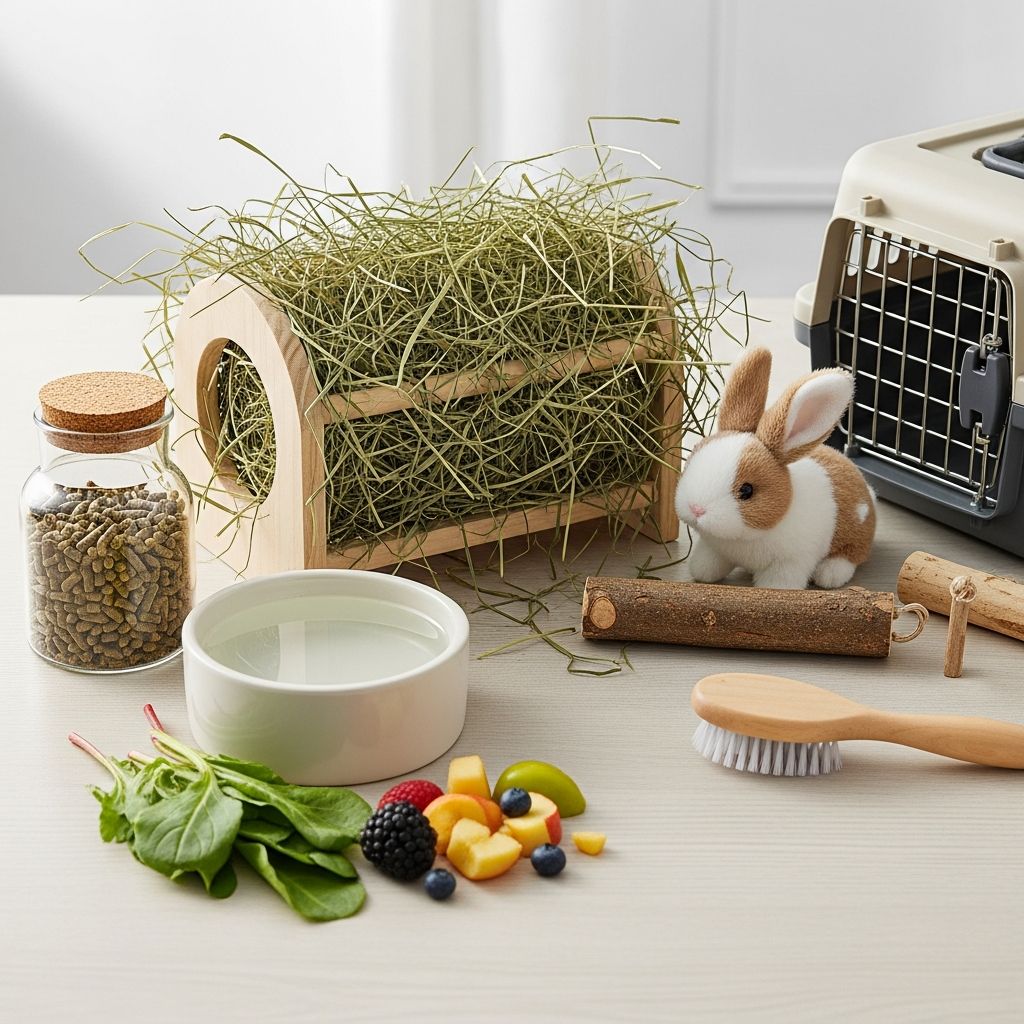
- Hay: Unlimited timothy or meadow hay for dental wear and fiber.
- Caecotrophs: Eaten 1-2 times daily, often unnoticed.
- Water: Fresh daily, via bowl or bottle.
- Vegetables: Leafy greens introduced gradually.
Housing and Enrichment Essentials
Spacious enclosures—at least 4×4 feet for singles, larger for pairs—support running, jumping, and hiding. Multi-level setups with ramps mimic warrens. Safe exercise areas prevent obesity and boredom.
Enrichment includes chew toys, tunnels, and dig pits. Avoid wire floors causing foot issues; bedding like fleece or paper suits. Temperature 60-70°F (15-21°C), good ventilation, and dim lighting match natural preferences.
Health Indicators and Common Issues
Healthy rabbits are alert, with clear eyes/nose, shiny fur, and normal appetite. Signs of illness: lethargy, hunched posture, diarrhea, or reduced feces. Dental overgrowth from poor diet causes drooling; GI stasis from low fiber halts digestion—emergencies needing vet care.
Regular checks catch parasites, abscesses, or pododermatitis. Neutering reduces cancers, aggression. Vaccines for myxomatosis, RHDV where prevalent.
Breeding and Reproduction Basics
Females (does) reach puberty at 4-6 months; males (bucks) similar. Induced ovulators, kindling after 31 days gestation yields 4-12 kits in fur-lined nests. Females dig nests instinctively. Responsible breeding avoids overpopulation; labs use ethical protocols.
Laboratory Use and Ethical Considerations
In research, rabbits model human diseases due to physiology. Welfare standards mandate enrichment, pain management, group housing where possible. Alternatives like in vitro reduce numbers. Handlers train for gentle handling to minimize stress.
FAQs
Why do rabbits thump their feet?
Foot thumping warns of danger, alerting group members.
How much space does a pet rabbit need?
Minimum 4x2x3 feet enclosure plus supervised playtime.
What is caecotrophy and is it normal?
Yes, eating soft feces reclaims nutrients—essential for health.
Can rabbits live alone?
Prefer companions; singles need extra interaction.
How do I know if my rabbit is happy?
Look for binkies, flopping, relaxed postures, and appetite.
References
- Common Rabbit Behaviours — The Rabbit House. Accessed 2026. https://www.therabbithouse.com/behaviour/rabbit-common-behaviours.asp
- Rabbit Biology — Rabbit Free Australia. Accessed 2026. https://rabbitfreeaustralia.org.au/rabbit-biology/
- Rabbit Basic Science — PMC (NCBI). 2020-04-07. https://pmc.ncbi.nlm.nih.gov/articles/PMC7158370/
- Understanding rabbit behavior and preventing and treating behavior problems — dvm360. Accessed 2026. https://www.dvm360.com/view/understanding-rabbit-behavior-and-preventing-and-treating-behavior-problems
- Rabbit Behaviour & Body Language — RSPCA. Accessed 2026. https://www.rspca.org.uk/adviceandwelfare/pets/rabbits/behaviour/understanding
Similar Articles








Read full bio of medha deb