

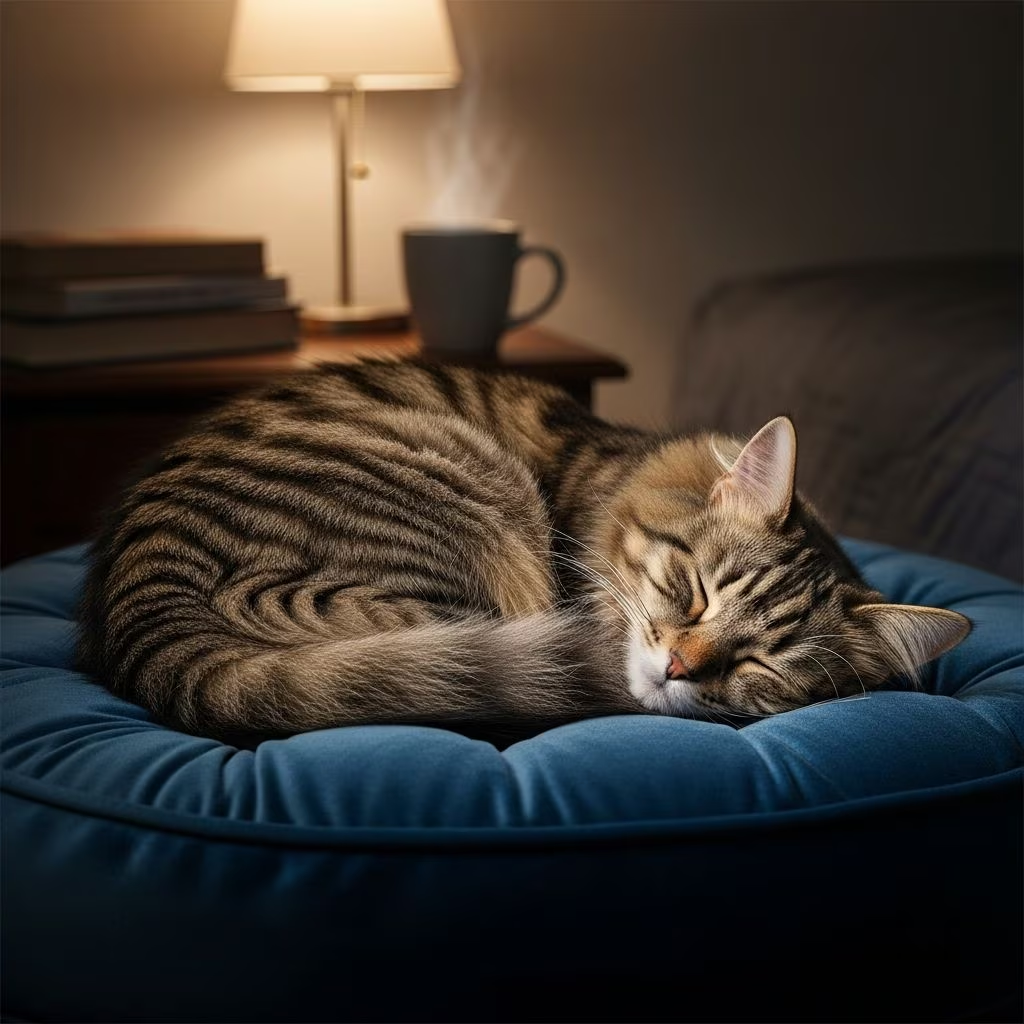
Cats often display bursts of energy known as zoomies during nighttime hours, disrupting sleep for owners. Establishing structured daily habits, providing outlets for physical and mental exertion, and optimizing the home environment can effectively reduce this behavior and foster tranquility after dark.
Understanding Feline Circadian Rhythms
Cats are crepuscular animals, meaning they are most active at dawn and dusk. This natural pattern leads to nocturnal playfulness if daytime energy remains unspent. Indoor cats, lacking outdoor stimulation, frequently redirect hunting instincts toward household items or owners during sleep hours. Recognizing this biological drive is the foundation for implementing changes that align with their instincts.
Building a Daily Schedule for Serenity
A predictable routine synchronizes your cat’s internal clock with household sleep patterns. Consistency signals appropriate times for activity and rest, minimizing disruptions.
- Morning Activation: Begin the day with 10-15 minutes of vigorous play upon waking to expend initial energy reserves.
- Daytime Engagement: Scatter feeding sessions and provide access to climbing structures throughout daylight hours.
- Evening Wind-Down: Transition to calmer interactions 1-2 hours before bedtime, using dim lighting to cue relaxation.
Adjusting meal times plays a crucial role; offering the primary dinner later in the evening induces post-meal drowsiness, as digestion promotes sleepiness. A small, protein-rich snack just before lights out further reinforces this effect without risking obesity.
Physical Exercise to Tire Out Your Cat
Targeted play mimics predatory behaviors, satisfying innate needs while exhausting muscles. Sessions should last 15-20 minutes, twice daily, focusing on high-movement activities.
| Activity Type | Description | Benefits |
|---|---|---|
| Wand Toys & Teasers | Feather attachments on poles for chasing and pouncing | Builds cardiovascular endurance; engages full-body motion |
| Laser Pointers | Erratic light dots across floors and walls | Stimulates sprinting; use sparingly to avoid frustration |
| Chase Balls | Battery-operated rolling toys | Encourages independent play overnight |
End each session with a “kill” moment, such as tossing a treat-filled toy, to complete the hunt-eat cycle and signal satisfaction.
Mental Stimulation Through Enrichment
Beyond physical output, cognitive challenges prevent boredom-induced antics. Puzzle feeders require problem-solving to access food, extending engagement without constant supervision.
- Hide kibble in cardboard boxes or muffin tins covered with balls.
- Use treat-dispensing rollers that release rewards upon batting.
- Rotate toys weekly to maintain novelty and interest.
For multi-cat homes, vertical spaces like shelves or cat trees reduce territorial tensions that escalate at night. Outdoor enclosures, if feasible, offer wildlife observation, a low-energy stimulant.
Environmental Adjustments for Peaceful Evenings
Modify surroundings to promote security and comfort, deterring exploratory mischief.
- Cozy Retreats: Place heated beds or blanket forts in quiet areas; warmth encourages curling up, especially in cooler seasons.
- Light Cues: Employ bright daytime illumination and soft amber bulbs post-sunset to regulate melatonin.
- Sound Management: Low-volume classical tracks or white noise machines mask external disturbances, aiding drift-off.
Excluding cats from bedrooms initially may provoke protests but retrains boundaries effectively. Provide an alternative room with litter, water, toys, and bedding to ease adaptation.
Calming Aids and Supplements
When behavioral tweaks fall short, targeted products support relaxation without sedation.
- Pheromone Diffusers: Devices like Feliway release synthetic facial pheromones, fostering familiarity and reducing stress. Plug in living areas for continuous effect.
- Herbal Options: Chamomile-infused treats or CBD oils formulated for pets may soothe mild anxiety; consult vets for dosing.
- Automated Feeders: Timed dispensers deliver midnight snacks, curbing hunger meows.
Avoid human medications; veterinary guidance ensures safety, particularly for underlying issues like hyperthyroidism.
Handling Persistent Nighttime Disruptions
If zoomies persist, employ non-reinforcing responses. Ignore meowing or door-scratching to extinguish attention-seeking; any interaction perpetuates the cycle. Redirect to toys during early episodes, then withdraw.
For extreme cases, rule out medical causes via vet exams. Neutering, if applicable, curbs hormone-driven restlessness. Gradual implementation—starting with play and feeding shifts—yields results within 1-2 weeks.
Common Mistakes to Avoid
Owners often inadvertently encourage nocturnal habits:
- Free-feeding, leading to irregular energy spikes.
- Overlooking daytime naps, resulting in pent-up vigor.
- Responding to nighttime demands, reinforcing behavior.
FAQs
Why does my cat run around at 3 AM?
Primarily due to crepuscular instincts and unspent daytime energy; structured routines address this.
Is it okay to lock my cat out of the bedroom?
Yes, temporarily, with a comfortable alternative space equipped with essentials.
How long until changes take effect?
Typically 7-14 days of consistency; patience is key.
Are pheromone products safe?
Vet-approved options like synthetic feline pheromones are non-toxic and effective for most cats.
What if my cat seems in pain at night?
Seek veterinary evaluation promptly to exclude health issues.
Implementing these strategies transforms chaotic nights into harmonious ones, benefiting cat health and owner well-being. Monitor progress and adjust as needed for optimal outcomes.
References
- How Do I Stop Cat Zoomies At Night: Routine, Exercise & Tips — Bailey’s CBD. 2023-10-15. https://baileyscbd.com/blogs/education/how-do-i-stop-cat-zoomies-at-night-routine-exercise-tips-for-near-immediate-calming-down
- 12 Vet-Approved Ways to Calm a Cat Down at Night — Catster. 2024-05-20. https://www.catster.com/cat-health-care/ways-to-calm-a-cat-down-at-night/
- Top Tips to Calm Night-Time Restlessness in Dogs and Cats — Pet Direct NZ. 2023-11-12. https://petdirect.co.nz/blog/managing-night-time-restlessness-pets
- Managing Your Cat’s Night-Time Activity — Acacia Pet Clinic. 2024-02-08. https://acaciapetclinic.com/managing-your-cats-night-time-activity/
- How to Manage Your Cat’s Night-Time Activity — Willow Glen Pet Hospital. 2023-09-18. https://willowglenpethospital.com/managing-your-cats-night-time-activity/
- Cat Keeping You Awake? How to Manage Night Activity — Animal Humane Society. 2022-07-14. https://www.animalhumanesociety.org/resource/cat-keeping-you-awake-how-manage-night-activity



