

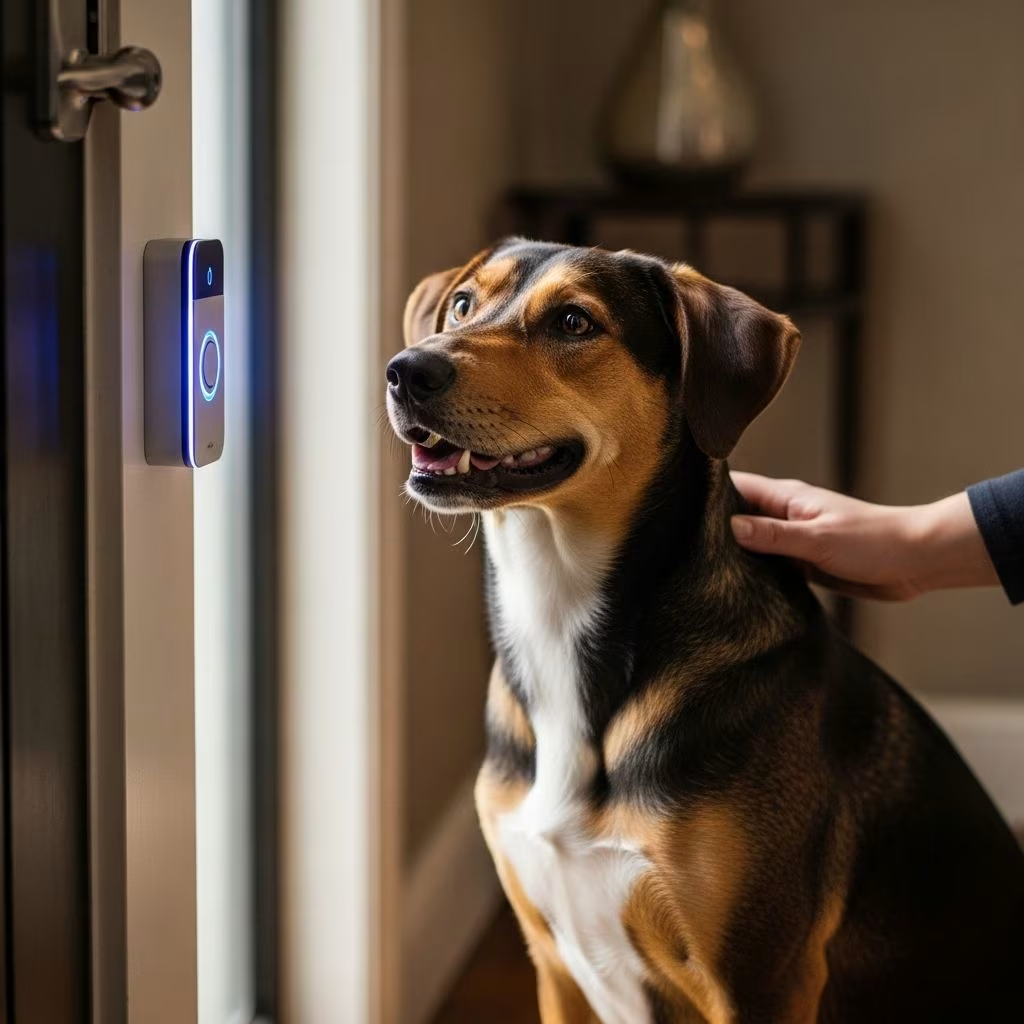
Many dog owners face the challenge of their pets erupting into frenzied barking every time the doorbell chimes or someone knocks. This instinctive reaction stems from a dog’s natural role as a protector, but it can disrupt daily life and create tension. Fortunately, with consistent positive reinforcement training, you can teach your dog to respond calmly, turning potential chaos into quiet anticipation.
Understanding Why Dogs Bark at the Doorbell
Dogs bark at doorbells primarily due to territorial instincts, excitement, fear, or boredom. Alert barking signals potential intruders, while excited barking occurs when dogs associate the sound with visitors they enjoy. Fearful dogs may bark to ward off perceived threats, and bored ones use it for stimulation. Recognizing your dog’s specific motivation—through body language like stiff posture for fear or wagging tail for excitement—guides effective training.
- Territorial bark: Stiff body, raised hackles, deep woofs directed at the door.
- Excited bark: Loose wagging tail, jumping, playful energy.
- Fearful bark: Cowering, tucked tail, high-pitched yaps.
Addressing the root cause prevents escalation and builds long-term calm. According to the American Kennel Club, understanding these triggers is the first step in behavior modification.
Preparation Essentials Before Training Begins
Success hinges on preparation. Stock up on high-value treats—tiny pieces of chicken, cheese, or commercial soft treats smaller than a pinky nail to avoid overfeeding. Record your doorbell sound and a knock using your phone for controlled playback. Set up a safe zone with a baby gate or mat away from the door, stocked with toys or a frozen Kong for enrichment. Train in short 2-5 minute sessions, spaced 30 minutes apart, to maintain focus and prevent fatigue.
| Item | Purpose | Tips |
|---|---|---|
| High-value treats | Reward calm behavior | Use pea-sized; vary types for interest |
| Phone recording | Desensitization practice | Low volume start; test multiple sounds |
| Baby gate/mat | Safe separation | Place 4-6 feet from door |
| Timer | Session control | Max 5 mins; 3-5 sessions/day |
Step-by-Step Desensitization: Sound Association Method
This core technique pairs the doorbell with positivity, gradually building tolerance. Start with low-volume playback to stay below your dog’s reaction threshold.
- Play low-volume sound: Use your recording at a whisper level where your dog notices but doesn’t react strongly. If barking occurs, lower it further next time.
- Immediate reward toss: Right after the sound, scatter 3-5 tiny treats on the floor away from the door. This creates a positive link without reinforcing door-rushing.
- Repeat calmly: Continue sessions until your dog perks up happily at the sound, anticipating treats. Ignore barks but reward anyway to maintain association.
- Gradual volume increase: Raise volume incrementally only when quiet responses are consistent. Practice both doorbell and knock sounds.
- Real-world transition: Enlist a friend to ring or knock while you toss treats behind the gate. Progress to full volume with door closed, then slightly open.
Expect 1-2 weeks of daily practice for reliable results. Dogs like Franklin in training examples learned to hunt treats instead of barking, associating the chime with opportunity.
Alternative Protocol: Distance and Muffling Technique
For high-energy dogs, reduce trigger intensity by starting distant or muffled. Place your dog outside or on a deck with the door closed. Muffle the chime with tape or a pillow.
- Practice 5 silent sits per session.
- Gradually unmuffle while requiring calm.
- Open door incrementally (1 inch at a time).
- Move dog closer indoors, rewarding spot-specific stays.
Cover the outdoor button and request knocks during training to avoid unplanned triggers. This method excels for dogs needing physical separation initially.
Behavior Replacement: Teach an Alternative Response
Replace barking with incompatible actions like ‘go to mat’ or ‘settle.’ First, train these independently.
- Warm up with cue practice (e.g., ‘place’ on mat).
- Introduce sound + cue: Knock/doorbell, then ‘place,’ rewarding compliance.
- Fade verbal cue: Sound alone prompts the behavior.
- Add distance, duration, distractions.
Verbal acknowledgments like ‘Thank you for alerting’ reassure without excitement. For greeters, release post-settlement: barrier up, enrich, then invite in.
Management Tools for Immediate Relief
While training, manage triggers: Disable chime temporarily, use signs requesting knocks, or employ calming aids like Adaptil diffusers (pheromone-based stress reducers). Barriers prevent door dashes. Consistency across family/sitters maintains progress.
Common Mistakes and How to Avoid Them
- Yelling or punishing: Increases arousal; stay neutral.
- Inconsistent rewards: Randomize treats to build anticipation.
- Too-fast progression: Revert if regression occurs.
- Ignoring body language: Tailor to fear vs. excitement.
Patience yields results; track progress in a journal.
Advanced Tips for Stubborn Cases
For persistent barkers, combine methods: desensitization + replacement. Consult certified trainers (CPDT-KA) if anxiety underlies. Exercise beforehand reduces baseline energy. Multi-dog homes train separately first.
Frequently Asked Questions (FAQs)
How long does training take?
1-4 weeks with daily sessions; varies by dog age, breed, motivation.
What if my dog is fearful?
Start ultra-low volume; use counter-conditioning with vet-approved calibers.
Can puppies learn this?
Yes, start at 8-12 weeks; prevention is ideal.
Does breed matter?
High-guard breeds (e.g., German Shepherds) may need more reps, but all respond to positives.
What about multiple triggers?
Train each sound separately before combining.
Long-Term Maintenance and Prevention
Practice weekly post-training. Generalize with varied helpers/sounds. Enrich environment to curb boredom barking. Celebrate calm responses to reinforce.
(Word count: 1678)
References
- Positively Trained: Trick, Treat, Train Dog Not to Bark at Doorbell — Chewy.com. 2023. https://www.chewy.com/education/dog/training-and-behavior/positively-trained-trick-treat-train-dog-not-bark-doorbell
- An Easy Way to Stop Dogs From Barking at the Sound of the Doorbell — Doggone Problems. 2022. https://www.doggoneproblems.com/percy-stop-barking-at-doorbell/
- STOP Barking at Knocking and Doorbells — YouTube (McCann Dogs). 2021-10-15. https://www.youtube.com/watch?v=ckVbR4-WI_w
- How to Stop Your Dog From Barking at the Doorbell — Rover.com. 2024. https://www.rover.com/blog/how-to-stop-dog-barking-at-doorbell-in/
- How to Keep Your Dog Calm When the Doorbell Rings — Clicker Training. 2023. https://clickertraining.com/how-to-keep-your-dog-calm-when-the-doorbell-rings/



