
Quick-Release Collars for Cats: Essential Safety Features
Understanding why quick-release collars protect your cat from entanglement hazards
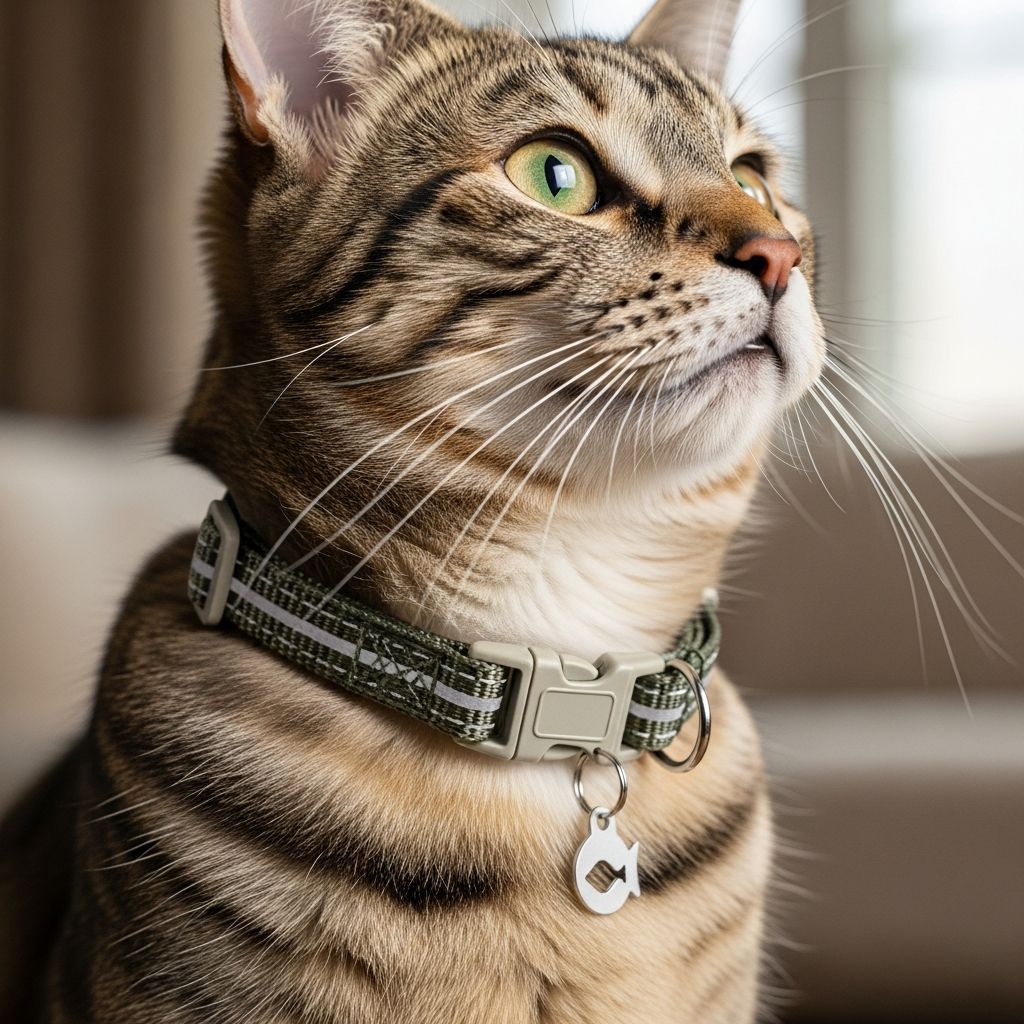
When selecting appropriate accessories for your feline companion, many cat owners overlook one of the most important decisions: choosing the right collar. While collars serve multiple purposes—from identification to aesthetic appeal—the mechanism by which they fasten can mean the difference between a safe pet and a serious injury. Quick-release collars, designed with specialized buckles that unfasten under pressure, represent a significant advancement in pet safety technology that every responsible cat owner should understand.
Understanding the Mechanism Behind Quick-Release Collars
Quick-release collars function through a simple yet ingenious design principle. Unlike traditional collars that remain fastened regardless of applied force, quick-release collars incorporate a buckle mechanism that disengages when sufficient pressure is exerted upon it. This pressure-activated release system allows cats to escape from entanglement situations that would otherwise trap them.
The buckle technology varies among manufacturers, but the fundamental concept remains consistent: when a cat’s collar becomes snagged on an object such as a tree branch or fence post, the tension created by the cat’s struggle to free itself triggers the buckle to open. This instantaneous release prevents the collar from continuing to tighten around the cat’s neck, which could lead to choking, asphyxiation, or severe neck injuries.
The Entanglement Crisis: Why Traditional Collars Pose Risks
Cats possess remarkable athletic abilities and natural curiosity that drives them to explore their surroundings with agility and grace. However, these same qualities that make cats such engaging companions can inadvertently place them in dangerous situations when wearing inappropriate collar types. Outdoor environments present numerous entanglement hazards that indoor cats rarely encounter.
When a cat wearing a traditional collar explores outdoor spaces, the collar can easily snag on various obstacles. Protruding tree branches, fence points, thorny vegetation, and architectural elements can all catch a conventional collar. Once caught, the collar’s rigid fastening mechanism prevents release, and the cat’s natural instinct to struggle against the constraint only tightens it further. Without intervention from a caregiver, this scenario can escalate from uncomfortable to life-threatening within minutes.
Even more concerning are situations where cats attempt to escape from their collars by pulling or twisting their bodies. In these attempts, cats may inadvertently catch their lower jaw or hind leg within the collar’s circumference. This creates a dual entanglement where the collar restricts both neck movement and limb mobility, severely compromising the cat’s ability to breathe or locomote. If this occurs when no human is present to provide assistance, the consequences can be irreversible.
Indoor Environments: Often Overlooked Hazards
While outdoor exploration presents obvious dangers, indoor cats are not immune to entanglement risks. Many cat owners assume their home environment is entirely safe for traditional collars, but household hazards exist in every residence. Furniture corners, decorative elements, shelving units, and even window blind cords can catch a collar.
Indoor cats that climb vertical spaces such as bookcases or wall-mounted shelves face particular risk. As cats maneuver through tight spaces, their collars can become trapped between furniture pieces or against structural elements. Quick-release collars provide the same protection indoors as they do outdoors, ensuring that accidental collar snags don’t escalate into emergencies within your own home.
Identification Benefits: The Dual-Purpose Advantage
Quick-release collars do not sacrifice functionality for safety. These collars continue to serve the critical purpose of carrying identification information. Most quick-release collars accommodate standard ID tags that display the owner’s contact information, providing a rapid identification method should a cat become lost.
The presence of visible identification on a collar serves as an immediate communication tool for anyone who encounters a loose cat. A neighbor, passerby, or good Samaritan can quickly read the owner’s phone number and contact them directly, facilitating a much faster reunion than would occur if the cat had only internal identification such as microchipping. This collar-based identification system operates independently of any scanning equipment, making it universally accessible to anyone who finds your cat.
Research indicates that the combination of a collar with visible ID tags, paired with permanent microchip identification, offers the strongest likelihood of successful recovery if a cat goes missing. The collar with ID tags provides the first layer of identification for the finder, while the microchip serves as a backup if the collar is removed or lost.
Comparing Quick-Release to Traditional Collar Options
| Feature | Quick-Release Collar | Traditional Collar | No Collar |
|---|---|---|---|
| Entanglement Safety | Releases under pressure | Remains fastened | N/A |
| Visible Identification | Yes, accommodates tags | Yes, accommodates tags | No identification |
| Outdoor Suitability | Excellent | Risky | Risky |
| Indoor Use | Safe | Potentially hazardous | N/A |
| Leash Walking Control | Limited if on leash | Full control | No control |
Special Considerations for Specific Cat Populations
Outdoor and Semi-Outdoor Cats
Cats with outdoor access face the highest risk of entanglement-related injuries. For these cats, quick-release collars are not merely recommended but essential. The regular interaction with natural environments filled with branches, vegetation, and structural hazards makes the pressure-release mechanism invaluable. Outdoor cats benefit most from quick-release collars combined with ID tags, as they have both the highest probability of becoming entangled and the highest likelihood of becoming separated from their owners.
Kittens and Growing Cats
Kittens present unique considerations when selecting collar types. Young cats possess less body mass and strength than adult cats, meaning they exert less pressure when struggling against a caught collar. Kitten-specific quick-release collars are engineered to open under the lighter force that young cats can generate, typically around 1 kilogram (2.2 pounds) of pressure. These collars are also designed with adjustable sizing that allows the collar to grow with the kitten, eliminating the need for frequent replacement as the cat matures.
Indoor-Only Cats
Indoor cats living exclusively within home environments may seem to have minimal entanglement risk, but household accidents occur regularly. Cats that climb, jump between furniture, or explore tight spaces can still encounter snag points. Additionally, indoor cats can accidentally escape through open doors or windows, finding themselves in unfamiliar outdoor environments. A quick-release collar with identification provides crucial protection for these escape scenarios, allowing an indoor cat to identify itself to a finder while also protecting against any indoor entanglement accidents.
The Leash Question: When Quick-Release May Not Apply
One important caveat exists regarding quick-release collar use. If you plan to walk your cat on a leash—a practice that is increasing in popularity among cat owners—the pressure-release feature becomes problematic. When a cat on a leash attempts to pull away or bolt, a quick-release collar would disengage, potentially allowing the cat to escape the leash entirely. This creates safety hazards including vehicular accidents, unwanted cat fights, or a lost cat in an unfamiliar environment.
For cats that will be leash-trained, a traditional collar or a harness system would be more appropriate than a quick-release collar, as consistent restraint is necessary. However, for cats that will not be regularly leashed—the vast majority of indoor and most indoor-outdoor cats—the quick-release mechanism provides essential protection without functional drawbacks.
Practical Maintenance and Safety Checks
Owning a quick-release collar requires ongoing maintenance to ensure the mechanism functions properly when needed. Regular inspection of the buckle and fastening mechanism should occur at least monthly. Check that the buckle releases smoothly under moderate pressure and that it securely fastens without slipping.
The collar material itself requires attention as well. Worn fabric, frayed edges, or damaged sections can compromise the collar’s integrity and the ID tag’s visibility. Replace collars that show significant wear, and ensure that ID tags remain legible and securely attached. Some quick-release collars include reflective or brightly colored materials that increase visibility in low-light conditions, an additional safety enhancement for cats in outdoor or dusk environments.
Microchipping: The Permanent Backup Identification
While quick-release collars with ID tags provide excellent first-line identification, they do have one inherent limitation: the collar can come off, either through the intended quick-release mechanism or through loss. For this reason, permanent identification through microchipping remains crucial. A microchip is a small, permanent identifier inserted under the skin that contains owner contact information linked to a national registry.
Should a cat’s collar become lost or removed, a veterinary clinic or animal shelter can scan for a microchip and reunite the cat with its owner using information from the registry. The combination of a quick-release collar with visible ID tags (the primary identification method) and a microchip (the permanent backup) creates a comprehensive identification system with multiple redundancies, maximizing the likelihood of recovery if your cat becomes lost.
Environmental and Wildlife Considerations
Quick-release collars offer additional benefits beyond personal safety. Many quick-release collar designs include bells that produce audible alerts when the cat moves. These bells serve an important function by warning birds and other wildlife of the cat’s presence. The jingling sound gives prey species an opportunity to flee before encountering a hunting cat, potentially reducing predation on local bird populations.
Some manufacturers have developed enhanced versions that combine the quick-release mechanism with specialized covers designed to increase visibility to birds through bright coloration. These dual-function collars address both feline safety (through the quick-release buckle and identification) and environmental responsibility (through noise and visual deterrents to reduce predation).
Frequently Asked Questions
Will a quick-release collar stay fastened during normal movement?
Yes. Quick-release collars are engineered to withstand normal movement, stretching, and casual pressure. They only release when subjected to sustained, significant force—the kind of tension that would occur during an entanglement situation. Normal running, jumping, and playing will not trigger the release.
Do quick-release collars work for all cat sizes?
Quick-release collars are available in multiple sizes designed for different cat ages and weights. Kitten-specific collars release under lighter pressure, while adult cat collars accommodate larger sizes and release under appropriate pressure for adult cat strength. Measure your cat’s neck and consult sizing charts to ensure proper fit.
Can I adjust a quick-release collar as my kitten grows?
Many quality quick-release collars feature adjustable sizing with multiple holes or velcro systems that allow the collar to grow with your cat. This feature eliminates the need to purchase new collars frequently as your kitten matures.
Are quick-release collars more expensive than traditional collars?
Quick-release collars typically cost slightly more than basic traditional collars, but the safety advantages justify the additional expense. The cost difference is usually modest—generally 15-30% higher—for a feature that can prevent serious injury or death.
Making the Decision: Is a Quick-Release Collar Right for Your Cat?
For most cat owners, the answer is definitively yes. The combination of entanglement prevention, maintained identification capability, and minimal drawbacks makes quick-release collars the superior choice for nearly all cats. Whether your cat is an adventurous outdoor explorer, a curious indoor climber, or a sedate senior companion, the safety benefits of a quick-release collar apply universally.
The only exception would be cats that will be regularly walked on a leash, where traditional collars or harnesses are more appropriate. For all other cats, a quality quick-release collar paired with a microchip represents best-practice pet safety.
References
- Breakaway Collars for Cats: Safety and Security — Animal Medical Center of New York. 2022-06-15. https://www.amcny.org/blog/2022/06/15/breakaway-collars-for-cats-safety-and-security/
- Cats and Collars: Why Breakaway Design is So Important — BC SPCA. https://spca.bc.ca/news/cats-collars-breakaway-design-important/
- The Importance of Breakaway Buckles on Cat Collars — Coastal Pet Products. https://www.coastalpet.com/blog/the-importance-of-breakaway-buckles-on-cat-collars/
- The Importance and Benefits of a Breakaway Cat Collar — Pawtitas. https://pawtitas.com/blogs/pawtitas/the-importance-and-benefits-of-a-breakaway-cat-collar
- Choosing the Best Breakaway Cat Collars for Your Feline’s Safety — Birds Be Safe. https://www.birdsbesafe.com/blogs/news/choosing-the-best-breakaway-cat-collars-for-your-felines-safety
Similar Articles








Read full bio of Sneha Tete




