
Quaker Parakeet: Personality, Food & Care Guide
Complete guide to Quaker parakeet care, behavior, diet, and breeding habits for pet owners.
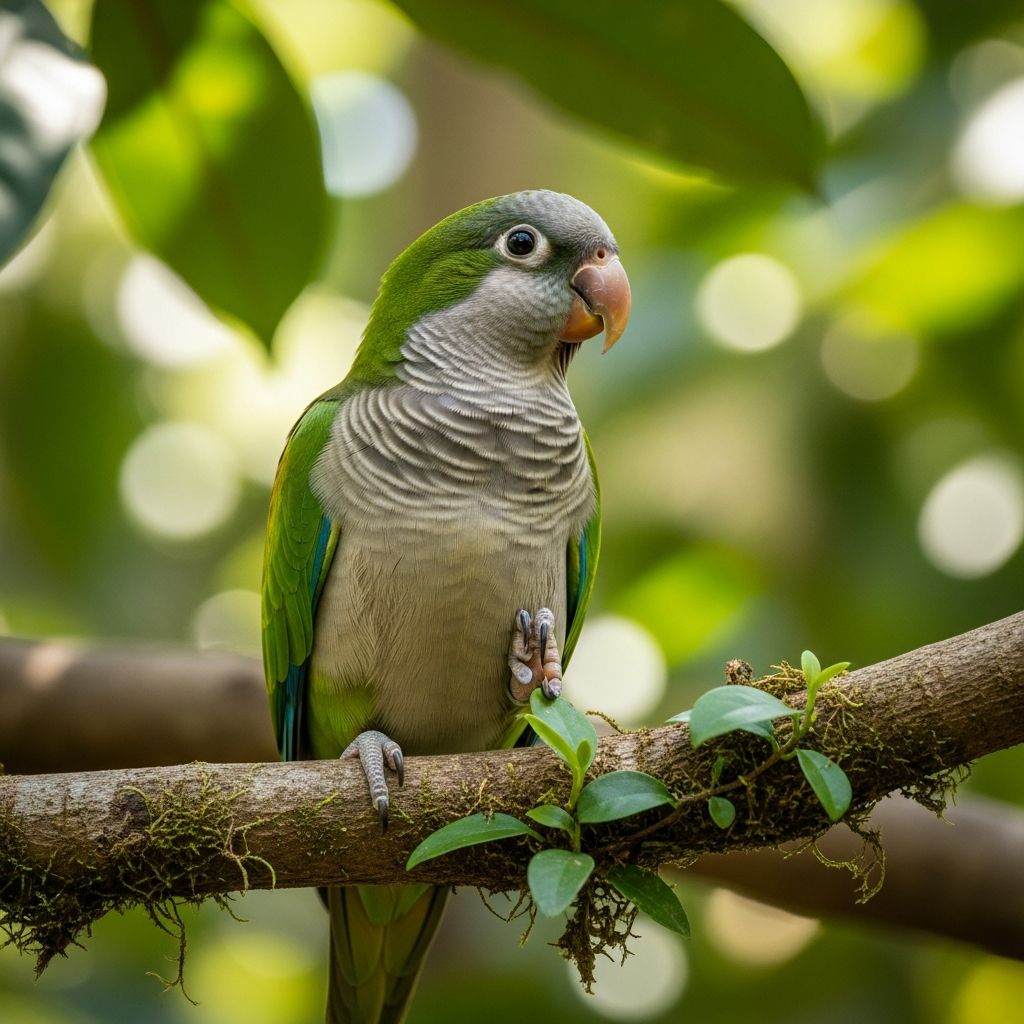
What Is A Quaker Parakeet?
The Quaker parakeet, also known as the Quaker parrot or monk parakeet, is a bright and resourceful small parrot native to South America. This 12-inch bird has become one of the most popular parrots of its size due to its exceptional availability, affordable cost, and outstanding ability to mimic human speech and sounds. The scientific name for this species is Myiopsitta monachus, and it belongs to the family Psittacidae.
What makes the Quaker parakeet particularly remarkable is its adaptability to various environments. Originally native to Argentina and nearby countries in South America, where it inhabits subtropical areas, these intelligent birds have successfully established large wild colonies from Southern Florida to the Northeast and Midwest regions of North America. While many people find these feral populations charming additions to their local landscapes, some areas have outlawed them due to concerns about their impact on native ecosystems and infrastructure.
Key Characteristics at a Glance
- Color variations: Lime green with blue tinges on wing undersides, or blue varieties
- Average size: Approximately 29 cm (11-12 inches) long
- Weight: Around 100 grams (3.5 ounces)
- Lifespan: Up to 30 years in captivity
- Distinctive feature: Storm-gray face, neck, and chest
- Beak color: Horn or orange-colored
Native Region and Natural Habitat
The Quaker parakeet originates from the temperate to subtropical areas of South America, with populations concentrated in isolated highlands of Bolivia, eastern Bolivia, southern Brazil, and central Argentina. These birds have demonstrated remarkable adaptability to urban landscapes, which has contributed to the establishment of numerous feral populations not only across North America but also throughout Europe. This ability to thrive in diverse climates and human-populated areas sets the Quaker parakeet apart from many other parrot species.
One of the most fascinating aspects of wild Quaker behavior is their unique approach to nesting. Unlike virtually all other parrot species that nest in tree cavities or cliff faces, wild Quaker parrots construct elaborate, oven-shaped structures made from thousands of twigs woven together into sophisticated nests. These communal nesting sites can become quite massive, with multiple chambers accommodating several breeding pairs within a single structure. This extraordinary nesting behavior is exclusive to the Quaker parakeet and represents a significant distinction from other parrot species.
Personality and Behavioral Traits
The most distinctive behavioral characteristic of the Quaker parakeet comes from its namesake—the quaking and shaking motion. These birds bob and quake in a manner that might appear abnormal or even disturbing to unfamiliar observers, but this is actually a completely natural behavior exclusive to this species. This unique trembling display represents an important part of their natural communication and emotional expression.
Quaker parrots are inherently social animals that deeply appreciate the company of their human companions or other Quakers. They form strong bonds with their flock members and can develop serious behavioral problems if left alone too frequently. Prolonged isolation can lead to depression and neurotic behaviors, making regular social interaction essential for their psychological well-being.
When introduced at a young age, pairs of Quaker parrots will form lasting bonds with each other. Interestingly, these bird-to-bird bonds do not diminish their attachment to their human owners if they receive sufficient close interaction and remain included in family activities. This dual bonding capability makes Quakers excellent choices for households where multiple birds are desired.
Speech and Sound Characteristics
Despite their name suggesting quiet contemplation, Quaker parakeets are anything but silent! These vocal communicators are known for their loud calls and impressive talking ability. Someone with noise sensitivity should carefully consider whether a Quaker parakeet is the right choice for their household. These birds can wake even the deepest sleepers and have the potential to disturb neighbors if kept in apartments or close-quarters living situations.
On the positive side, Quaker parakeets are wonderful talkers capable of learning numerous words and phrases, especially when kept as single birds. They excel at mimicking human speech and are also highly trainable, capable of learning various tricks when properly motivated by food rewards or praise. Hand-raised Quaker parakeets can be as affectionate and tame as any companion bird can be, developing deep emotional bonds with their primary caregiver.
Even untamed Quaker parakeets can be successfully tamed with patience and consistent, positive interaction. The key to developing a well-behaved, social Quaker is early socialization and regular handling from a young age. This investment of time and effort typically results in a devoted and entertaining companion.
Health Considerations and Common Conditions
Like all parrot species, Quaker parakeets are susceptible to certain health conditions that prospective owners should understand. The most prevalent health problems in captive Quakers include feather destructive behaviors such as feather plucking and fatty liver disease, which is directly associated with consuming a high-fat, seed-based diet.
Quaker parrots fed predominantly seed-based diets are particularly prone to obesity, fatty liver disease, and atherosclerosis. To prevent these serious health conditions, a balanced nutritional approach is essential. An optimal diet for a Quaker parakeet should consist primarily of a high-quality pelleted diet supplemented with fresh fruits, vegetables, and healthy table foods.
Recommended Dietary Components
- High-quality pellets as the primary dietary base
- Fresh fruits and vegetables daily
- Healthy table foods in moderation
- Limited seeds as occasional treats only
- Clean, fresh water available at all times
Breeding and Nesting Behavior
The Quaker parakeet exhibits unique breeding characteristics that distinguish it from virtually every other parrot species. In their natural habitat, wild Quakers are quick to nest and begin constructing their elaborate nests as early as March, typically laying five to eight eggs, though they can lay up to 13 viable eggs in a single clutch. The first young birds usually leave the nest by the end of May.
In captive breeding situations, Quakers are sometimes reluctant to use traditional breeding boxes. However, they respond well when provided with substantial nesting materials such as fresh-cut twigs and a wire base. This allows them to engage in their natural nest-weaving behavior, creating structures that more closely resemble their wild nesting habits. The incredible instinct to arrange and control object placement in their environment is more highly developed in Quakers than in many larger parrot species, making the provision of building materials essential for their psychological well-being.
This strong drive to build and arrange materials is not limited to breeding situations. Pet Quakers in household settings will attempt to rearrange and organize their cage furnishings and toys, sometimes becoming quite territorial about their cage space. Understanding and accommodating this natural behavior can help prevent behavioral problems and stress-related illness.
Feral Populations and Urban Colonization
The Quaker parakeet is unique among all parrot species in its ability to establish self-sustaining populations in urban environments, even in climates that differ significantly from their native South American habitat. Self-sustaining feral populations now occur in many locations worldwide, particularly in areas with similar climates to their native regions, including North America and Europe.
These feral populations have become so successful that they occasionally cause infrastructure problems. Most notably, huge stick nests have crashed onto power lines in various cities, causing blackouts affecting thousands of homes. In New York City and other major metropolitan areas, the massive communal nests built by feral Quaker populations have become notable urban wildlife phenomena.
Fast-flying and long-tailed, these parakeets can typically be observed on utility poles and other raised structures where they’ve established their colonies. Their success in colonizing human-dominated landscapes speaks to their remarkable intelligence, adaptability, and resourcefulness as a species.
Frequently Asked Questions
Q: How long do Quaker parakeets live?
A: Quaker parakeets can live up to 30 years in captivity with proper care, making them a long-term commitment for pet owners.
Q: Are Quaker parakeets good talkers?
A: Yes, Quaker parakeets are excellent talkers capable of learning numerous words and phrases, especially when raised as single birds from a young age.
Q: What do Quaker parakeets eat?
A: A proper diet consists of high-quality pellets as the primary food, supplemented with fresh fruits, vegetables, and healthy table foods. Seeds should be limited to occasional treats.
Q: Why do Quaker parakeets shake or quake?
A: The quaking and shaking motion is a natural behavior unique to Quaker parakeets and represents an important part of their communication and emotional expression.
Q: Can Quaker parakeets be kept in apartments?
A: Quaker parakeets are quite vocal and may disturb neighbors in apartment settings. They are best suited for households where noise levels are not a significant concern.
Q: Do Quaker parakeets need toys and enrichment?
A: Yes, Quakers are highly intelligent and need lots of pet-safe toys and playtime. They particularly enjoy materials for building and arranging, reflecting their natural nesting instincts.
Q: What is the most common health problem in captive Quakers?
A: Fatty liver disease associated with high-fat, seed-based diets is one of the most common health issues, along with feather destructive behaviors.
Q: How can I tame an untamed Quaker parakeet?
A: Untamed Quaker parakeets can be successfully tamed with patience, consistent handling, and positive reinforcement through treats and praise.
References
- Quaker Parakeet: Personality, Food & Care — Lafeber Company. 2025. https://lafeber.com/pet-birds/species/quaker-parakeet/
- Monk Parakeet Overview — Cornell Lab of Ornithology, All About Birds. 2025. https://www.allaboutbirds.org/guide/Monk_Parakeet/overview
- Quaker or Monk Parakeets – General Care Guide — VCA Animal Hospitals. 2025. https://vcahospitals.com/know-your-pet/quaker-or-monk-parakeets—general
- Quaker Parakeet Fact Sheet — Northern Parrots. 2025. https://www.northernparrots.com/blog/quaker-parakeet-fact-sheet/
- The Ultimate Guide to Quaker Parrot Care — We Know Pets. 2025. https://www.weknowpets.com.au/blogs/news/the-ultimate-guide-to-quaker-parrot-care-everything-you-need-to-know
Similar Articles








Read full bio of medha deb


