

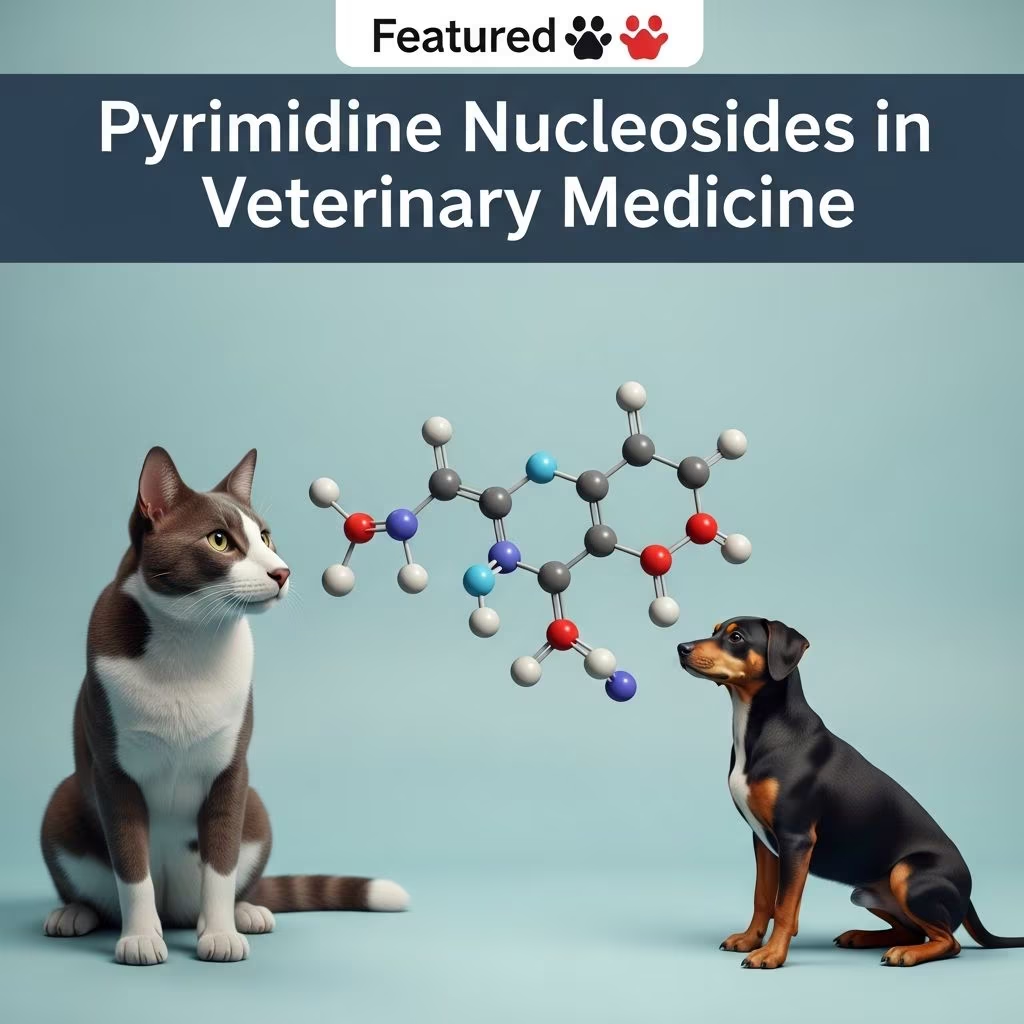
Pyrimidine nucleosides represent a critical class of compounds in veterinary pharmacology, serving dual roles as antiviral agents and nutritional supplements to bolster animal health. These molecules, derived from natural pyrimidines like uracil, thymine, and cytosine, mimic endogenous nucleic acid precursors, enabling targeted interventions in viral infections and metabolic processes.
Biochemical Foundations of Pyrimidine Nucleosides
At their core, pyrimidine nucleosides consist of a pyrimidine base linked to a sugar moiety, such as ribose or deoxyribose. This structure allows them to integrate into cellular metabolic pathways, where they function as building blocks for RNA and DNA synthesis. In animals, these nucleosides are absorbed intact from the intestine after enzymatic breakdown of dietary nucleotides, facilitating rapid uptake and utilization.
Key examples include uridine and cytidine, which are abundant in mammalian milk and play essential roles in energy metabolism, lipid regulation, and immune function. Their structural similarity to natural pyrimidines enables analogs to compete for enzymes, disrupting pathological processes like viral replication while supporting normal physiology.
Mechanisms of Action in Antiviral Therapy
Pyrimidine nucleoside analogs exert antiviral effects by interfering with viral nucleic acid synthesis. Once phosphorylated inside host cells, they incorporate into growing viral DNA or RNA chains, causing chain termination or inducing lethal mutations. For instance, cytosine arabinoside (cytarabine) inhibits viral polymerases more selectively than host enzymes, minimizing toxicity.
- Incorporation into viral genomes: Analogs like fluorodeoxyuridine block thymidylate synthase, depleting dTTP pools essential for DNA viruses.
- Enzyme inhibition: They compete with natural substrates for kinases and polymerases, halting replication cycles.
- Host cell modulation: Enhanced expression of transport proteins improves nutrient delivery, indirectly supporting antiviral defenses.
In veterinary contexts, these mechanisms prove effective against herpesviruses, poxviruses, and retroviruses in species like cattle, horses, and poultry.
Nutritional Supplementation in Livestock
Beyond antivirals, pyrimidine nucleosides enhance growth and metabolism when supplemented in maternal diets. Studies in sows demonstrate that adding 150 g/t of pyrimidine nucleosides (uridine and cytidine) to gestation feeds reduces neonatal mortality, boosts birth weights, and elevates serum glucose levels in piglets.
This supplementation modulates fatty acid profiles, increasing polyunsaturated fats while balancing saturated ones in neonatal liver and serum. It also upregulates genes for glucose (SGLT1) and amino acid transporters (SNAT1, SNAT4) in the jejunum and placenta, optimizing nutrient transfer.
| Parameter | Control Group | PN-Supplemented Group | P-value |
|---|---|---|---|
| Birth Weight (kg) | 1.45 | 1.62 | <0.05 |
| Neonatal Mortality (%) | 12.5 | 7.2 | <0.05 |
| Serum Glucose (mmol/L) | 4.8 | 5.6 | <0.05 |
| PUFA:SFA Ratio | 0.45 | 0.58 | <0.05 |
Hepatic pathways are activated too, with elevated phosphorylation of hormone-sensitive lipase (HSL) and protein kinase B (AKT), alongside sterol regulatory element-binding protein-1c (SREBP-1c), promoting lipogenesis and energy storage.
Veterinary Applications Across Species
Companion Animals
In dogs and cats, pyrimidine nucleosides treat feline leukemia virus (FeLV) and canine distemper. Cytarabine analogs deliver continuous infusions for lymphoma remission, leveraging their ability to cross the blood-brain barrier for neurological manifestations.
Livestock and Poultry
For swine, maternal supplementation improves litter uniformity and weaning weights. In poultry, uridine and cytidine blends enhance feed efficiency and resistance to infectious bronchitis virus, reducing antibiotic reliance.
Equine and Bovine Uses
Horses benefit from treatments against equine herpesvirus-1 (EHV-1), where nucleoside analogs shorten outbreak durations. Bovine respiratory disease complexes respond to combinations targeting paramyxoviruses.
Safety Profiles and Dosing Considerations
These compounds exhibit favorable safety margins in animals due to rapid clearance and selective activation in infected cells. Common side effects include mild myelosuppression, reversible upon discontinuation. Dosing varies by species: 10-20 mg/kg IV for acute viral infections in small animals; 150 g/t feed for nutritional boosts in swine.
- Monitoring: Track CBC for neutropenia; adjust in renal impairment.
- Contraindications: Avoid in pregnancy unless benefits outweigh risks; not for bacterial infections.
Pharmacokinetics show peak plasma levels within 1-2 hours post-administration, with half-lives of 4-8 hours in most species.
Emerging Research and Future Directions
Ongoing studies explore pyrimidine nucleosides for metabolic syndromes in obese pets and antiviral resistance prevention in intensive farming. Novel analogs target specific veterinary pathogens like avian influenza, promising broader prophylaxis.
Integration with probiotics enhances gut absorption, amplifying efficacy. Gene therapy vectors incorporating these nucleosides could revolutionize herd immunity.
Comparative Analysis of Key Agents
| Agent | Primary Use | Species | Mechanism | Key Benefit |
|---|---|---|---|---|
| Cytarabine | Leukemia, viral encephalitis | Dogs, Cats | DNA chain termination | BBB penetration |
| Fluorouracil | Squamous cell carcinoma | Horses, Cattle | Thymidylate inhibition | Topical efficacy |
| Uridine/Cytidine | Nutritional support | Swine, Poultry | Metabolic regulation | Growth promotion | Azacytidine | Myelodysplastic syndromes | All mammals | DNA hypomethylation | Epigenetic modulation |
Frequently Asked Questions (FAQs)
What are pyrimidine nucleosides?
They are nucleotide derivatives with pyrimidine bases, used in veterinary medicine for antiviral action and metabolic enhancement.
Are they safe for pregnant animals?
Maternal supplementation improves offspring outcomes in swine, but consult a vet for antivirals due to potential teratogenicity.
How do they differ from purine nucleosides?
Pyrimidines (C/T/U bases) target DNA/RNA synthesis differently from purines (A/G), offering unique antiviral spectra.
Can they replace vaccines?
No, they treat active infections; vaccines prevent them. Combinations yield synergistic protection.
What is the cost-effectiveness in farming?
Supplementation reduces mortality by 40-50%, offsetting costs through higher weaning rates.
Clinical Case Studies
In a swine herd with high neonatal losses, pyrimidine nucleoside feed addition increased live births by 15% and average weights by 12%, correlating with upregulated placental transporters.
A canine lymphoma case responded to cytarabine infusions, achieving 8-month remission with minimal side effects.
These examples underscore practical utility in diverse settings.
References
- Maternal pyrimidine nucleoside supplementation regulates fatty acid… — PMC. 2022-10-18. https://pmc.ncbi.nlm.nih.gov/articles/PMC9589032/
- Metabolism of pyrimidine analogues and their nucleosides — PubMed. 1990-01-01. https://pubmed.ncbi.nlm.nih.gov/2293239/
- Pyrimidine acyclic nucleosides. 1-[(2-Hydroxyethoxy)methyl… — ACS Publications. 1986-01-01. https://pubs.acs.org/doi/10.1021/jm00138a022
- Pyrimidines – DrugBank — DrugBank. 2023-01-01. https://go.drugbank.com/categories/DBCAT000349



