

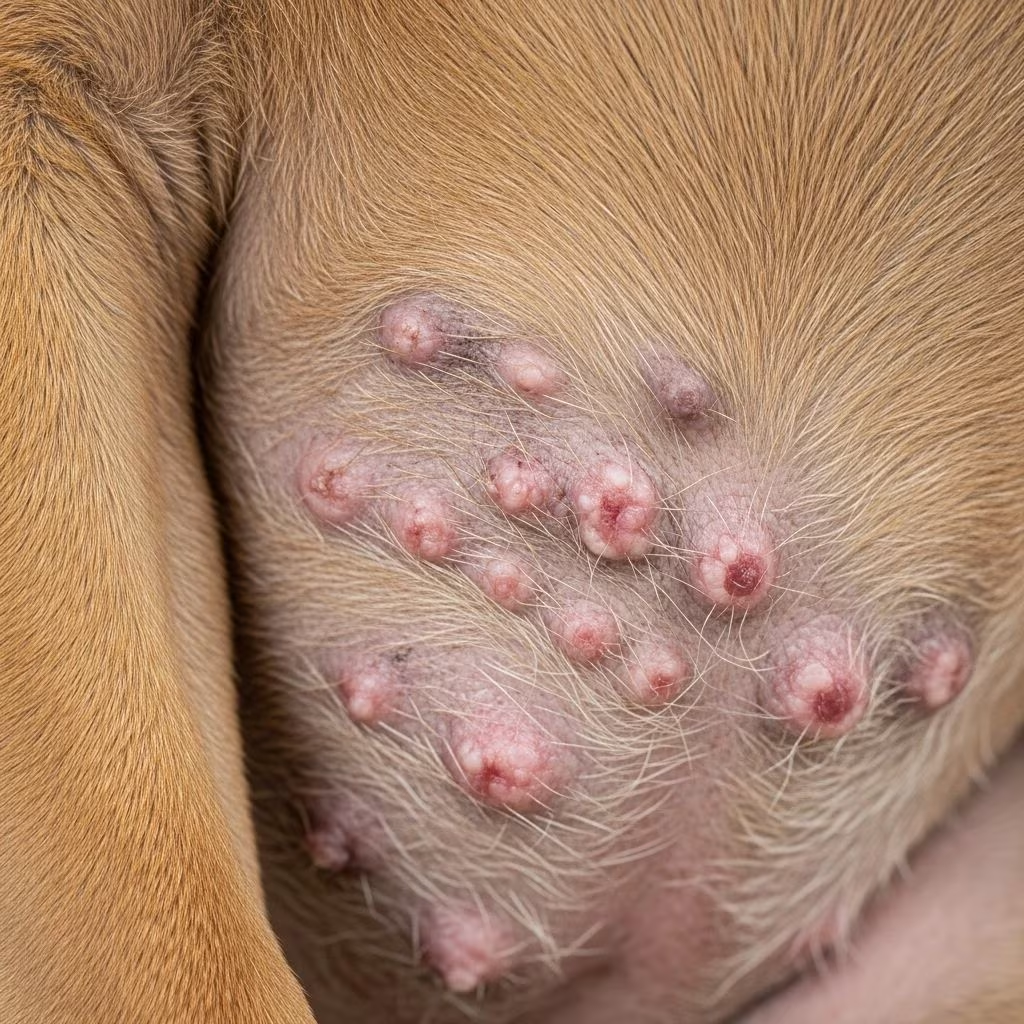
Pyoderma represents one of the most frequent bacterial skin infections affecting dogs, often manifesting as red, itchy, and pustule-filled patches that can escalate if untreated. Primarily driven by bacteria like Staphylococcus pseudintermedius, this condition thrives when the skin’s natural defenses weaken, allowing normal skin flora to overgrow into a problematic infection.
Understanding the Roots of Canine Skin Infections
The development of pyoderma stems from an interplay of bacterial invasion and predisposing factors that compromise skin integrity. At its core, bacteria such as Staphylococcus pseudintermedius—responsible for over 90% of cases—shift from harmless residents to pathogens when opportunities arise. Other microbes, including Staphylococcus schleiferi, Streptococcus, Escherichia coli, and Pseudomonas aeruginosa, can also contribute, particularly in complicated cases.
Several underlying triggers heighten susceptibility:
- Allergic reactions: Flea allergies, food sensitivities, or environmental atopy cause relentless itching, leading to self-trauma and bacterial entry points.
- Endocrine imbalances: Conditions like hypothyroidism or Cushing’s disease alter skin moisture, pH, and immune responses, fostering bacterial adhesion.
- Structural issues: Skin folds, especially in breeds like Bulldogs or Shar-Peis, trap moisture, promoting surface infections.
- Immune suppression: Medications such as high-dose steroids or diseases weakening immunity pave the way for opportunistic infections.
- Environmental factors: Prolonged wetness, poor grooming, or parasitic infestations exacerbate risks.
Puppies are particularly prone to a mild form known as puppy pyoderma, often appearing in sparsely haired areas like the groin or armpits due to immature skin barriers.
Recognizing the Warning Signs Early
Early detection hinges on observing subtle changes that progress to more severe indicators. Initial signs include small red papules and pustules resembling pimples, alongside generalized redness or erythema. As the infection advances, owners may notice:
- Hair loss (alopecia) in affected zones.
- Crusty, flaky skin or circular collarettes with scaly edges.
- Thickened, darkened skin (lichenification and hyperpigmentation).
- Odorous discharge, either pinkish-yellow or cloudy.
- Intense itching behaviors like chewing, licking, or rubbing.
Symptom patterns vary by pyoderma type. Surface variants in lip or facial folds show crusting and hair loss, while superficial folliculitis targets armpits and groins with papules and collarettes. Deep pyoderma brings painful, draining nodules with ulcerations. Short-haired breeds might display ‘hives-like’ raised fur, and an abnormal skin odor often signals active infection. Prompt recognition prevents deepening and resistance development.
Classifying Pyoderma for Targeted Management
| Type | Depth | Common Locations | Key Features |
|---|---|---|---|
| Surface Pyoderma | Epidermis only | Lip folds, interdigital | Scales, mild redness, no deep pain |
| Superficial Pyoderma (Folliculitis) | Follicle surface | Trunk, groin, axillae | Pustules, collarettes, epidermal collarettes |
| Deep Pyoderma | Deep follicles/dermis | Any, often multifocal | Nodules, drainage, pain, furunculosis |
This classification guides therapy intensity, with superficial cases often responding to topicals alone, while deep ones require systemic intervention.
Diagnostic Approaches in Veterinary Practice
Veterinarians employ a multi-step process to confirm pyoderma and uncover root causes. Initial exams involve visual assessment and history review for allergy patterns or endocrine symptoms. Cytology—scraping and microscopic examination—reveals bacterial rods or cocci, distinguishing pyoderma from yeast or fungal issues.
Culture and sensitivity testing proves essential for recurrent or non-responsive cases, identifying pathogens and antibiotic susceptibilities, especially methicillin-resistant strains (MRSP). Additional diagnostics target predispositions:
- Bloodwork for thyroid function or cortisol levels.
- Allergy trials via elimination diets or intradermal testing.
- Skin biopsies for chronic or atypical presentations.
Addressing pyoderma first clears secondary infection, enabling accurate underlying disease evaluation.
Treatment Strategies: From Topicals to Systemics
Effective management combines antimicrobial action with underlying cause control, prioritizing topicals to curb resistance.
Topical Therapies
Medicated shampoos and sprays form the cornerstone, used 1-2 times weekly for 3-4 weeks. Key ingredients include:
- Chlorhexidine: Broad-spectrum against staphylococci, effective even on MRSP.
- Benzoyl peroxide or sulfur-salicylic combos: Degreasing and antibacterial.
- Sodium hypochlorite or phytosphingosine: For resistant cases, paired with moisturizers.
Clean, dry bedding supports healing, minimizing recontamination.
Systemic Antibiotics
For generalized or deep infections, oral antibiotics like cephalexin or amoxicillin-clavulanate are selected via culture, administered 3-4 weeks minimum. Combination with topicals optimizes outcomes and resistance prevention.
Supportive Measures
Omega-3 supplements reduce inflammation, while antihistamines or low-dose steroids manage allergic flares pre-long-term therapies.
Preventing Recurrence Through Root Cause Control
Pyoderma recurs without addressing predispositions. Strategies include:
- Allergy management: Hypoallergenic diets, flea preventives, or immunotherapy.
- Hormonal correction: Thyroid supplements or trilostane for Cushing’s.
- Hygiene protocols: Regular baths, fold cleaning, and grooming.
- Monitoring: Early cytology for at-risk breeds.
Veterinary hygiene, like handwashing and antisepsis, curbs spread.
Frequently Asked Questions
Is pyoderma contagious to humans?
Rarely; most strains are canine-specific, though immunocompromised individuals should exercise caution.
How long does treatment take?
Superficial cases resolve in 3-4 weeks; deep or recurrent ones may extend longer with follow-ups.
Can natural remedies help?
Supportive, but not substitutes for vet-prescribed antimicrobials; consult professionals.
What breeds are most affected?
Any, but fold-heavy breeds (e.g., Pugs) and allergy-prone ones (e.g., Labs) face higher risks.
Long-Term Skin Health for Your Dog
Maintaining vigilant care transforms pyoderma management from reactive to proactive. Routine vet check-ups, balanced nutrition rich in skin-supporting nutrients, and prompt itch response keep infections at bay. By integrating these practices, dog owners foster resilient skin barriers, ensuring their pets enjoy itch-free, vibrant lives.
References
- Pyoderma in Dogs: Signs, Diagnosis, and Treatment — Dr. Buzby, ToeGrips. 2023. https://toegrips.com/pyoderma-in-dogs/
- Pyoderma in Dogs — VCA Animal Hospitals. 2024. https://vcahospitals.com/know-your-pet/pyoderma-in-dogs
- Canine superficial pyoderma and therapeutic considerations — PMC (NCBI). 2015-10-01. https://pmc.ncbi.nlm.nih.gov/articles/PMC4713004/
- Pyoderma in Dogs — PetMD. 2024. https://www.petmd.com/dog/conditions/skin/c_multi_pyoderma
- Canine Pyoderma — Antimicrobial Resistance Learning Site, University of Minnesota. 2023. https://amrls.umn.edu/canine-pyoderma



