

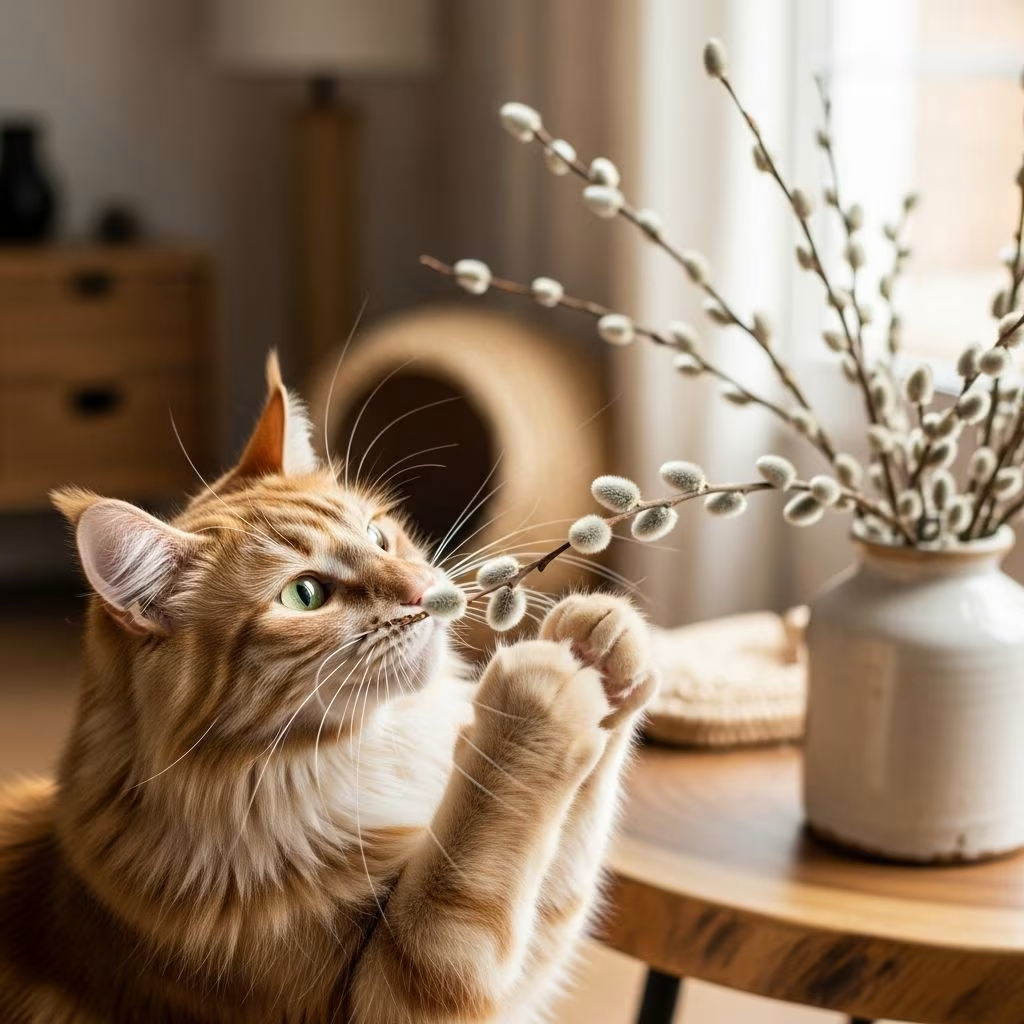
Pussy willows are iconic spring plants that many households welcome into their homes for their distinctive fuzzy catkins and delicate appearance. However, for cat owners, questions about plant safety naturally arise when bringing any vegetation into the living space. Understanding the relationship between pussy willows and feline health is essential for maintaining a secure environment for your pet. This comprehensive guide explores the toxicity profile of pussy willows, identifies potential health risks, and provides practical strategies for protecting your beloved cat.
Understanding the Botanical Composition of Pussy Willows
Pussy willows belong to the Salix family, commonly known as willows. These plants are recognizable by their distinctive soft, velvety catkins that emerge in early spring, making them popular decorative choices in floral arrangements and home gardens. The botanical structure of pussy willows includes branches, buds, leaves, and the characteristic fuzzy catkins that give these plants their distinctive appearance and name.
The key concern regarding pussy willow safety for cats lies in the chemical compounds present within the plant’s tissues. All members of the Salix family contain salicin, a naturally occurring compound that metabolizes into salicylic acid within the body. This salicylic acid is structurally related to aspirin, the common pain reliever used in human medicine. This biochemical similarity is the primary reason veterinarians recommend caution when pussy willows are present in homes with feline companions.
Toxicity Classification: Mild Risk Assessment
The toxicity profile of pussy willows for cats is classified as mild to moderate, depending on the quantity ingested. This classification distinguishes pussy willows from highly toxic plants that pose immediate life-threatening risks. The distinction between toxicity levels is crucial for cat owners to understand, as it informs both prevention strategies and response protocols.
The mildness of pussy willow toxicity stems from two primary factors: the relatively low concentration of salicin in the plant tissues and the natural reluctance of cats to consume large quantities of vegetation. Cats are obligate carnivores, meaning their dietary requirements center on protein and nutrients derived from animal sources rather than plants. This biological predisposition typically prevents cats from consuming substantial amounts of any plant material, including pussy willows. As a result, accidental poisoning from pussy willows remains relatively uncommon in feline populations.
However, the presence of salicin warrants precautionary measures. Cats demonstrate heightened sensitivity to salicylates, the chemical class to which salicin belongs. This sensitivity explains why aspirin, despite its common use in human medicine, is considered highly toxic to felines. The feline liver lacks certain enzymes necessary for efficiently metabolizing salicylates, leading to accumulation of these compounds in the body and potential adverse health effects.
Gastrointestinal and Systemic Symptoms Following Ingestion
When cats consume pussy willow material, the severity of symptoms correlates directly with the quantity ingested and individual feline sensitivity. Recognizing these symptoms early enables prompt veterinary intervention and appropriate treatment.
Primary Gastrointestinal Manifestations
- Vomiting — The most commonly observed symptom, occurring as the body attempts to expel irritating substances
- Diarrhea — Indicates gastrointestinal distress and inflammation of the digestive tract
- Excessive salivation — Results from oral irritation or nausea signals
- Loss of appetite — Typically accompanies gastrointestinal discomfort
- Stomach pain — Manifests as abdominal tenderness or reluctance to eat
Systemic and Neurological Symptoms
- Lethargy or weakness — Results from the body’s energy expenditure during detoxification
- Incoordination or tremors — Observed in cases of significant salicylate accumulation
- Hyperthermia — Elevated body temperature indicating systemic inflammation
- Seizures — Rare but possible in severe cases of poisoning
These symptoms typically emerge within hours following ingestion, though onset timing varies based on the quantity consumed and the individual cat’s metabolism. Most cats experiencing mild exposure may show only transient gastrointestinal upset, while more substantial ingestion could produce more pronounced neurological symptoms.
Timeline and Expected Clinical Progression
Understanding the timeline of symptoms helps cat owners distinguish between normal gastrointestinal upset and pussy willow poisoning. Initial signs typically appear within 2-4 hours of ingestion, with peak symptom severity occurring 6-24 hours after exposure. Most cases of mild poisoning resolve within 24-72 hours with appropriate veterinary support, though severe cases may require extended monitoring and treatment protocols.
Immediate Response Protocol for Suspected Ingestion
Discovering or suspecting that your cat has consumed pussy willow material requires a systematic approach to minimize potential harm.
- Secure the environment — Remove all remaining plant material from your cat’s immediate vicinity to prevent continued ingestion
- Collect plant specimens — Preserve a portion of the plant for identification purposes, which assists your veterinarian in determining exposure level
- Contact veterinary services promptly — Do not delay professional consultation, particularly if you suspect your cat consumed significant plant material
- Avoid home remedies — Do not attempt to induce vomiting or administer medications without explicit veterinary guidance, as these interventions may exacerbate certain conditions
- Provide detailed information — Inform your veterinarian of the quantity consumed (if known), the timing of exposure, and any symptoms observed
- Maintain observation records — Document all symptoms, their timing, severity, and any changes, providing your veterinarian with a comprehensive clinical picture
Veterinary Treatment and Supportive Care
Professional veterinary treatment for pussy willow poisoning focuses on supportive care rather than specific antidote administration, as no antidote exists for salicin toxicity. Veterinarians typically employ the following treatment approaches:
- Fluid therapy — Intravenous or subcutaneous fluids support kidney function and facilitate toxin elimination
- Gastrointestinal protectants — Medications that coat the stomach lining and reduce irritation
- Anti-nausea medications — Help control vomiting and support nutritional intake
- Monitoring protocols — Regular assessment of kidney and liver function through laboratory testing
- Activated charcoal — May be administered in some cases to absorb remaining toxins in the gastrointestinal tract
Creating a Pussy Willow-Free Environment
Prevention remains the most effective strategy for protecting your cat from pussy willow exposure. Implementing these preventive measures eliminates risk entirely.
Elimination and Substitution Strategies
- Remove pussy willow branches and arrangements from indoor spaces accessible to your cat
- If outdoor pussy willows are present, supervise outdoor time or restrict access to areas containing these plants
- Replace pussy willow decorations with cat-safe floral alternatives such as roses, sunflowers, or orchids
- Communicate plant safety guidelines to family members and visitors who may bring plants into your home
Environmental Enrichment Without Risk
Many cats show interest in plants due to natural curiosity and the desire to engage with vegetation. Satisfying these instincts with safe alternatives redirects attention from potentially harmful plants.
- Cat grass — Specially cultivated grass varieties designed for feline consumption support digestive health
- Catnip and silvervine — Provide stimulation and enrichment through scent and tactile engagement
- Spider plants — Safe for cats and often appeal to felines interested in foliage
- Boston ferns — Non-toxic plants that offer visual interest and varied textures
- Cat trees and climbing structures — Provide vertical engagement that satisfies exploratory instincts
Comparative Toxicity Profile of Common Household Plants
Understanding how pussy willows compare to other common household plants helps contextualize their risk level.
| Plant Name | Toxicity Level | Primary Toxic Component | Severity of Symptoms |
|---|---|---|---|
| Pussy Willow | Mild to Moderate | Salicin (salicylic acid) | Gastrointestinal upset, rarely severe |
| Lilies | Highly Toxic | Alkaloids | Kidney failure, potentially fatal |
| Azaleas/Rhododendrons | Toxic | Grayanotoxins | Vomiting, heart arrhythmias |
| Oleander | Highly Toxic | Cardiac glycosides | Heart problems, potentially fatal |
| Dieffenbachia | Moderate | Calcium oxalate crystals | Oral irritation, swelling |
| Spider Plant | Non-Toxic | None | Safe |
Behavioral Considerations and Individual Risk Factors
The actual risk pussy willows pose to any individual cat depends on behavioral tendencies and individual sensitivities. Cats that display strong plant-chewing behaviors face elevated exposure risk compared to felines that show no interest in vegetation. Age, overall health status, and any underlying kidney or liver conditions influence how a cat’s body processes and tolerates salicin exposure.
Senior cats or those with pre-existing health conditions require additional precautions, as their organs may be less efficient at metabolizing and eliminating toxins. Kittens, while typically less interested in plants than adults, may inadvertently consume plant material during play, necessitating vigilant environmental management.
Frequently Asked Questions Regarding Pussy Willow Safety
Are pussy willows completely safe for cats if consumed in tiny amounts?
Small amounts of pussy willow—such as a single leaf or brief chewing on a branch—typically cause no noticeable harm due to the low salicin concentration and cats’ natural sensitivity rather than susceptibility to minute exposures. However, consistent monitoring remains advisable, as individual sensitivity varies.
What distinguishes pussy willow toxicity from aspirin toxicity in cats?
Aspirin is a highly concentrated synthetic form of salicylic acid, whereas pussy willows contain naturally dispersed salicin that converts to salicylic acid during metabolism. The concentration difference means cats would need to consume substantial plant material to approach aspirin-level toxicity. Nonetheless, cats remain sensitive to salicylates regardless of source.
Can pussy willow be used therapeutically in cats despite its toxicity?
White willow bark, a related plant containing salicin, is sometimes used in supplements designed to address inflammation and arthritis pain in cats. However, research validating its effectiveness specifically in felines remains limited, and therapeutic applications require veterinary oversight to manage dosing and prevent toxicity.
Should outdoor cats be restricted from areas containing pussy willows?
While restriction isn’t always necessary given cats’ natural disinterest in plants, limiting unsupervised access to pussy willow plants provides an additional safety margin, particularly for cats demonstrating plant-chewing behaviors or living in multi-cat households where competitive eating behaviors might occur.
Which plants should absolutely never be present in cat homes?
Lilies represent the most critical plants to eliminate entirely, as they pose severe kidney toxicity risks and can cause fatal outcomes with minimal ingestion. Oleander, foxglove, sago palm, and autumn crocus similarly demand complete exclusion from cat-accessible environments.
Concluding Recommendations for Feline Safety
Pussy willows present a manageable risk for cat owners who implement straightforward preventive measures. The classification of pussy willows as mildly toxic rather than highly toxic means that cautious cohabitation is possible, though complete elimination of pussy willow exposure remains the simplest and most protective approach. Cats demonstrating no interest in vegetation face minimal realistic risk, particularly when exposed to only decorative pussy willow branches rather than substantial plant material.
The cornerstone of feline safety around pussy willows involves environmental management—removing or securing pussy willow arrangements and providing enriching safe alternatives that satisfy cats’ natural curiosity about vegetation. Should accidental exposure occur, knowledge of symptom recognition and prompt veterinary contact ensures that any poisoning effects are addressed rapidly and appropriately. By combining environmental precautions with informed awareness of toxicity signs, cat owners can confidently navigate pussy willow season while maintaining their feline companions’ health and safety.
References
- Are Pussy Willows Poisonous to Cats? Vet-Reviewed Houseplants — Catster. https://www.catster.com/cat-health-care/are-pussy-willows-poisonous-to-cats/
- Are Pussy Willows Toxic To Cats? Keeping Your Cat Safe — Hepper. https://articles.hepper.com/are-pussy-willows-toxic-to-cats/
- Are Pussy Willows Poisonous to Cats? — Zoorithm. https://www.zoorithm.com/cats/are-pussy-willows-poisonous-to-cats



