

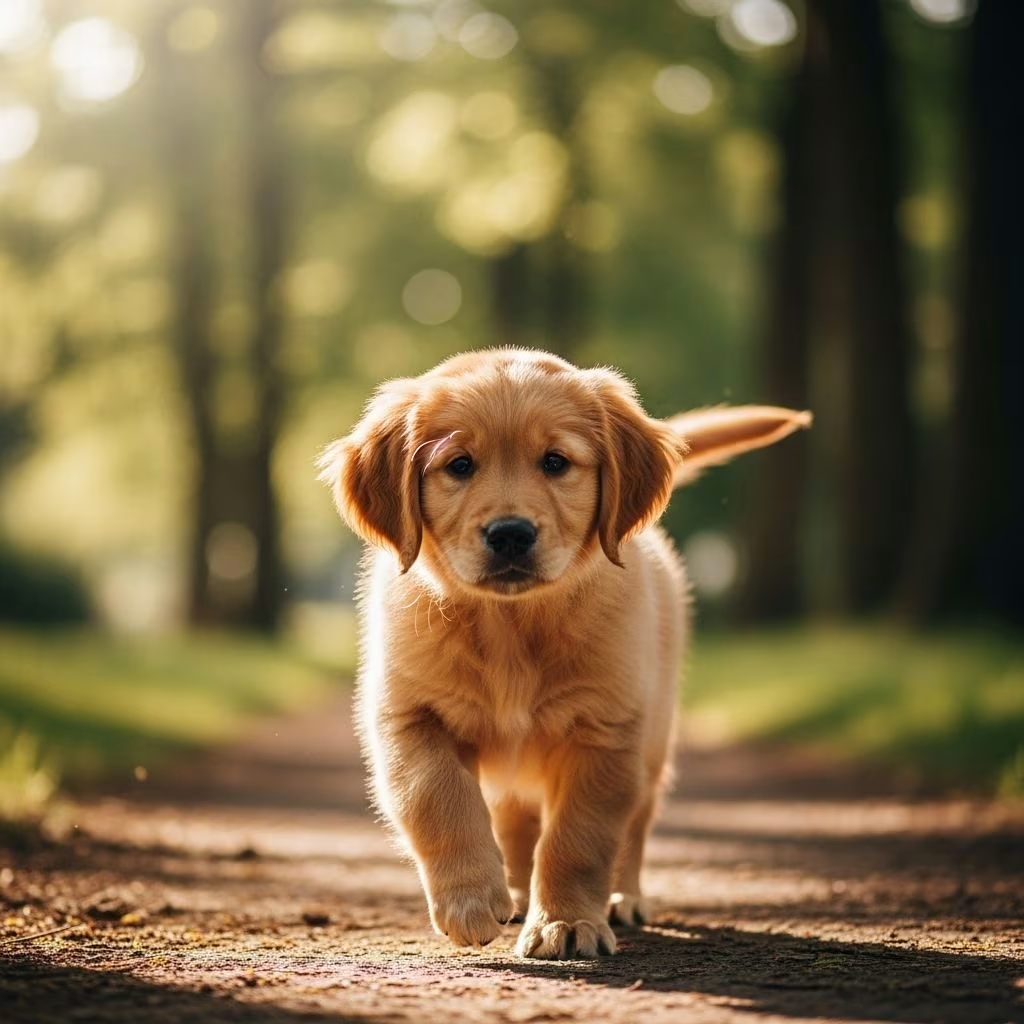
Puppies typically begin walking between 2 and 4 weeks of age, transitioning from helpless crawlers to exploratory explorers.
Understanding Early Puppy Development
The journey from birth to mobility is a fascinating process in canine growth. Newborn puppies enter the world in a neonatal phase where survival depends entirely on their mother. They cannot regulate body temperature, see, or hear, spending most of their time nursing and sleeping. This initial stage lasts about two weeks, during which subtle muscle developments lay the groundwork for future movement.
As days pass, puppies show incremental progress. By the end of the first week, they wriggle and scoot using their front limbs, inching toward warmth and milk. These movements strengthen core muscles and prepare the limbs for weight-bearing. Observing this phase helps owners anticipate the shift toward independence.
The Transitional Phase: Eyes Open, Legs Wobble
Between 2 and 4 weeks, puppies enter the transitional stage, a pivotal period marked by sensory awakenings and physical advancements. Eyes typically open around 10-14 days, revealing a blurry world that sparks curiosity. Ears unfold shortly after, allowing responses to sounds like littermate yelps or maternal calls.
Mobility ramps up here. Puppies attempt to stand around 3 weeks (21 days), often with unsteady legs. By 4 weeks (28 days), most achieve walking, though initial steps are wobbly. They explore their enclosure, interact with siblings, and even try climbing low barriers. Tail wagging and soft barks emerge, signaling growing coordination.
- Key signs of progress: Pushing up on forelegs, reduced swaying when sitting, crawling toward stimuli.
- Sensory ties to movement: Vision and hearing motivate exploration, prompting leg use.
- Elimination independence: Puppies stop needing maternal stimulation for waste removal by week’s end.
Factors Influencing When Puppies Start Walking
Not all puppies hit milestones identically. Several variables affect timing.
| Factor | Impact on Walking | Examples |
|---|---|---|
| Breed Size | Smaller breeds often advance quicker | Chihuahuas vs. Great Danes |
| Litter Dynamics | Larger litters may delay due to competition | Competition for space and nursing |
| Maternal Health | Strong dam supports faster gains | Nutritious milk aids muscle growth |
| Environment | Stimulating spaces encourage movement | Toys and safe areas boost curiosity |
| Health Status | Issues like weakness slow progress | Consult vet for delays |
Large breeds grow slower overall, with mobility lagging slightly behind toy breeds. Environmental enrichment, like soft toys or varied textures, naturally spurs standing and stepping without force.
Physical and Behavioral Changes During Walking Onset
Walking coincides with other transformations. Baby teeth erupt around 3 weeks, prompting weaning onto softened puppy food mixed with formula. This dietary shift fuels energy for activity. Coordination sharpens as puppies play-fight, learning bite inhibition from siblings’ reactions—yelps teach gentle mouths.
Behaviorally, puppies grow bolder. They wag tails during excitement, bark at novel noises, and investigate scents. These actions build leg strength through repeated trials. By 4-8 weeks, independence surges: solid food intake increases, potty control begins, and personalities emerge via play styles.
How to Support Healthy Walking Development
Interference is rarely needed; nature guides the process. Provide a warm, clean whelping area with non-slip surfaces to prevent slips. Introduce mild stimuli gradually—household sounds, gentle handling—to build confidence without overwhelm.
- Ensure dam’s nutrition for quality milk.
- Offer shallow food dishes at 3-4 weeks.
- Monitor weight gain: steady increases signal health.
- Confine to safe zones for supervised exploration.
- Avoid overhandling newborns; focus on 2+ weeks.
For adopted puppies (usually 8+ weeks), assess gait upon arrival. Wobbly walks may indicate travel stress, resolving quickly. Leash intro starts indoors at 8-12 weeks: collar comfort first, then short drags with treats.
Red Flags: When to Worry About Delayed Walking
Most puppies walk by 4 weeks, but outliers exist. Persistent crawling past 5 weeks, limping, or asymmetry warrants veterinary check. Causes include nutritional deficits, infections, or congenital issues like cerebellar hypoplasia. Early intervention via exams, supplements, or therapy improves outcomes.
Signs needing attention:
- No standing attempts by 3 weeks.
- Trembling legs or refusal to bear weight.
- Lethargy alongside motor delays.
- Uneven littermate progress.
Vets may recommend diagnostics like bloodwork or imaging. Prognosis is good for most if addressed promptly.
Breed-Specific Walking Timelines
Variations abound by genetics. Here’s a snapshot:
| Breed Type | Average Walking Start | Notes |
|---|---|---|
| Toy Breeds | 2-3 weeks | Fast maturation |
| Small-Medium | 3 weeks | Balanced growth |
| Large-Giant | 3-4 weeks | Slower bone development |
Examples: Pugs (early walkers) vs. Mastiffs (later). Always tailor expectations to lineage.
Beyond Walking: Next Mobility Stages
Post-4 weeks, puppies run by 5-6 weeks, mastering stairs soon after. Juvenile phase (3-6 months) brings teething, growth spurts, and high energy. Adult teeth arrive by 6-7 months, with coordination peaking.
Potty training aligns at 7-8 weeks as control solidifies. Socialization windows (3-16 weeks) demand walks: expose to stimuli for confident adults.
Preparing for Puppy Walks at Home
Once adopted, foster skills:
- Collar acclimation: 5-10 minutes daily with positives.
- Indoor leash walks: Lure with treats, cue “come.”
- Outdoor transition: Short, positive outings post-vaccines.
- Gear essentials: Harness over collar for trachea safety.
Consistency builds habits; patience prevents fear.
Frequently Asked Questions
Can I Help My Puppy Walk Sooner?
No—let them develop naturally. Supportive environments suffice; forcing risks injury.
What If My Puppy Isn’t Walking at 4 Weeks?
Consult a vet. Most causes are treatable if caught early.
Do All Puppies Walk at the Same Time?
No, breed, health, and environment vary timelines within 2-4 weeks.
When Can Puppies Go on Real Walks?
After full vaccines, around 12-16 weeks, starting short.
How Active Should 3-Week Puppies Be?
Moderately: short explorations between sleeps and feeds.
References
- When Do Puppies Start Walking? — K&H Pet Products. 2023. https://khpet.com/blogs/dogs/when-do-puppies-start-walking
- Puppy Stages Milestones: What to Expect — Coastal Veterinary Care. 2024. https://coastalveterinarycare.vet/puppy-stages-milestones/
- When Do Puppies Start Walking? A Guide for Pet Parents — Earth Rated. 2023. https://www.earthrated.com/blogs/blog/when-do-puppies-start-walking-a-guide-for-pet-parents
- Puppy Development Stages From Birth to 2 Years Old — Best Friends Animal Society. 2024. https://bestfriends.org/pet-care-resources/puppy-development-stages-birth-2-years-old
- A Puppy Growth Timeline: Transitions in Puppyhood — American Kennel Club. 2023. https://www.akc.org/expert-advice/puppy-information/puppy-growth-timeline-transitions-puppyhood/



