

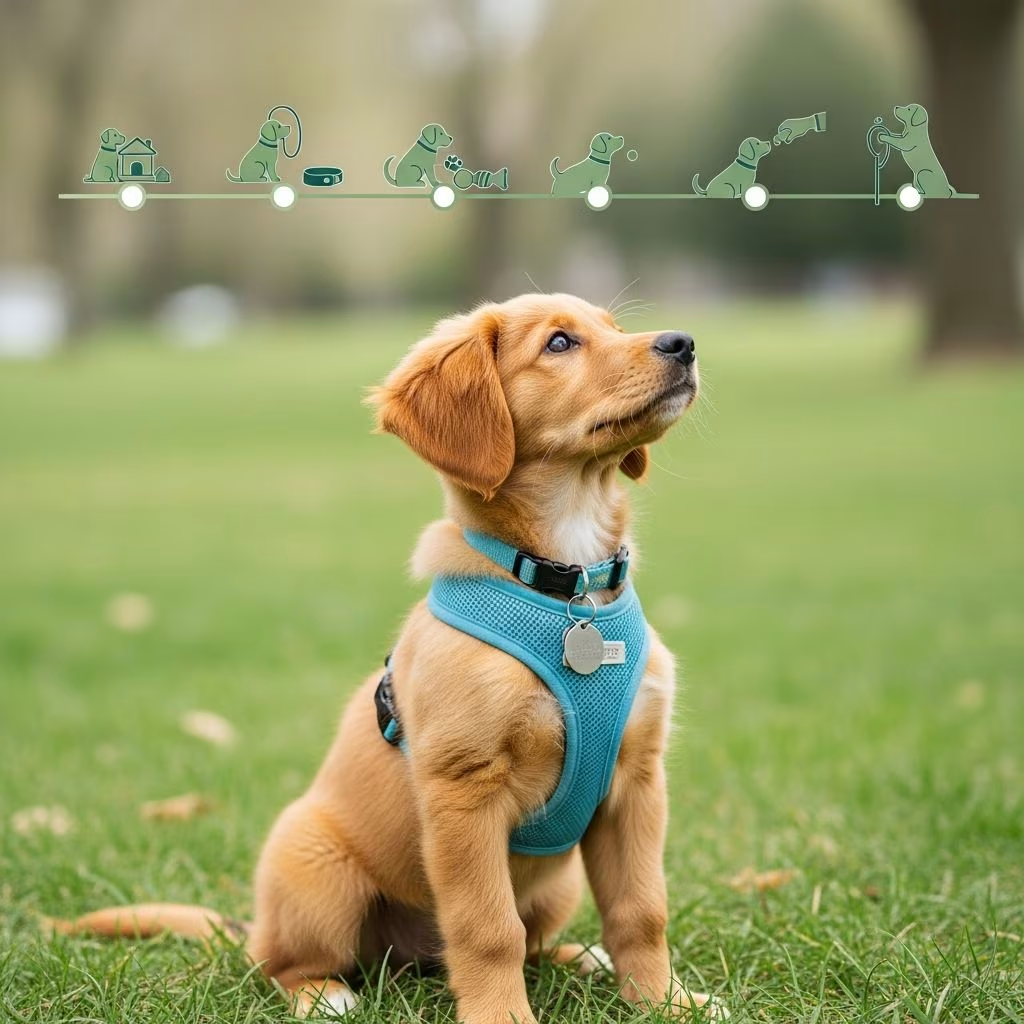
Bringing home a new puppy marks the start of an exciting journey filled with learning and bonding. Establishing a structured training routine from day one sets the foundation for a harmonious life together. Puppies thrive on consistency, positive reinforcement, and age-appropriate challenges, allowing them to develop into confident, obedient companions. This guide outlines key milestones from 8 weeks through the first year, focusing on essential skills like housebreaking, basic commands, social exposure, and independence.
Why Timing Matters in Puppy Development
The early weeks of a puppy’s life represent a critical window for brain development and behavioral shaping. Between 3 and 16 weeks, puppies are highly receptive to new experiences, making it ideal for introducing stimuli safely. Delaying training can lead to missed opportunities, as fear responses solidify after this period. Training isn’t a one-time event but a lifelong process, with the most rapid progress occurring in these formative months. Positive methods, rewarding desired actions with treats or praise, yield the best, science-backed results without causing stress.
Owners should aim for short, frequent sessions—5 to 10 minutes for young pups—to match their attention spans. Incorporate training into daily routines like mealtimes, where kibble becomes a reward for performing cues. Consistency across family members prevents confusion, while patience accommodates individual learning paces.
8-10 Weeks: Building the Basics at Home
At 8 weeks, most puppies arrive home, eager yet needing structure. Focus on acclimating them to their new environment through a predictable daily rhythm of meals, potty breaks, play, and rest. Puppies this age sleep 18-20 hours daily, so enforce nap times in a quiet crate to promote healthy growth.
Housebreaking Foundations
Potty training begins immediately. Puppies can hold their bladder for roughly one hour per month of age, so at 2 months, expect breaks every 2-3 hours, plus after meals, naps, and play. Leash them outdoors, stand quietly in one spot for 5 minutes to minimize distractions, and praise lavishly upon success. Accidents indoors warrant calm cleanup without punishment, as pups lack full control.
- Supervise constantly or use baby gates/crate when unsupervised.
- Feed 3-4 meals daily on schedule to predict elimination needs.
- Clean mishaps with enzymatic cleaners to remove scents.
Early Name Recognition and Calm Manners
Teach name response by saying it cheerfully before offering treats or toys, rewarding eye contact. Discourage jumping or nipping with timeouts—turn away and ignore until settled. Introduce crate as a cozy den with toys and covered sides for security.
10-12 Weeks: Expanding Commands and Tools
As puppies gain confidence, layer in obedience basics. Their growing curiosity suits gentle leash introductions and expanded interactions. Vaccinations allowing, start brief outdoor ventures for real-world practice.
Core Obedience Cues
| Command | How to Teach | Purpose |
|---|---|---|
| Sit | Lure with treat above nose, move to hand signal. | Impulse control, polite greetings. |
| Down | From sit, lure treat to ground between paws. | Calming position for relaxation. |
| Come | Call name + cue excitedly, reward heavily on return. | Safety recall in distractions. |
Use high-value rewards during meals. Sessions post-potty or play keep energy high.
Leash and Harness Habits
Familiarize with equipment indoors: clip on, reward calm standing, then short walks around the house. Progress to yard strolls, rewarding loose-leash walking. Prevent pulling by stopping movement until slack returns.
12-16 Weeks: Socialization Surge
This prime socialization phase ends around 16 weeks—expose pups to diverse, positive encounters to build resilience. Aim for 100 new experiences weekly: sounds, surfaces, people, animals.
- Visit pet-friendly stores (post-vaccines).
- Introduce gentle children, seniors, umbrellas, vacuums.
- Enroll in puppy classes for supervised play (12-16 weeks typical start).
Classes last 4-6 weeks, emphasizing play-based learning. Watch body language: wide eyes/yawning signal overload; pause and comfort.
4-6 Months: Adolescence and Reliability
Jaws strengthen, energy peaks—adolescence brings testing boundaries. Reinforce basics outdoors, where distractions challenge focus. Potty intervals extend to 4-6 hours.
Impulse Control Milestones
Teach ‘Place’ (settle on mat/bed) for visitors. Practice ‘Leave It’ with dropped treats, rewarding from hand. Heel training refines loose-leash walks: reward beside-leg position.
Socialize in public: parks, trails. Continue alone-time practice, building to 1-2 hours crated with toys.
6-12 Months: Advanced Polish and Maintenance
By 6 months, puppies master basics; shift to proofing in varied settings. Full adult teeth emerge—provide chews. House training solidifies; overnight holds possible.
Teenage Challenges
Hormonal surges may spike reactivity—double positive reinforcement. Group classes or agility introduce teamwork. Track progress:
- 90% reliable recalls off-leash in safe areas.
- Comfort alone 4+ hours.
- Polite with strangers/dogs.
Annual refresher sessions prevent regression. Spay/neuter timing (consult vet) aids focus.
Daily Schedules by Age Group
Tailor routines to life stage for security and success.
| Age | Sample Daily Routine |
|---|---|
| 8-10 Weeks | 6AM potty/feed, 7AM play/train 5min, 8AM nap, repeat; bedtime 10PM. |
| 10-16 Weeks | Add 10min walks, 2x daily training; naps after activity. |
| 4-6 Months | 3 meals, 20min sessions, 30min walks 2x, evening wind-down. |
| 6-12 Months | 2 meals, 1hr exercise split, advanced drills, alone practice. |
Common Hurdles and Fixes
Biting: Redirect to toys; yelp and withdraw attention.
Fear: Counter-condition slowly with treats.
Regression: Revisit basics patiently—growth spurts cause setbacks.
Tools: Quality crate, enzyme cleaner, puzzle toys, clicker for precision marking.
FAQs
How long until my puppy is fully trained?
Basics by 5-6 months, but lifelong reinforcement needed for fluency.
When to join classes?
Socialization at 8 weeks if vaccinated; obedience 12-16 weeks.
Best rewards?
Soft treats, play, praise—vary to maintain interest.
What if I miss the socialization window?
Never too late; use desensitization, but early yields easiest results.
Crate or pen for alone time?
Crate fosters security; pen for active play.
Long-Term Success Strategies
Beyond year one, engage in sports like obedience trials or therapy work. Annual vet checks ensure health supports learning. Track via journal: note wins/challenges weekly. Involve whole household for unity. Professional trainers aid stubborn cases, using force-free methods.
Patience transforms chaos into companionship. Celebrate small victories—your consistent effort shapes a joyful, mannerly dog for years.
References
- Puppy Training Guide: How and When To Start — PetMD. 2023. https://www.petmd.com/dog/general-health/when-start-training-puppy
- Complete Puppy Training Schedule by Age — The Puppy Academy. 2020-08-24. https://www.thepuppyacademy.com/blog/2020/8/24/complete-puppy-training-schedule-by-age
- Puppy Training Timeline: Teaching Good Behavior Before It’s Too Late — American Kennel Club (AKC). 2023. https://www.akc.org/expert-advice/training/puppy-training-timeline-teaching-good-behavior-before-its-too-late/
- Your Step-By-Step Puppy Training Schedule (By Age) — McCann Dog Training (YouTube). 2025-07-19. https://www.youtube.com/watch?v=3ITJcTSiCW4
- The Importance of an Age-Appropriate Puppy Training Schedule — Purina. 2023. https://www.purina.com/articles/dog/puppy/training/puppy-training-schedule



