

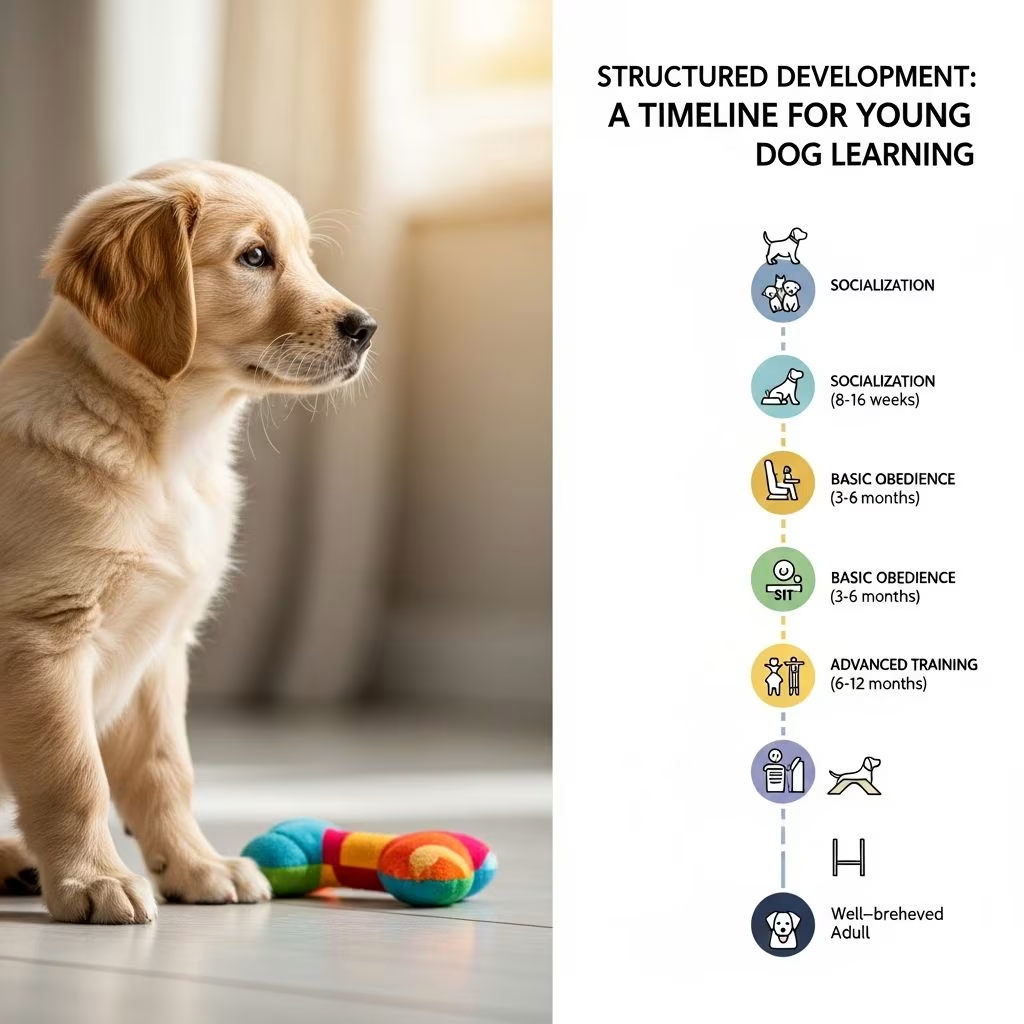
Bringing a new puppy home is an exciting milestone, but it also comes with significant responsibilities. Understanding the developmental arc of your young dog—from the moment they arrive at your home through their first year—enables you to provide appropriate guidance, expectations, and training at each critical stage. A structured approach to puppy development ensures that foundational skills are established when your dog’s brain is most receptive to learning, setting the stage for a well-behaved, confident adult dog.
The journey of training and socializing a puppy is not a one-size-fits-all process. Rather, it requires an adaptive strategy that aligns with your puppy’s cognitive abilities, physical development, and emotional maturation. This comprehensive guide explores the distinct phases of early canine development and outlines the specific training priorities, behavioral expectations, and learning opportunities that characterize each stage.
The Early Foundation Phase: 8 to 16 Weeks
The window between 8 and 16 weeks represents a critical period in your puppy’s development. During this time, your young dog is experiencing rapid neurological growth, building muscle tone, and forming foundational associations about the world around them. This phase is characterized by heightened learning capacity and a natural curiosity that makes it ideal for introducing basic routines and behavioral expectations.
Establishing Bathroom Habits
House training is among the first priorities during this early stage, though expectations must remain realistic. Puppies aged 8 to 16 weeks have limited bladder control and typically need outdoor breaks every 2 to 4 hours during waking periods and every 5 to 8 hours at night. The key to success is consistency and positive reinforcement rather than punishment. Establish a predictable schedule that takes your puppy outside after meals, naps, playtime, and before bedtime. When your puppy eliminates in the appropriate location, immediate praise and rewards reinforce the desired behavior.
Creating a designated potty area helps your puppy develop spatial awareness and understanding of where elimination is acceptable. Many trainers recommend using a crate as part of the house training process, as puppies naturally avoid soiling their sleeping quarters. However, the crate should never be used as a punishment tool but rather as a safe den-like space that facilitates the development of bladder control.
Introducing Basic Obedience Concepts
This phase is optimal for introducing foundational obedience concepts, though expectations should focus on simple, single-word commands. Your puppy’s attention span is limited, so training sessions should be brief—typically 5 to 10 minutes—but frequent throughout the day. Commands such as “sit,” “come,” and “down” can be introduced using high-value rewards like small treats or enthusiastic praise.
The approach should emphasize positive reinforcement exclusively. Rather than correcting unwanted behaviors, focus on rewarding desired behaviors consistently. This creates positive associations with training and builds your puppy’s confidence and willingness to engage with you.
Social Integration and Environmental Exposure
Between 8 and 16 weeks, your puppy undergoes critical socialization that shapes their comfort level with various stimuli, environments, and individuals. This period is when puppies learn normal canine social skills, including bite inhibition, appropriate play behavior, and reading other dogs’ body language signals. Controlled exposure to different surfaces, sounds, environments, and people helps prevent fear-based behavioral issues later in development.
Puppy socialization classes offer structured environments where young dogs can interact with peers under professional supervision. These classes typically accommodate puppies beginning at 8 weeks of age and focus on positive interactions and confidence building. Additionally, careful exposure to everyday household sounds—vacuum cleaners, doorbell chimes, traffic noise—normalizes these stimuli and reduces the likelihood of noise sensitivity or anxiety responses.
Rest and Sleep Requirements
While training and socialization are important, adequate rest is equally critical during this phase. Young puppies require 16 to 20 hours of sleep daily to support physical growth, cognitive development, and emotional regulation. Ensuring your puppy has multiple opportunities for napping throughout the day is not laziness but rather essential developmental support. Overtired puppies exhibit behavioral issues similar to overtired children and are more difficult to train effectively.
The Rapid Growth Phase: 4 to 6 Months
By four months of age, your puppy enters what is often termed the “adolescent phase.” During this period, your dog experiences increased independence, greater physical strength, and sometimes a tendency toward behavioral regression or testing of boundaries. However, this phase also presents opportunities for advancing training complexity and deepening your puppy’s obedience foundation.
Advancing Bathroom Management
Puppies aged 4 to 6 months can typically extend their time between potty breaks to every 4 to 5 hours, and many can begin holding their bladder throughout the night. However, individual variation exists, and some puppies may need additional time to develop complete nighttime control. Consistency remains paramount, as does patience. Accidents may still occur and should be treated as learning opportunities rather than behavioral failures.
Building On Obedience Skills
This phase is appropriate for reinforcing previously learned commands and introducing moderate complexity to training. Your puppy’s attention span has increased, allowing for slightly longer training sessions of 10 to 15 minutes. Commands can be practiced in varied environments, which helps your puppy generalize behaviors across different contexts. For instance, practicing “sit” in multiple locations—at home, in the yard, at a park—reinforces that the command applies universally, not just in one setting.
Introducing impulse control exercises, such as “wait,” “leave it,” and “drop it,” becomes increasingly important as your puppy’s curiosity and tendency to pick up objects increases. These commands can prevent dangerous situations where your puppy might consume harmful substances or objects.
Managing Increasing Energy Levels
Puppies at this stage experience significant increases in energy and playfulness, with corresponding decreases in sleep requirements. While napping remains important, your puppy will now have extended periods of active engagement. Providing appropriate outlets through structured play, supervised fetch sessions, and interactive games channels this energy productively. Without adequate physical and mental stimulation, puppies may redirect this energy toward destructive behaviors like chewing furniture, digging, or excessive barking.
Crate Time Management
While crate training should be ongoing, it’s important to ensure that crate time remains developmental rather than restrictive. Puppies should not spend extended periods confined to a crate, as this can negatively impact both physical development and emotional well-being. The general guideline is that puppies should not be crated for periods exceeding one hour per month of age, though this varies by individual. By 4 to 6 months, your puppy may be capable of tolerating several hours during times when you’re away, but this should be built gradually with appropriate exercise and bathroom breaks before confinement.
The Teenage Phase: 6 to 12 Months
The period from 6 to 12 months encompasses what trainers and behaviorists often call the “teenage years”—a phase characterized by increased independence, selective attention, and testing of established boundaries. Many dog owners are surprised when puppies appear to “forget” previously learned commands or suddenly develop behaviors that seemed resolved earlier. This is developmentally normal and reflects the adolescent dog’s need to establish autonomy and independence.
Bathroom Training Consolidation
By six months, most puppies can manage 3 to 4 potty trips throughout the day while maintaining control during overnight periods. Some puppies achieve full house training by this age, though others may require additional months. Individual variation depends on breed, individual metabolism, and training consistency. Maintaining a predictable schedule remains important, as does continued positive reinforcement. Some adolescent puppies temporarily regress in house training, often related to excitement, anxiety, or hormonal changes. Remaining patient and reinstating consistent routines typically resolves these setbacks.
Addressing Adolescent Behavioral Challenges
The teenage puppy often exhibits increased distractibility, selective compliance, and a tendency to test boundaries more assertively than younger puppies. This is not defiance but rather normal developmental behavior reflecting increased independence. Addressing these behaviors requires consistent reinforcement of learned commands, remaining patient with occasional lapses, and ensuring that your expectations remain realistic for the developmental stage. Continuing positive reinforcement training during this phase reinforces that compliance remains rewarding, even as your puppy matures.
Leash Training and Walking Mechanics
By this stage, puppies have progressed significantly in their understanding of leash training and walking expectations. They can learn to maintain a loose leash, walk at a consistent pace alongside their handler, and respond to directional cues while walking. However, increased energy and heightened interest in environmental stimuli (other dogs, squirrels, interesting scents) may make walks more challenging than they were at younger ages. Maintaining training consistency and using reinforcement for appropriate on-leash behavior helps your dog understand that pleasant walks require focusing on the handler and following directional guidance.
Sleep Pattern Evolution
The sleep requirements of adolescent puppies decrease significantly compared to younger puppies, but their energy levels increase substantially. This phase often sees puppies requiring intensive exercise and mental stimulation to prevent behavioral problems stemming from boredom or excess energy. Long walks, fetch sessions, puzzle games, and sniffing activities all provide appropriate outlets. Managing the balance between exercise, mental stimulation, and rest allows your puppy to continue developing appropriately while channeling their abundant energy constructively.
Training Activities Across Development Phases
| Age Range | Primary Focus Areas | Training Duration | Sleep Requirements | Exercise Needs |
|---|---|---|---|---|
| 8-16 Weeks | Crate training, basic commands, potty training, socialization | 5-10 minute sessions | 16-20 hours daily | Short, frequent play sessions |
| 4-6 Months | Command reinforcement, impulse control, increased socialization | 10-15 minute sessions | 14-18 hours daily | Moderate play with variety |
| 6-12 Months | Boundary reinforcement, complex behaviors, off-leash training | 15-20 minute sessions | 12-16 hours daily | Intensive exercise and engagement |
Essential Training Components Across All Phases
Consistent Potty Training Protocol
Regardless of your puppy’s age, maintaining a consistent bathroom schedule supports success. Take your puppy outside at predictable times—after meals, after naps, after play, and before bed. Use a specific area and consistent verbal cue to signal the desired behavior. When elimination occurs in the appropriate location, immediately provide enthusiastic praise and a high-value reward. This creates a strong association between the location, the cue, and positive outcomes.
Progressive Socialization Strategy
Socialization should be ongoing throughout your puppy’s first year. Early socialization (8 to 16 weeks) emphasizes basic environmental exposure and gentle introduction to various stimuli. As your puppy matures, socialization can expand to include more complex social interactions, varied environments, and increasingly challenging experiences. The goal is to build confidence and adaptability across diverse situations.
Sleep Schedule Integration
Incorporating scheduled nap times into your training plan prevents overtiredness and supports learning consolidation. Puppies learn best when well-rested, and maintaining appropriate sleep supports cognitive development and emotional regulation. Schedule training sessions during periods when your puppy is alert and receptive, typically following a period of sleep and earlier in the day when energy levels are highest.
Leash Training Progression
Begin leash training indoors with a lightweight leash, allowing your puppy to acclimate to the sensation without the pressure of outdoor distractions. Progress to quiet outdoor areas before advancing to busier environments. By six months, your puppy can begin learning to maintain a loose leash during walks, walk at a consistent pace, and respond to directional cues even amid environmental distractions.
Frequently Asked Questions About Puppy Training Timelines
When Should Formal Puppy Training Classes Begin?
Most puppies can start puppy socialization classes by 8 weeks of age, with structured obedience training classes typically beginning around 12 to 16 weeks. Class selection should consider your puppy’s vaccination status, as facilities typically require proof of certain vaccines before enrollment. Classes usually span 4 to 6 weeks and emphasize positive reinforcement methods.
Can Puppies Learn Commands Before 8 Weeks?
While puppies under 8 weeks are capable of simple learning, most puppies join their new homes around 8 to 12 weeks of age. Training can certainly begin immediately upon arrival, focusing on basic routines, potty training, and very simple associations. However, formal training with structured commands typically begins around 8 weeks when cognitive capacity has developed further.
How Do I Know If My Puppy Is Overstimulated During Training?
Signs of overstimulation include loss of focus, excessive excitement or jumping, nipping, or refusal to engage. If you observe these signs, end the training session and allow your puppy rest time. Training sessions should always end on a positive note, and your puppy should remain enthusiastic about training interactions.
What Should I Do About Command Regression in the Adolescent Phase?
Temporary regression is normal adolescent behavior and does not indicate failure in training. Respond by reinstating consistent training routines, remaining patient, and continuing positive reinforcement. Adolescent puppies often respond well to training that incorporates increased challenges or variations, as they benefit from continued mental engagement.
Conclusion: Supporting Optimal Development
Creating a structured approach to puppy training that aligns with your dog’s developmental stage sets the foundation for a well-behaved, confident adult dog. By understanding the distinct characteristics of each phase—from the highly receptive learning period of 8 to 16 weeks through the independent adolescent phase of 6 to 12 months—you can adjust your expectations, training methods, and activities to support optimal development. Patience, consistency, positive reinforcement, and realistic expectations characterize successful puppy development, resulting in a dog that is both behaviorally sound and emotionally well-adjusted.
References
- The Importance of an Age-Appropriate Puppy Training Schedule — Purina. 2025. https://www.purina.com/articles/dog/puppy/training/puppy-training-schedule
- Week-by-week Puppy Training Schedule for 8-16 Weeks Old — Zigzag. 2025. https://zigzag.dog/en-us/blog/puppy-training/training-basics/weekly-puppy-training-schedule/
- When to Start Puppy Training: Complete Timeline — Always Faithful Dogs Training. 2024. https://www.alwaysfaithfuldogs.com/when-to-start-puppy-training-complete-timeline
- Puppy Training Guide: How and When To Start — PetMD. 2024. https://www.petmd.com/dog/general-health/when-start-training-puppy
- Puppy Training Timeline: Teaching Good Behavior Before It’s Too Late — American Kennel Club. 2024. https://www.akc.org/expert-advice/training/puppy-training-timeline-teaching-good-behavior-before-its-too-late/



