

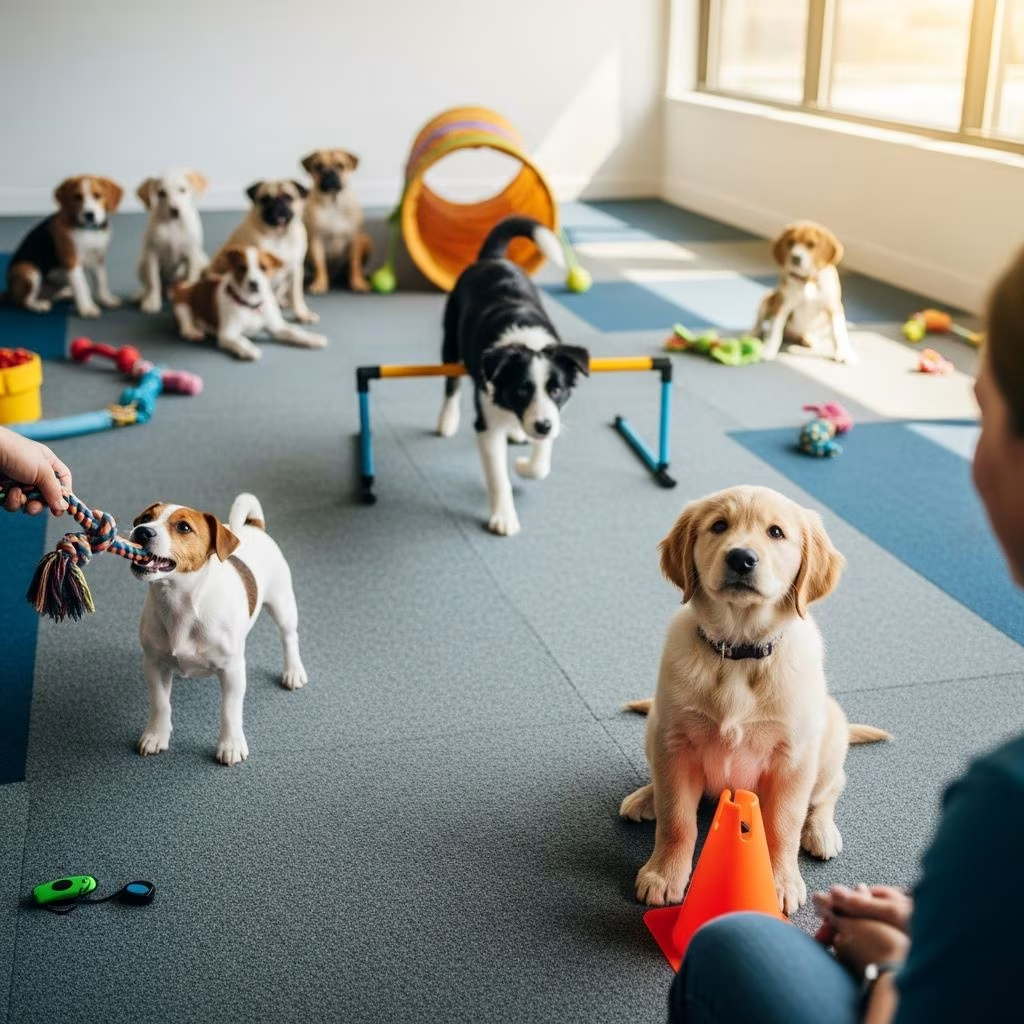
Bringing a puppy into your home marks the start of an exciting journey filled with learning opportunities for both you and your canine friend. Effective training lays the groundwork for a well-behaved, happy dog. However, with numerous methods available—from group classes to at-home sessions and professional services—selecting the right one requires understanding their strengths and weaknesses. This article delves into key puppy training strategies, highlighting what works, potential pitfalls, and tips for success.
Understanding Puppy Development Stages
Puppies enter the world with innate curiosity but limited self-control. The critical socialization window, typically between 3 and 14 weeks, shapes their interactions with the world. During this phase, exposure to new experiences builds confidence and reduces future fear-based behaviors. Training must align with these developmental milestones to maximize effectiveness.
Early intervention prevents issues like excessive barking or leash pulling. Consistency across family members ensures the puppy grasps expectations clearly. Factors such as breed temperament, individual personality, and prior experiences influence how quickly a puppy adapts to training cues.
Group Puppy Classes: Socialization Hubs
Group classes offer structured environments where puppies interact with peers under trainer supervision. These sessions emphasize basic commands like sit, stay, and come, alongside playtime to encourage appropriate social skills.
- Key Benefits: Puppies learn bite inhibition through supervised play, crucial for preventing aggression later. Owners gain real-time feedback from professionals.
- Potential Downsides: Short durations, often 4-6 weeks, may not solidify habits without home reinforcement. Risk of disease transmission exists if vaccination protocols aren’t strict.
Classes promote off-leash socialization, vital for breeds prone to reactivity. However, one-size-fits-all curricula might overlook unique needs, leading to frustration for advanced learners.
Positive Reinforcement Techniques: Reward-Driven Learning
Positive reinforcement tops modern training recommendations, using treats, praise, or toys to reward desired actions. This method boosts enthusiasm without instilling fear, fostering a strong owner-pet bond.
| Aspect | Pros | Cons |
|---|---|---|
| Effectiveness | Scientifically supported for long-term retention | Slower initial results compared to aversive methods |
| Emotional Impact | Builds confidence and trust | Risk of food dependency if rewards aren’t phased out |
| Versatility | Suitable for all ages and breeds | Requires precise timing to avoid reinforcing errors |
Implement by marking correct behavior with a clicker or verbal cue immediately followed by a reward. Gradually reduce treats, transitioning to life rewards like walks or play. This approach excels in teaching complex tasks through progressive steps, starting in low-distraction settings.
At-Home DIY Training: Personalized Flexibility
For busy owners, training at home provides scheduling freedom and cost savings. Resources like online videos and books guide sessions tailored to your puppy’s pace.
- Advantages include bonding through daily routines and addressing specific issues like crate training without group distractions.
- Challenges involve maintaining consistency and lacking expert correction for stubborn behaviors.
Structure sessions in 5-10 minute bursts multiple times daily. Track progress in a journal to identify patterns. Combine with virtual consultations for hybrid support.
Board-and-Train Programs: Intensive Immersion
Professional boarding combines housing with full-day training, ideal for severe behavioral challenges. Experts immerse puppies in controlled routines, accelerating skill acquisition.
Daily repetitions cover obedience, manners, and desensitization. Upon return, owners receive handoff sessions to maintain gains. Drawbacks include high costs and potential separation anxiety if not managed well.
Relationship-Based Methods: Building Lasting Bonds
These strategies prioritize mutual understanding over strict commands. Daily interactions reinforce rules through positive feedback, mimicking pack dynamics humanely.
Pros: Enhances communication and adaptability. Cons: Demands owner commitment to interpret subtle cues. Integrate with play to keep sessions engaging.
Model-Rival and Observational Learning
Leveraging dogs’ social instincts, this technique lets puppies observe trained dogs performing tasks. Intrinsic motivation arises from competition and emulation, effective for retrieval or herding skills.
- Strengths: Engages natural enthusiasm, avoids external lures.
- Limitations: Best for motivated breeds; requires access to model dogs.
Sessions spark excitement, accelerating complex learning without fatigue.
Hybrid Approaches: Combining for Optimal Results
No single method suits every puppy. Blend group socialization with home reinforcement and professional tweaks. Monitor body language to adjust intensity—stressed tails signal a need for breaks.
Variable reward schedules prevent predictability, mirroring real-life variability. Incorporate management tools like leashes during transitions.
Common Pitfalls to Avoid in Puppy Training
Inconsistent cues confuse puppies, while over-reliance on one tool limits adaptability. Punishment-based tactics risk shutdown or aggression, lacking evidence for sustained change.
- Expect gradual progress; rushing leads to setbacks.
- Prioritize prevention over correction for proactive success.
Choosing the Right Method for Your Puppy
Assess your lifestyle, puppy’s age, and goals. Shy pups benefit from controlled home starts; energetic ones thrive in groups. Budget for ongoing tools like quality treats.
Test methods briefly: If engagement drops, pivot quickly. Long-term, focus on lifestyle integration over perfection.
Frequently Asked Questions (FAQs)
Are puppy classes worth the cost?
Yes, for socialization benefits, but supplement with home practice for best outcomes.
Can positive reinforcement fix aggression?
It addresses root causes effectively when paired with professional assessment.
How long until my puppy masters commands?
Basics take weeks with daily sessions; fluency requires months of consistency.
Is DIY training sufficient for all puppies?
Often yes for mild issues; seek pros for reactivity or fear.
What if my puppy regresses after training?
Reinforce cues in varied settings to generalize learning.
Essential Tips for Training Success
- Keep sessions short and fun.
- Use high-value rewards initially.
- Socialize broadly but safely.
- Track milestones weekly.
- Stay patient—puppies learn at their pace.
References
- Common Dog Training Methods and Their Pros and Cons — Astro Loyalty. 2023-05-15. https://www.astroloyalty.com/common-dog-training-methods-and-their-pros-and-cons/
- Dog Training Methods: Pros and Cons of Each Approach — Woofz. 2024-02-10. https://www.woofz.com/blog/dog-training-methods/
- Top Dog Training Methods: Pros, Cons, & Tips — KC Dawgz. 2023-11-20. https://kcdawgz.com/top-dog-training-methods-pros-cons-tips-kansas-city/
- Puppy Training Classes: Should You Enroll + The Pros and Cons — The Online Dog Trainer. 2024-01-05. https://theonlinedogtrainer.com/pros-and-cons-of-puppy-training-classes/
- DOG TRAINING METHODS PROS AND CONS — Wagging Rights Dog Training. 2023-08-12. https://www.waggingrightsdogtraining.com/dog-training-methods-pros-and-cons7b0f1977
(Word count: 1678)



