

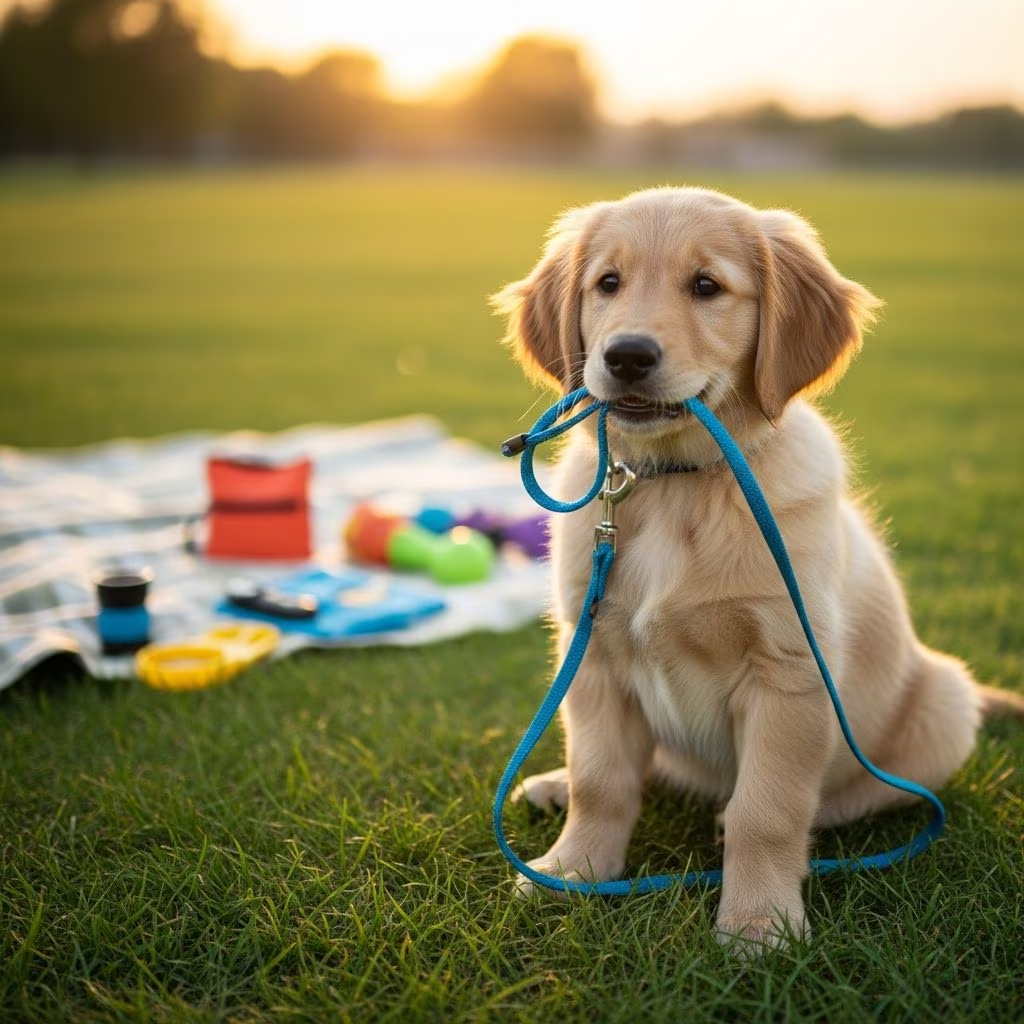
Bringing home a new puppy is an exciting milestone, but it comes with the responsibility of proper training and socialization. The foundation you build during your puppy’s first weeks and months will shape their behavior for years to come. Whether you’re a first-time dog owner or an experienced pet parent, understanding the fundamentals of puppy training is essential for developing a well-behaved and confident companion.
The key to successful puppy training lies in recognizing that every interaction with your puppy is a teaching opportunity. From the moment your puppy arrives home, they’re learning what is and isn’t acceptable behavior. The way you greet them, how you respond to jumping, and the manner in which you walk them on a leash all send powerful messages about what behaviors you’ll accept. This comprehensive guide will walk you through everything you need to know about basic puppy training, from establishing routines to mastering essential commands.
Puppy Training Tips for Success
Before you begin any training session with your puppy, it’s important to set yourself and your pup up for success. Following these fundamental guidelines will dramatically improve your training outcomes and make the experience enjoyable for both you and your puppy.
The following tips form the foundation of effective puppy training:
- Make sure your puppy is well-rested and not too revved up
- Take a potty break before starting any training session
- Come prepared with lots of yummy, high-value treats
- Find a familiar, quiet place to practice initially
- Keep lessons short and sweet to maintain focus and enthusiasm
These simple guidelines ensure that your puppy is in the optimal mental and physical state to learn. A tired puppy who has just relieved themselves in a calm environment is far more likely to focus on your instructions than a hyperactive pup who’s desperate for a bathroom break.
Establishing a Daily Training Schedule
Dogs thrive on routine and predictability. When your puppy knows what to expect and when to expect it, they experience less anxiety and learn more effectively. Setting up a daily schedule is crucial for successful puppy training because it provides structure and helps your puppy develop good habits.
Your daily schedule should include:
- Designated meal times
- Regular potty trips throughout the day
- Dedicated playtime periods
- Structured training lessons
- Crate time for rest and naps
- End-of-day wind-down activities
Keeping detailed notes of your puppy’s schedule, bathroom habits, and training progress will help you identify patterns and adjust your routine as needed. Many puppy parents find it helpful to create a written schedule they can reference daily, ensuring consistency in their training approach.
Early Training Focus Areas
During your puppy’s earliest weeks at home, you should concentrate on three primary goals: crate training, potty training, and foundational socialization. These areas form the bedrock of your puppy’s development and will influence all other training efforts.
Focus on Crate and Potty Training
Crate training and potty training work together synergistically. When you teach your dog crate training, you’re simultaneously working on house training. This is because puppies naturally avoid soiling their sleeping area, making the crate an invaluable tool for housetraining.
Your most important goals at this stage are:
- Helping your pup learn that the crate is a happy, safe place
- Teaching them that they get rewarded immediately after they potty outside
- Establishing a consistent routine for bathroom breaks
The combination of these two training methods creates a powerful foundation for house training. When your puppy spends supervised time in their crate and is immediately taken outside afterward, they quickly learn where it’s appropriate to eliminate.
Begin Socialization
A well-socialized dog is a happy, confident dog who is less prone to fear and anxiety-related behaviors. Socialization should begin early and continue throughout your puppy’s first year. Enrolling your pup in an accredited puppy class provides a controlled environment where they can interact with other puppies and learn appropriate social skills.
Beyond formal classes, you should actively expose your puppy to new experiences, environments, and people. This includes welcoming new friends into your home and taking brief outings to locations where dogs typically aren’t found, such as banks or dry cleaners. Always bring treats with you to make these experiences positive and rewarding.
Teach “Sit”
One of the earliest obedience training lessons for a puppy to master is the basic “sit” cue. The “sit” command is foundational because it teaches impulse control and establishes a pattern for learning other commands. You can ask your pup to “sit” before giving them things they want, such as their food bowl, a toy, or access to the outdoors.
Begin teaching “sit” in a low-distraction environment, then gradually work on it in a variety of locations with different types of distractions. This approach, known as generalization, ensures your puppy understands the command applies everywhere, not just in your training space.
Development by Age: Ten to Twelve Weeks
By ten to twelve weeks of age, your puppy is ready for more advanced socialization and training. At this stage, continue your pup’s exposure to the world by introducing new experiences and environments in a controlled manner.
Continued Socialization
During this period, continue welcoming new friends into your home to meet your puppy and take them on brief outings to various locations. Consistent positive exposure to new people, animals, and environments builds your puppy’s confidence and resilience.
Managing Mouthing and Providing Appropriate Chew Toys
At this stage, your puppy will want to put their mouth (and sharp teeth!) on everything. This is a normal developmental phase, but it’s important to redirect this behavior toward appropriate chew toys. Provide a variety of safe, durable chew toys and praise your puppy when they choose to chew on them rather than on your hands or furniture.
Building Basic Commands
Begin working on training cues beyond “sit,” including coming when called, “down,” and brief “stays.” Use positive reinforcement training exclusively, as puppies respond best to reward-based methods. Keep your puppy’s lessons short and upbeat so they remain interested and engaged. Sessions should last no more than 5-10 minutes for puppies, with multiple short sessions throughout the day being far more effective than one long session.
How to Crate Train Your Puppy
Crate training is one of the most valuable skills you can teach your puppy. A properly crate-trained dog has a safe haven where they feel secure, and you have peace of mind knowing your puppy is safe when you can’t directly supervise them.
Step 1: Introduce the Crate Using Treats
To begin crate training your puppy, introduce the crate by leaving the door open and putting treats inside for your puppy to discover. The goal is to make the crate seem like the best place in the world. Let your dog examine the crate without shutting the door and give them a few more treats for remaining inside.
You can also entice your dog with a busy toy stuffed with treats—anything to make that crate as appealing as possible. Stay happy and upbeat as your puppy explores the crate, making sure to give lots of praise when they go inside.
Continue this introductory process in a few short sessions until your puppy goes into their crate without hesitating. At this stage, the choice to go into the crate is entirely up to your pup. Never force them if they seem reluctant, as this can create negative associations.
Gradually Building Positive Associations
Practice the introduction step as many times as necessary for your dog to get completely comfortable in the crate. This process may take several days or even weeks, depending on your individual puppy. Patience is essential during this phase.
Once your puppy is willingly entering the crate, you can begin gently closing the door for very short periods while they’re eating or chewing on a treat inside. Gradually increase the duration of closed-door time as your puppy becomes more comfortable.
How to Potty Train Your Puppy
Potty training is one of the most important training goals for new puppy owners. Success requires consistency, patience, and understanding your puppy’s bathroom schedule.
Establishing a Potty Training Routine
The foundation of successful potty training is a consistent routine. Take your puppy to a potty area (outdoors or indoors) on leash at least once every 30 minutes while you are home and awake. At night, one or two outings are typically sufficient for most puppies.
Always give your dog a potty break before putting them in the crate, as this significantly improves housetraining outcomes. Additionally, take your puppy outside immediately after meals, after playtime, and after they wake from naps, as these are the times they’re most likely to need to eliminate.
Using Treats and Positive Reinforcement
Once outside with your pup, take them to a familiar location and wait for them to find the perfect potty spot. When they’re finished, immediately follow up with a small treat and praise them enthusiastically for a job well done. Don’t wait until you’re back inside—the timing of the reward is crucial for your puppy to make the connection.
You can also teach your puppy a potty phrase that will eventually act as a potty “trigger.” Simply say something like “hurry up” or “go potty” as your puppy eliminates. With enough repetitions, your puppy will associate the phrase with the act of eliminating, which can help you cue them during inclement weather or when you’re pressed for time.
Handling Accidents Calmly
If your puppy does not pee or poop outside, don’t worry—that’s completely normal. Simply take your puppy back to an indoor confinement area for 10 to 20 minutes, then take them outside again. Potty training takes time, and every puppy learns at their own pace. Be patient and consistent with your routine, and celebrate small wins along the way.
If accidents happen inside, never punish your puppy. Punishment creates fear and confusion and doesn’t actually teach them where the appropriate place to eliminate is. Instead, simply clean up the accident thoroughly to remove scent markers and redouble your efforts with more frequent outdoor breaks.
How to Teach Your Puppy to Sit
The “sit” command is foundational and serves as a stepping stone to learning other commands. Teaching this essential skill properly sets your puppy up for success with future training.
Using Treats as Training Tools
To teach “sit,” begin by holding a treat close to your puppy’s nose. Slowly move the treat upward and slightly backward over their head. As your puppy’s head follows the treat, their bottom naturally lowers to the ground.
The minute their rump hits the ground, mark the action by saying “yes!” or “good!” and then immediately give your puppy the treat. If your puppy opts to jump up rather than sit, it’s likely you’re holding the treat too high. Try to keep it anchored to their nose so that it’s easy for them to reach with all four paws planted on the ground.
Mastering the Command
Repeat this process a few times until your puppy is quickly moving into the sitting position. Once they’re consistently sitting when you use the lure, you can add the verbal cue “sit” just before using the treat to guide them.
Simply say “sit” and give your pup a few seconds to process the command (try not to repeat the word!), then give them a treat when they do it. Practice sitting in a variety of environments and with different types of distractions to truly master the command. This varied practice ensures your puppy understands the command applies everywhere, not just during training sessions at home.
Building on Early Training Success
Once your puppy has mastered the basics—crate training, potty training, and the sit command—you can begin expanding their training repertoire. The skills your puppy learns in these early stages form the foundation for all future training endeavors.
As your puppy grows, you can introduce more complex commands such as “down,” “stay,” and “come.” The consistent approach you’ve established with earlier training will serve you well as you continue building your puppy’s obedience and good manners.
Frequently Asked Questions About Puppy Training
Q: At what age can you start training a puppy?
A: You can begin basic puppy training—including sit, stay, and lie down—as soon as you bring your puppy home. Even 8-week-old pups can learn new tricks. Puppies are incredibly absorbent of information when you start training them very young, making the early months an ideal time for foundational learning.
Q: How long should training sessions be?
A: Keep training sessions short and fun. Brief sessions throughout the day of around 5-10 minutes or fewer for puppies will get much better results than marathon training sessions. Multiple short sessions maintain your puppy’s interest and focus far better than one long session.
Q: Can you crate train a puppy in three days?
A: Three days is a very short period of time to expect to train a new puppy to do anything, even simply getting comfortable in their crate. All puppies are different, so while some may be able to be crate-trained in a matter of days, others may take several weeks or longer. Patience and consistency are key to successful crate training.
Q: What is the most challenging dog command to train?
A: The most challenging skill for most dogs is coming when called. For best results, start practicing the day you get your dog, and always reward your dog—ideally with tasty food—for coming to you. Building a strong recall takes time and consistent practice.
Q: What should I do if my puppy has an accident during potty training?
A: Never punish your puppy for accidents, as punishment creates fear and confusion. Instead, simply clean up the accident thoroughly with an enzymatic cleaner to remove scent markers, and increase the frequency of outdoor bathroom breaks. Consistency and patience are essential for successful potty training.
Q: How do I handle mouthing and biting during puppy training?
A: Mouthing is a normal puppy behavior. Redirect their biting toward appropriate chew toys and praise them when they choose to chew on toys rather than your hands or furniture. Provide a variety of safe, durable chew toys and supervise playtime closely.
References
- Puppy Training 101: Your Guide to Training Your Puppy — Chewy. 2024. https://www.chewy.com/education/dog/new-dog/basic-puppy-training
- How to Crate Train a Puppy: A Step-by-Step Guide from an Expert — Chewy. 2024. https://www.chewy.com/education/dog/new-dog/how-to-crate-train-a-puppy-a-step-by-step-guide-from-an-expert
- How To Potty Train a Puppy — Chewy. 2024. https://www.chewy.com/education/dog/new-dog/how-to-potty-train-your-dog-in-7-days
- Bringing a Puppy Home: Everything You Need to Know — Chewy. 2024. https://www.chewy.com/education/dog/new-dog/puppy-survival-kit
- Your Essential Guide to Basic Dog Obedience Training — Chewy. 2024. https://www.chewy.com/education/dog/training-and-behavior/sit-stay-and-beyond-weve-got-the-essential-guide-to-basic-dog-obedience-training



